




























How to choose a rhubarb for your garden?
Our buying guide to choose the best rhubarb suiting your needs
Contents
With rhubarb, you invest for the long term! Indeed, unlike vegetables that we sow or plant every year, rhubarb (Rheum) is a perennial plant of exceptional longevity, capable of yielding generous harvests for more than twenty years. However, to ensure this planting is successful, you must carefully choose the variety that best matches its climate, its needs and preferences.
Discover our comprehensive buying guide to help you find the ideal variety for your vegetable plot or garden, while exploring the botanical nuances of each variety.

Why planting rhubarb in your garden?
Before addressing the criteria for choosing the variety best suited to your needs, perhaps it’s worth recalling why rhubarb deserves a prime place in the garden, often along the edge of the vegetable plot or even in an ornamental border.
A hardy plant
Rhubarb is one of the few perennial vegetables. Unlike most vegetables (yes, rhubarb is a vegetable!) that must be sown each year, rhubarb remains in place for many years.
Moreover, its hardiness is exemplary as it tolerates temperatures down to -30°C.
It is also the gardener’s perfect ally who has little time, because once well established, it requires very little maintenance, apart from an annual compost application and a few waterings in periods of prolonged drought.
An aesthetic asset
With its large, wrinkled leaves in a deep green, and its thick stems, red or green, rhubarb has an exotic appearance. In spring, it can produce large white flower spikes that provide a striking visual display. However, to obtain beautiful fleshy stems, it is advisable to cut these inflorescences.
Rhubarb defines space over more than a square metre and occupies corners that are a little cooler or semi-shaded in the garden where other vegetables would struggle to grow and produce.
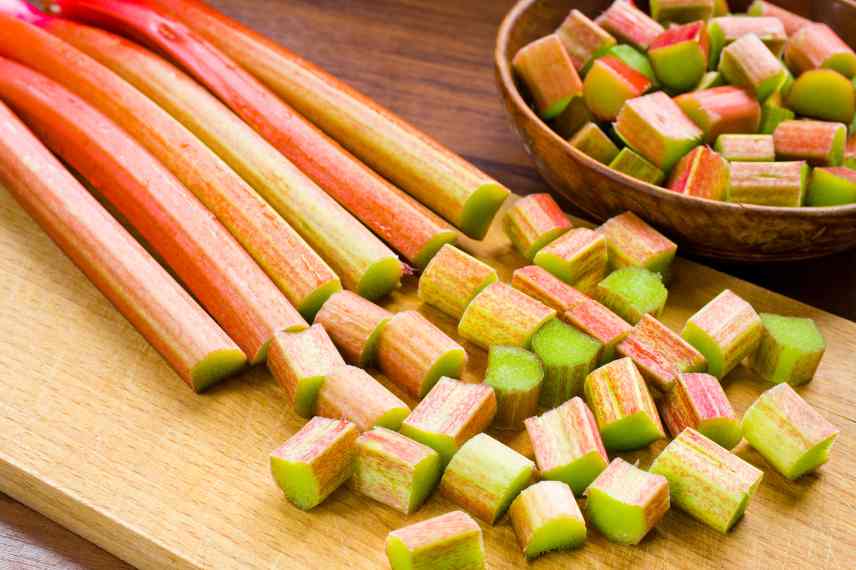
Rich in fibre, vitamin C, calcium and potassium, rhubarb is one of the first vegetables to be harvested in spring
Nutritional and culinary benefits
Rich in fibre, vitamin C, calcium and potassium, rhubarb is one of the first vegetables to be harvested in spring. From April onwards, while fruit trees are still in bloom, rhubarb already offers its crunchy petioles.
Its characteristic acidity adds pep to compotes, to tarts, but also to savoury dishes, for example as an accompaniment to fatty fish or to duck. Growing your own rhubarb is a guarantee of ultra-fresh stalks, much crisper and juicier than those found in shops.
Read also
Rhubarb: planting, growing, harvestChoosing rhubarb for its colour
Clearly, this is the most obvious selection criterion. Naturally, we’re talking here about stems or petioles that come in two colours, red and green. Many think that the redder the stems, the riper they are. False! Some varieties are naturally red, others green.
Red-stem varieties
- ‘Paragon red’ : it is distinguished by its stems of a bright, deep red. It is the ideal variety for jams and pies, as its red pigmentation remains present during cooking, giving a natural ruby colour.
- ‘Frambozen Red’ : this variety lives up to its name. Its petioles are a soft red and its flesh is milder than that of the green varieties. It is ideal for those who fear the acidity of traditional rhubarb.
- ‘Valentine’ : this is a remarkable variety because it keeps its bright red colour even after cooking. It is also less fibrous than average, making it an excellent choice for refined desserts.
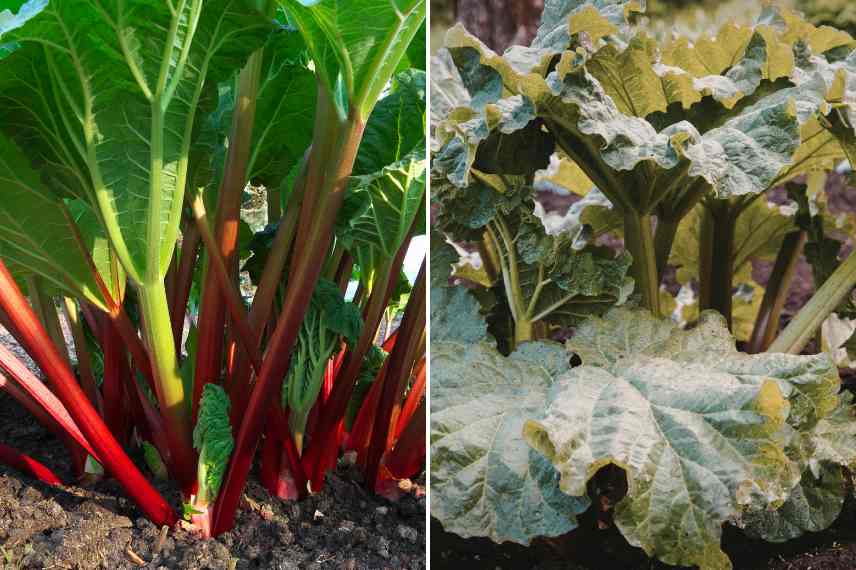
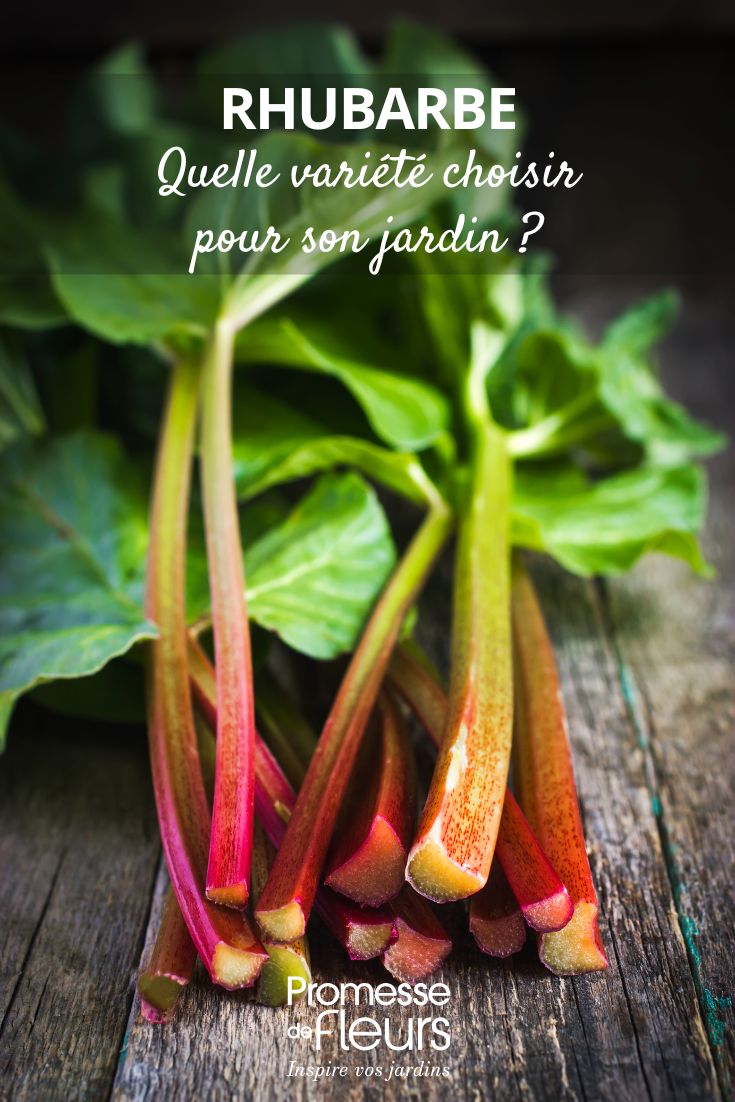
Rhubarb plants have red or green stems
Green-stem varieties
‘Victoria’ is the quintessential heritage variety. Its stems are bicoloured, red at the base and green at the top. Its green flesh offers a powerful and authentic fragrance. It is an extremely vigorous plant, perfect if you’re looking for rhubarb that makes a visual impact in the garden. Indeed, its substantial growth can reach up to 1.2 m in all directions.
Select rhubarb according to the harvest period
The harvest period is a strategic criterion. Traditionally, rhubarb is harvested from April to June. However, some varieties allow extending this calendar. By planting several plants, you can thus enjoy rhubarb over a longer period.
Early varieties for an early spring
The most impatient gardeners (and the most eager for a harvest!) will opt for varieties that start to grow very early in the season:
- ‘Lider’ : this variety is a true force of nature. Originating from Eastern Europe, it is classified among very early varieties. ‘Lider’ stands out for its rapid growth at the start of spring. Its stalks, mostly green and vigorous, are particularly rich in vitamin C. It’s the perfect choice for those living in regions where spring is short and who want to ensure a plentiful harvest before the first heat. Its ability to produce large petioles quickly makes it one of the most efficient on the market
- ‘Mikoot’ : this variety is notable for its early maturity. It enables you to make the first rhubarb tarts of the year from early April depending on the region. Its green stalks tinged with red are sturdy and fleshy from the start of spring
- ‘Livingstone’ : this is an early, repeat-flowering variety from which you can harvest the stalks from spring to the first frosts of autumn. You can thus cook rhubarb with summer fruits but also with autumn fruits such as apples.
Read also
How to divide rhubarb?Plant rhubarb for its texture and flavour
There’s nothing more off-putting than stringy rhubarb. Texture is therefore a major criterion, as is acidity.
The least fibrous varieties
- ‘Valentine’ is renowned for its fine, low-fibre flesh. It rarely needs peeling, which preserves its red colour and vitamins
- ‘Red Paragon’: its texture is firm but melts in the mouth after cooking, ideal for a smooth compote with no tough pieces.
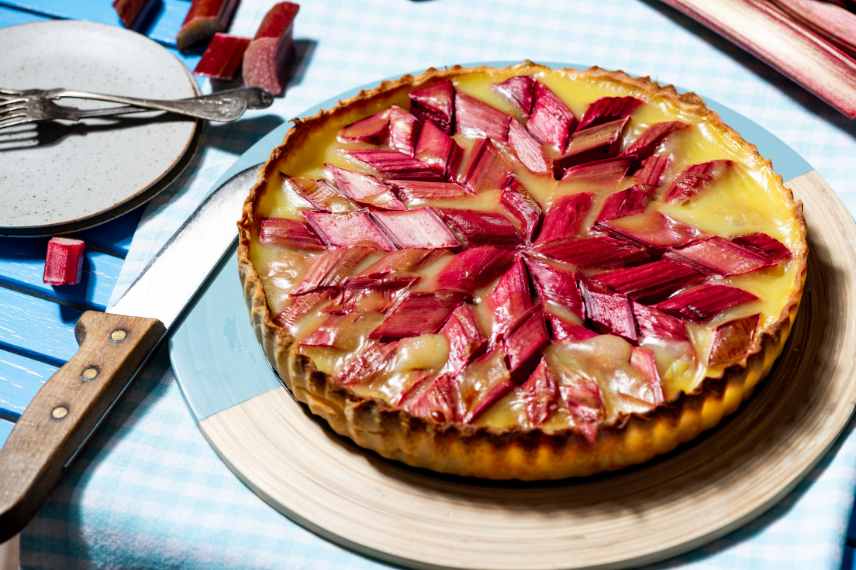
The balance between sweetness and acidity in rhubarb enables delicious desserts with reduced added sugar
The balance between sweetness and acidity
- ‘Frambozen Rood’ is the least acidic in the catalogue. It helps reduce the amount of added sugar in recipes, which is a notable health benefit
- Raspberry Red is distinguished by exceptional natural sweetness and subtle aromas evoking raspberry, which makes it one of the sweetest rhubarb varieties on the market. This low acidity allows cooking with a reduced amount of added sugar
- ‘Victoria’ offers a lively acidity which, when paired with the sweetness of custard or a clafoutis batter, creates an interesting gastronomic contrast.
Make your choice according to the yield
Depending on your family size and climate, the harvest volume can be a deciding factor.
For high yields
- ‘Goliath’: as its name suggests, this variety is a yield champion. It produces gigantic and very broad stems, which makes it the variety of choice for those who do a lot of preserves and jams
- ‘Victoria’: very reliable, it delivers a steady harvest year after year, whatever the weather.
Climate adaptation
Rhubarb prefers cool, damp climates. In northern France, all varieties will thrive.
But in regions with a milder climate, rhubarb can suffer from the summer heat. That’s why, when planting, choose a site that is shaded in the afternoon.
Varieties such as ‘Valentine’ are reputed to tolerate dry spells better.
A few quick planting tips
Once you’ve chosen your variety, remember that rhubarb is a hungry plant. It prefers deep, humus-rich soil that stays cool.
- Planting is ideally carried out in autumn or early spring. Dig a wide hole and mix in two good buckets of well-rotted compost or manure.
- Patience is the secret to vigorous rhubarb. In the first year after planting, do not harvest any stalks. In the second year, harvest only two or three. From the third year, you can harvest at full yield. These waiting years allow the rootstock to develop and establish itself properly.
- Flower removal as soon as they appear helps prevent exhausting the plant, unless you wish to keep a plant for its ornamental value.
- Subscribe!
- Contents
Comments