





























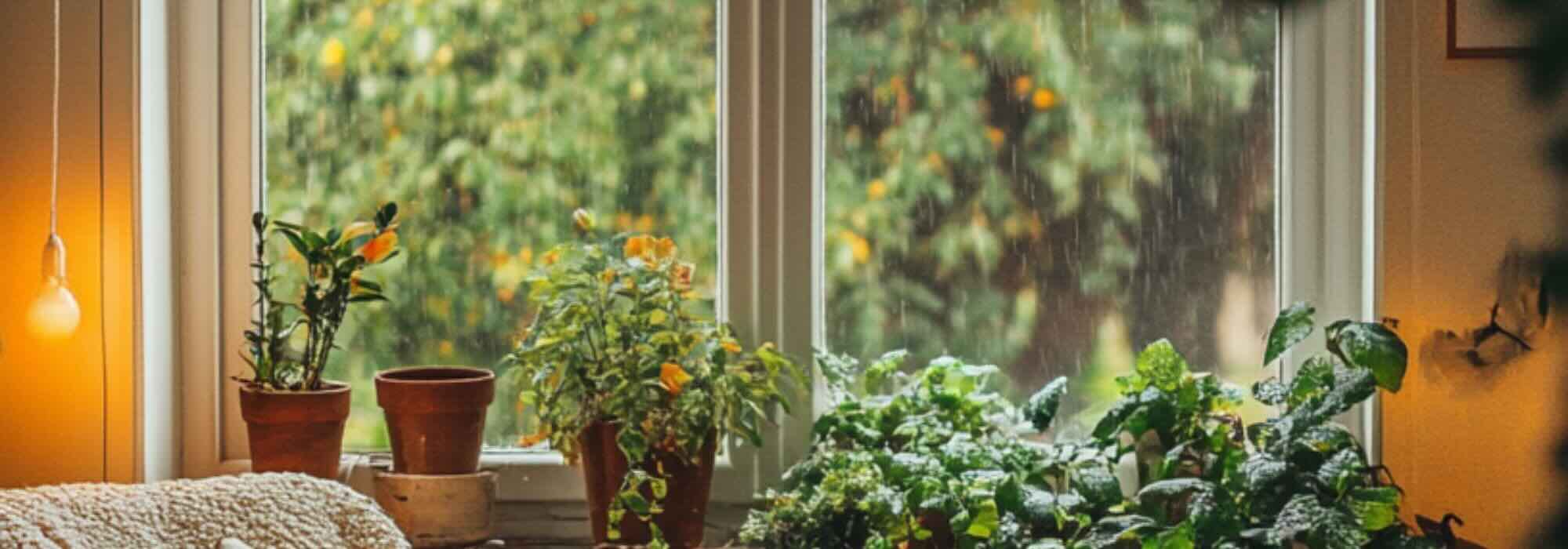
Ideal indoor plants for dimly lit rooms
Curated selection and tips to create your green oasis!
Contents
Living in a space with limited natural light doesn’t mean you have to forgo a beautiful plant display. On the contrary, many houseplants are perfectly suited to shade or dark spaces, allowing you to bring greenery to your favourite rooms.
In this article, discover the best varieties and tips for caring for them, to create a warm and verdant atmosphere, even in the darkest corners of your home.

Why are some indoor plants better suited to low light?
A natural origin in the woodland understory
When considering indoor plants suited to dark spaces, with little light or even no direct light, one often wonders why some thrive where others wither. Many shade-tolerant plants originate from tropical forests or areas where sunlight is filtered by trees. In their natural habitat, they grow under a dense canopy, with little light reaching the soil. For example, ferns and Calatheas are indoor plants native to these dark environments, where they have developed strategies to capture every available ray of light.
Leaves designed to maximise light
In an environment where light is scarce, large leaves provide a crucial advantage. Some plants have large leaves that allow them to capture as much light as possible, even in the understory of tropical forests, where sunlight struggles to reach the soil. These shade-tolerant indoor plants, or those in low-light conditions, use their size to compete with their neighbours and thrive in dark spaces.
However, not all indoor plants living in low-light conditions can rely on oversized leaves. Many small understory plants, such as Calatheas or even smaller Peperomias, have developed another clever trick: a pigment adaptation.
If their upper surfaces are often green, they display a purple-red underside, a characteristic typical of plants adapted to low-light zones. This colour acts as a natural reflector, catching light that passes through the leaf from the green upper surface and reflecting it back through. These plants manage to survive and even flourish in environments where light is low.
Low light requirements for photosynthesis
Some indoor plants, adapted to dark zones, have a slower metabolism. This means they do not require a high light intensity to carry out photosynthesis, the process by which they produce energy. These plants use less energy, making them particularly resilient to missed waterings or challenging growing conditions.
Resilience to harsh conditions
In spaces with little light, plants often have to cope with water shortages or fluctuating temperatures. Shade-adapted indoor plants often store water in their stems or in fairly thick leaves, or slow their growth to conserve resources.
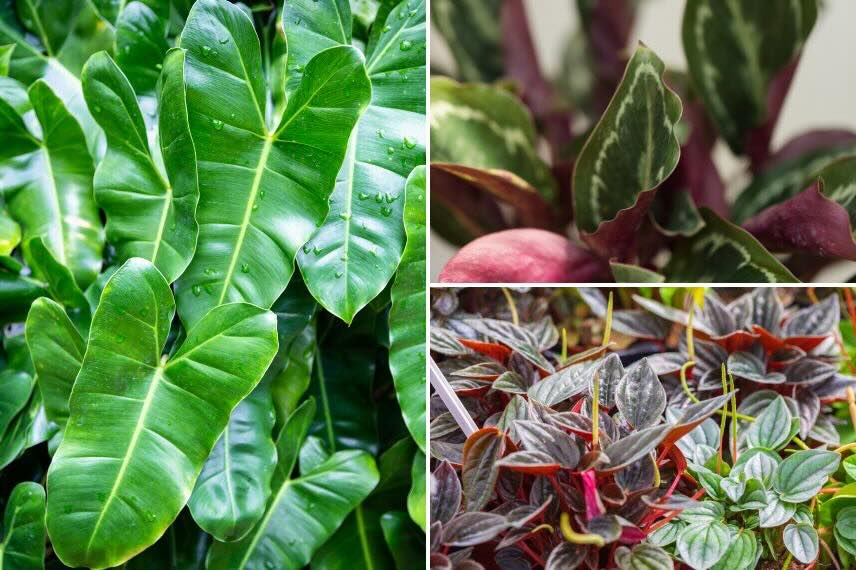
Different adaptations of plants living beneath the canopy of tropical forests: a large area of glossy foliage on philodendrons, red undersides for Calatheas and Peperomias
Ideal plants for low-light interiors
Hardy classics
Some indoor plants have become essentials for dim spaces due to their robustness and their ability to adapt to low-light conditions.
- Sansevieria (Mother-in-law’s tongue) : this plant is a staple of low-light environments. It needs very little maintenance and can thrive in dark corners without issue. Its long, upright, graphic leaves add a modern touch to any interior.
- Zamioculcas zamiifolia (ZZ Plant) : with its thick, glossy foliage, this plant is fairly tolerant of light levels. Be mindful of overwatering; it prefers waterings spaced apart.
- Chlorophytum (Spider Plant) : easy to grow and very hardy, it thrives even in spaces with little light. Its long, slender leaves and small pendulous plantlets bring an airy, light touch. It is truly a very low-maintenance plant.
- Dracaena : with its slender habit and exotic tufted foliage, this plant is an excellent choice for medium light. There are many cultivars with different leaf colours.
Tropical plants naturally shade-tolerant
- Marantaceae : this family of plants includes the popular Calatheas, and the somewhat less-known Marantas and Ctenanthes. Some Ctenanthes favour bright light, but the majority of marantaceae are medium-light plants. They are prized for their decorative leaves, often marked with colourful patterns. Adapted to shaded environments, they prefer constant humidity and stable temperatures.
- Peperomias : compact and varied, peperomias, with their small to medium thick and textured leaves, are perfect for small shelves or tight spaces. They don’t need to be right next to windows and prefer moderate watering.
- Ferns : many species of ferns thrive in low-light, humid environments. They love bathrooms where they can enjoy the ambient humidity.
- Philodendrons : some philodendrons are undemanding and are content with medium light.
Climbing and trailing plants
For fans of trailing or climbing plants, several species thrive in shaded spaces.
- Epipremnum : well known by the common name Pothos, it is probably the most popular climbing plant for dark spaces. Its heart-shaped leaves, often variegated, adapt very well to low-light conditions. The white-variegated cultivars bring a lot of brightness.
- Ivy (Hedera helix) : ideal for shelves or hanging baskets, it thrives in low-light spaces as long as the soil remains slightly damp.
Terrarium plants
Some small indoor plants thrive particularly well in terrariums, where humidity and confined conditions remind of their natural habitat. Place them a few metres from a north-facing window, for example.
- Fittonias : also called “nerve plants”, they are appreciated for their small leaves veined with white, pink or red.
- Ficus pumila : it’s an unusual fig species, creeping with very small leaves. In addition to its ability to climb, this plant adapts wonderfully well to a terrarium, where it can form a pretty green carpet.
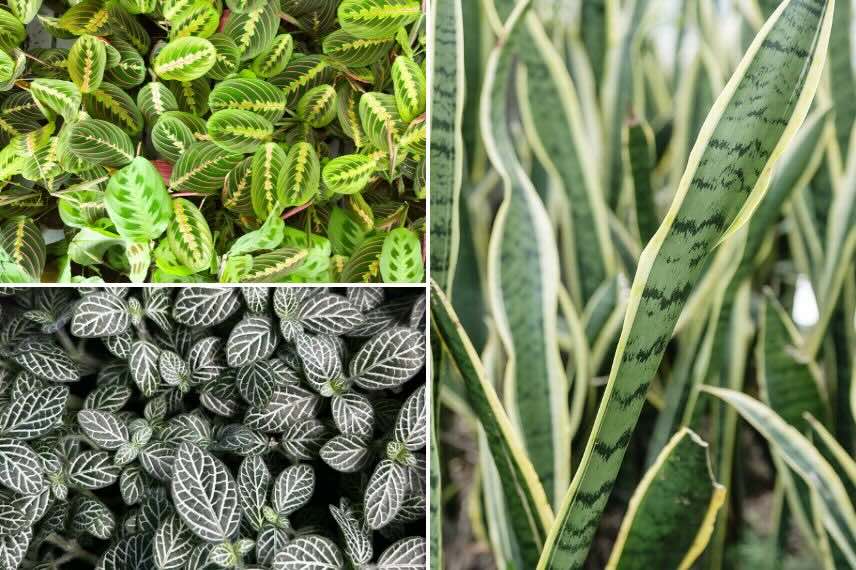
Marantas with vibrant foliage, Fittonias with small veined leaves, Sansevieria robust throughout, 3 species to try at home when your interior isn’t very bright.
What is a poorly lit interior?
Specify the light conditions suitable for shade-loving plants grown indoors.
A north-facing exposure can be fairly bright if the glazing area is large and there are no nearby obstructions.
Medium indoor light, suitable for all the plants mentioned, means:
- an area a few metres from the windows of a bright room, without direct sunlight.
- near an east- or north-facing window in a room with little glazing.
- a bathroom with a skylight, for example.
- a hallway, provided it’s not too dark.
Keep in mind medium light levels. Some plants will tolerate low light, such as pothos or chlorophytum, for example, but most need a little more light. For more demanding plants, a horticultural lamp can be a useful addition in winter, for example, or if light is too low.
Tips for looking after plants in a dark indoor space
Cultivating indoor plants in a dim space requires particular attention to compensate for the lack of natural light. Here are a few tips to keep them in good shape.
Supplementing light
Even plants suited to dark environments can benefit from a little boost. Use grow lights: these artificial lights mimic the spectrum of natural light and help plants to perform photosynthesis. Place them at an appropriate distance to prevent leaf burn.
Adjusting watering for low-light conditions
Under low-light conditions, plants use less water, as their metabolic activity slows.
- Avoid overwatering: the substrate should dry slightly between waterings. The roots of plants in low-light environments are more susceptible to rot caused by excess water.
- Use a pot with good drainage: ensure pots have holes to drain excess water, and choose a light, well-aerated potting mix.
Maintaining good humidity
Many indoor plants adapted to dark zones originate from tropical environments where humidity is high.
- Mist the leaves: regularly spray water onto the foliage to create a humid environment.
- Group plants: Gather several plants to create a microclimate in which humidity will be higher. You can also install a humidifier if necessary.
Cleaning the leaves to maximise light absorption
Dust accumulating on the leaves can reduce their ability to capture light, which is already low. Clean the leaves regularly by gently wiping with a damp cloth or give them a light shower. This also improves their appearance.
Rotating the pots
In dim spaces, plants may tend to grow toward the light source. Rotate the pots regularly to allow more uniform growth and to prevent the plant from becoming unbalanced.
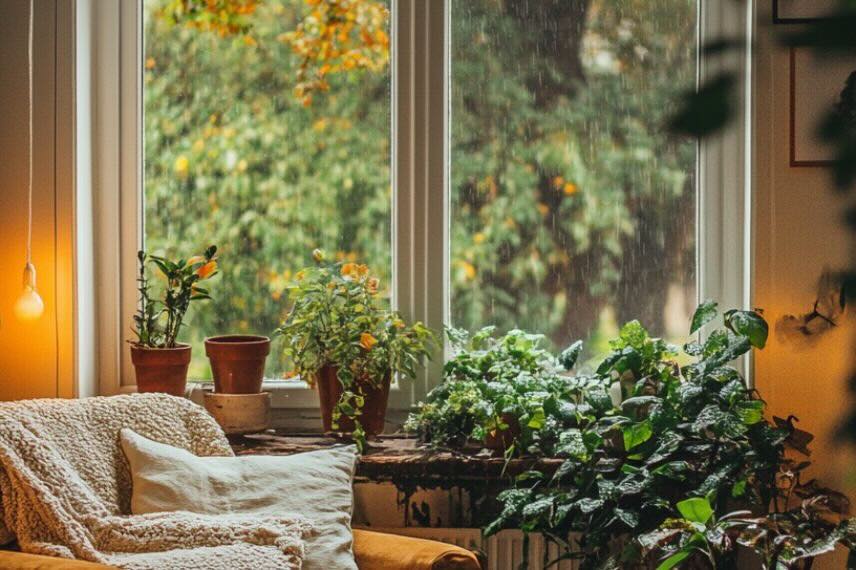
In a dim interior, move the plants closer to the window
Mistakes to avoid in a dimly lit interior
Here’s what to avoid to keep your plants in good health.
Choosing unsuitable plants
Not all houseplants thrive in low-light spaces.
- Avoid plants that require a lot of light: Succulents, cacti, or other plants native to arid environments are not suitable. They require direct sunlight to thrive and quickly wither in dark corners.
- Choose proven plants: favour those specifically adapted to shaded areas, such as Pothos, Calathea or Sansevieria.
Moving plants too frequently
Houseplants acclimatise slowly to their environment. Moving them constantly can stress them and disrupt their growth. Let them settle: Find a suitable spot from the start and avoid moving them unless necessary.
Ignoring the specific needs of each plant
Even though they share the ability to adapt to dark conditions, each plant has unique needs in terms of watering, temperature or humidity. Find out about each species: Take the time to understand what your plant prefers, whether it’s a fern, a Dracaena or a Peperomia.
- Subscribe!
- Contents
Comments