





























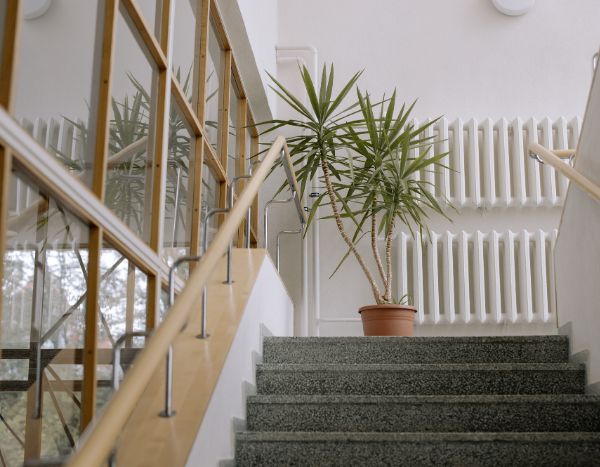
A yucca touching the ceiling? Here’s how to prune it and restore its stately appearance!
Our tips
Contents
Indoor yucca, in particular the elephant’s-foot or Yucca elephantipes, is a tropical plant that is very popular for its graphic silhouette and its great resilience. With growth that is slow but regular, it can reach an imposing size over the years, especially if it benefits from good sunlight and moderate watering. Result: it sometimes ends up becoming too tall or unbalanced for indoor spaces. Let’s discover how to prune a yucca that has become overgrown and give it the right care to keep it looking good and in shape.

Pruning an indoor Yucca that's too tall, in brief.
| Key takeaways: best practices for your Yucca | |
|---|---|
| Pruning period | In spring, between March and May |
| Pruning technique | Clean cut, slightly angled, just above a bud |
| Light & watering | Bright indirect light, watering sparingly according to the season |
Pot care |
Repot every 2–3 years, or top-dress if it has become too large |
Read also
Pairing YuccaWhen to prune a Yucca that has grown too tall?
The best time to prune an indoor yucca that’s grown too tall is in spring, between March and May. At that time, the plant is in active growth, which promotes healing and the appearance of new shoots.
We can also prune in summer if necessary, but it’s better to avoid autumn and winter: the yucca is then in vegetative rest and may react poorly to pruning.
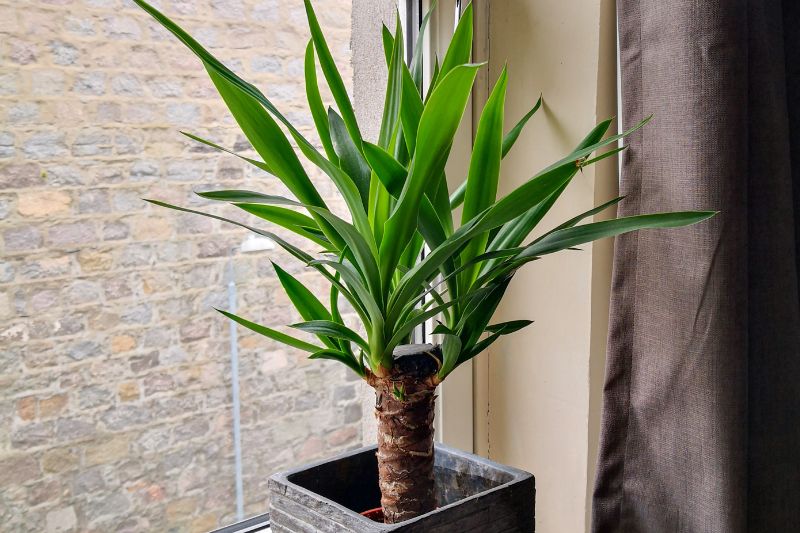
Don’t hesitate to prune a Yucca to keep it at a manageable size indoors.
Pruning an old yucca that has grown too tall: effective methods
When an indoor yucca becomes too tall, don’t panic: a good prune can restore its neat silhouette while stimulating its growth.
Trunk pruning (height reduction)
The most direct method is to cut the trunk to the desired height. Depending on its thickness, you can use a heavy-duty pruning shear or even a small saw. First of all, thoroughly sterilise your cutting tools to prevent spreading diseases to the plant.
Make a clean cut, slightly at an angle, just above a bud or a rosette of leaves. This will encourage new shoots to appear at the cut, giving your yucca a nice silhouette. No need for wound sealant.
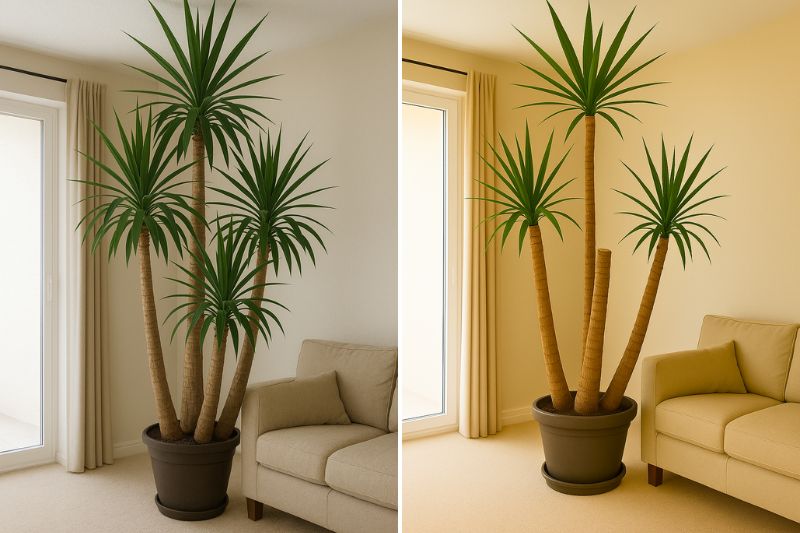 A small before-and-after of pruning a Yucca elephantipes that is too imposing. (AI-generated images)
Propagation by cuttings and division: recycle the cut pieces
Don’t throw away the trunk pieces! You can use them to make new plants. Cut them into sections 15 to 40 cm long, and replant them in a well-drained mix (potting compost + sand or perlite).
Another technique is air layering: before cutting, wrap a section of the trunk with damp moss and plastic film, so roots form directly on the stem. Once rooted, you can separate this new plant from the mother plant.
In all cases, after pruning, place the cuttings in warmth, with soft light, and keep the growing medium slightly moist (not waterlogged). Patience is required: the first shoots may take a few weeks to appear!
Read also
Choosing a yuccaPost-pruning care and shaping tips for your Yucca
After pruning, your yucca needs a little boost to get back on its feet. Here’s how to give it the best conditions to recover in style.
Light: not too much, not too little
The Yucca loves light. Place it in a bright room, near a window facing east or west, but without direct scorching sun that could scorch its leaves. Absolutely avoid dark corners, where it may become etiolated again.
Watering: better to underwater than overwater
After pruning, watering should be adjusted to avoid stress or root rot. Wait until the root ball is dry to the touch on the surface before watering again. In winter, watering every 3 to 4 weeks may be sufficient; in summer, adjust according to the heat, but not to excess. The Yucca tolerates drought much better than excess water!
Monitoring and cleanliness
A weakened Yucca can attract pests such as scale insects or red spider mites. Inspect the leaves regularly, especially the undersides. In case of an infestation, wipe gently with a damp cloth or use a diluted black soap. A light mist from a spray (without wetting the foliage) can also help maintain a healthy atmosphere if the air is very dry.
Repotting or top-dressing
Every two to three years, consider repotting your Yucca into a slightly larger pot with good drainage. If the plant is already very large or difficult to handle, top-dressing suffices: remove the 4–5 cm of soil from the surface and replace with fresh, rich, well-aerated potting compost.
Warning: Yucca can be toxic to cats and dogs if they chew its leaves.
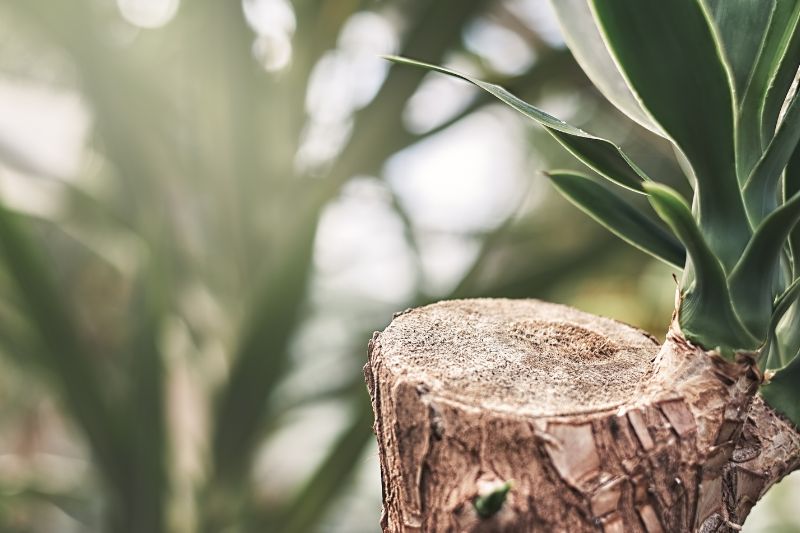
The Yucca quickly grows new shoots after pruning.
For more information about growing Yucca indoors, read our article “Growing Yucca in a pot“.
Tips to prevent your yucca from growing too tall again.
Once your yucca is well pruned, a few simple steps keep its size in check while keeping it in good condition.
An appropriately sized pot makes all the difference
Make sure your yucca is planted in a pot that is proportionate to its size, not too small and not too large. The pot must have drainage holes to prevent water from accumulating at the bottom, which can rot the roots and disrupt growth. A good, well-draining substrate (potting compost mixed with sand or perlite) is also essential.
☀️ Light: your best ally
For balanced growth, place your yucca in a bright spot, ideally near a south- or west-facing window. Insufficient light causes the plant to reach for light and become overly leggy, hence its characteristic lanky appearance. With good exposure, the yucca develops a sturdier trunk and stays well balanced.
✂️ Maintenance pruning: not to be forgotten
Even after a heavy pruning, regularly remove the lower, dry or yellowing leaves. This light pruning helps maintain a nice silhouette, lets the base of the trunk breathe, and channels energy toward the upper parts of the plant.
A little outing outside when the weather is fine
If you have a balcony, terrace or garden, take your yucca outside in the warmer season! As soon as temperatures stay consistently above 10°C (usually from May), place it outdoors, in partial shade or in gentle light. This natural light boost promotes a more compact growth and stronger overall vigour. Just remember to bring it back inside before the first chilly nights of autumn!
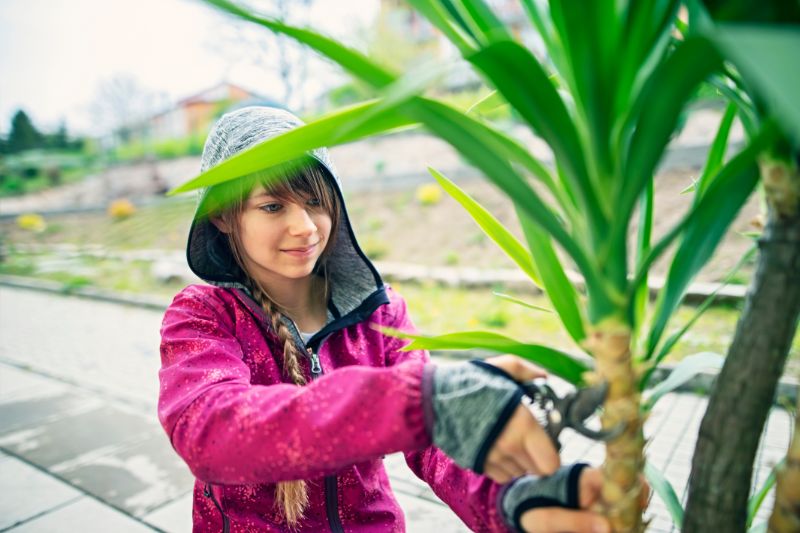 Don’t forget to regularly remove the old leaves from your Yucca.
Frequently asked questions
-
Can you prune a houseplant Yucca outside of spring?
Yes, it is possible to prune an indoor yucca outside of spring, particularly in summer if the plant is in good condition. However, avoid autumn and winter, as regrowth will be slower and the plant more vulnerable. -
Is it possible to prune an old yucca without it dying?
Yes, you can absolutely cut a yucca without it dying, provided you prune it properly and meet its needs. By cutting in the right place (just above a bud) and taking care of the plant afterwards, it will even form new shoots! -
Should you use a wound sealant?
A wound dressing isn't essential if the cut is clean, but it's advisable to help prevent disease. -
When to repot an indoor Yucca?
Repotting an indoor yucca is ideally carried out in spring, every 2 to 3 years, when the plant resumes growth. If it is too large to move, a single top-dressing (replacing the surface soil) suffices. -
What is the ideal indoor height?
The ideal indoor height for a yucca is between 1.20 m and 2 m, to keep an elegant silhouette without crowding the space.
- Subscribe!
- Contents
Comments