


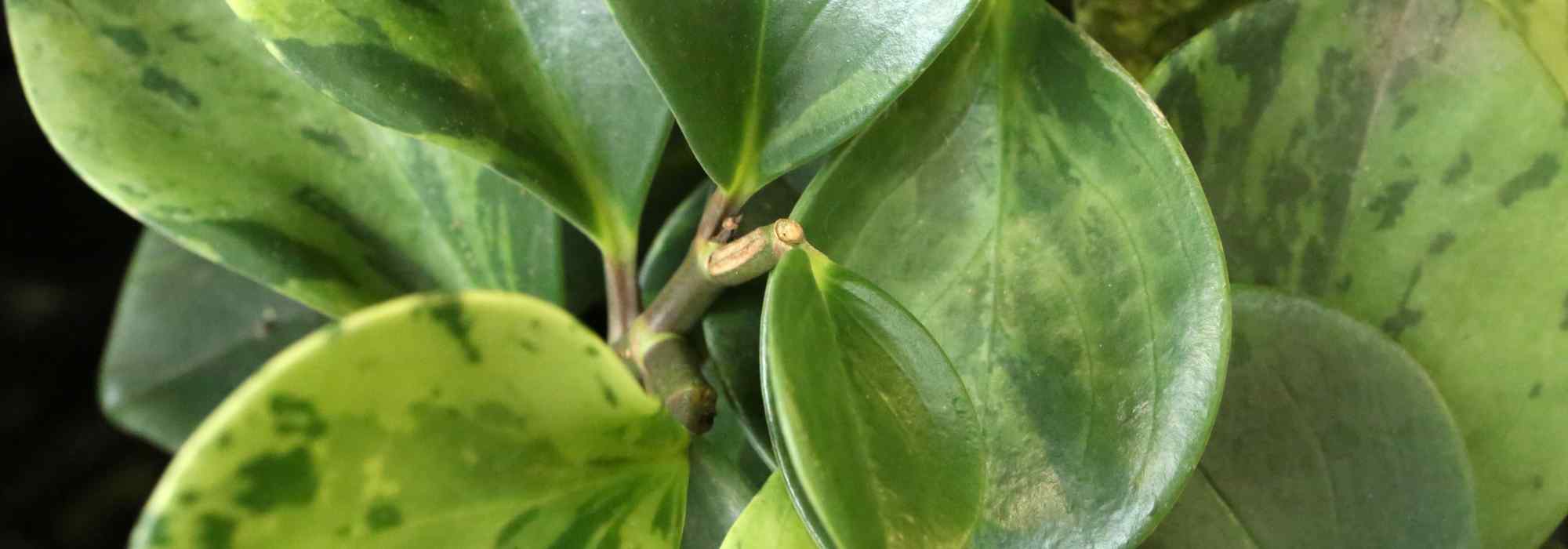
Peperomia diseases and parasitic pests
Identification, prevention and natural solutions
Contents
Peperomia is a houseplant appreciated for its beautiful fleshy, decorative foliage, which comes in a range of shapes and colours. Compact, it fits into all interiors, grown in a pot, in a terrarium or as a hanging plant. It also has the advantage of being safe for pets.
Easy to care for, Peperomia does not require a lot of maintenance. However, it can be targeted by pests or suffer from certain diseases, which will affect its health and aesthetics.
Let’s see how to identify the symptoms, prevent risks and naturally treat a Peperomia to keep it in good health.
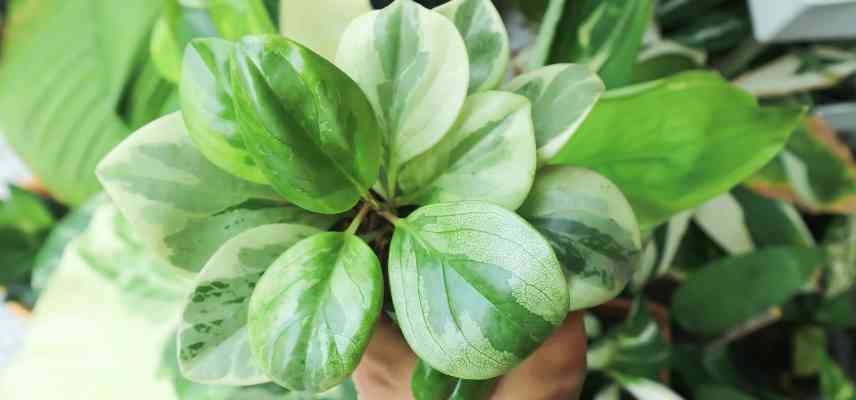
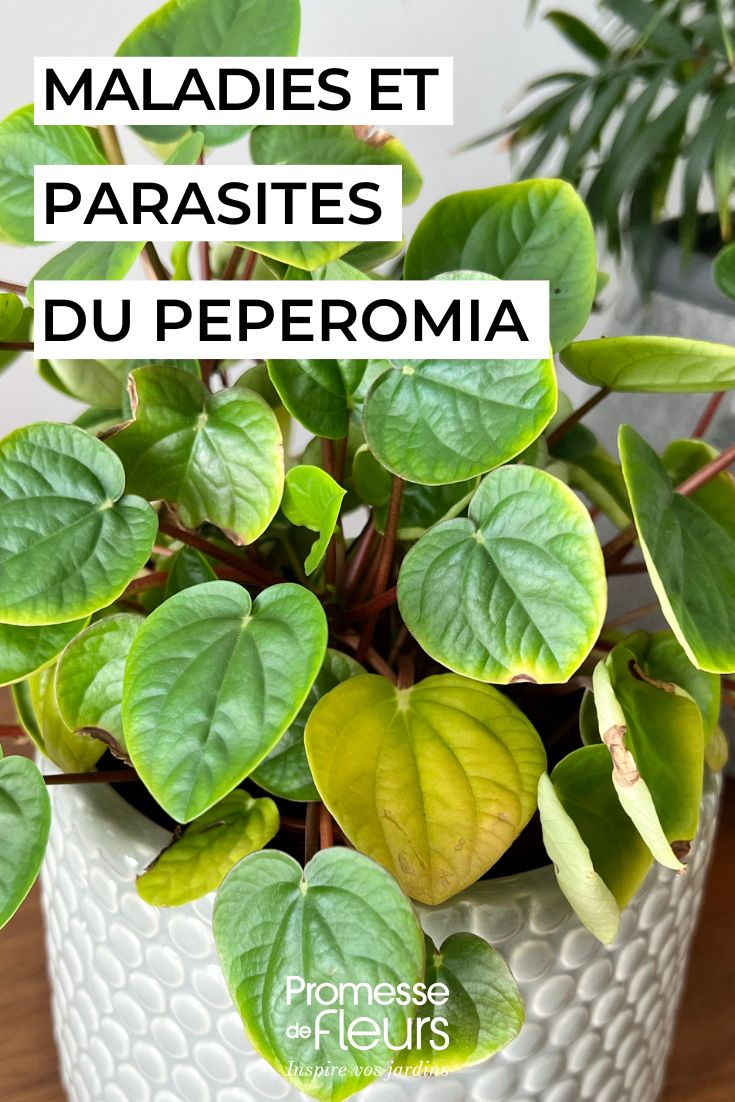
Prevention is always important with houseplants such as Peperomia (here P. obtusifolia)

Parasitic pests of Peperomia
Peperomia can be affected by certain pests, fairly common in houseplants. They are mites or piercing-sucking insects that gradually weaken it by feeding on its sap. If a few individuals do not cause it to wither, these pests have a high reproductive capacity, which can quickly lead to an infestation, or even spread to neighbouring plants. In that case, the plant will lose its ornamental value, stop its growth and may eventually die if nothing is done.
Aphids
They are certainly the pests most familiar to gardeners. Aphids can colonise houseplants. They are small insects, often green or black, visible to the naked eye. They particularly favour the young tender leaves and the stems of Peperomia. The first symptoms are the curling of the leaves and the deformity of the new shoots.
Aphids have the characteristic of producing honeydew. It is a sticky substance that promotes the development of a fungal or cryptogamic disease, caused by a fungus: sooty mould. It shows up as black, soot-like deposits on the aerial parts of the plants. In time, this disease affects the photosynthesis process, which is detrimental to the plant’s growth and overall health. Moreover, aphid feeding punctures can promote the spread of bacteria or viruses.
For more information, discover our article: Aphid: identification and treatment
Mealybugs
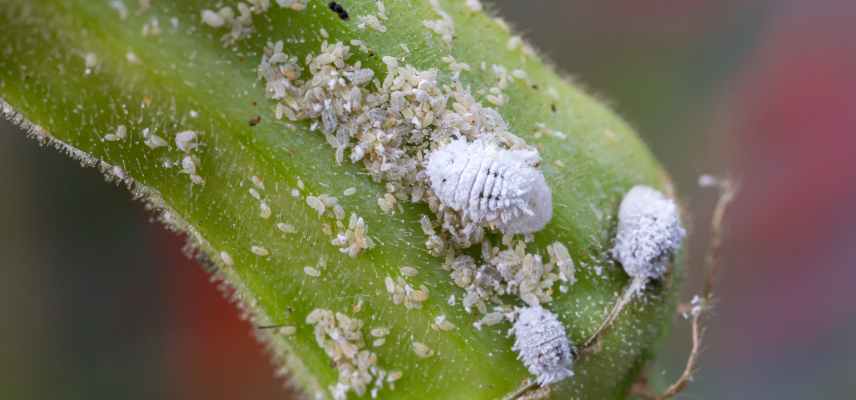
Their name gives a clue about their appearance: mealybugs are covered with a white, cottony, or even granular substance. They are visible to the naked eye and settle, like aphids, along the stems, underneath or at the base of the leaves.
As with aphids, they produce honeydew which promotes the appearance of sooty mould.
For more information, discover our article: Mealybug: identification and treatment
Red spider mites
They aren’t really spiders, but mites. Their name refers to the fine webs resembling spider silk that cover the leaves and stems of the plant. This is in fact the first symptom of their presence, their small size making them very difficult to observe with the naked eye. Then, you will notice discolouration of the foliage, which mottles yellow and brown.
To learn more, discover our article: “Red spider mite: identification and treatment”
Prevention against Peperomia pests
As a preventive measure, the first step to take is regular observation of the Peperomia. This helps to spot the presence of pests at the earliest stage, before an infestation.
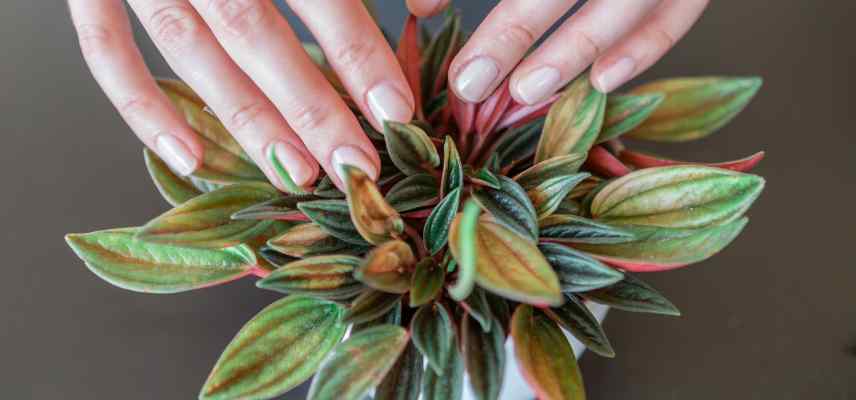
Then, a plant grown in good conditions will naturally be more resistant to pest attacks. Native to tropical and subtropical regions, Peperomia appreciates never being exposed to temperatures below 10°C. Also avoid any abrupt temperature changes by offering it a location protected from drafts, but also away from strong heat sources (ovens, radiators, etc.). A stable environment, between 18 and 24 °C, is ideal for its healthy development.
Because of its origins, it also enjoys humid environments. For this, feel free to place clay pebbles in its saucer or cachepot and to group plants together to create a favourable microclimate.
In terms of exposure, plan for a well-lit spot, but sheltered from direct sun rays, which could burn the foliage. An east- or west-facing exposure would be ideal.
Also consider moderating nitrogen fertiliser inputs (which promote leaf growth): these can make the plant more attractive to pests.
Natural solutions in case of pest attacks
If it is too late and pests have already colonised your Peperomia, start by rinsing the plant by wetting its foliage under the shower or in the bath. This helps to dislodge some of the pests. Then simply allow the plant to drain before putting it back in its place.
If the pests are still present, you can make a natural insecticide based on black soap, to be used neat. For this, mix 1 to 2 tablespoons of black soap in 1 litre of lukewarm water. Mix well and allow to cool. Pour the mixture into a spray bottle and spray onto the foliage, taking care not to forget the undersides and the stems. If needed, repeat the operation after 7 days.
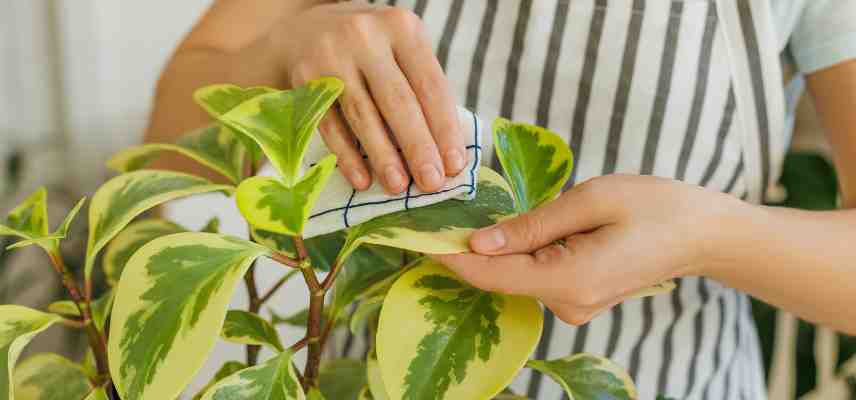
To remove mealybugs, you can clean the affected leaves with a cloth dampened with 70% alcohol.
Cryptogamic Diseases of Peperomia
Peperomia is also susceptible to certain cryptogamic or fungal diseases, caused by fungi. These are the most common diseases, both indoors and outdoors. It is generally the combination of heat and excess moisture that promotes their development.
Root rot
It is caused by an excess of water, which can come from inappropriate watering or soil that is too heavy. Unfortunately, it is often discovered late, when the plant really begins to suffer: general softening, loss of leaves and a musty odour emanating from the soil.
To stand any chance of keeping your Peperomia alive, it will be essential to repot it into fresh, suitable potting compost.
Leaf spots
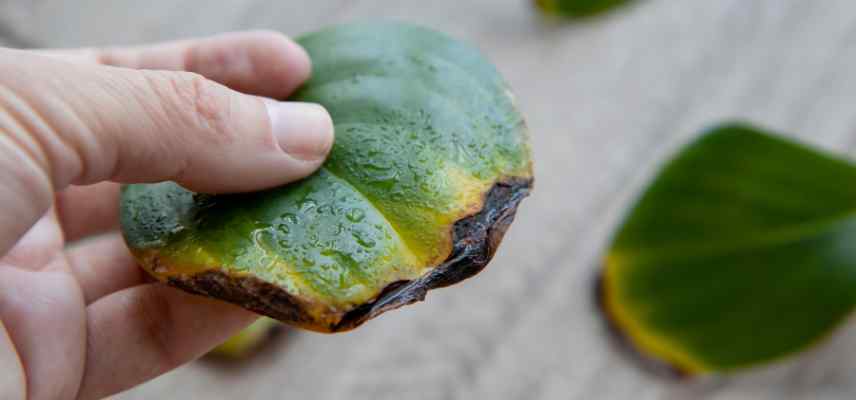
This disease leads to the appearance of brown or black spots on the foliage. Then the foliage drops and Peperomia growth slows.
Grey mould (Botrytis)
It is identifiable by greyish deposits that appear on the foliage, stems or flowers of Peperomia. The disease can spread quickly to the entire plant and cause its decline.
Prevention against cryptogamic diseases of Peperomia
There is really no effective curative treatment once a fungal disease is well established. Prevention is therefore essential.
As with parasite management, disease management starts with good cultivation conditions. First, plant your Peperomia in a well-draining substrate, which allows the water from watering to drain away without stagnating in the roots. Since excess humidity is responsible for their development, ensure you manage watering carefully. Wait until the soil surface is dry to the top few centimetres before watering the plant. If you tend to be heavy-handed, opt for terracotta pots, which allow water to evaporate more quickly than in plastic containers. Remember to empty the saucer or cachepot to remove excess watering, about 30 minutes afterwards (you can simply set an alarm on your phone to remind you). Another option: basin watering—the plant is immersed in a container of water or in a sink, so that it drinks from the bottom. The soil thus absorbs only the amount of water it needs. Then simply allow the pot to drain for a few minutes before placing it back. Finally, avoid watering the foliage or misting it.
Remember to remove plant debris, so that they do not stagnate at the base of the plant. Also prune damaged or yellowing leaves as they appear.
Avoid crowding plants together to promote natural aeration, helping to prevent excess humidity.
Finally, do not place your Peperomia in conditions subject to temperatures below -10°C : this increases the risk of root rot.
Natural remedies in case of diseases
If diseases are already present, promptly cut away the affected parts down to healthy tissue. Do not leave them at the base of the plant (compost them or take them to the local tip). For all pruning, use cutting tools pre-disinfected with alcohol at 70°C. This helps limit the risk of contagion between plants.
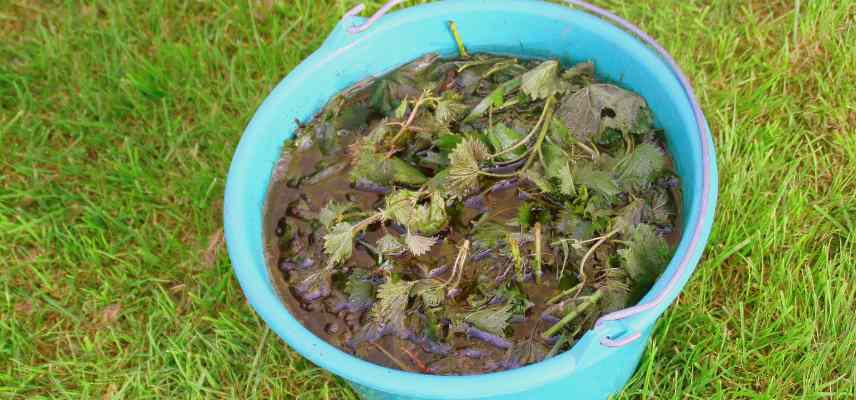
Finally, you can also try nettle manure sprays, reputed for their antifungal properties.
- Subscribe!
- Contents
Comments