


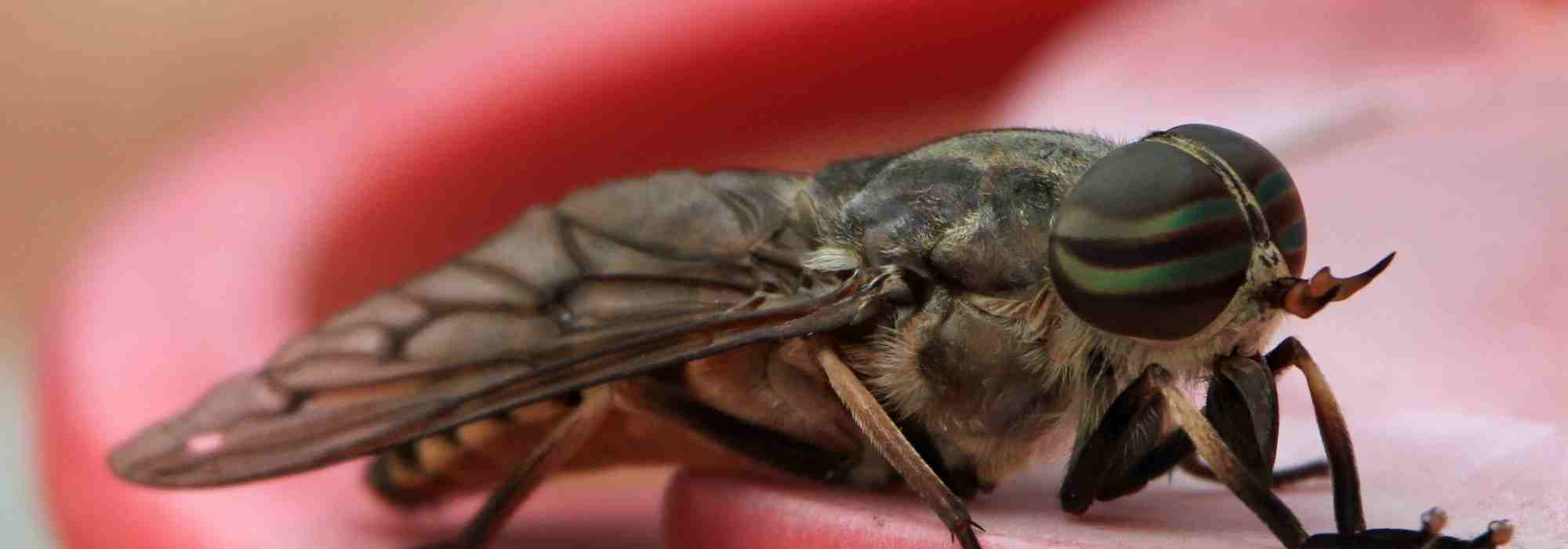
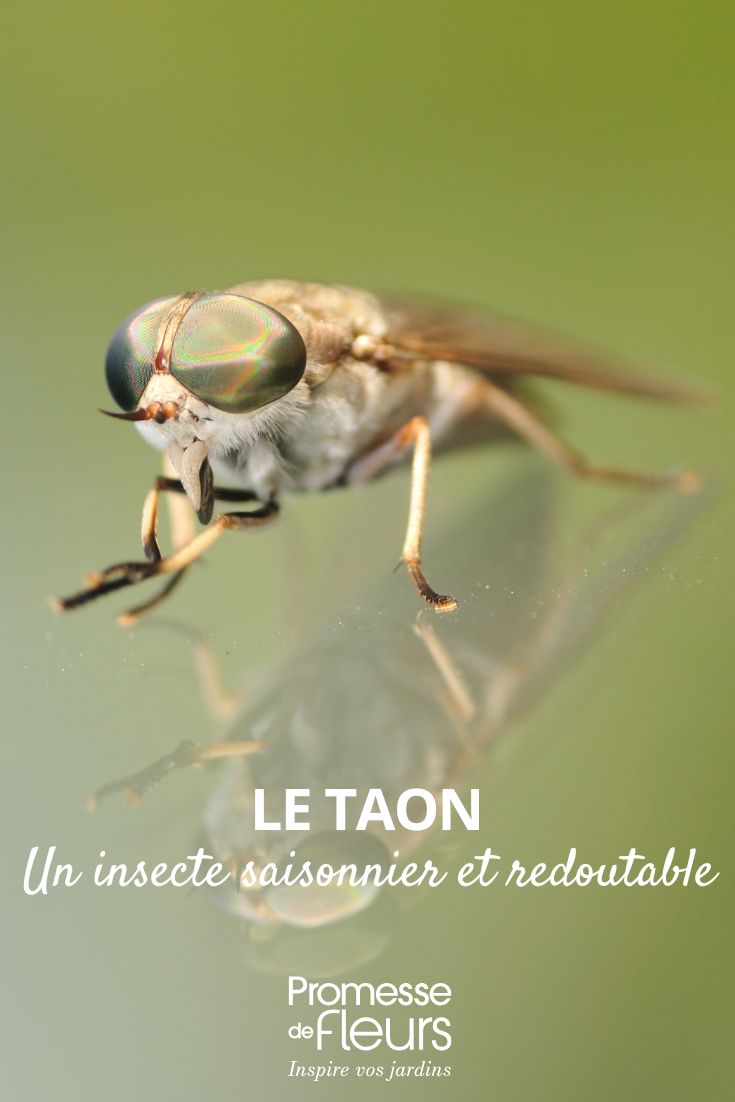
The horse fly, a seasonal and formidable insect
All you need to know about horse flies: species, life cycle, dangers and prevention methods
Contents
Anyone who’s ever been bitten by a horsefly won’t forget it! This bite — or rather sting — is particularly painful, even allergenic, and a source of redness and swelling. The horsefly, this formidable dipteran, is one of those seasonal insects that gardeners dread as much as they observe with curiosity. Found in wetlands and rural areas, it spares neither people nor animals, and bites can make outdoor work difficult in midsummer.
Discover all you need to know about the horsefly, from its life cycle to the different species found in the territory, so you can recognise it and learn how to protect yourself.

The horse fly, a dipteran with a seasonal life cycle
The horse fly belongs to the order Diptera, like flies, mosquitoes or the hoverflies. It is part of the family Tabanidae, which groups several hundred species worldwide. These insects, which could be mistaken for large, flat flies, have a massive, robust and stocky body, large colourful, faceted eyes, and well-developed wings.
Only the female bites
The male is exclusively florivorous as it feeds on the nectar of flowers and sap. By contrast, the female is hematophagous: to ensure the development of her eggs, she needs proteins, which she finds in the blood of cattle, horses, and also humans. While mosquitoes bite, the female horsefly “bites”. Indeed, she is equipped with sharp mandibles to cut a small patch of flesh, causing immediate bleeding. As she injects an anticoagulant, she has time to lap up the blood that flows thanks to her sponge-like mouthparts. This bite is particularly painful, often a source of stress in cattle, horses and deer. Horseflies are regarded as ectoparasites.
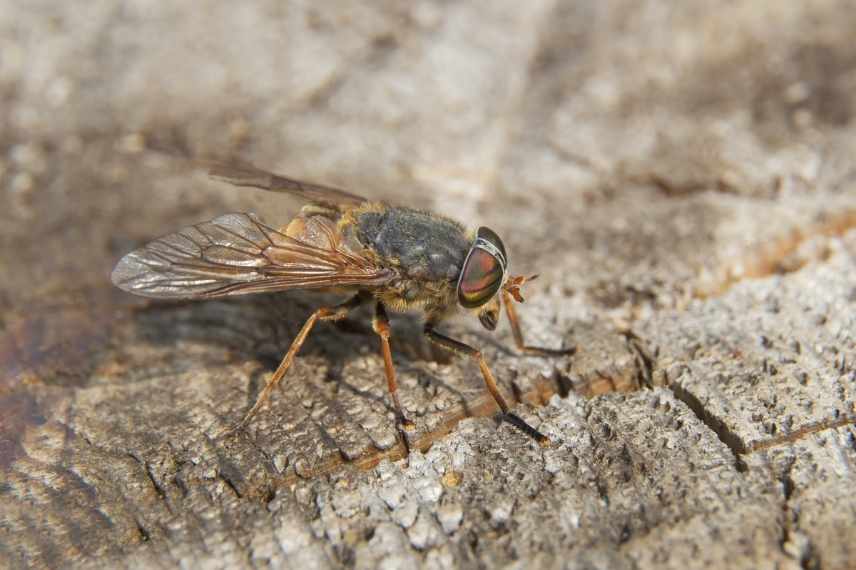
Horseflies resemble large, stocky, flat flies, with large colourful eyes
More prevalent in summer
Horse flies are seen mainly from May to September, with a peak of activity in July–August, a period when warmth and humidity favour their development. Their presence is particularly marked near wooded areas, ponds, wet meadows, the edges of pastures, farms and equestrian centres. Their life cycle is closely linked to these environments, where they find both hosts for feeding and suitable oviposition sites.
The life cycle of horseflies, complex and hidden
As with most insects, the life cycle of the horse fly unfolds in four major stages: egg, larva, pupa and adult.
In autumn, the mated female lays between 100 and 1000 eggs per cluster on low vegetation located near damp or waterlogged soil, in the immediate vicinity of a pond, ditch or flooded soil, as the larvae require a high level of moisture to survive.
After a few days, the eggs hatch and give rise to cylindrical, slender, mobile larvae with powerful mouthparts. These larvae, almost aquatic, are detritivores, or carnivorous and predatory: they feed on decaying plant matter, rotten wood, but also worms, small insects and sometimes even other horse fly larvae. Their development lasts several months, sometimes more than a year depending on the species and conditions. They then enter the pupal stage, which occurs in soil or among damp plant debris. The emergence of the adult usually takes place in spring or early summer, around May.
The most common species of horseflies in our countryside
In France, several species of horseflies coexist, each with their ecological preferences and morphological characteristics. Three genera are particularly common: Tabanus, Haematopota and Chrysops.
- The bovine horsefly (Tabanus bovinus) is one of the most widespread species. It measures up to 2.5 cm in length, with a light brown to grey body and transparent wings. It is a typical species of pastures and damp meadows.
- The horsefly, or rain horsefly (Haematopota pluvialis), is smaller, around 1 cm, but dreaded for its speed. It is recognisable by its marbled wings and by its very colourfully iridescent eyes. Very active in hot and stormy weather, it often attacks bare legs and arms.
- The golden horsefly or autumn horsefly (Chrysops relictus), is easily identifiable thanks to its green- and violet-patterned eyes and its dark wings marked with light patches. It frequents damp woodland, clearings and forest edges.
- The small blinded horsefly (Chrysops caecutens), is of modest size (8 to 11 mm), black in colour, with green or red eyes depending on orientation. It feeds more readily on pollen than on blood.
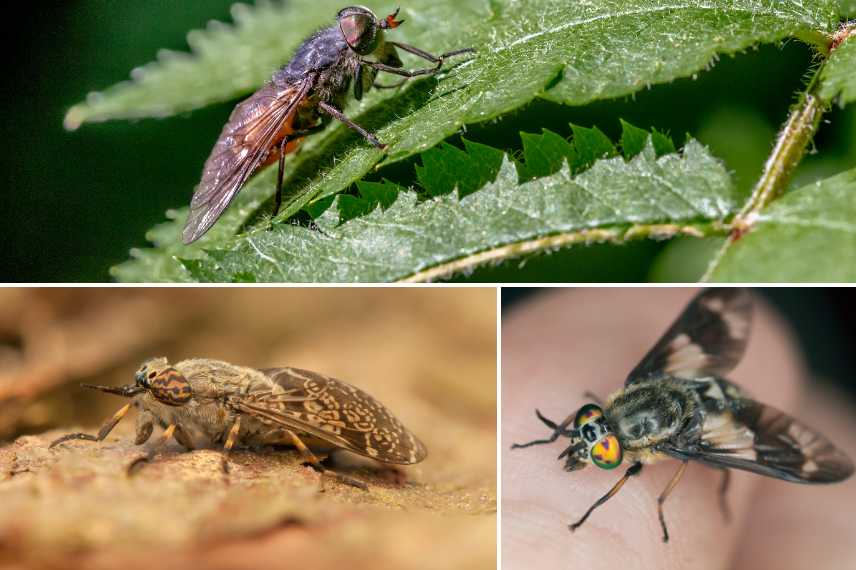
In clockwise order, the bovine horsefly, the golden horsefly and the rain horsefly
These three genera account for most human interactions with horseflies in gardening contexts or during outdoor activities. Their behaviour is influenced by the weather: they become particularly aggressive in the late afternoon or just before a thunderstorm.
What are the risks of a cicada's bite?
The horsefly bites the skin more than it stings. But the result is the same. This bite is particularly painful and those who have experienced it will remember it. Beyond the pain, this bite often causes a sharp burning sensation, followed by local swelling, very marked redness and sometimes persistent itching. In some sensitive individuals, it can trigger a more intense allergic reaction, up to swelling, hives or fever.
Although horseflies are not regarded as major vectors of disease in France, cases of mechanical transmission of bacteria or parasites have been observed, particularly in animals. The risk of transmission of anthrax (charbon disease), pasteurellosis and tularemia is rare but exists, especially in animals. In humans, the risks mainly concern secondary bacterial infections due to scratching or poor wound hygiene. In case of a strong reaction, it is advisable to consult a doctor who may prescribe antibiotics.
How can you reduce horseflies in the garden?
For gardeners, the question isn’t so much about eradicating them as keeping them at bay or safeguarding against their attacks.
Prevention and control measures in the garden
The most attractive areas for horseflies are gardens near standing water, a pond, or a damp meadow. If these features are essential to the ecological balance of the garden, it may be useful to prevent them from becoming larval breeding grounds. Maintaining good aeration of damp areas, eliminating permanent puddles, and regular maintenance of banks, natural ponds and basins helps limit breeding sites. Also avoid standing water in plant pot saucers, open rainwater harvesters, and animal water bowls, both for horseflies and mosquitoes. If you live near a cattle farm or near an equestrian centre, the presence of horseflies will be even more prevalent.
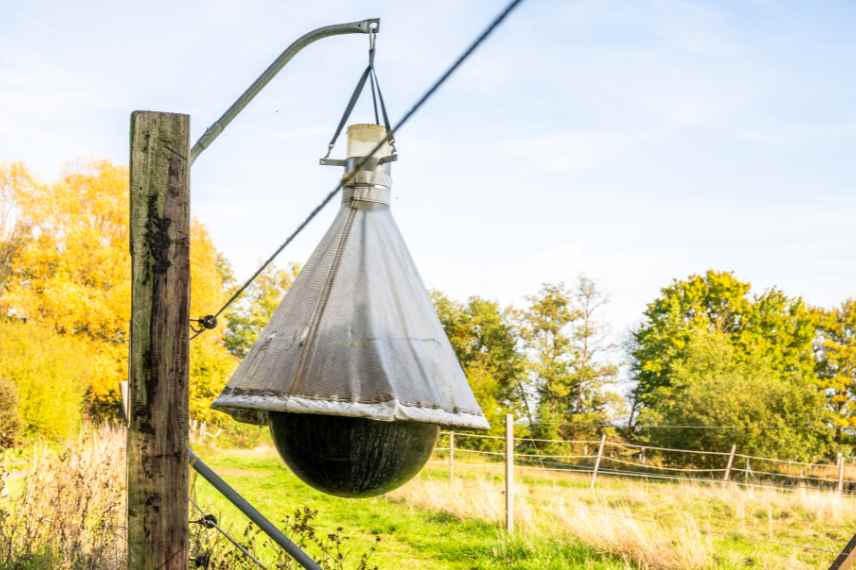
Although expensive, horsefly traps are very effective, especially if you live near a farm or an equestrian centre
Other useful precautions
Clothing also plays a crucial role. Horseflies are attracted by dark colours and strong contrasts. It is therefore advisable to wear long, light-coloured and loose-fitting clothing when working in high-risk areas. Some gardeners also use head nets, similar to those used by beekeepers, to protect themselves during periods of high activity.
Horseflies also seem drawn to body odours from sweat. Essential oils of citronella, rose geranium, lemon eucalyptus or lavandin are relatively effective when diffused on clothing or applied topically in diluted form. They mask body odour and mislead the horseflies, but their effectiveness is time-limited and heavily depends on weather conditions. Also avoid strong perfumes and sweet cosmetic products.
However, even though horseflies remain a nuisance, their presence also reflects the ecological richness of a natural garden. Their life cycle depends on numerous natural predators and regulators, notably insectivorous birds, dragonflies, bats, or some amphibians.
- Subscribe!
- Contents
Comments