
Canna indica Empire - Indian shot
Canna indica Empire - Indian shot
Canna indica Empire
Indian shot, Canna, Cann Lily, African Arrowroot, Edible Canna, Purple Arrowroot, Sierra Leone Arrowroot
Back-to-school special offer!
Get €10 off for every €50 you spend! And get up to €40 off on a single order.
How does it work?
1. Shop your favourites
Add your favourite plants to your basket. For every €50 you spend (excluding delivery charges, store credit and the plastic-free option), you’ll receive a €10 voucher.
€50 spent = €10 voucher
€100 spent = €20 voucher
€150 spent = €30 voucher
€200 spent = €40 voucher
2. Place your order
Once your basket reaches one of the spending thresholds, place your order. You can even choose your delivery date!
3. Receive your voucher
As soon as your order has been shipped, you’ll receive an email containing your personal voucher code and its value.
4. Use it on your next order
Your voucher is valid for 90 days from the date you receive it. It can be used once only, on a new order worth at least the value of the voucher, excluding delivery charges.
Please note: Vouchers can be combined with other offers, but cannot be split or refunded.
Why not try an alternative variety in stock?
View all →
Available in 1 sizes

Available in 2 sizes
This plant carries a 6 months recovery warranty
More information
We guarantee the quality of our plants for a full growing cycle, and will replace at our expense any plant that fails to recover under normal climatic and planting conditions.
Would this plant suit my garden?
Set up your Plantfit profile →
Description
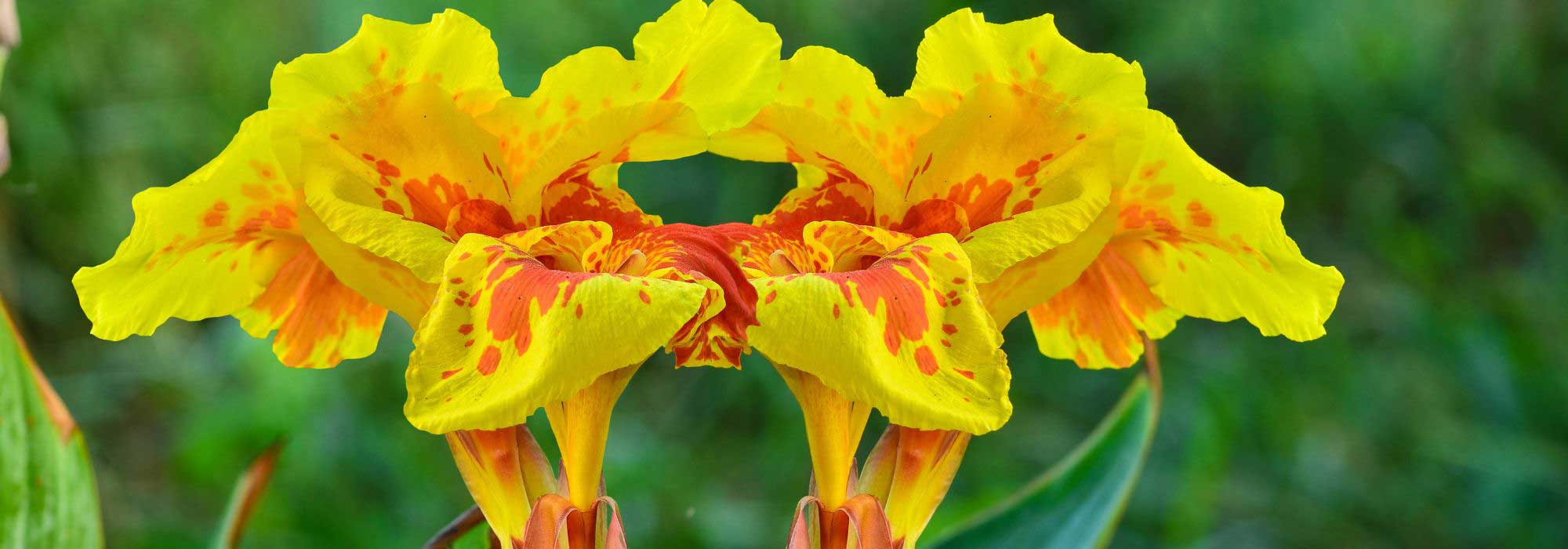
Canna ‘Empire’ is a compact Indian shot plant with large, very bright carmine pink flowers. This plant adds a touch of exoticism to all borders and sunny terraces. Its moderate size makes it perfectly suited for cultivation in pots. Its flowering is almost continuous from summer to autumn if care is taken to remove spent flowers.
Belonging to the Cannaceae family, Canna ‘Empire’ is part of the horticultural hybrids grouped under the name Canna × generalis, resulting from cross-breeding between American species such as Canna indica and C. glauca. These ornamental plants are tender rhizomatous perennials, grown in our climate as summer bulbs and renowned for their spectacular flowering.
The plant forms an upright clump, 60 to 80 cm tall and about 40 cm wide. Its thick, sturdy stems bear large, ovate, medium green, 25 to 40 cm long leaves, with a prominent central vein. The upright inflorescences bear several large flowers, with slightly ruffled, rich carmine pink "petals" with a slightly lighter throat. They repeat from June-July until October in a warm position. The foliage is deciduous: the aerial growth disappears in the cold, while the fleshy rhizomes go dormant. These will regrow the following spring if they have not frozen or after overwintering in a dry state.
In the garden, Canna ‘Empire’ is used in repeated colour accents to add depth to a border. It can be used in front of the soft spikes of a Pennisetum alopecuroides ‘Black Beauty’ mixed with the bright pink corollas of Dahlia Happy Single Juliet. Its carmine pink colouring pairs particularly well with dark red daylilies such as 'Pardon Me' or the bluish-purple spikes of meadow sage 'Lyrical Blues'. In large containers, it can be combined with a Colocasia or Alocasia with dark foliage to enhance the tropical effect.

Plant habit
Flowering
Foliage
Botanical data
Canna
indica
Empire
Cannaceae
Indian shot, Canna, Cann Lily, African Arrowroot, Edible Canna, Purple Arrowroot, Sierra Leone Arrowroot
Cultivar or hybrid
Planting and care
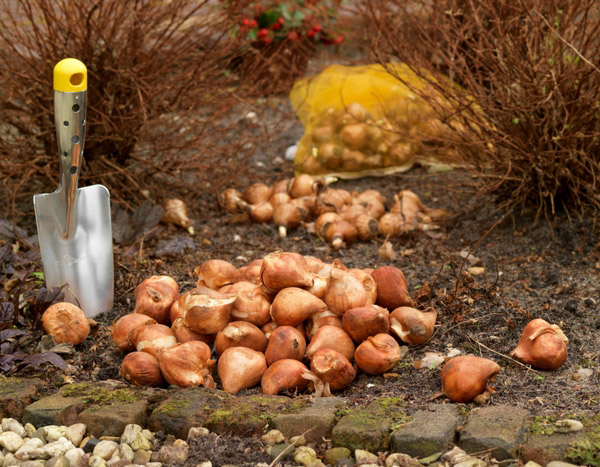
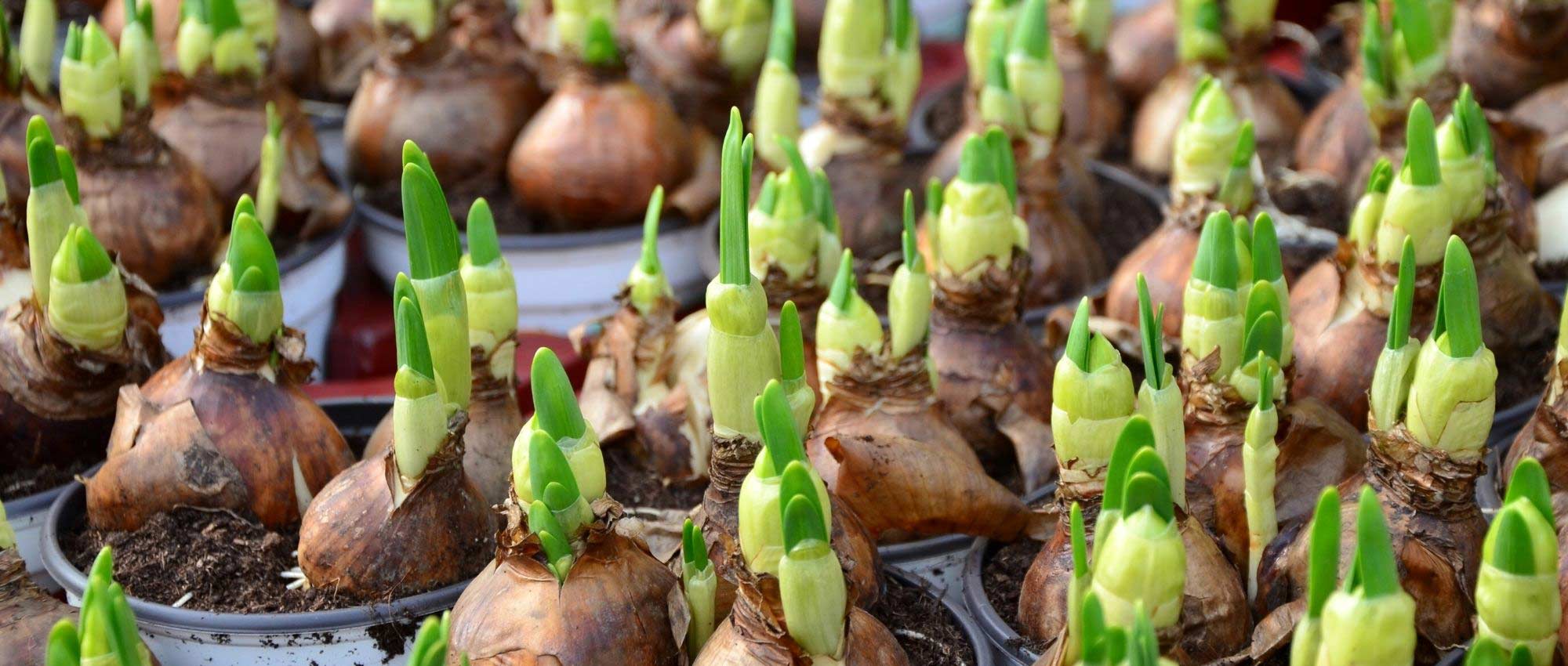
Dig up the crowns of the Canna Empire at the time of the first frosts or just before. Important: leave some soil around the roots, then store in a frost-free place, even without light. Divide if necessary, only in March. Replant the divisions in pots, in a bright and heated room to start them off, then plant them in the garden when frosts are no longer expected. For a few years now, given the scale of the task, we have decided to leave the plants in the garden in the ground all year round. At the first white frosts, we cut back the foliage to ground level and then cover the crowns with a layer of 15-20 cm of straw or dead leaves. This mulching can be practised in all regions; the important thing is that the frost must never reach the rhizomes, which lie just below the soil surface.
We have found that this method gives better results in our garden: the crowns are more robust, the plants larger, and the flowering earlier.
Canna is capable of enduring brief frosts of around -5°C in well-drained and fairly dry soil and under a protective mulch.
Planting period
Intended location
Care
Planting & care advice
-
-

-

-
-

-

-
-

This item has not been reviewed yet - be the first to leave a review about it.
Recently viewed products
Haven't found what you were looking for?
Hardiness is the lowest winter temperature a plant can endure without suffering serious damage or even dying. However, hardiness is affected by location (a sheltered area, such as a patio), protection (winter cover) and soil type (hardiness is improved by well-drained soil).

The flowering period indicated on our website applies to countries and regions located in USDA zone 8 (France, the United Kingdom, Ireland, the Netherlands, etc.)
It will vary according to where you live:- In zones 9 to 10 (Italy, Spain, Greece, etc.), flowering will occur about 2 to 4 weeks earlier.
- In zones 6 to 7 (Germany, Poland, Slovenia, and lower mountainous regions), flowering will be delayed by 2 to 3 weeks.
- In zone 5 (Central Europe, Scandinavia), blooming will be delayed by 3 to 5 weeks.
In temperate climates, pruning of spring-flowering shrubs (forsythia, spireas, etc.) should be done just after flowering.
Pruning of summer-flowering shrubs (Indian Lilac, Perovskia, etc.) can be done in winter or spring.
In cold regions as well as with frost-sensitive plants, avoid pruning too early when severe frosts may still occur.
The planting period indicated on our website applies to countries and regions located in USDA zone 8 (France, United Kingdom, Ireland, Netherlands).
It will vary according to where you live:
- In Mediterranean zones (Marseille, Madrid, Milan, etc.), autumn and winter are the best planting periods.
- In continental zones (Strasbourg, Munich, Vienna, etc.), delay planting by 2 to 3 weeks in spring and bring it forward by 2 to 4 weeks in autumn.
- In mountainous regions (the Alps, Pyrenees, Carpathians, etc.), it is best to plant in late spring (May-June) or late summer (August-September).
The harvesting period indicated on our website applies to countries and regions in USDA zone 8 (France, England, Ireland, the Netherlands).
In colder areas (Scandinavia, Poland, Austria...) fruit and vegetable harvests are likely to be delayed by 3-4 weeks.
In warmer areas (Italy, Spain, Greece, etc.), harvesting will probably take place earlier, depending on weather conditions.
The sowing periods indicated on our website apply to countries and regions within USDA Zone 8 (France, UK, Ireland, Netherlands).
In colder areas (Scandinavia, Poland, Austria...), delay any outdoor sowing by 3-4 weeks, or sow under glass.
In warmer climes (Italy, Spain, Greece, etc.), bring outdoor sowing forward by a few weeks.
Shipping country and language
Your country of residence may be:
Your country of residence is:
For a better user experience on our website, you can select:
Your shipping country:
-
 Austria
-
 Belgium
-
 Bosnia & Herzegovina
-
 Bulgaria
-
 Croatia
-
 Cyprus
-
 Czechia
-
 Denmark
-
 Estonia
-
 Finland
-
 France
-
 Germany
-
 Greece
-
 Hungary
-
 Iceland
-
 Ireland
-
 Italy
Italy
-
 Latvia
-
 Liechtenstein
-
 Lithuania
-
 Luxembourg
-
 Malta
Malta
-
 Netherlands
-
 Poland
-
 Portugal
-
 Romania
-
 Serbia
-
 Slovakia
-
 Slovenia
-
 Spain
Spain
-
 Sweden
-
 Switzerland
Language:
-
French
-
 English
-
Spanish
-
Italian
-
German
-
Portuguese
-
Dutch
-
Finnish
My Account
Hello
My wish lists
My cart
Log in / Register
Existing customer?
This form is protected by reCAPTCHA - the Google Privacy Policy and Terms of Service apply.
New customer?
Create an account to track your orders, access our customer service and, if you wish, make the most of our upcoming offers.