



How to move your plants without damaging them?
Propagation, preparation, transport and care of your plants when moving
Contents
Moving involves a lot of preparation, organisation and often a bit of stress. Properly packing boxes with crockery, clothes, toys and decorations… but also plants. Whether you have a garden or indoor plants to move, mishaps can happen quickly: a broken pot, a damaged plant, irrigation water spilt… So many situations to avoid to keep your plants in good health.
Here you’ll find our tips for handling and transporting your plants, efficiently and stress-free.


Preparations before moving plants
If you are fortunate enough to plan ahead by several weeks, or even several months, before your move, you will already be able to start some of the preparations for your plants.
Sorting
That is the first thing to do. The idea is to sort the plants you will keep, taking into account several factors.
- Organisation of your move. Will you be able to make several trips, or do you have a van large enough to transport all your belongings? Will the move be by air / container? Will your belongings need to be placed in a storage unit for several days? If you hire a professional removals company, will they agree to look after the plants (bearing in mind that damage insurance often does not cover plants)? If you are moving to a new country, can the plants be imported there?
- The new space you will move into. Will it be smaller or larger? What other cultivation constraints will there be (climate, light exposure, soil type, etc.)?
- Plant health. Ideally, keep only healthy plants that won’t risk contaminating their fellow plants during the move when they are all gathered. In addition, plants already weakened by disease or pests are likely to withstand the move even less well. Also consider the plants’ sensitivity to movement, so as to keep only those likely to tolerate the transport.
You can therefore plan which plants to keep and which to part with. You will then have several options:
- give them to friends or to charities;
- leave them on site for your successor;
- sell them, if appropriate.
The transplantation of garden plants
If you have a garden and wish to relocate certain plants, it’s possible. However, there are some factors you will need to consider.
- If you are a tenant, you must leave the garden in a state similar to how it was when you arrived. If a plant was already there before your arrival, it should therefore still be there when you leave. If you plan to remove a plant you have grown during your tenancy, also consider the aesthetic damage this may cause (holes of varying sizes), so you can plan to leave a clean space. Normally you would have needed to obtain the landlord’s consent in advance to plant a tree or shrub, or to create a vegetable plot or a bed, depending on the lease.
- If you are a homeowner and you are selling your house, most sale agreements state that the seller commits to leaving trees, shrubs, plants and flowers in the ground for a private garden. You will need therefore to either remove the plants concerned before buyers’ viewings, or have in the pre-contract agreement which plants you will retrieve.
- Transplanting is not possible for certain plants, which do not tolerate being moved once established. They often have a deep root system, which makes them difficult to uproot without damaging them. The operation would therefore risk causing them to wither. This is particularly the case for Mediterranean shrubs (lavender, rosemary, thyme…), an acanthus, peonies, hellebores or daphnes).
Whether for trees, shrubs, roses or perennials, transplantation is ideally carried out between the start of autumn and the start of spring (outside frost). This indeed corresponds to the period when most plants are in dormancy. If you already have your new home, you can move the plants directly to your new garden. If not, you will need to keep them in pots. So plan appropriately sized containers, high-quality potting compost and drainage materials (clay balls, gravel, broken terracotta…), and ensure regular watering of the transplanted plants while they can be replanted in the ground. You can also choose to wrap the root ball in a large hessian sack or in thick plastic if the plants are intended to be planted back into the ground quickly: the aim is to prevent the roots from drying out.
In addition, feel free to read our article “Transplanting trees, shrubs, roses and perennials: when and how?”.
Propagation
If you can’t take several plants with you (too large, planted in the ground…), but you would still like to enjoy them in your new home, you can easily propagate them by cuttings. It is a multiplication method that yields perfect clones of the mother plants, inheriting all their characteristics. It is fairly easy to master and works for many plants: cacti and succulents, shrubs, houseplants, climbing plants, perennials, etc. Don’t hesitate to take several cuttings of the same plant to have backup options in case of failure.
If needed, also read our article “Propagation by cuttings: everything you need to know about the different techniques and our advice”.
You can also take slips from plants that have produced offsets or proceed with division.
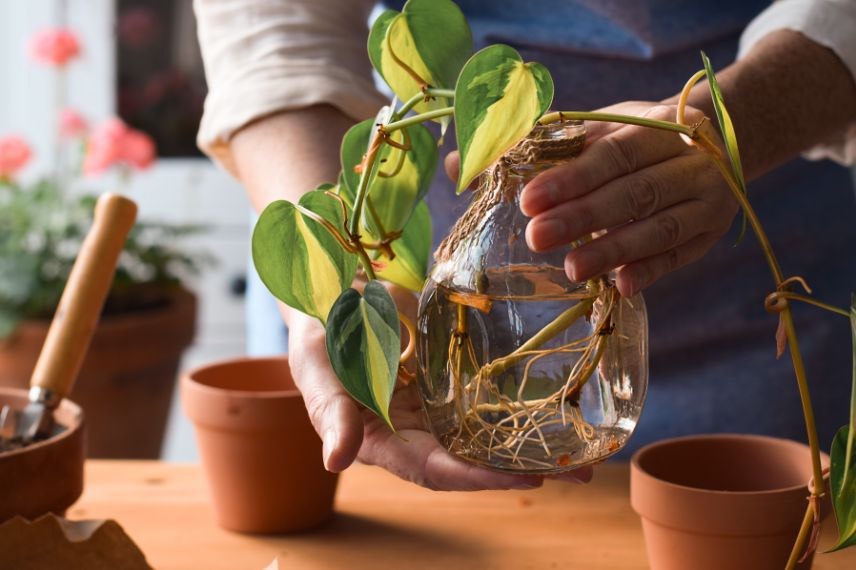
Propagate oversized plants by cuttings so they can regrow later
Read also
How to repot a houseplant?Protecting plants: a few precautions to take
A few days before the move, you can start preparing and packing your plants to protect them for the relocation.
Care to be given
Start with a light pruning, especially for the larger specimens, to make them easier to handle. Remember to use sharp, sanitised cutting tools between plant transfers. This helps minimise the spread of diseases. Remove damaged shoots, excessively long stems, and faded flowers.
Water all your plants generously in advance, but never on the day of the move. This would weigh the soil down (and thus the plants) and also increase the risk of soil spillages. Plan to do this at least 3 to 4 days beforehand. Empty all saucers thoroughly before moving them. For the same reason, potted plants left outdoors should be moved to keep them out of the rain.
Protecting pots
To handle the most fragile pots (terracotta, ceramic), which can also be fairly heavy, you have two options:
- re-pot the plant into an appropriate plastic container;
- protect the pot with bubble wrap, kraft paper, cardboard, recycled foam, old newspapers, an unused sheet, etc.
Place the smaller pots in crates or boxes, ensuring they are well secured so they do not knock against one another.
The larger pots will benefit from being placed on wheeled supports, to make moving easier.
If you worry that some pots might topple and soil could spill onto your belongings during the move, you can place a sheet of plastic or cardboard over the top of the pot, cut to leave the leafy parts of the plant free to pass.
Similarly, if you think some containers may come apart during transport, don’t hesitate to strap them.
Protection of the aerial parts
The foliage and aerial parts in general can be tied at the stems to take up less space and reduce the risk of breakage. It is also possible to install supports to hold them more securely. The more fragile plants can also be protected with the help of winter shields.
If you need to move thorny plants, you can cover them during transport with a thick towel or newspaper to avoid injuring yourself.
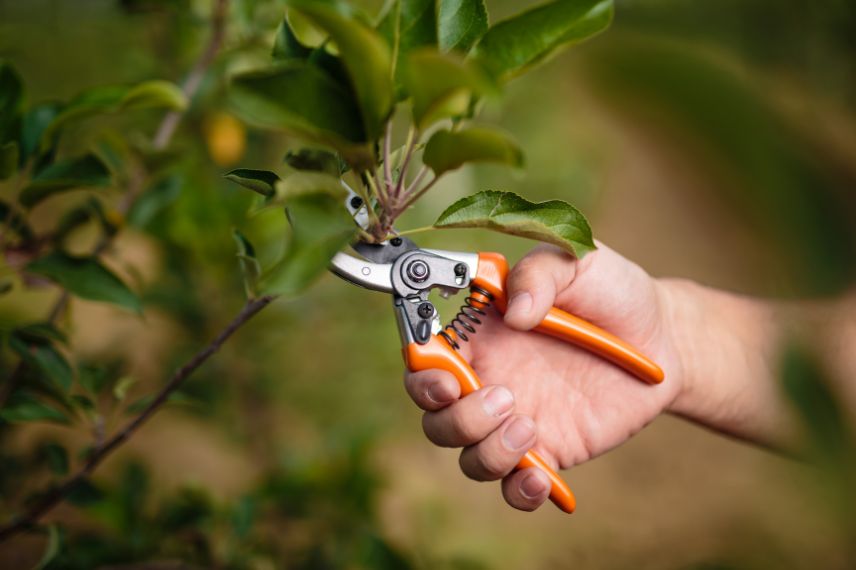
Plan to prune outdoor plants before moving
Transport of plants during a move
Do not stint on protection to cushion your plants securely, keep them upright and prevent them from toppling or getting damaged. Use cardboard boxes, magazines or even egg boxes.
For logistical reasons, it is best to place the plants last in the lorry. This helps prevent them from being crushed by the rest of the contents as loading progresses. Additionally, they can be unloaded first.

Post-move care for plants
Drafts, temperature variations, darkness, changes in humidity… as many upheavals as your plants will experience during the move. To help them after this ordeal, unload them from the truck as quickly as possible and remove the protective coverings. Position them in a bright, temperate location. If the potting media are dry, water them. You can also mist the foliage of plants that enjoy humidity, while waiting to find each plant a perfectly suited place. Optionally provide a light fertiliser to support the recovery.
Outdoor plants, for their part, should be transplanted as soon as possible (outside periods of frost or heatwaves).
In the days following the move, regularly inspect your plants to quickly spot any signs of a potential problem: presence of parasitic pests, yellowing, leaf drop, etc. Act quickly by isolating the affected plant.
Wishing you good luck with your move!
- Subscribe!
- Contents

Comments