


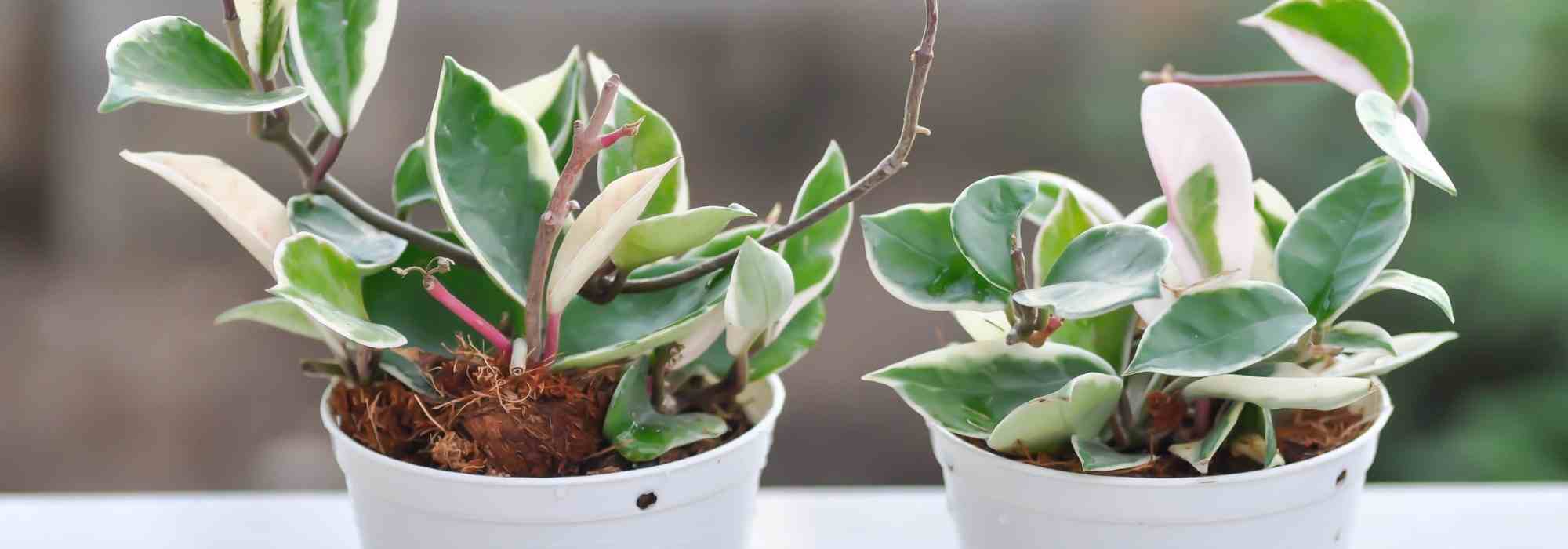
Hoya: What are the most common diseases and parasitic pests?
Identify, treat and prevent wax plant diseases and pests
Contents
An ornamental plant with undeniable aesthetic qualities, the Hoya, nicknamed “wax plant” or “porcelain flower,” captivates indoor plant enthusiasts with the delicacy of its star-shaped inflorescences, the sheen of its foliage and its vigorous growth indoors. Behind this apparent robustness lies, however, a certain vulnerability to pathogenous agents and parasites, especially when growing conditions are not optimal.
Discover the main diseases and pests of Hoya, but also the treatments and preventive measures to prevent their appearance.
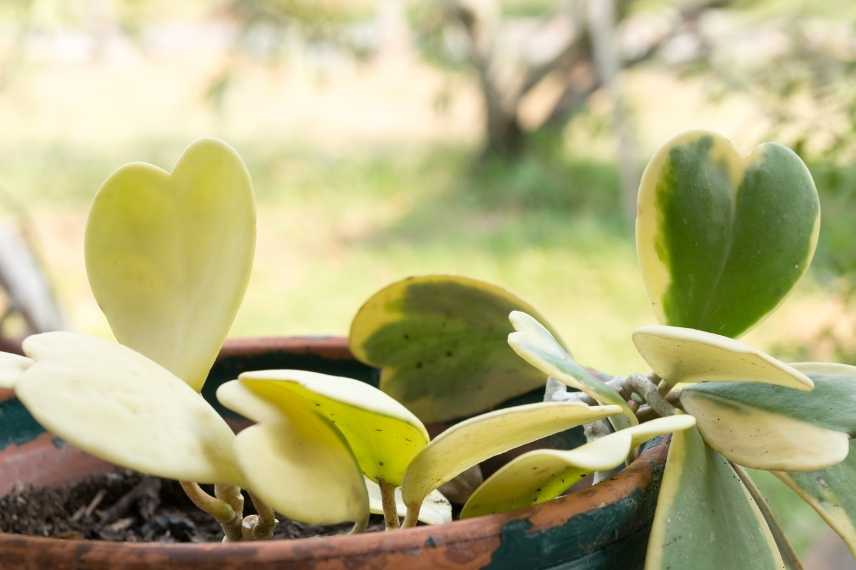
The Hoya kerrii ‘Variegata’ and its pretty heart-shaped leaves

Common diseases of Hoya
Although Hoya is fairly hardy, it can be afflicted by diseases, often due to poor cultivation conditions. It is therefore essential to identify the earliest symptoms to act quickly and preserve the good health of your Hoya, a very decorative plant thanks to its leathery, thick foliage, its star-shaped, waxy flowers and stems that allow it to trail or climb.
Root rot
It is a cryptogamic disease, often caused by Phytophthora, and due to excess water or poorly draining substrate. It is therefore a disease that essentially stems from poor cultivation conditions. The roots become necrotic.
Symptoms
Leaves begin to yellow, leaves wilt and the stems appear to soften. The roots become necrotic, brown and soft. An unpleasant odour may emanate from the substrate.
What to do?
- Unpot the plant to inspect the roots. If they are necrotic, cut away the rotten portions.
- Repot the plant into fresh, light, well-aerated substrate.
- Apply a copper-based fungicide such as Bordeaux mixture.
Prevention
- Control watering: allow the substrate to dry partially between two waterings.
- Choose a pot with good drainage and a light, well-drained, nutrient-rich substrate.
Powdery mildew
Another disease linked to excess humidity quite frequently affects Hoyas. Powdery mildew is a very common disease caused by the fungus Podosphaera spp. Powdery mildew is generally caused by high humidity and poor air circulation.
Symptoms
A white, floury deposit settles on the foliar surfaces, particularly on young leaves and stems. The foliage becomes deformed and may drop.
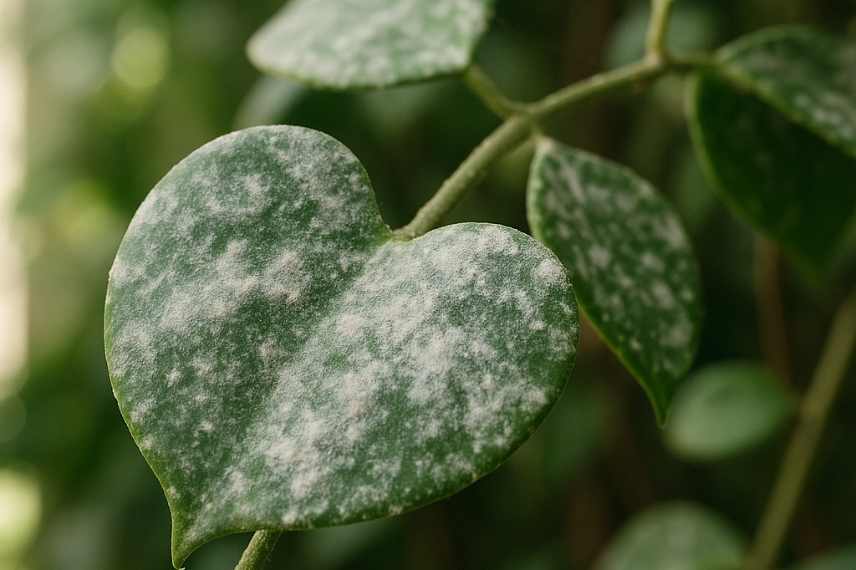
Hoya leaves affected by powdery mildew (AI-generated image)
What to do?
- Remove the infected parts.
- Use a powdery mildew–specific fungicide based on micronised sulfur, potassium bicarbonate or nettle manure.
Preventive measures
- Maintain moderate humidity.
- Lightly mist the foliage if the ambient air is too dry, but avoid condensation on the leaves.
- Ensure good ventilation around the plants.
Botrytis
Also known as grey mould, this disease is caused by the fungus of the genus Botrytis that develops in very damp conditions or when air circulation is poor.
Symptoms
Blurry brown-grey spots appear on the foliage, accompanied by a grey-blue mould on the flowers and the decaying tissues.
What to do?
- Remove the affected regions and discard them.
- Spraying a copper-based fungicide such as Bordeaux mixture is recommended.
Preventive measures
- Carefully monitor the substrate; it should not be too damp.
- Remove dead or damaged leaves promptly.
- Keep pots clean.
- Maintain a dry environment.
The most common parasitic pests of Hoya
Hoya isn’t immune to the most common pests affecting houseplants.
Mealybugs
Whether they are mealybugs or armored scale, they are dreaded for their tenacity. They settle on stems and the undersides of leaves, piercing the tissues and sucking sap to feed. They secrete honeydew that blocks photosynthesis and promotes the appearance of sooty mould.
Symptoms
Cottony white or brownish-red masses cling to the undersides of leaves and on the stems.
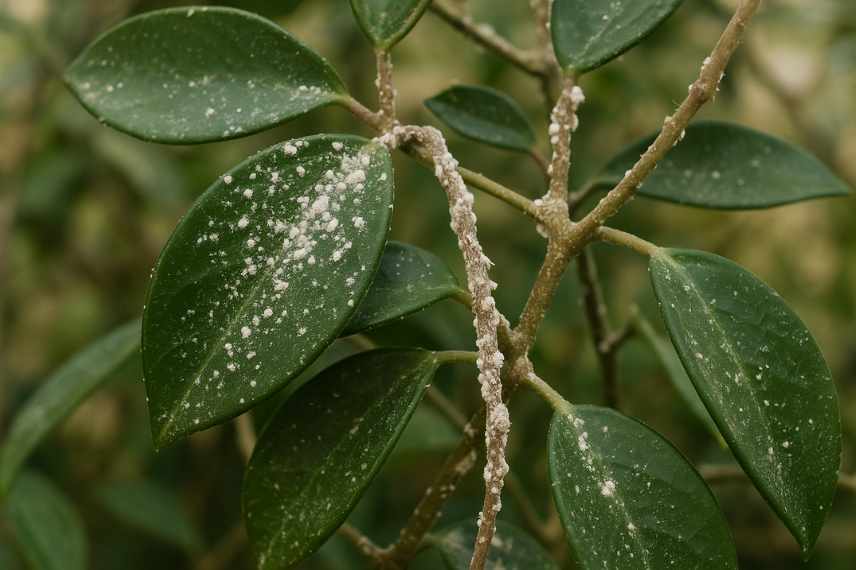
Leaves of Hoya carmosa infested with mealybugs (AI-generated image)
What to do?
- Manually remove pale or brownish masses with a cotton bud soaked in 90% alcohol.
- Spray the undersides of the leaves and the stems with a mixture of one tablespoon of black soap, one tablespoon of vegetable oil and one tablespoon of 70% alcohol, then add one litre of water. The spray can be repeated a week after the first application.
Prevention
- Inspect the foliage weekly to spot the first individuals.
- Avoid excessive temperatures and overly high humidity.
Aphids
Less common than mealybugs, aphids can still colonise Hoya and settle on young shoots from which they suck sap.
Symptoms
- Distortion of new growth.
- Presence of small green, black, brown or yellow shells.
- Presence of a sticky honeydew film.
What to do?
- Wash the leaves with water containing black soap.
- A jet of water to remove any remaining aphids.
- Apply repellent nettle or comfrey manure.
Red spider mites
These mites can also infest Hoya foliage. Even though they are invisible to the naked eye, red spider mites can be detected by the fine webs they leave behind.
Symptoms
In addition to the webs, red spider mites show pale yellow speckled spots on the foliage.
What to do?
Simply spray water on the foliar surfaces, as red spider mites thrive when the atmosphere is too dry.
Prevention
- Keep ambient humidity between 50–60 %.
- Maintain cleanliness, and avoid dust that promotes the mite by regularly cleaning the foliage.
Fungus gnats
À l’état adulte, les sciarids resemble small gnats fluttering around the foliage. But it is the larvae that are the most to fear, as, installed in the substrate, they gnaw at the rootlets.
What to do?
- Install yellow sticky traps to trap the adults.
- Repot the plant, changing the substrate and washing the pot in water containing black soap.
- Place a trap in a saucer with sugar water.
Prevention
- Avoid excess moisture in the pot and allow the substrate to dry thoroughly between waterings.
- Diffuse around the plant natural repellents such as geranium essential oil or citronella essential oil.
Best growing practices
When it comes to indoor plant care, prevention is better than cure, adopting good cultural practices helps prevent diseases or the appearance of pests. Although not difficult to care for, the Hoya still requires good cultural conditions tailored to its needs to stay healthy.
- Light: it should benefit from bright indirect light, without prolonged direct sun, to keep its stomata active. Likewise, it should be kept at a temperature between 18 and 25 °C, with no drafts. Hoya dislikes temperatures below 10 °C.
- Substrate: the mix should be well-draining, light and airy, composed of special orchid potting mix supplemented with perlite or a mix of lightweight potting soil with pine bark and perlite. Ensure the pot (preferably terracotta) is perforated.
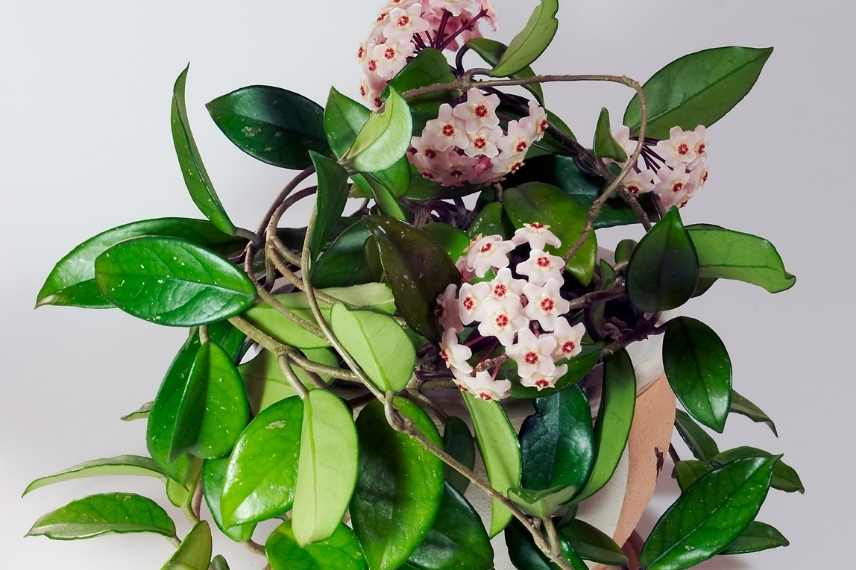
Cultivated under proper cultural conditions, a Hoya can bloom
- Watering: the watering frequency is moderate in spring and summer (once a week) and more infrequent in autumn and winter (every two to three weeks). The substrate must dry before watering. Waterings should be with soft water at room temperature.
- Fertiliser: Apply a balanced liquid fertiliser, low in nitrogen, rich in potassium and magnesium every two to three weeks from March to October.
- Repotting: repot every two to three years.
- Regular inspection: at least once a week to detect early warning signs.
- Subscribe!
- Contents
Comments