


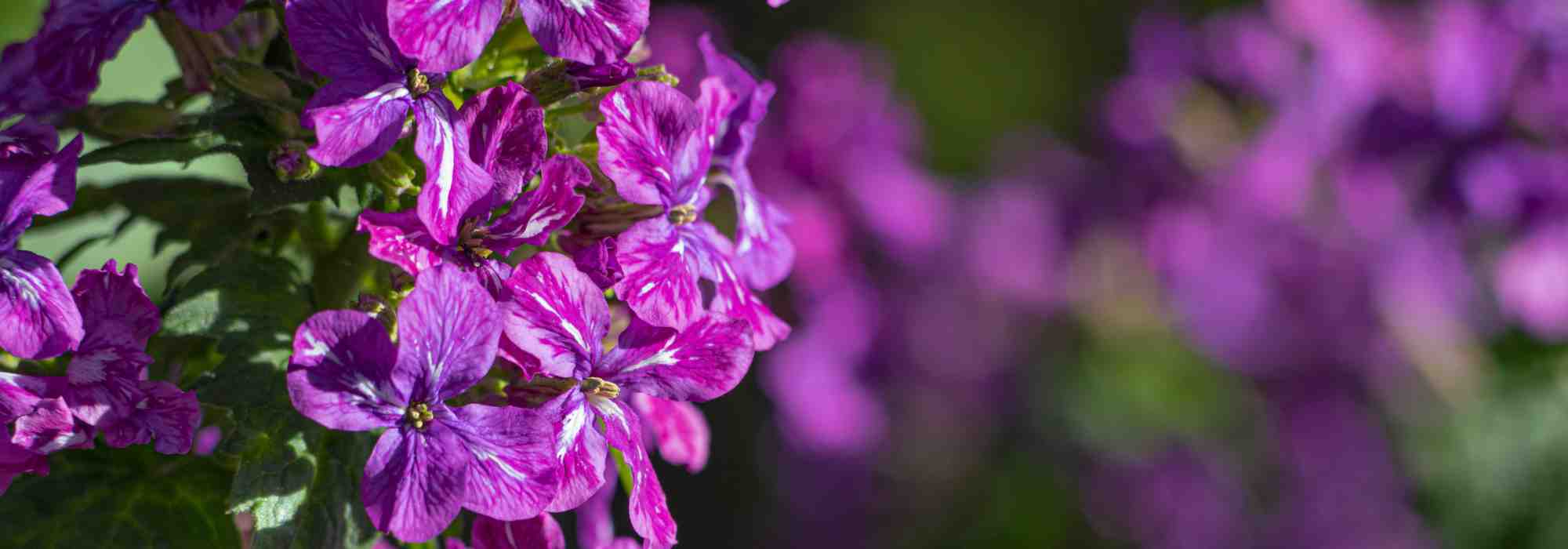
Biennials or autumnal annuals: plant from September in the garden!
Choosing, sowing and planting biennials to ensure beautiful spring flowering
Contents
Autumn gently signals the end of the busy period of activity in the garden. But that doesn’t mean there’s nothing left to do: last harvests, pruning, or tidying up are tasks to carry out. From September, it is also possible to plan the spring flowering, notably with the biennials plants. This is indeed the right time to attend to the planting of these plants with a particular life cycle, which will guarantee a spectacular spring flowering. Let’s see which biennials are essential and how to prepare their establishment in the garden or in pots.

A few notes on the distinctive life cycle of biennials
Let’s start with a quick reminder: as their name suggests, biennials have a life cycle that spans two years. This means that they will first germinate, develop their root system and their aerial parts (stems, leaves…), then flower and produce the seeds needed for their reproduction over two years. They are plants that are planted in autumn, in order to flower in spring or as early as the end of winter, a little over a year later.
They are distinguished from annuals, which have a cycle of only a few months (less than a year), and perennials, whose lifespans vary but exceed three years. By extension, short-lived perennials are often equated with biennials, such as wallflowers.
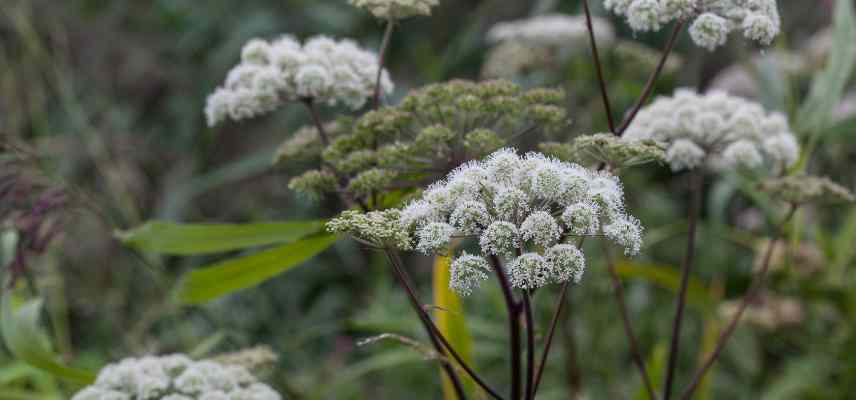
Angelica is one of the loveliest biennials in the garden, flowering only in the second year of growth
Why planting biennials from September in the garden or in a pot?
Biennials are sometimes overlooked, as they do not produce immediate results, unlike annuals. But they are not particularly long-lived either, unlike perennials.
Yet they have several advantages that fully justify giving them a place in the garden, on the terrace or balcony.
They are hardy plants, capable of withstanding frost in all our regions. Biennials actually need this winter period to grow well and flower: this is what we call vernalisation. There is therefore no need to wait for mild temperatures and warmed soil to sow them. Planting them in autumn, from September, also minimises the maintenance required: watering, weeding, etc.
Their flowering occurs early in late winter or at the very start of spring, bringing colour and life to a period when the garden is still lacking.
Furthermore, they are easy to live with, requiring hardly any maintenance once established. If growing conditions are favourable (i.e. they meet the plants’ needs), biennials can also self-seed at the end of their cycle, allowing them to return each year.
Finally, there are several quite different species of interest for their ornamental qualities: foliage, flowering, but also fruiting. They suit borders, wildflower meadows, edging, the front of a free-standing hedge, the vegetable plot, or pots, to brighten terraces, balconies and patios. They pair easily with many other plants: early-flowering perennials, decorative foliage, spring bulbs, grasses in a container, etc.
Biennials are often quite economical to buy, whether as seeds, plug plants or pots. It is also possible to harvest seeds at the end of flowering to multiply them easily. But as we have seen, it is also quite possible to let them self-seed spontaneously.
Note also that the flowering of biennials is often highly appreciated by pollinators, to whom it provides early food in spring.
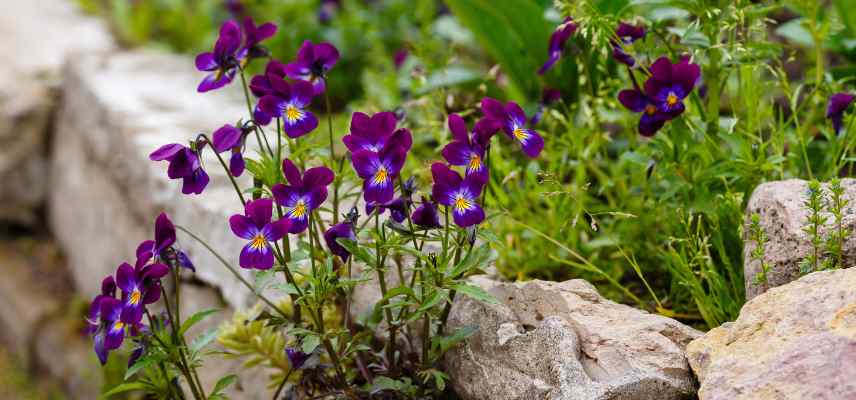
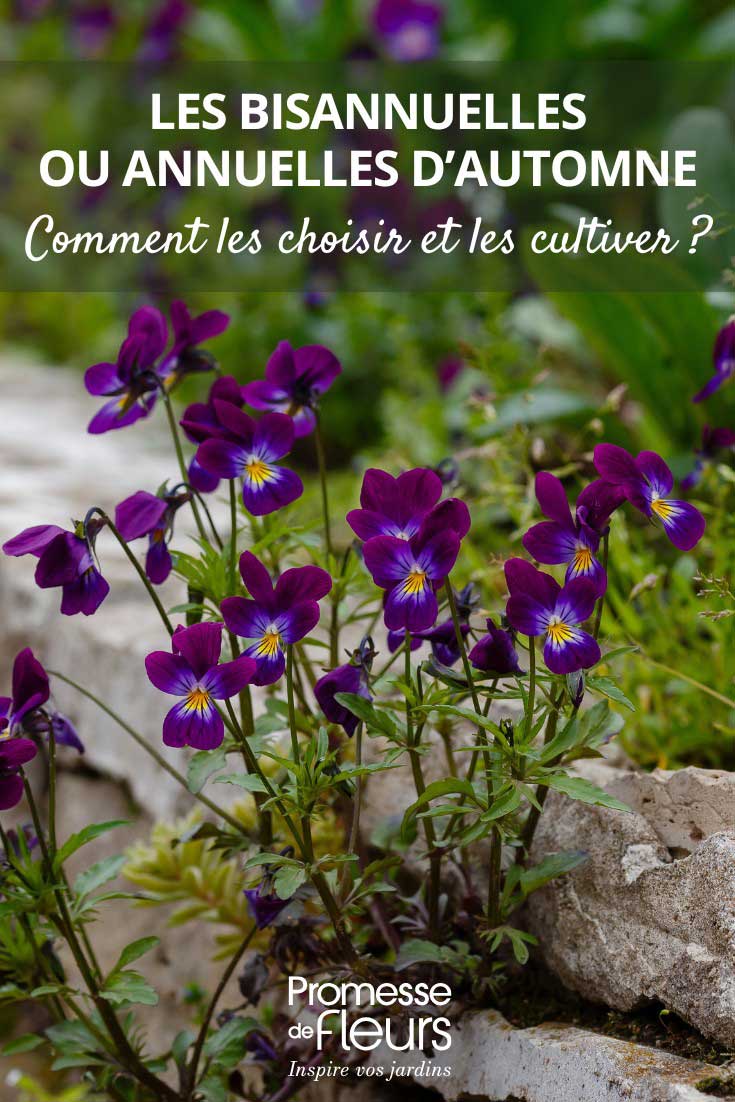
Violets (here Viola tricolor) are full of charm in the garden or in pots
Preparing the soil for sowing or planting biennials in September
Biennial plants establish themselves in autumn, between September and November. But not all have exactly the same needs. We therefore recommend choosing them according to the cultivation constraints of your garden (exposure, soil type, climatic conditions, available space…): it’s the best way to ensure their success and development with minimum care.
Choosing the right exposure
The first step is to determine the most suitable location for your biennials. Most of them favour partial shade, i.e. they receive sunlight for a few hours each day, but not when it is too intense or scorching. Especially in hot southern regions, choose a site sheltered from the noonday sun (east- or west-facing). In light shade, under trees, between buildings that provide partial shade… These are places that will readily welcome many biennials: pansies, horned violas, primroses, honesty, purple foxgloves, forget-me-nots or even daisies.
But some biennials will prefer more sun, such as wallflowers or the great mauve.
If you have a shadier exposure, some primrose varieties can be planted.
Ideally, avoid exposures that are too windy.

Primroses will enjoy partial shade
Working the soil
Biennials generally prefer soils rich in organic matter, but well-drained, meaning that excess water should drain away.
If your soil is rather heavy and clayey, begin by loosening it with a digging fork or a broadfork. Incorporate drainage elements, such as river sand, gravel or clay pellets. Do not hesitate to add a handful of well-rotted compost or manure.
If your soil is rather poor and well-drained, you will need to supply nutrients. Mix the soil with good-quality potting compost, with compost, with manure or with horn meal. The idea is to restore texture to the soil. Only wallflowers can tolerate poor soils, even rocky or sandy ones.

Annual wallflowers or Matthiola incana
In any case, also remember to remove weeds and any large stones. Then level the soil with a rake.
In pots, choose a potting compost for window boxes and pots or a potting compost for window boxes and pots or a potting compost for flowering plants. Remember to place at the bottom of the chosen container a drainage layer of 3 to 5 cm. Make sure to use a pot, tub or planter with drainage holes, sufficiently deep (at least 20–30 cm).
Planting or sowing biennials in autumn
Sowing
Once the soil is ready to accommodate your biennials, you can proceed with sowing. It is done by broadcasting, that is, by scattering a handful of seeds on the ground randomly. Then simply cover with a thin layer of compost or potting soil, and water gently (using a watering can rose or a spray), to avoid letting the seeds filter too deep into the soil. Once the seedlings have developed 4 to 5 leaves, you can thin out by keeping only one plant every 30 to 40 cm.
Notes: Biennial sowing is mainly done in open ground, not in pots, due to the fragile root system of some that do not tolerate transplanting well.
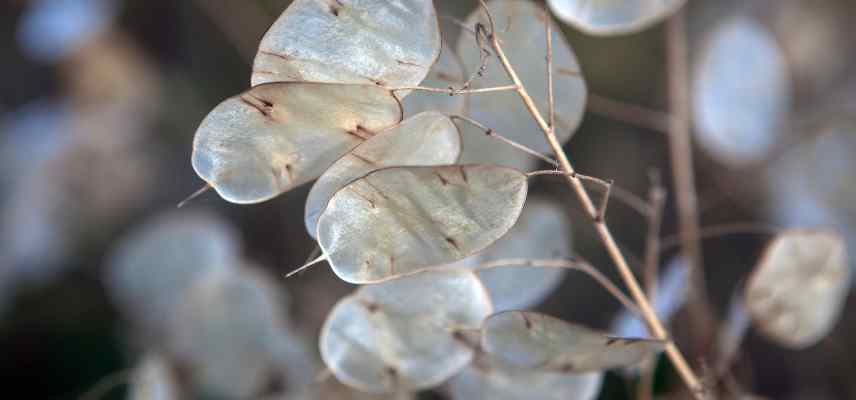
Money plant sowing should be considered in autumn
Planting
If you have opted for biennials in pots or in plug plants, start by soaking the clump in a container of water for a few minutes, in order to rehydrate it well.
Dig planting holes about twice the volume of the clump, then place your biennials gently. The plants will be spaced about 30 to 40 cm apart.
Backfill with soil or potting soil until the clump is covered, then firm with your fingers.
Water generously. If autumn is dry, proceed with regular watering to encourage recovery. The soil should remain moist, i.e., never completely dry, even in winter.
Install a vegetal mulch at the base of the biennials, to better retain moisture and to limit the development of adventive weeds that could compete.
Planting can be done in open ground in the garden or in pots.
Care
Care will be limited to regular watering in case of drought, especially during the first weeks after establishment. Be all the more vigilant when growing in pots, as the substrate dries out more quickly. In spring, do not hesitate to apply fertilisers to support flowering and to remove spent flowers as you go (you may leave a few to self-seed or to harvest seeds if you wish).
Essential autumn annuals or biennials
Among various biennial species, choosing isn’t always easy. Choose them according to your taste, of course, but also according to how you plan to use them.
In pots, favour compact-growing biennials, such as pansies, forget-me-nots and daisies.
In borders, plant carnations, primroses, the angelicas or honesty. They have a fairly tall silhouette (between 80 cm and 1.5 m) and a vertical habit that will add volume and structure.
Biennials can also be grown in the vegetable garden, for example with the parsley, the parsnips or the carrot.
To learn more, feel free to consult our article: Choose autumn biennials for a flowering garden as soon as the warm days arrive.
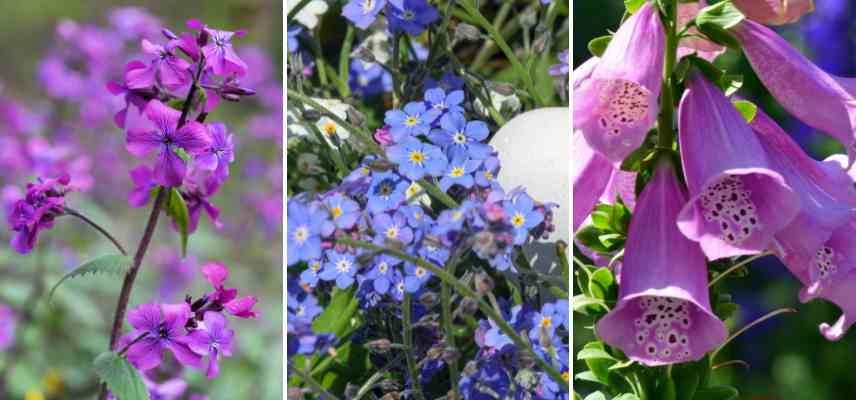
Honesty (Lunaria annua), forget-me-not and purple foxglove
- Subscribe!
- Contents
Comments