


Diseases and parasitic pests of candelabra cactus
Identification, prevention and natural solutions
Contents
The African milk bush (Euphorbia trigona) is a beautiful sculptural houseplant, which forms thick upright and ramified stems, covered with spines. It therefore closely resembles candle cacti.
As with all succulents, it is undemanding and fairly easy to care for. However, it can suffer from a few cultivation problems. Let’s look at the main pests and diseases that can affect the cactus spurge. We will share our tips for identifying them, preventing their appearance and treating them naturally to keep a beautiful young plant.
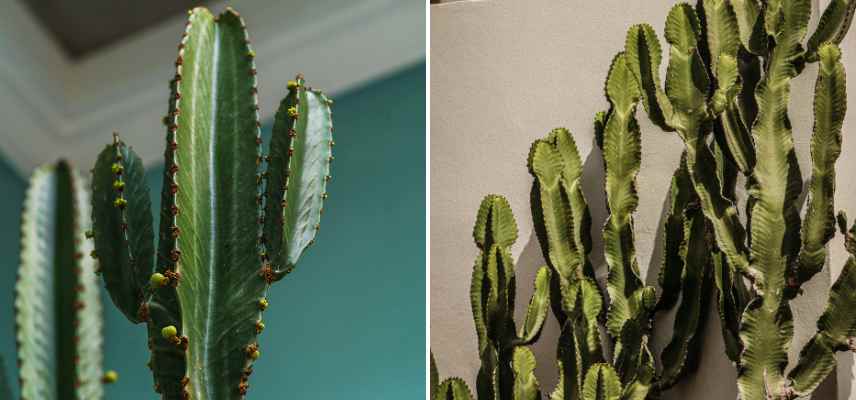
Euphorbia trigona

Root rot due to excess water.
Description and symptoms
The candelabra cactus is a plant native to Africa, thriving in hot, dry climates. Naturally, it is therefore undemanding and does not need much water. On the contrary, it is more likely to suffer from excess water than from shortages. This is, in fact, the primary cause of the plant’s decline: watering that is too heavy and/or too frequent.
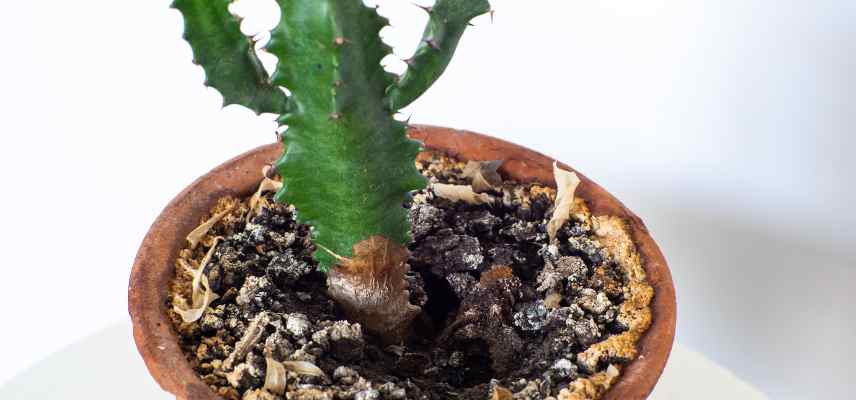
An excess of water will promote the development of fungal (mould) and bacterial diseases. Root rot is the most common. You will notice a softening at the base of the stems and a general yellowing of the plant. Sometimes these symptoms are accompanied by an unpleasant odour due to rotting. The substrate may even begin to whiten on the surface. The fungi can also cause brown or black spots to appear on the stems.
If the plant is not cared for, it will eventually blacken and wither away completely.
Prevention and natural solutions
In prevention, to avoid excess water, you must first place your candelabra cactus in a container with drainage holes. Excess water must be able to drain away. If you have placed a saucer or cachepot, remember to empty them after about thirty minutes. The plant will have had time to absorb the water it needs, but will not suffer from any stagnation.
Next, use a well-drained growing medium, again to ensure the water drains away properly. You will find soils for succulents and cacti, lighter than conventional growing media and without water-retentive agents. You can also mix light garden soil or quality horticultural compost, half-and-half, with river sand, gravel, the clay balls or any other draining element.
When it comes to placement, give your cactus a well-lit exposure (west or south), even in direct sun: near a window, conservatory, office, etc. However, avoid humid rooms such as the kitchen or bathroom. Choose a well-ventilated place, but not subject to too strong draughts (near a doorway, for example). Finally, do not expose the plant to temperatures below 5°C.
In terms of frequency, plan for watering about every two weeks in summer. In winter, a monthly watering is usually sufficient. In spring and autumn, adjust according to the ambient temperature. To ensure you do not water too early, test the soil with your fingers: it should be dry deep down. If the plant needs water, you will notice it wrinkles along the stem. Always avoid wetting the stems when watering and do not mist the above-ground parts.
As a supplement, feel free to follow our tips from the article “How to water a cactus?”.
If the damage is done and the cactus shows signs of excess water, it may still be possible to act. To do so, unpot the plant carefully. Inspect the roots to remove all parts that appear affected (covered with a white coating, soft, brownish, giving off a bad odour), using scissors or a pruning shear pre-disinfected with alcohol. Clean the container with a drop of black soap, then repot the cactus into fresh, dry substrate. If the plant is already too damaged, the final solution is to propagate it by cuttings to relaunch a new plant. For this, put on gloves, as the plant secretes a toxic latex. Succulent plants are fairly easy to propagate.
Mealybugs
Description and symptoms
Mealybugs are among the small, formidable pests that are fairly common, yet sadly are usually noticed far too late. The first visible symptom is the appearance of white cottony or powdery masses on the plants. Sometimes mealybugs attract ants, which protect them from predators in exchange for honeydew.
The mealybug is a piercing-sucking insect that feeds on plant sap, which will gradually weaken the plant. But by secreting honeydew, a sticky substance, it can also promote the development of sooty mould, a cryptogamic disease. You will then observe a deposit of black soot on the aerial parts of the cactus euphorbia. This fungus will affect photosynthesis and can therefore cause the plant to wither.
These little pests prefer warm, enclosed environments, such as a veranda.
Prevention and natural solutions
As with all plants, regular observation will help quickly detect the first signs of pest presence and act before they proliferate. Because mealybugs have a very rapid reproductive capacity and can overrun a plant in a matter of weeks. Moreover, they are not easy to eliminate once established.
If you have a well-exposed outdoor space, you can move your cactus euphorbia outside to benefit from natural ventilation.
If mealybugs are present, use a cotton bud moistened with 70% alcohol and gently rub the infested areas to remove the pests. Wear gloves to avoid being pricked.
Another solution: spray a homemade natural insecticide made from black soap. For this, choose pure black soap and dilute one tablespoon with one tablespoon of vegetable oil (rapeseed oil, for example) in a litre of lukewarm water. Pour the mixture into a spray bottle, shake well and spray onto the aerial parts of your cactus euphorbia. Do this away from direct sunlight, preferably late in the day. Repeat as necessary after one week.
To learn more, read our article: “Mealybug: identification and treatment”
Red spider mites
Description and symptoms
Red spider mites are tiny mites that are very difficult to spot, measuring barely 1 mm. Like mealybugs, they feed on the sap of the Euphorbia cactus and therefore weaken it. An infestation can cause its decline.
The visible symptoms are the appearance of fine webs that resemble spider silk. The stems and leaves of the plant can also become yellowed or appear discoloured.
Red spider mites favour dry, warm, and rather confined atmospheres. Here again, these are parasites that develop very quickly.
Prevention and natural solutions
Prevention measures are the same as for mealybugs: regular observation and moving the plant outside during fine weather, if possible.
In case of infestation, use the same natural insecticidal soap.
For more information: Red spider mite: identification and treatment
- Subscribe!
- Contents
Comments