


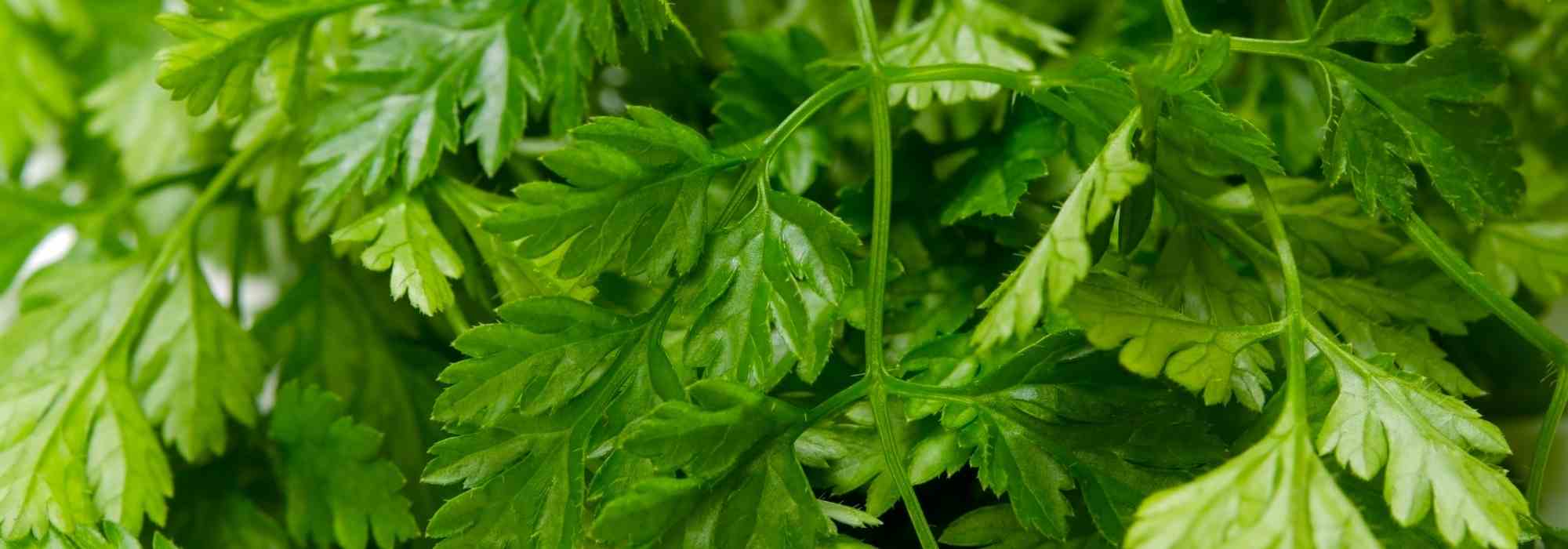
Diseases and parasitic pests of Chervil: Identification and treatment
Recognise, treat and prevent diseases and pests of this aromatic herb
Contents
Chervil (Anthriscus cerefolium) is an annual herb with delicately incised leaves, which the Greeks also called “leaves that delight”. Among the Romans, chervil was a symbol of rejuvenation. It must be said that this aromatic herb harbours numerous medicinal virtues. It is also a plant that enhances the flavour of salads and cooked dishes with its aniseed flavour. Easy to grow, chervil has its rightful place in the vegetable garden where its foliage is also appreciated as a deterrent against slugs and snails.
Like many aromatic herbs, chervil is not particularly susceptible to diseases and pests. However, with poor growing conditions, it can suffer some cultivation problems.
Discover how to identify, treat naturally and avoid the main fungal diseases and pests of chervil.
For further reading: Chervil: sowing, growing, harvest.

A quick reminder of chervil’s growing conditions
Why remind readers of the planting and cultivation conditions for chervil? Simply because many diseases are caused by improper planting or by cultural practices that are not followed. This is obviously not the only reason… Meteorological conditions are also highly influential for a plant.
Chervil, whether common or curly, prefers light and cool soils, well-drained and fairly fertile. In terms of exposure, it needs a position in partial shade, because the hot summer heat makes it bolt quickly. Ideally, chervil should be sown in spring in full sun, then shaded in summer, for example with a piece of hessian. Chervil can be grown just as well in the ground as in pots. 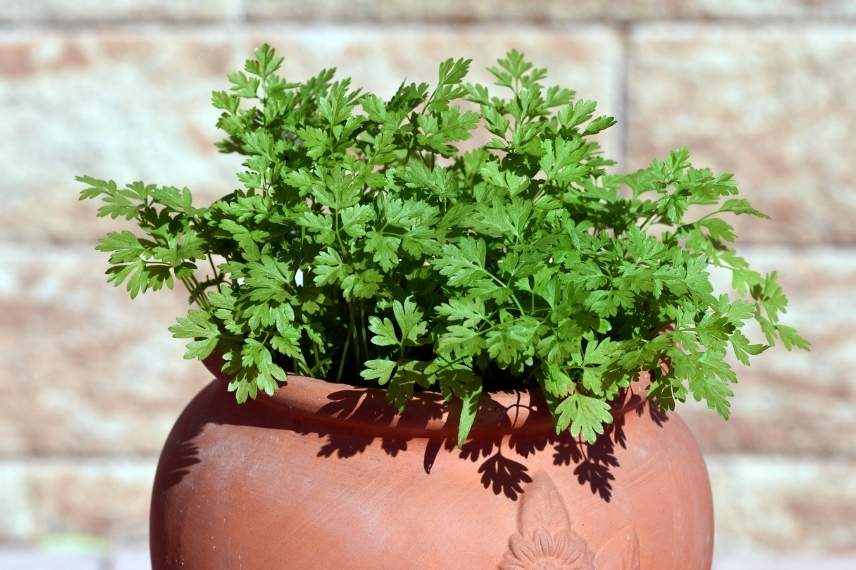
In terms of maintenance, chervil requires regular watering if rainfall is scarce, and always at the base of the plant. Mulching helps to space out watering. When grown in pots, chervil will require even more regular watering. To increase its vigor and leaf production, it is necessary to cut back the flowering stems.
Read also
Growing chervil in potsDiseases that affect chervil
Chervil is a relatively hardy aromatic herb that rarely suffers from disease. However, if cultivation conditions are not respected or if the weather is damp, certain fungal diseases can develop very quickly. They mainly affect the leaves.
Late blight
Late blight is a disease that spreads mainly in damp years, with moderate temperatures, from the end of spring through the summer. In dry years, late blight is absent. Infestation occurs on young shoots through the stomata. 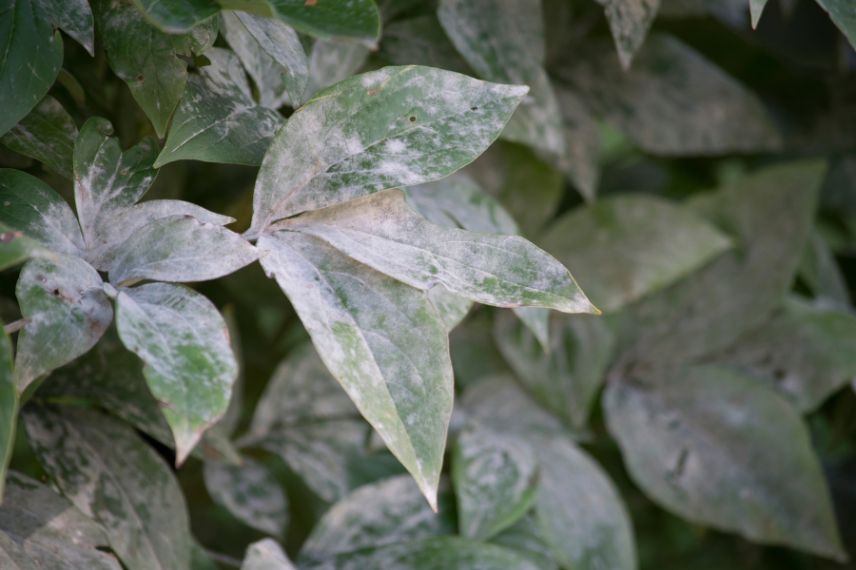
What damage does it cause?
White-yellowish spots appear on the upper surface of the leaves. And on the undersides of the leaves, a white to grey‑violet felt-like coating is visible, which resembles mould. The leaf tips dry out, and the leaves as a whole die.
How to treat?
There is really no natural treatment for late blight. At the first signs, remove the infected leaves and take them to the tip. Do not put them in your compost. Then, a Bordeaux mixture spray or of bicarbonate of soda will slow the progression of the disease, without stopping it.
How to prevent?
As no effective treatment exists, it is best to prevent the disease from appearing. Several steps are required:
- Avoid growing chervil in poorly drained and too damp soil. Chervil likes fresh soils, but not waterlogged ones
- Do not sow or plant too closely to ensure good air circulation for the chervil
- Ensure you do not wet the leaves when watering
- Water in the morning, as the soil dries more quickly
- Strengthen the chervil’s defences with sprays of nettle manure or of horsetail decoction.
Powdery mildew
Powdery mildew is a cryptogamic disease that develops in dry and warm weather. Spores are dispersed in summer by the wind. The disease generally only appears towards the end of the growing season. 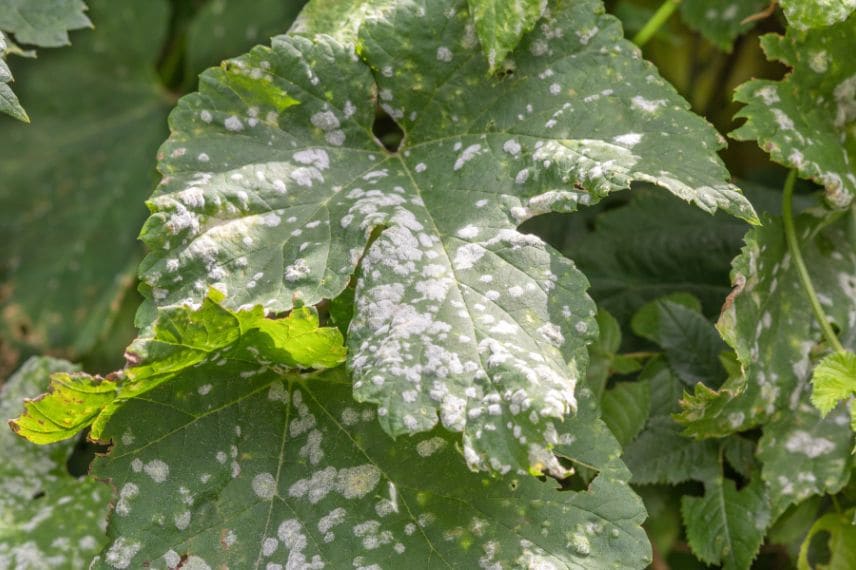
What damage does it cause?
Small white spots appear on the leaves, then a white-grey deposit forms on both faces of the leaves. The leaves dry out prematurely.
How to treat?
To treat, you can spray horsetail decoction or a sulphur-based fungicide.
How to prevent powdery mildew?
- Do not sow or plant chervil too closely to promote air circulation
- Avoid over-fertilisng the soil with nitrogen-rich fertilisers
- If your chervil is grown in a greenhouse, you should regularly ventilate the space.
Rust
Rust is a cryptogamic disease, caused by several fungi, which appears from spring to autumn in wet weather. The fungi overwinter in crop debris before infecting the chervil. Then, the spores are dispersed by wind or by contact. It is a disease that does not necessarily kill the plant, but considerably affects its leaves.
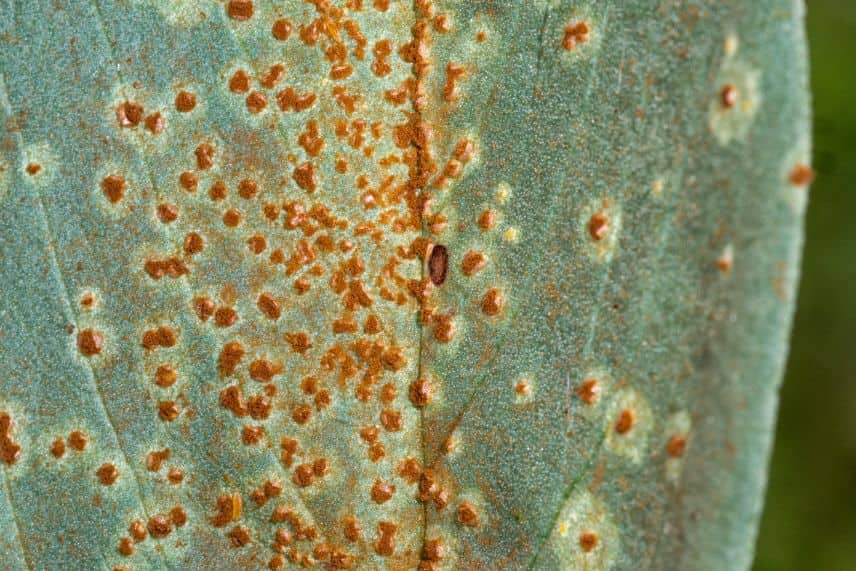
Rust symptoms on a broad bean leaf
What damage does it cause?
It is a disease easy to recognise by the reddish to yellowish spots on the upper surface of the leaves. On the underside, you can see small pustules, slightly powdery, yellow to orange. Often the leaves drop and the chervil loses vigor.
How to treat?
You should remove the affected leaves as soon as the first symptoms appear. Then, apply a Bordeaux mixture spray or sulphur, or nettle manure or horsetail decoction.
How to prevent the disease?
- Water without wetting the leaves, preferably in the morning
- Do not sow or plant too closely
- Use well-disinfected tools to harvest your chervil leaves.
Parasitic pests that attack chervil
Only aphids can attack chervil. Simply because chervil, with its anise-scented leaves, makes a good repellent, among other things against slugs and snails, but also against flies and the Colorado potato beetles. Chervil is therefore an ideal companion for lettuces, tomatoes and potatoes, carrots…
Despite this anise scent, aphids can infest the leaves and stems of chervil. These piercing-sucking insects are fairly easy to spot, especially since they often produce a lot of honeydew, encouraging the growth of sooty mould.
To get rid of them, you need:
-
- Spray the foliage with a jet of water to remove most of the colony.
- Spray a solution based on black soap (15 to 30 g per litre of water).

Aphids
In a balanced vegetable garden or garden where biodiversity thrives, beneficial insects naturally control aphids. Simply planting nectar-rich flowers, leaving a small patch of lawn unmown, or maintaining a wild corner is enough to attract ladybugs, hoverflies, and lacewings—natural predators of aphids—to your garden.
For further reading :
- Subscribe!
- Contents
Comments