


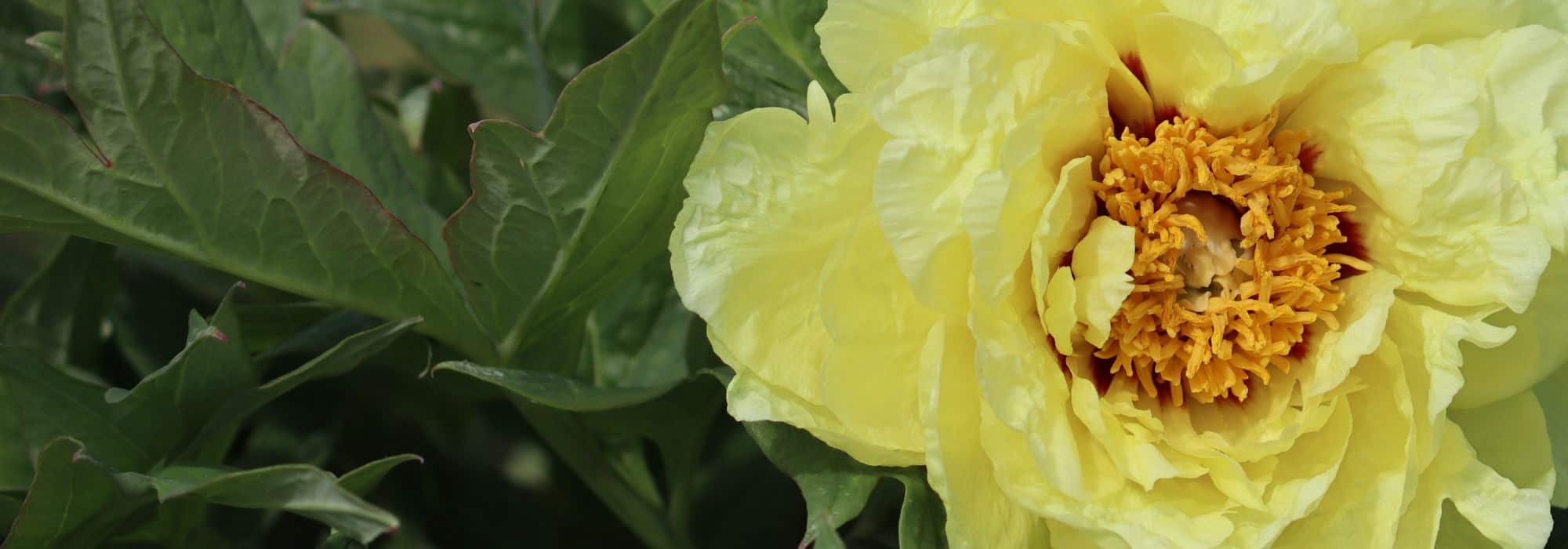
How to care for a tree peony throughout the seasons?
All our tips
Contents
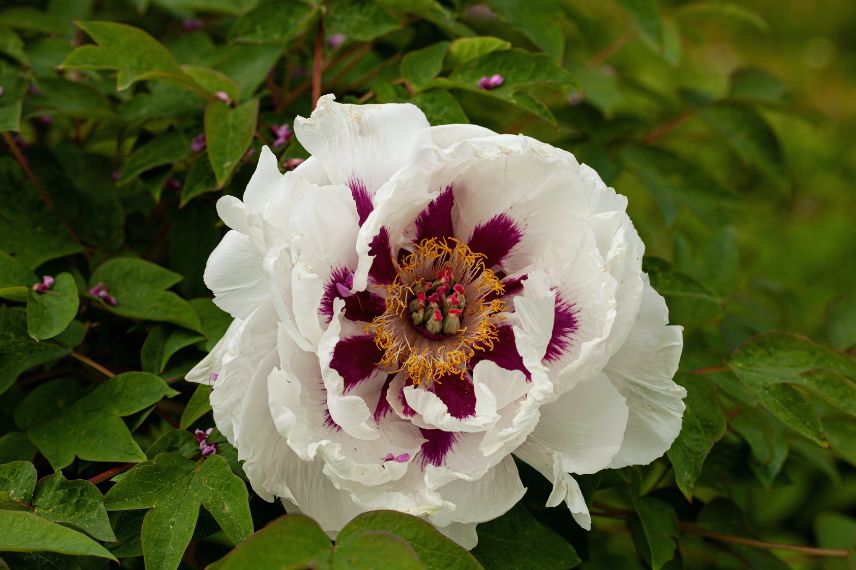
In gardens, tree peonies captivate with their spectacular flowers and their architectural silhouette, halfway between a shrub and a perennial. Hardier than they look, they can live for many years and maintain their good looks throughout the seasons. But for them to bloom to their full potential, tree peonies need a little care… and above all, seasonally appropriate care. Discover our tips for looking after a tree peony all year round.

Winter: Protecting the tree peony without overdoing it
Winter is a period of rest for the tree peony. It loses its leaves and enters dormancy, preserving a hardy woody habit that withstands frost without issue.
In regions with very wet winters or on heavy clay soil, it is important to improve drainage before planting, for example by incorporating coarse sand or gravel into the soil. Once the plant is well established, mineral mulch, such as pozzolana or gravel, helps keep the collar dry, especially on heavy ground. Organic mulches can be used if the soil is well-drained and the collar remains exposed to avoid stagnant moisture at the base.
Contrary to other shrubs, the tree peony does not tolerate severe pruning. Moreover, it flowers on wood formed the previous year: it is better to limit oneself to removing dead, damaged or ill-placed branches at the end of winter. This gentle pruning is sufficient to maintain good branching without compromising flowering.
Read also
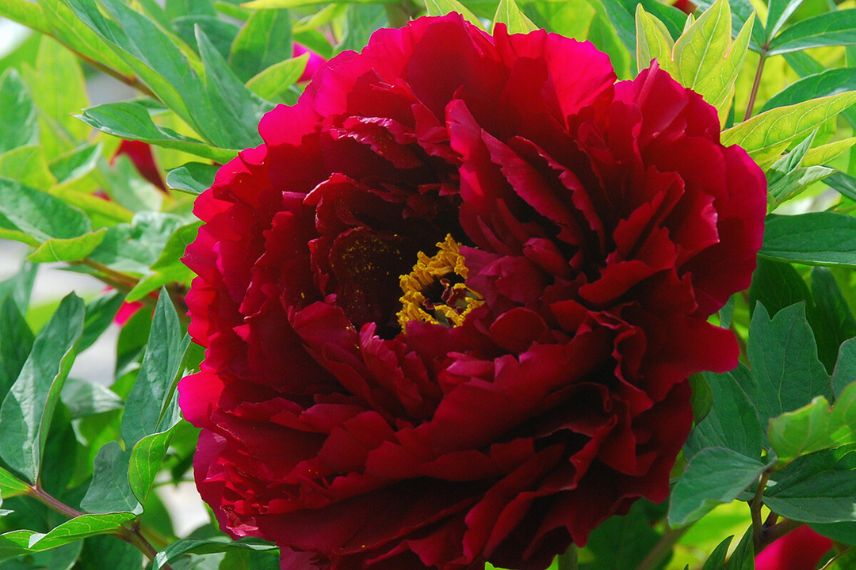
plant a tree peonySpring: the season to support the flowering of the tree peony
With the return of fine weather, the tree peony emerges from its dormancy. Young shoots appear from March, sometimes even earlier depending on the region. At this stage, moisture is welcome but not excessive. Cool, well-drained soil is ideal.
Watering the tree peony in spring is not routine, unless there is a prolonged drought. However, an application of organic fertiliser or well-rotted compost in March–April helps to support the growth of the flowering stems. Another option: a fertiliser for flowering plants, rich in potassium (high in K), promotes the quality of the buds.
From April, depending on the region, the first flowers begin to open. Their sizeable blooms can cause the stems to bend, especially on young plants that are still not ramified. It is then prudent to discreetly stake some stems if necessary, to prevent them from snapping under their own weight.
After flowering, remove spent flowers by hand or with a clean pruning shear, just above a group of leaves. This action limits the risk of disease and allows the plant to devote its energy to its structure, rather than seed production.
Avoid heavy pruning of your tree peony after flowering. Unlike herbaceous peonies, too drastic a cut would compromise subsequent flowering.
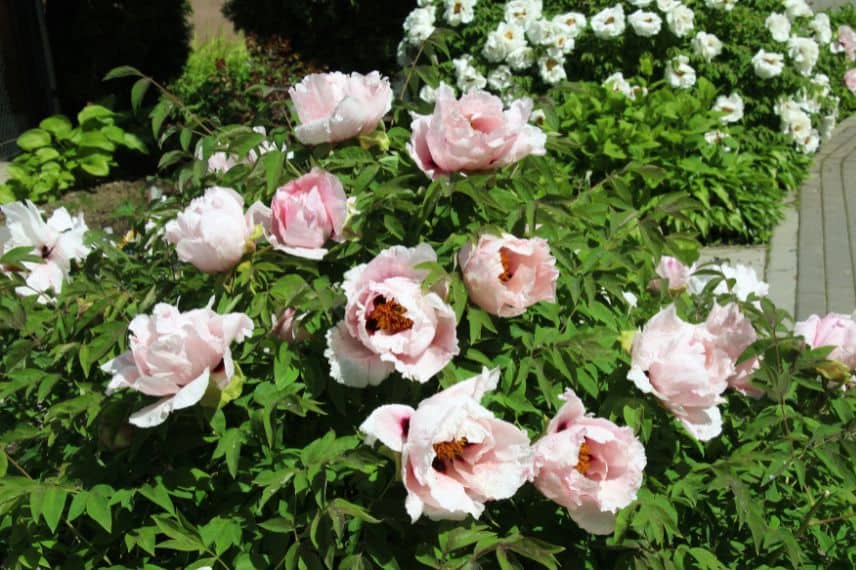
Summer: helping the shrub peony cope with heat stress
In summer, the key is to keep the soil cool, without soaking the crown. The tree peony tolerates heat well, but occasional watering is useful during long dry periods, especially for young plants or those grown in pots. Water deeply, at the base, avoiding wetting the foliage.
A mulch, whether organic (bark, wood chips, straw) or mineral (pozzolana, gravel…) plays its role in summer: it limits evaporation, protects the roots from heat and slows the growth of weeds. At this season, there is no particular pruning required, except to remove damaged or diseased leaves.
Also monitor for aphids or powdery mildew, especially during stormy periods. A spray of horsetail decoction or a solution of black soap can be sufficient to curb early infestations. For more information, read our article: “Diseases and pests of shrub peonies”.
In poor soil or in pots, a light balanced liquid feed may be considered in July, without going beyond to avoid stimulating vulnerable young shoots late in the season. No pruning is necessary at that time, except for removing yellowing or damaged leaves.
Read also
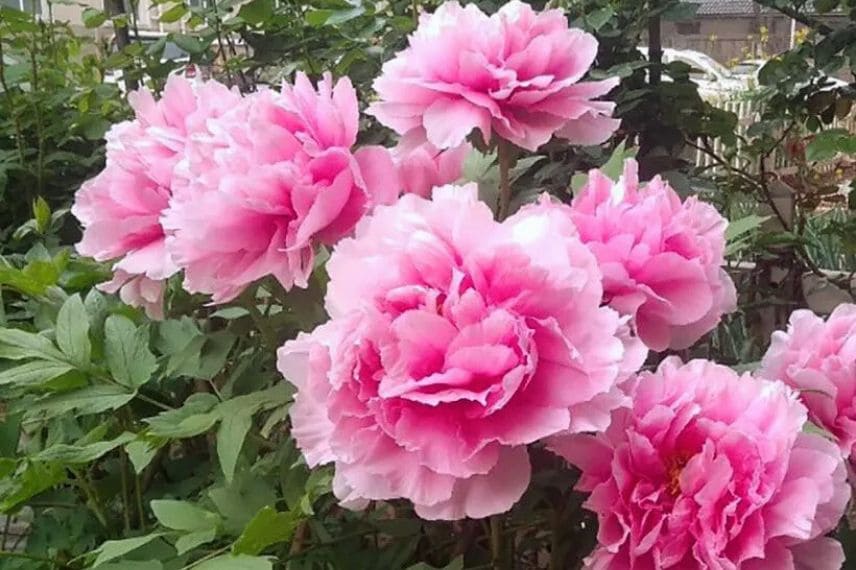
How to support peonies?In autumn: prepare the tree peony for the coming year
In autumn, the shrub peony gradually goes into dormancy. The foliage turns yellow and then falls naturally. Leaves can remain on the soil for several weeks to feed the soil, but it is recommended to clear away dead leaves before winter to limit the risks of cryptogamic diseases, especially in humid climates or in gardens prone to powdery mildew.
It is also an excellent time to plant a new shrub peony, provided the soil remains loose and frost-free. Choose a sunny or lightly shaded location, in deep, light and well-drained soil.
For established plants, a light cultivation of the soil around the base, together with an application of well-rotted compost or crushed horn, nourishes the roots for the next season. It is at this time that the plant is already preparing its future flower buds; therefore avoid any pruning or unnecessary movement.
- Subscribe!
- Contents

Comments