


Indoor plant care: Pineapple through the seasons
Watering, fertilising, repotting... everything you need to know to care this tropical houseplant
Contents
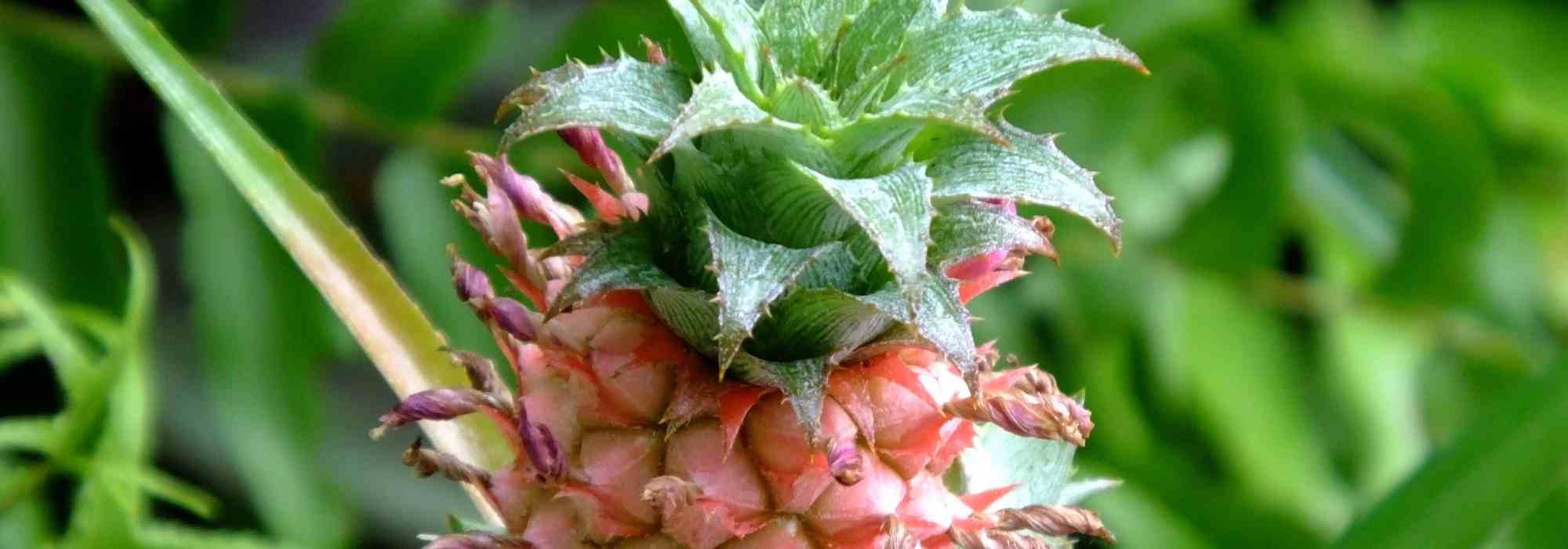
When the pineapple is mentioned, one instantly thinks of the famous juicy, sweet fruit—a true tropical treat. However, the pineapple (Ananas comosus) has also become a popular houseplant for its decorative and distinctive appearance. Cultivating a pineapple plant at home brings a touch of the exotic and helps create a warm, inviting atmosphere. However, to ensure this potted plant thrives indoors and keeps its beauty through the seasons, it is essential to provide it with appropriate care.
Discover our comprehensive guide to growing and caring for pineapple, our practical tips on watering and fertilising for each season, as well as tips to maximise its growth.
Further reading : Pineapple: planting, growing and propagating.

What are the pineapple's specific needs?
Growing pineapple indoors involves meeting its natural needs that vary with the seasons. Originally from tropical regions, this plant thrives in warmth, intense light and relatively high ambient humidity. However, adapting to the indoor climate and seasonal variations requires some adjustments to its care routine.
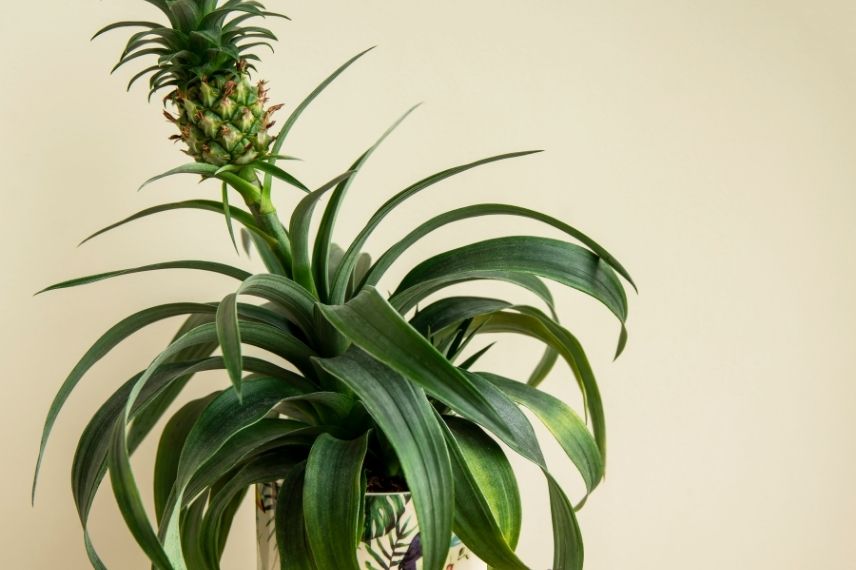
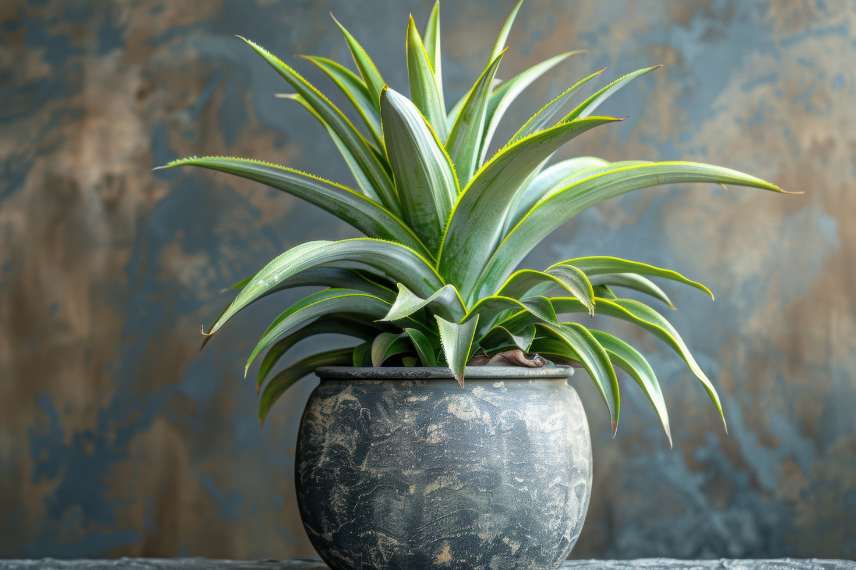
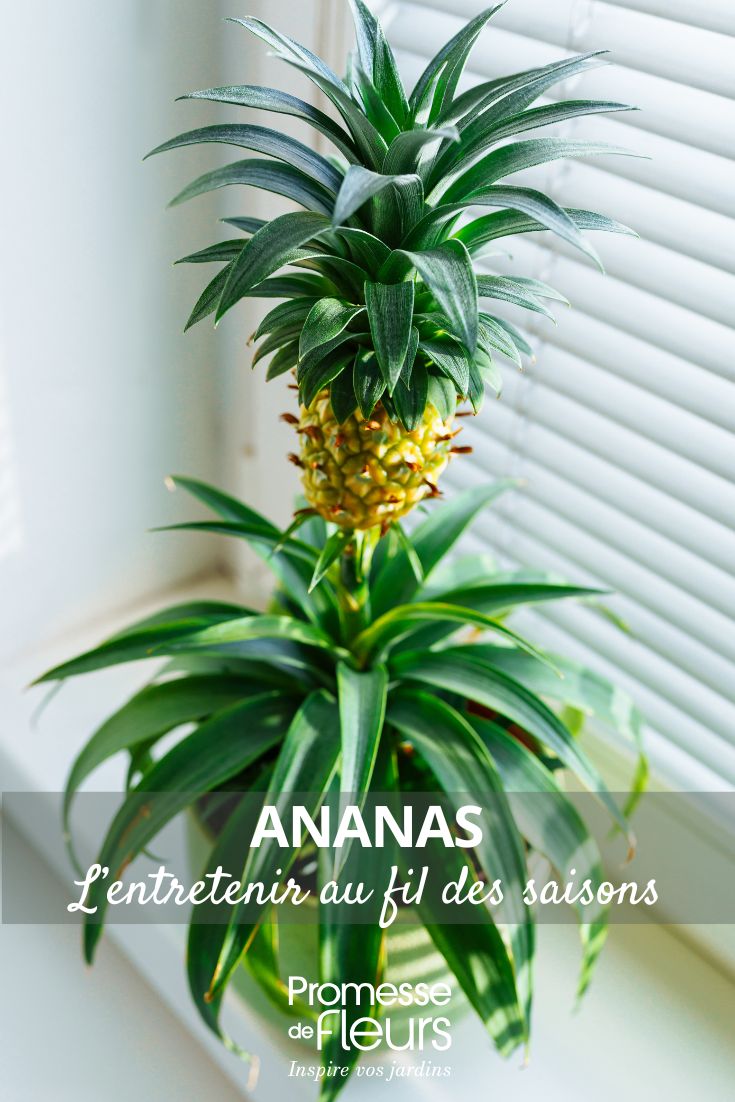
The pineapple plant presents itself as a rosette of tough, striate leaves, arranged to evoke the look of a pineapple. Most often, it is sold with its characteristic inflorescence, perched on a tall stem. This distinctive appearance makes it a showpiece in interior decoration. Here are some key points to know:
- Origin: The pineapple plant is tropical, adapted to hot and humid climates.
- Light : The plant requires a sunny exposure near a south-facing window, shaded by a sheer curtain, to avoid direct sun.
- Water: Watering should be adjusted according to the season, and overwatering can cause root rot.
- Fertilisation : Regular feeding with nutrients is required to promote the growth of the pineapple.
How to care for the pineapple plant through the seasons?
Caring for the indoor pineapple plant adapts to the seasons, each bringing its own specifics in terms of light, temperature and humidity—key elements of its environment.
How to look after the pineapple in spring?
Spring is the season of renewal, and for the pineapple plant, it’s the ideal moment to stimulate growth after the winter period. Here are a few tips for spring:
- Increase light exposure: as the days lengthen, move your plant closer to a sunny window to maximise daylight.
- Water regularly, but not excessively: as temperatures rise, adjust watering to keep the soil slightly moist, not soggy. Water twice a week with rainwater at room temperature, and be sure to remove any residual water in the saucer or cachepot. To increase humidity, feel free to place your pot on a bed of moistened clay pebbles.
- Fertilising: apply a balanced fertiliser suitable for orchids or tropical plants every 3–4 weeks to promote leaf growth and rosette formation.
Pineapple care in summer
Summer brings heat and bright light, ideal conditions for photosynthesis, but also a few specific challenges for an exotic plant grown indoors.
- Temperature and humidity: ensure indoor temperature remains moderate and that the air isn’t too dry. Using a humidifier or regular misting of the leaves can be beneficial.
- Tackling excessive heat: avoid placing the plant in an atmosphere that’s too hot to prevent leaf desiccation. In summer, it is also recommended to move your pineapple outdoors into the garden, keeping it in partial shade. You will need to monitor water inputs and, especially after a storm, ensure any residual water is drained away.
- Frequent watering: during hot periods, increase the watering frequency to two to three times per week if necessary. The substrate should remain constantly moist. However, ensure excess water drains away to prevent waterlogging. To achieve this, first your pineapple should be planted in a suitable container filled with a bromeliad potting mix, or if unavailable, an orchid potting mix, or a mixture of leaf mould, heather soil and perlite to ensure perfect drainage. Installing your pot on a bed of clay pebbles saturated with water is essential to ensure good hydration of the foliage.
Pineapple in autumn
Autumn is a transitional period, with decreasing light and temperatures beginning to drop. For the pineapple plant, this season calls for a few adjustments to preserve its vitality.
- Gradual reduction of watering: the plant, which uses less water in autumn, requires a gradual decrease in watering. Water only when the substrate dries to provide water.
- Control of light and temperature: place the plant in a location where it still benefits from maximum natural light, ideally near a well-exposed window. It is also important to monitor temperature, ideally between 18 and 24 °C, and never below 15 °C.
- General care: take this period to remove dead or yellowing leaves, which helps redirect the plant’s energy toward the growth of new leaves.
What does the pineapple need in winter?
Winter is the trickiest time for caring for the indoor pineapple plant, due to lower temperatures and reduced light. However, with a few adjustments, your plant can get through this season calmly.
- Reduction of watering: in winter, the plant’s water needs decrease. Water sparingly to help promote dormancy.
- Control of temperature: keep a stable ambient temperature between 18 and 24 °C, and avoid cold drafts that could stress the plant.
- Leaf cleaning: take this season to regularly dust the leaves, which helps the plant capture more light and promotes photosynthesis.
A few tips for optimal maintenance.
Beyond seasonal care, some regular steps help ensure the health and longevity of your pineapple: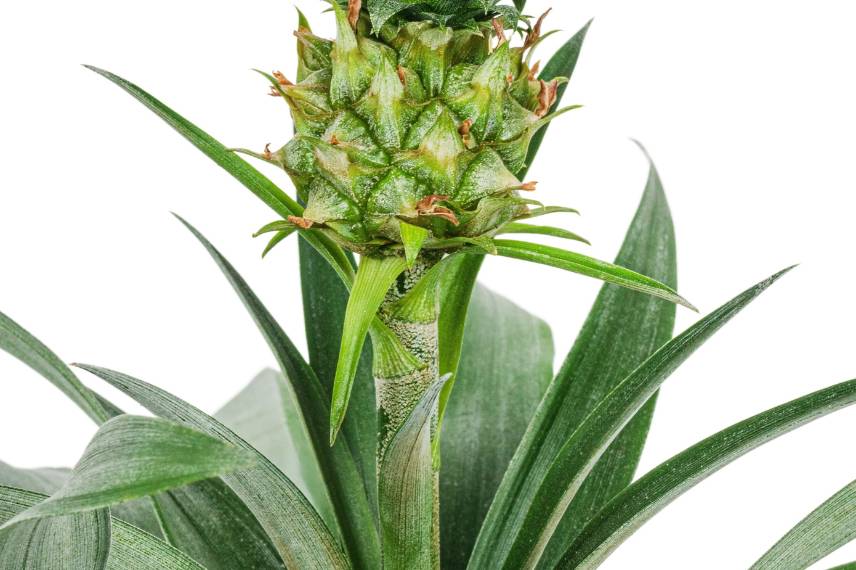
- Regularly rotate the container so that all faces of the plant receive light, resulting in uneven growth.
- Inspect your plant daily for potential diseases or parasitic insects such as the mealybugs or the red spider mites. If infested, treat promptly with appropriate products or natural remedies such as the black soap.
- Choose a well-drained, light soil enriched with organic matter tailored to provide your plant with all the nutrients it needs.
Learn more about the pineapple
- Find our article: “Diseases and pests of the pineapple: how to identify them and treat them?“
- Subscribe!
- Contents
Comments