


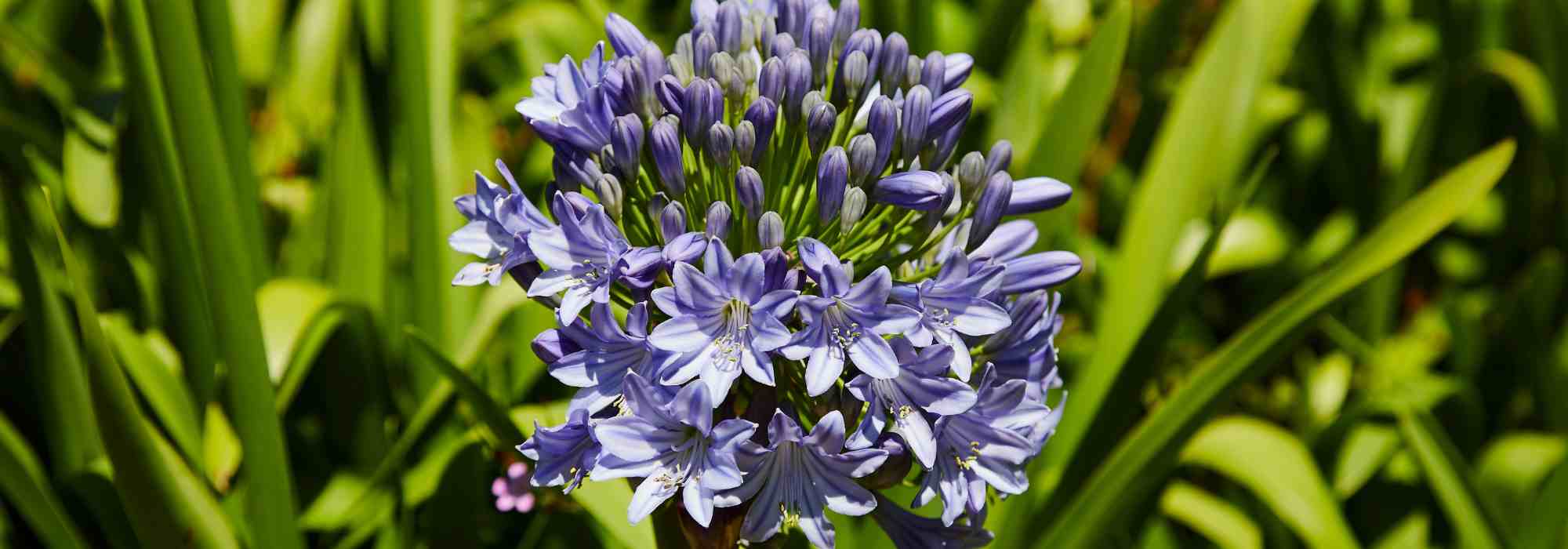
Plants that like to be root-bound
Needing little space, they are happy with small pots
Contents
Some potted plants don’t need to be repotted too often, as they like to keep their roots snug! This can even lead to more abundant flowering. It’s a matter of survival and adaptation: by limiting the root space, these plants focus on producing flowers and leaves rather than expanding their roots. It’s a bit like they tell themselves: ‘Since I can’t spread out, I may as well show off!’
It’s important to know which plants enjoy being a little snug so as to choose the right pot size, to look after them properly, and to better manage the timing of repotting. Among them are some foliage houseplants, but also a few flowering perennials in the garden such as Agapanthus! Here are some of these plants that enjoy being a little confined, surprisingly thriving in their tiny pots, for beginner gardeners or busy gardeners…

Agapanthus
These are the ones that first come to mind when we talk about plants that can stay in fairly small pots, because they have that reputation, even though they are also widely grown in gardens. Agapanthus are perennial plants native to South Africa that light up the summer with their umbels of flowers. White or blue, they love the sun, but tolerate partial shade and are hardy down to -8°C for some deciduous-leaved species. By limiting root space, you promote flowering. You should plant this plant in a pot up to 20–30 cm in diameter for a young specimen. A well-drained substrate and moderate watering are essential.
My tip: don’t waterlog them; they hate excess moisture! To encourage healthy growth, avoid repotting too often and keep up regular maintenance.
→ Also read: How to grow an agapanthus in a pot? and the best agapanthus to grow in pots.
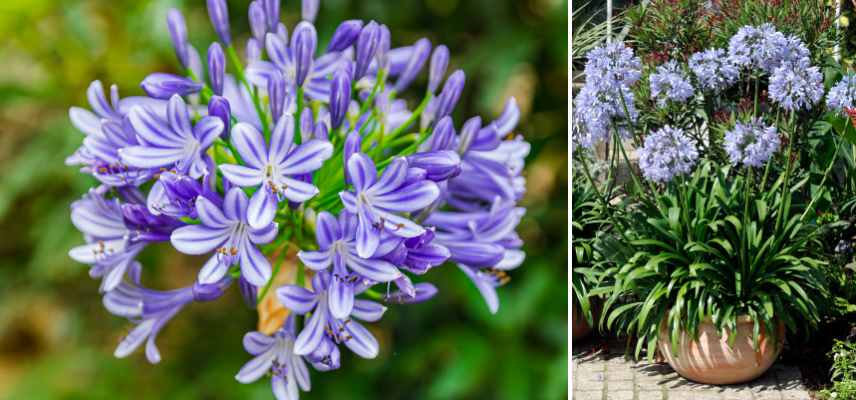
Grown in tight spaces, Agapanthus showcase their colours
Read also
The ABC of Pot PlantingClivias
The tighter the Clivias are packed into their pot, the happier they are! Their beautiful clumps increase year after year, thriving in pots that eventually become quite small, which don’t need to be changed as often. A key tip for busy gardeners or those with little time to devote to their indoor plants. These plants with fleshy roots are known to thrive in pots where their roots will be minimally confined.
Clivias are ideal for you if you want to create an exotic ambience indoors and on your terrace or balcony in summer. A two-in-one perennial, so to speak, and rightly so! With their strap-like leaves and tropical-looking orange flowers, they bring a holiday vibe to your home during their flowering (which lasts about a month). In summer, Clivias love to be outdoors, preferably in partial shade, where they display only their broad foliage, surrounded by other leafy plants. In the home, they prefer a bright position, but without direct sun and a temperature between 15 and 25°C. Hardy down to around -2°C, they require regular watering but not excessive, with a watering pause in autumn. By restricting root space, you greatly promote their flowering. Offsets will appear gradually, a sign that it’s time to repot, generally every four years, not before.
You will plant them in a pot no larger than 25 cm in diameter for a young plant.
My tip: add a little compost or a top-dressing of compost or potting mix in spring to boost them, as Clivias tend to push their roots to the surface, another sign that it will soon be time to think about repotting!
→ Learn more about growing it indoors at Growing a clivia indoors.
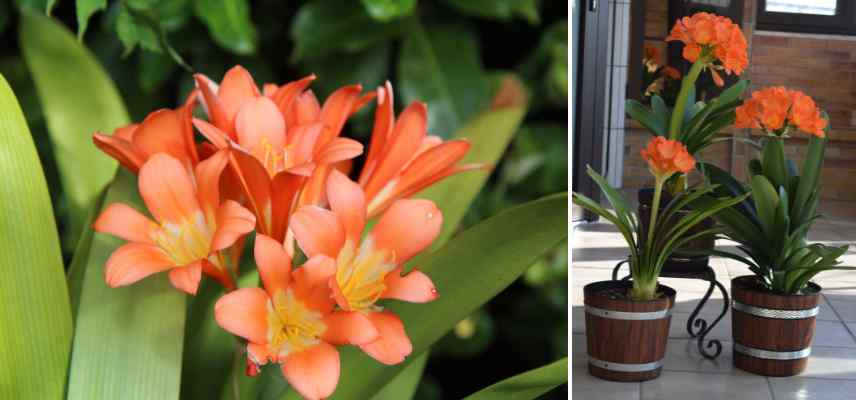
Clivias confer a real touch of the exotic with their orange-coloured flowers and strap-like foliage
Aspidistra
The Aspidistra eliator, or “the cast-iron plant”, is a hardy plant. Robust and easy to care for, it brightened building entrances in the 1980s, where it was relegated to that single role, not fearing dark places. Often left dusty, regarded as a granny’s plant, it didn’t look particularly appealing. And yet, the Aspidistra proves to be both a handsome indoor plant or a potted plant on a terrace: it adds a touch of lushness not to be neglected, forming over the years handsome green tufts with spear-shaped leaves, perfect for jungle vibes, paired with other graphic plants.
The Aspidistra is known for tolerating dry shade, which also makes it a good ornamental plant for beds under trees. But it is generally used in low-light interiors, as it adapts perfectly there. Don’t judge it too quickly and learn to appreciate its dark-green leaves. Hardy to -5°C, it requires moderate watering and well-drained soil. By limiting the root space, you encourage a more compact and denser growth in the Aspidistra. Plant it in a pot 20 to 30 cm in diameter, maximum, for a young plant, and repot it after three years into a slightly larger pot, but not necessarily any deeper.
My tip: regularly dust its leaves so it can breathe more easily! As in Spain or Italy, use it in an urban patio or in a container garden; it will tolerate regions with mild climates.
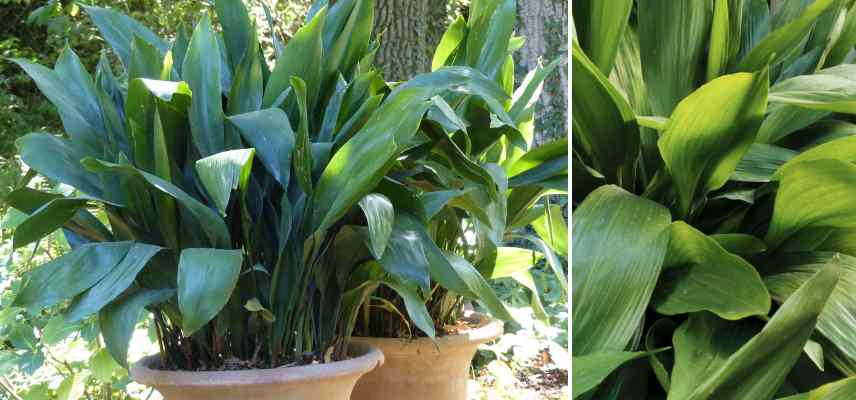
Aspidistra beautifully planted in terracotta pots: a plant to rediscover !
Read also
Watering potted plantsCrassulas
The Crassula ovata, also known as the jade tree, is a succulent native to South Africa. Its fleshy leaves are its main attraction (although it flowers discreetly in winter) and earn it the status of the epitome of an ornamental plant. It also loves having slightly restricted root space, which does not hinder it in the slightest.
It needs plenty of warmth and sun, as well as well-drained soil. Hardy to -1°C when potted, it is better grown indoors here. By limiting the root space, you also promote a more compact growth: the plant gradually develops a thick trunk, even in undersized pots. You will plant it in a pot up to 15–20 cm in diameter for a young plant.
My tip : Jade tree requires very moderation watering: water only when the substrate is dry! For optimal growth, avoid repotting too often, only every three to four years. Take it outside for the summer.
→ Also read Growing a jade plant indoors.
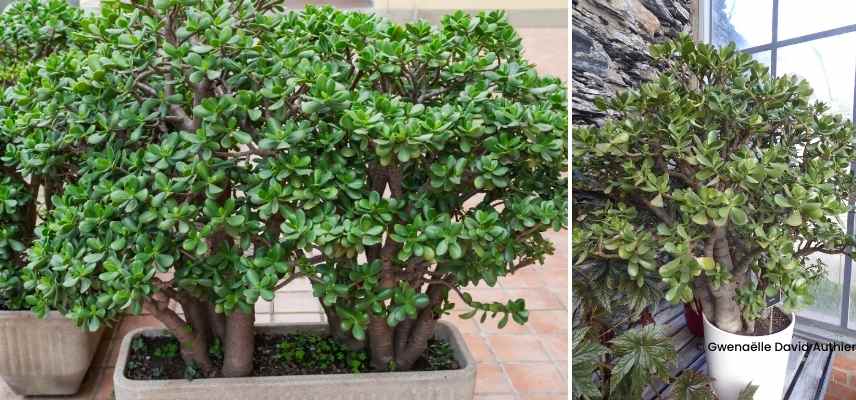
Crassulas can live for a long time in very little soil (photo: Gwenaëlle David Authier)
Hoyas
Hoyas, also called porcelain flowers or wax flowers, are tropical climbing plants appreciated for their graceful and fragrant flowers. They prefer a bright exposure, but not direct sun (for example, west-facing), and a temperature between 18 and 25°C. Hardy down to 10°C, they are only suitable for indoor cultivation. They require regular watering, but not excess. Why do hoyas like small pots? Because restricted space also stimulates their flowering, and that’s the great advantage of this indoor plant. By reducing their root space, you will in return achieve generous flowering. You will plant the hoya in a pot with a maximum diameter of 20 to 30 cm for a young plant.
My tip: add at planting one or two circular supports to help them climb and flourish! Repot every three to four years.
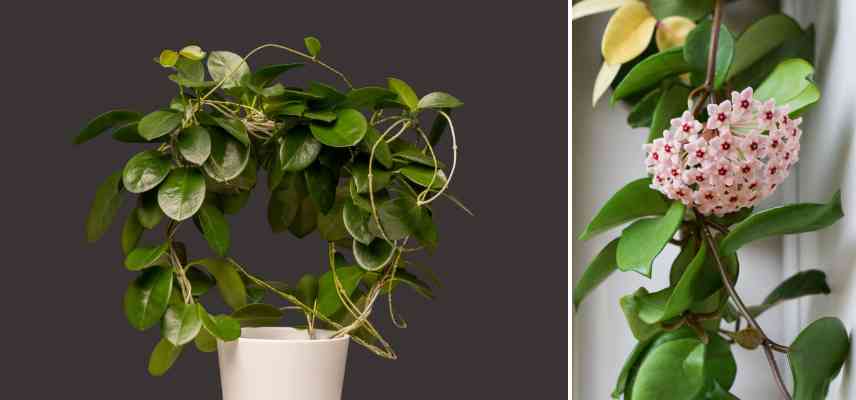
Hoya carnosa
The Sansevieria
The Sansevieria, or mother-in-law’s tongue, is a very easy indoor plant to care for. Not only does it rarely need repotting, but it will shrug off the occasional missed watering! A true beginner’s indoor plant, ideal for people who are away frequently and for those who don’t have green fingers.
Its vertical, graphic leaves make it an original and bohemian plant (it belongs to the same family as agaves). It prefers bright light but tolerates semi-shade. Hardy down to 10°C, Sansevieria requires moderate watering and a well-drained potting mix. By limiting root space, you promote compact growth and a healthy multiplication of its foliage.
Plant it in a pot no larger than 20–30 cm in diameter for a young plant, and repot it every four years, at most.
My tip: don’t overwater it; it hates excess moisture! Renowned for its air-purifying qualities, place it in a living room with contemporary furnishings or in rooms that have been recently repainted.
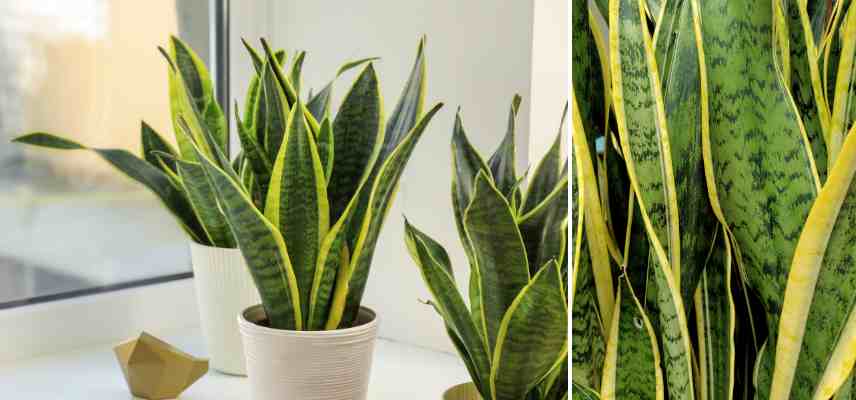
The Sansevieria, graphic and on-trend
Zamioculcas
The Zamioculcas are tropical plants native to southern and eastern Africa. Their current popularity largely stems from their ability to withstand challenging conditions, particularly indoors with low light and dry air. The glossy, tough and waxy leaves of Zamioculcas have a striking and modern look that works well in contemporary décor. Additionally, these plants are known for their air-purifying abilities: they can help remove common toxins such as benzene and formaldehyde.
Growing very slowly, you won’t need to repot it very often. The ZZ plant (its other common name) is low-maintenance and only requires repotting every four years.
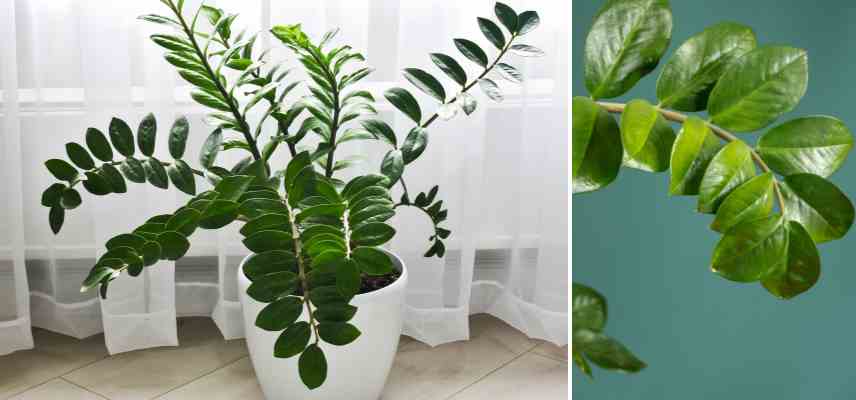
Zamioculcas zamiifolia
But also...
All the plants cited in this article, including indoor plants, can literally perish if their pot is too deep or wide!
Among the plants most sensitive to pot size, there are many cacti and succulent plants that are also content with a pot narrow in relation to the plant’s size (Echeveria, Haworthia, sedums, etc.). Les broméliacées, whose rosette dies after flowering, such as Guzmania, Billbergia and Tillandsia to name but a few of the best known, also do not need a large pot to develop properly.
Let us also mention the Polyscias, a genus of plants primarily tropical, belonging to the Araliaceae family. Native to Asia, the Pacific and Africa, they are characterised by dense and often colourful foliage, adopting either lobed foliage or more finely divided and delicate.
- Subscribe!
- Contents
Comments