



Getting one's hands dirty in the soil again on St Catherine's Day
The pleasure of gardening in autumn
Contents
When autumn settles in, the garden changes pace. The light becomes softer, the foliage takes on warm hues, and the soil regains some suppleness under the first rains. It’s a time to slow down, observe and plant! For, as the French saying goes: “On Saint Catherine’s Day, all wood takes root“. It’s time to dust off your boots, your dibber, your spade and enrich the garden with new bushes, perennials and bulbs that can take root quietly in the garden over winter. A reminder of the pleasure of getting your hands back in the soil.

Autumn: exceptional conditions for planting
In autumn, the soil enjoys a rare balance. It, hardened by the heat and drought in summer, becomes supple again following the onset of the first autumn rains. Humidity takes hold gradually, facilitating soil work and rooting. The organic matter, decomposing, naturally nourishes the soil and supports life underground. In this stable environment, young roots easily find their way, carried by a soft, living soil.
In Mediterranean regions, it is even the best season for planting and giving plants more time to establish themselves, to face the next summer (note that you are advised to keep an eye on watering during the first two summers after planting).
On St Catherine’s Day, the garden presents a clearer picture. Perennials begin to die back, the foliage lightens: it is easier to spot areas that lack presence, those too bare or those that could welcome a new tree.
And what about the gardener in all this? No longer overwhelmed by the heat of summer, he can use this season to rethink his garden and plant without rushing, while observing the soil textures. All this in a sublime autumn display, with colours blending gold, red and orange.
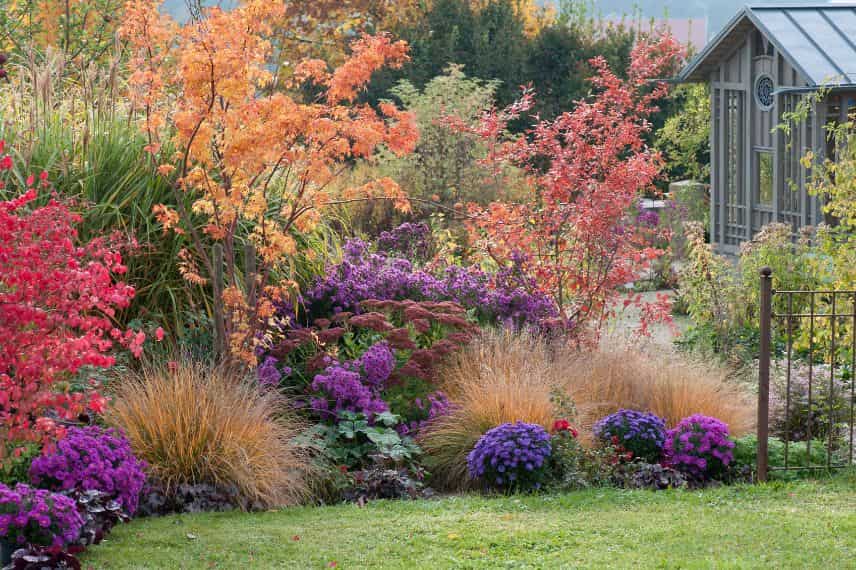
The autumn garden takes on magical colours
Saint Catherine's Day, a moment that awakens the urge to plant
For many gardeners, Saint Catherine’s Day is the calendar marker that marks the start of autumn planting, or the cut-off date in some regions where cold sets in quickly. But what is it really?
There is first a biological reality: in autumn, plants gradually enter dormancy. Sap flows more slowly, the wood lignifies, the leaves fall and growth activity comes to a halt. This dormancy makes plants far easier to handle and better able to withstand the stress of planting.
It is also the moment when the roots continue their quiet work. Even though the above-ground part slows, the underground system remains active as long as the soil retains a little warmth. By planting in autumn, we give plants the opportunity to develop their roots before spring, and thus better resistance to the following summer.
Saint Catherine’s Day is, however, only a symbolic milestone. The planting window is in reality much wider. From October, when temperatures drop and rains naturally re-wet the soil, up to December (and sometimes even up to March in warm regions) provided that you avoid days when it freezes and waterlogged soils. The best is to adapt your plantings to your local climate and the real state of the garden rather than a fixed date.
This is also (at least for me) the last period when you can enjoy your garden before a (too long) winter rest.

What to plant on St Catherine's Day?
On Saint Catherine’s Day, the garden naturally offers a beautiful diversity of plantings.
- fruit trees (apple trees, pear trees, cherry trees, etc.) are particularly suited to this period, as their root system benefits from soil that remains soft enough to take root deeply. The more tender fruit trees (orange trees, lemon trees, apricot trees, etc.) will be planted in spring.
- shrubs, too, easily find their place in soil moistened by autumn rains.
- roses are often more vigorous when planted outside the active growing period.
- climbing plants follow the same rhythm and use winter to prepare their future growth. Note that clematis prefer spring planting.
- hardy perennials, when they are no longer actively growing, can also be planted or moved in autumn.
- spring-flowering bulbs(tulips, daffodils, hyacinths, crocuses…) are planted in early autumn.
The bare-root plants (perennials, fruit trees and shrubs) establish themselves particularly well at this time, as they are sold in their dormant state. Without a container, their roots come into direct contact with the soil, which facilitates establishment. Their more affordable price allows you to plant more or plan more ambitious projects, such as a full hedge, several fruit trees or a planting bed to define.
Tip for successful bare-root planting: before planting, perform a root coating. It is enough to coat the roots in a muddy mixture (a blend of water, garden soil, compost or manure) before planting to prevent their drying out and encourage the formation of new rootlets. Read our article “the root coating of trees and shrubs” for more information.

Frequently Asked Questions about Saint Catherine's Day and autumn plantings
Why plant on Saint Catherine’s Day?
Because plants enter vegetative rest. Their sap flows more slowly, above-ground growth ceases, and they tolerate handling better. The soil remains soft enough for the roots to establish themselves comfortably before winter.
Can you plant only around 25 November?
No. The actual planting period is much broader. You can plant from October, and continue in December, January or even March as long as there is no daytime frost and the soil is not waterlogged.
What should you do if the soil is waterlogged?
It’s better to wait. Soil that is too waterlogged becomes compacted and risks suffocating the roots. There is also a risk in case of frost. We plant as soon as the soil becomes soft again and well-draining, even if that means waiting until spring.
Can you plant in cold weather?
Yes, as long as the soil is not frozen. A cool temperature does not trouble the roots; on the contrary, it reduces the plant’s stress.
And what if a frost period arrives just after planting?
No need to worry: a light frost won’t damage a recent plant. We would recommend mulching the surface of the soil around the plant with chips, bark, straw, etc., to protect the roots from the cold. We simply avoid planting when the soil is frozen during the day.
Can you still relocate plants in autumn?
Yes, as long as they are in vegetative rest and the soil remains workable. Hardy perennials, young bushes and rose bushes relocate easily at this time.
- Subscribe!
- Contents

Comments