


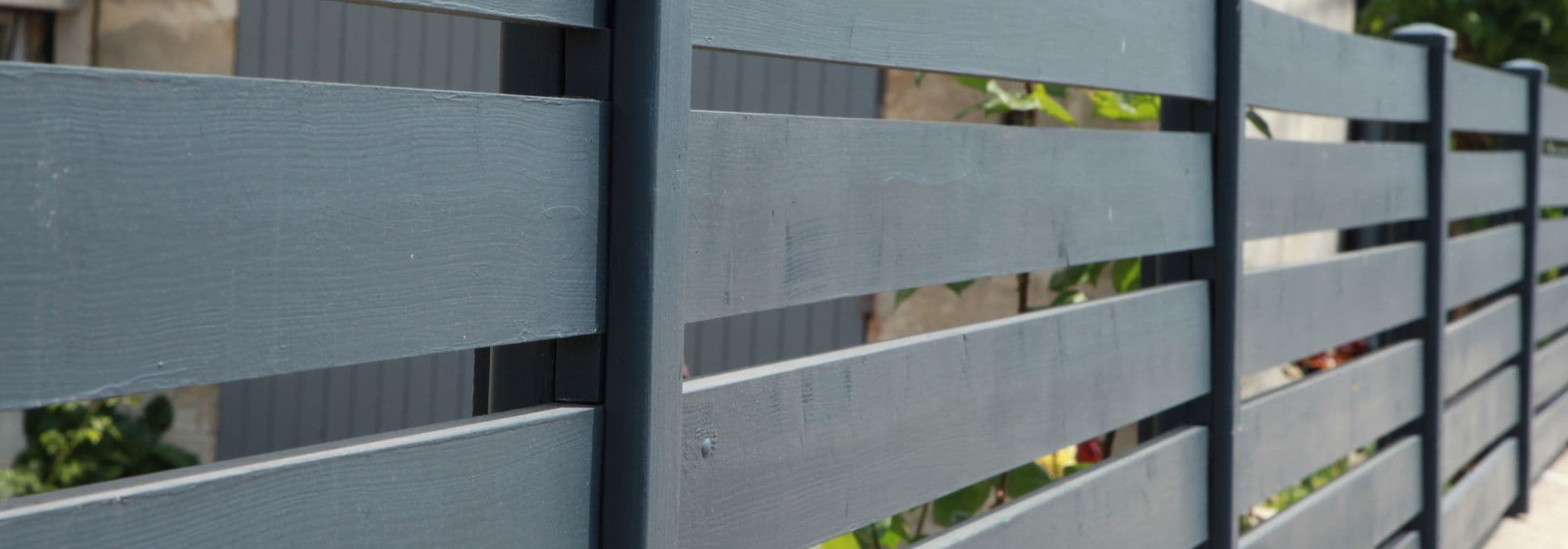
Which fence to choose for a garden exposed to the wind?
Our tips and solutions
Contents
Living in a garden exposed to the wind can sometimes pose a few small problems : gusts that shake everything in their path and storms that put your garden installations to the test. That’s why choosing the right fence is essential. Not only will it protect your garden, but it can also be a handsome aesthetic asset… if you make the right choice!
In this article, we share our tips for finding the perfect fence for your garden. We will review the key points to consider, the designs that stand up best to the wind, the materials to recommend, and some practical tips for a wind-resistant installation.

How to choose a fence for a windy garden?
Before rushing to a fence that looks attractive, take a moment to ensure it truly meets the requirements of a wind-exposed garden. Here are the four key points not to neglect:
Durability of materials
To resist gusts, the durability of the materials is paramount. Opt for durable materials:
- Solid wood or composite wood: Natural and warm, solid wood is sturdy but requires maintenance (stain, varnish), especially by the sea. Composite wood, on the other hand, is durable and maintenance-free.
- Metal (steel or aluminium): Very strong and modern, metal suits contemporary designs well. Aluminium, lighter than steel, is ideal for openwork fences. Steel requires a corrosion-resistant treatment (stainless finish and/or painting), especially by the coast.
- Reinforced PVC: Light, economical and easy to maintain, it is particularly suitable for low fences in moderately windy areas.
However, avoid solid wood panels, as well as PVC fences that are too thin, which may crack or tear under strong winds. Flexible meshes can also deform quickly.
Wind flow
You may think that a solid fence is the best option for blocking the wind… Yet the opposite is true! A completely opaque fence catches the wind and is more likely to become destabilised… or ripped away in a strong storm. Prefer openwork fences (spaced slats, mesh, bush hedges…) which allow some wind to pass through and thus reduce the pressure exerted on the structure.
Fence height
Finally, beware of choosing a fence that is too tall, especially if it is installed on very exposed ground. The taller a fence, the more wind it catches and the more likely it is to weaken. Opt for a reasonable height (between 1.20 m and 1.80 m) and adjust it according to your needs for privacy and protection. For very exposed gardens, prefer a low hedge or a small fence… or even a low wall like those along the Breton coast.
Strengthen fixing and ground anchorage
Choose sturdy posts (wood, metal or concrete) firmly anchored in the ground with concrete footings.
Read also
10 climbing plants ideal for fencesTypes of fencing suitable for windy areas
Bush hedges
If your aim is to protect yourself from both the wind and prying eyes, while defining the boundary of your plot and aiding biodiversity (birds and insects), installing a windbreak hedge is probably the best solution. In spring or autumn, plant wind-tolerant bushes: the golden yew, Taxus baccata ‘Semperaurea’, the cherry laurel, Prunus laurocerasus, the hornbeam or beech, the common holly, the pyracantha, the evergreen viburnums, etc. In coastal areas, think of Leyland cypress, Elaeagnus, privet, Photinia, Escallonias, etc.
→ Find our tips and recommendations for bushes in these articles: “How and why to create a windbreak hedge?” and “The 10 best bushes for creating a windbreak hedge”.
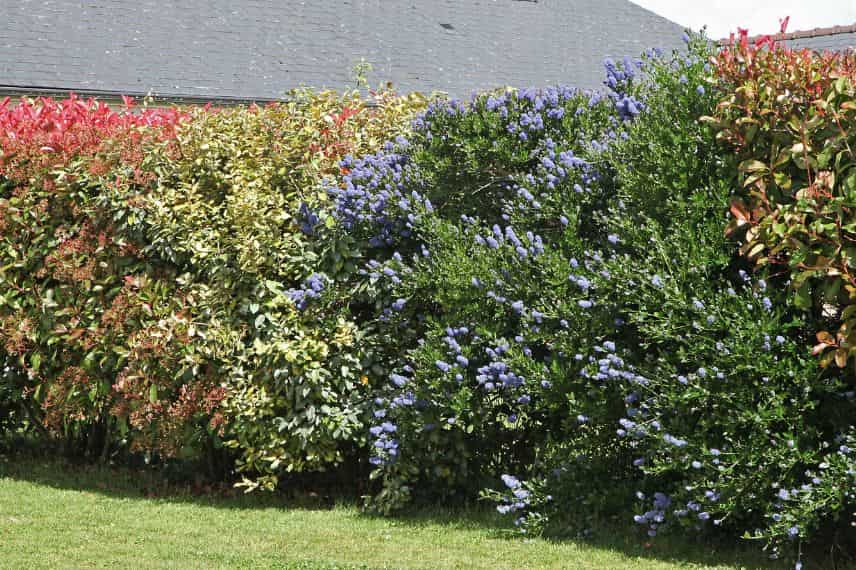
Photinia ‘Red Robin’, Elaeagnus ebbingei and Ceanothus
Openwork fences
Openwork fences are ideal for minimising wind pressure on the structure, letting air pass through, while delimiting the garden. Here are a few examples:
- Openwork wooden panels: Perfect for a warm and rustic style, these lattice screens let wind pass between the slats, which can be openwork (Venetian panel) or inclined. They should be firmly fixed to sturdy posts to ensure stability. They are usually available in rough-sawn wood or composite in the trade.
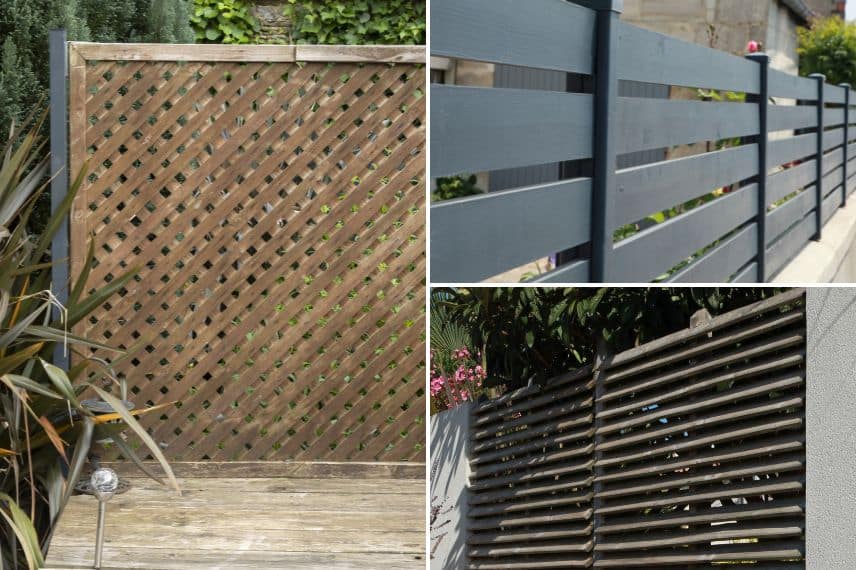
Examples of openwork wooden panels
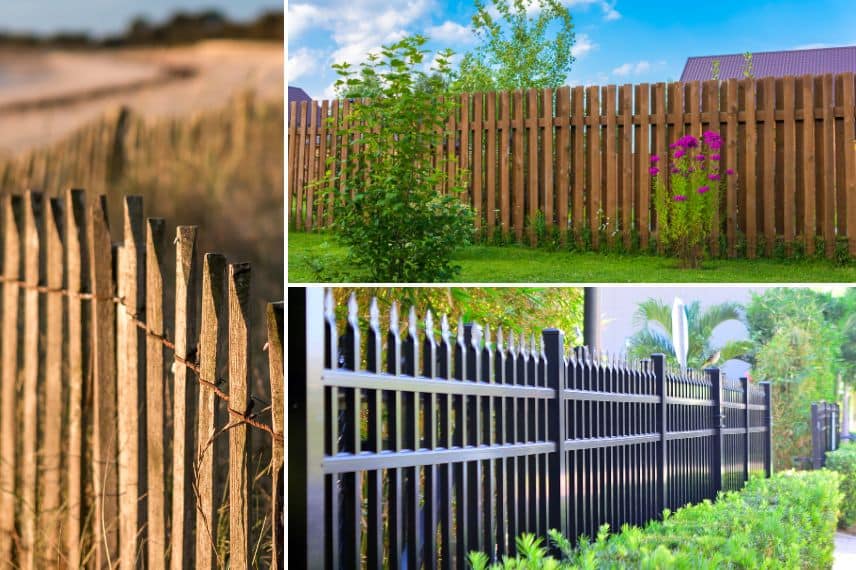
- Wooden fences and ganivelles (woven hazel fences): As with openwork panels, wooden fences let wind pass through. Plan for coastal wood treatment (marine varnish or stain). Ganivelles, in particular, bring natural charm and great wind resilience, while being easy to install. They are ideal for coastal, sandy or rural gardens.
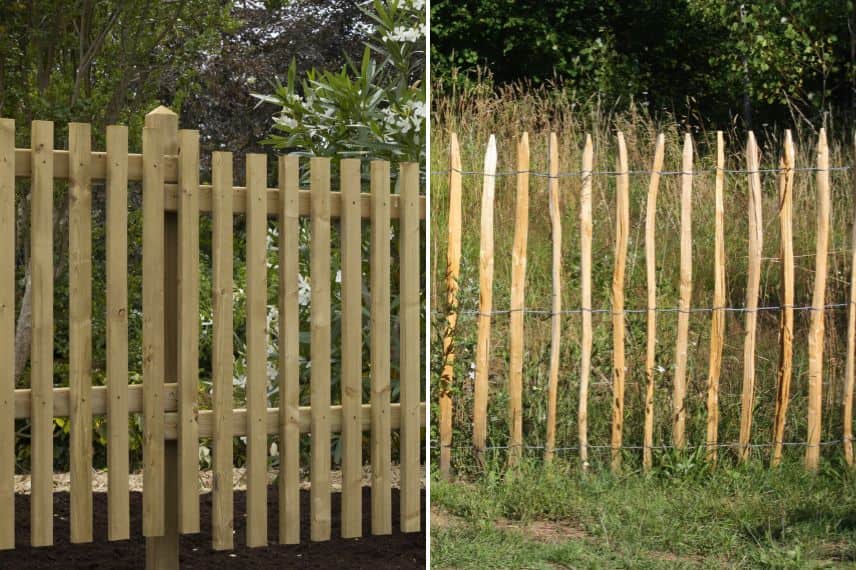
Wooden fence and ganivelle
- Rigid mesh fences: Very sturdy, these metal meshes are perfect for modern and windy gardens. You can add a windbreak with PVC slats or wood slats for a touch of privacy, while allowing the wind to circulate. And why not plant climbing plants such as a clematis, jasmine or honeysuckle?
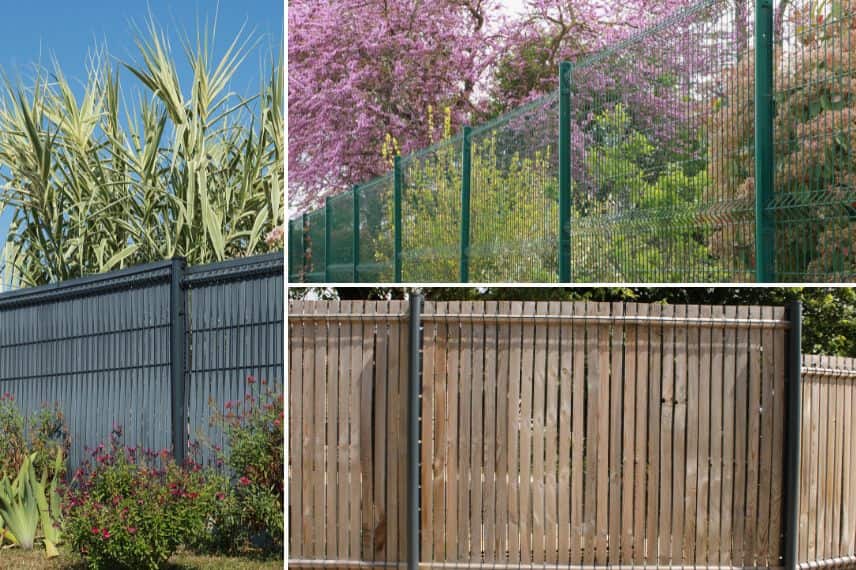
Des grillages rigides, avec ou sans brise-vue
- Openwork metal fences: Offering a contemporary look, these fences are often made from steel or aluminium. They come in many designs, such as geometric or floral patterns, and their sturdiness is a major advantage. Be mindful of steel in coastal areas: opt for stainless steel or a QUALIMARINE ® certified paint that resists sea spray.

Openwork metal fences
Our wind-resistant installation tips
- Solid anchorage for posts: Bury them deeply (at least 30 to 50 cm depending on fence height) and set them in concrete to ensure their stability.
- Proper spacing of posts: Compared with a standard fence, reduce the gap between posts (for example, space them 1.5 metres apart rather than the recommended 2 metres) to prevent the fence from bending under wind pressure.
- Additional reinforcements: Add stays or angled braces to strengthen the framework, especially for tall fences. You can also pair wire mesh with a hedge of bushes to reinforce the first line of defence.
- Subscribe!
- Contents
Comments