



Diseases and parasitic pests of Ficus
Identification, prevention and natural solutions
Contents
Ficus are indoor plants with the look of miniature trees, very easy to care for. They are usually among the first plants adopted by people looking to bring a touch of greenery into their homes. Ficus lyrata, Ficus elastica, Ficus benjamina… There are different species, able to suit all tastes and blend into any décor style.
Although they do not require much maintenance, ficus can be susceptible to certain diseases and to certain parasitic pests. Let us look at their symptoms, how to prevent risks and, if necessary, apply natural treatments to keep healthy ficus.

Although easy to grow, ficus can sometimes show symptoms that are often the result of improper care

Cryptogamic diseases of Ficus
Cryptogamic diseases are conditions caused by fungi. They are also called fungal diseases. They are the most common in the garden, both in the vegetable patch and in the orchard or ornamental garden. But they can also strike indoors, notably on Ficus. These are contagious diseases that can rapidly spread to neighbouring plants. Moreover, their spores can remain in the growing medium for several months. Generally, warm, humid and confined conditions favour their development.
Root rot
Root rot is caused either by overwatering or by poor drainage of the substrate. In either case, it is water stagnation around the roots that causes them to rot. You will notice that the leaves of the Ficus turn yellow and drop. Another symptom: the trunk will gradually soften. If you remove the roots from the pot, you will notice they give off a bad odour and turn black.
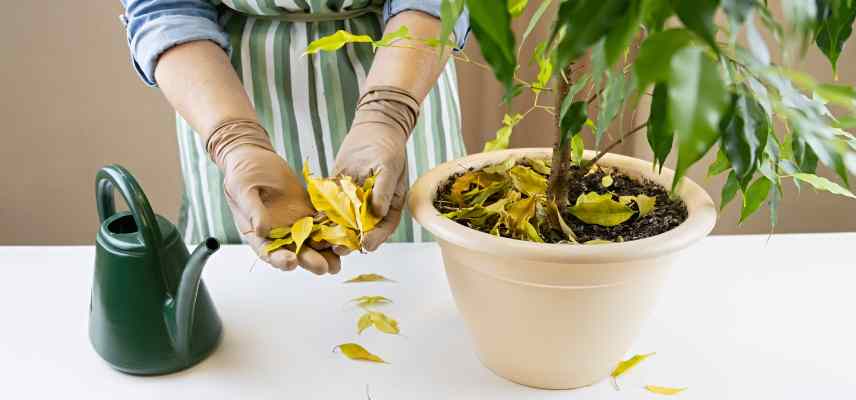 The foliage turns yellow and drops: this may be due to improper watering
Powdery mildew
If powdery mildew is also known as the “white disease,” it references its main symptom: a white, powdery deposit that appears on the Ficus leaves. This disease causes deformation of the leaves and stems, then affects the plant’s overall health.
Leaf spots
They are brown or black spots that appear on the plant’s foliage. They are caused by fungi or possibly bacteria. Excessive humidity is, here again, often to blame.
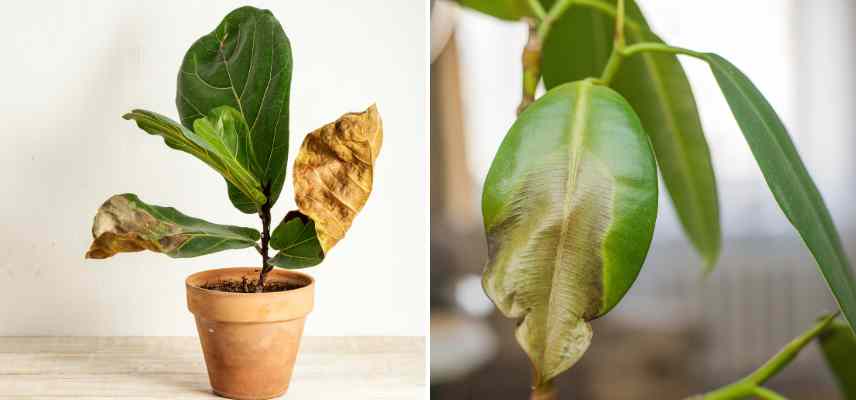 The spots and the leaf desiccation may be due to fungi on Ficus
Prevention and natural remedies for cryptogamic diseases
Cryptogamic diseases cannot always be cured, which is why preventive measures are crucial.
Start by improving the growing conditions of your Ficus. A plant whose needs are met will always be more resistant to diseases and pests, more resilient. Ficus plants prefer bright light, but not direct sun which can burn the leaves. Do not place them directly behind a south-facing window without a curtain. Opt for a well-ventilated room, but avoid strong drafts and major temperature changes, which can cause leaf drop.
Watering is carried out as soon as the substrate is dry to 2–3 cm on the surface. Allow for about one watering per week in summer and one watering every 2–3 weeks in winter (depending on the ambient temperature). Ensure a container with a bottom drainage hole and avoid pots with a water reservoir. If you reuse an old container, make sure to clean it thoroughly with hot water and black soap, then rinse with a little water mixed with white vinegar to remove any potential pathogens. If your Ficus is grown with a saucer or cachepot, remember to empty excess water after about thirty minutes. The growing medium (the soil in which the plant will grow) should be well-draining, i.e. water should be able to flow away easily. For example, opt for a special indoor plant potting mix or for a blend of 2/3 standard potting compost with 1/3 sand or other draining elements (clay balls, gravel…).
If the atmosphere is dry, you can mist the foliage with non-calcareous water (rainwater preferred) at room temperature to provide a little humidity. Repot the plant every 2–3 years when the roots start to emerge from the drainage holes. In other years, simply top-dress by renewing only the first centimetres of soil.
If you need to prune your Ficus to harmonise its shape or remove damaged branches, always use cutting tools disinfected beforehand with 70% alcohol. This simple step helps limit the spread of diseases between plants. Remember that the latex produced by Ficus can be irritating: therefore wear gloves or wash your hands promptly after pruning.
To support the plant’s growth, you can apply liquid fertiliser for green plants from spring to summer. Follow the dosages carefully: over-fertilising can weaken the plant, which will then be more susceptible to diseases.
If you notice the first symptoms of a cryptogamic disease, promptly cut away the affected parts and dispose of them in the household waste (do not leave them in the pot). Optionally, test the nettle manure (even if its odour is not always very pleasant indoors), which is reputed to prevent cryptogamic diseases and strengthen the plant’s natural defences. Use it diluted, then spray onto the plant.
In case of root rot, depot the plant and replant it in fresh substrate after trimming all damaged roots.
In addition, discover our articles All you need to know about cryptogamic diseases and Powdery mildew or the white disease.
The parasitic pests of Ficus
In addition to diseases, Ficus can be attacked by small pests. These very common pests typically feed on the plant’s sap, which can cause leaf distortion, leaf drop and a slowdown in the overall growth of the Ficus. But some of these pests also produce honeydew, a sticky substance that promotes the development of a cryptogamic disease called sooty mould. It forms a black soot-like deposit on the foliage and disrupts the photosynthesis process, essential to the plant’s survival.
Hot, dry, almost confined conditions often promote pest outbreaks.
Mealy bugs
The first signs of mealybug presence are white cottony or powdery masses on the foliage (undersides and veins) and the branches of Ficus.
To learn more, discover our article: Mealybug: identification and treatment
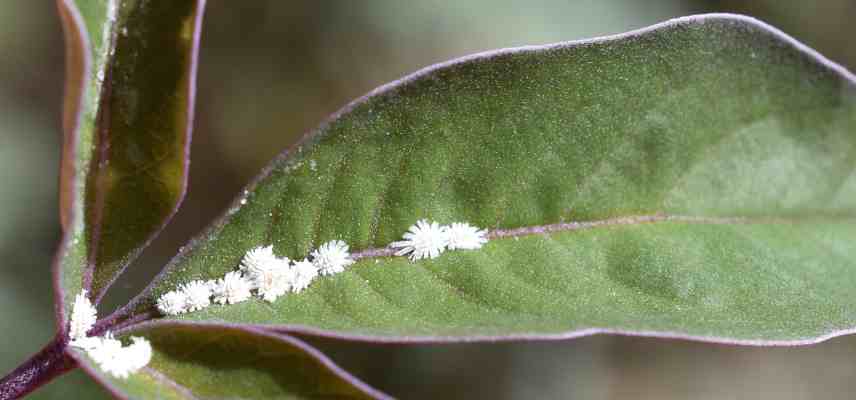
Mealybugs are identifiable by white masses
Red spider mites
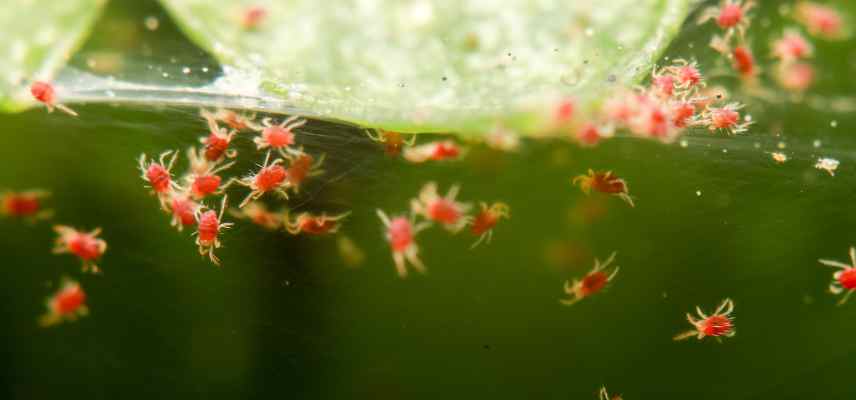
Red spider mites are tiny mites that measure only about 1 mm. Hard to see with the naked eye. However, you will notice their presence by the appearance of fine webs resembling spider’s silk under and between the leaves. Moreover, the foliage will gradually develop small yellowish spots.
For more information: Red spider mite: identification and treatment.
Aphids
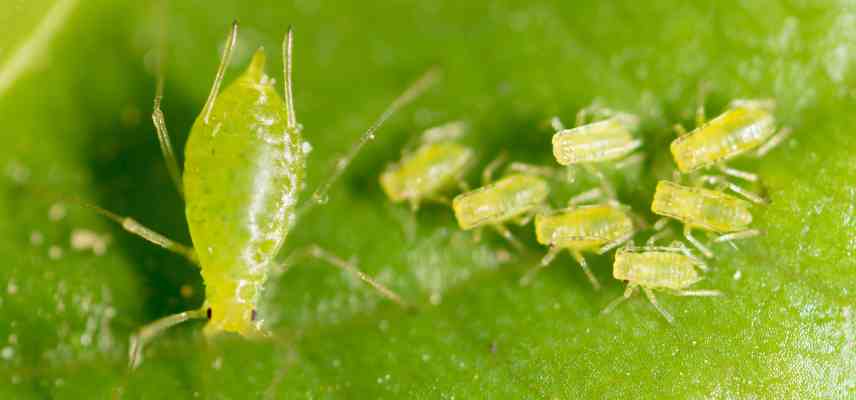
Other well-known pests: aphids. Different species can colonise indoor plants, in green, black or yellow colours. Aphids form colonies that are visible especially on the Ficus’s tender new growth.
For more information, discover our article: Aphid: identification and treatment.
Thrips
These tiny elongated insects are quite difficult to spot. They indeed often hide under the leaves and can even fly. Symptoms include silvered or brownish spots on the foliage, deformities of the young shoots and a general weakening of the plant.
For more information, discover our article: Thrips: identification and natural treatment.
Prevention and natural solutions against Ficus pests
Observation is the best form of prevention, as it will allow you to quickly spot the first pests, before infestation. Remember to dust the Ficus foliage regularly with a soft, damp cloth. On the one hand, this will promote the photosynthesis process and help maintain a glossy appearance; on the other hand, it’s a step that will help you check for any potential pests.
Ensure that the new plants you place indoors are healthy and free from pests that could easily contaminate neighbouring plants.
As with combating diseases, provide good cultural conditions for your Ficus: suitable exposure, measured watering, well-drained substrate, moderate fertilisation.
If you notice pests, start by washing the Ficus foliage with water. Humidity and the water jet can be enough to dislodge the unwanted visitors. Mealybugs can be removed manually with a cotton bud soaked in 70% alcohol. In cases of heavier infestation, make a natural insecticide based on black soap. Choose pure black soap, then dilute one tablespoon with one tablespoon of vegetable oil (rapeseed, sunflower…) in 1 litre of warm water. Pour into a spray bottle, shake, then spray onto the affected parts. Repeat the operation after 8 to 10 days if needed.
You can also install colour traps, in the form of adhesive bands that capture the pests. We advise against them outdoors since they are not selective and can trap other insects, but they can provide an alternative treatment indoors. This is, however, not the most aesthetically pleasing solution.
- Subscribe!
- Contents
Comments