


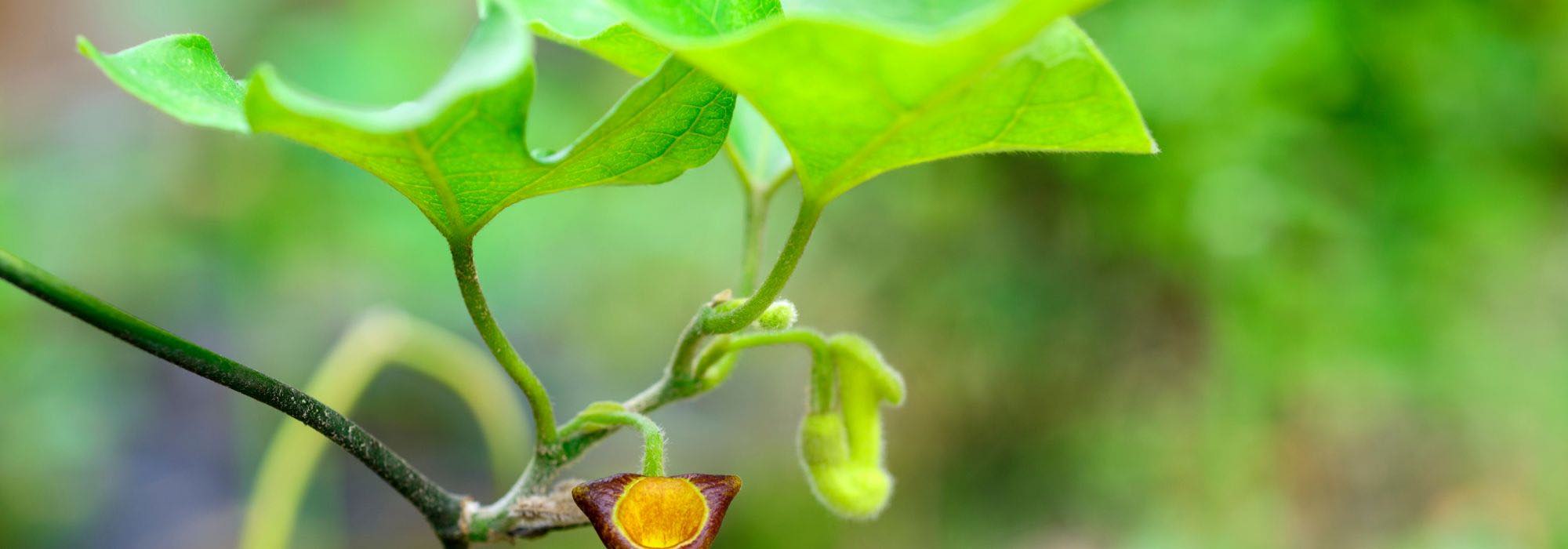
Growing Aristolochia in a pot: tips and care
An exotic, voluble climbing plant
Contents
Aristolochia, a climbing plant with lush foliage and pipe-shaped flowers, is ideal for adding an exotic and decorative touch to your balcony or terrace. With heart-shaped leaves and twining stems, it quickly transforms a space into an oasis of greenery.Cultivating Aristolochia in pots allows you to control its growth while enjoying its beauty in small spaces, or to overwinter it in cold climates. This article provides the essentials for growing it in pots, from the ideal position to seasonal care. Follow our tips to make the most of this fascinating climbing plant!
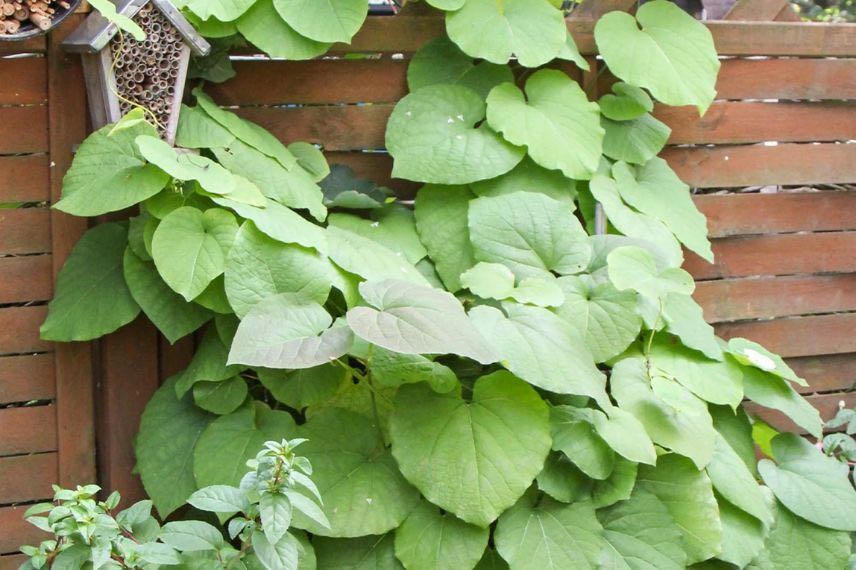
Aristolochia climbing plant (macrophylla)

Distinctions among species
Two species are mainly marketed.
Aristolochia macrophylla, which behaves as a climbing plant and can form long lianas up to 8 m.
Aristolochia clematitis, with a herbaceous perennial habit, which can reach up to 2 m in height.
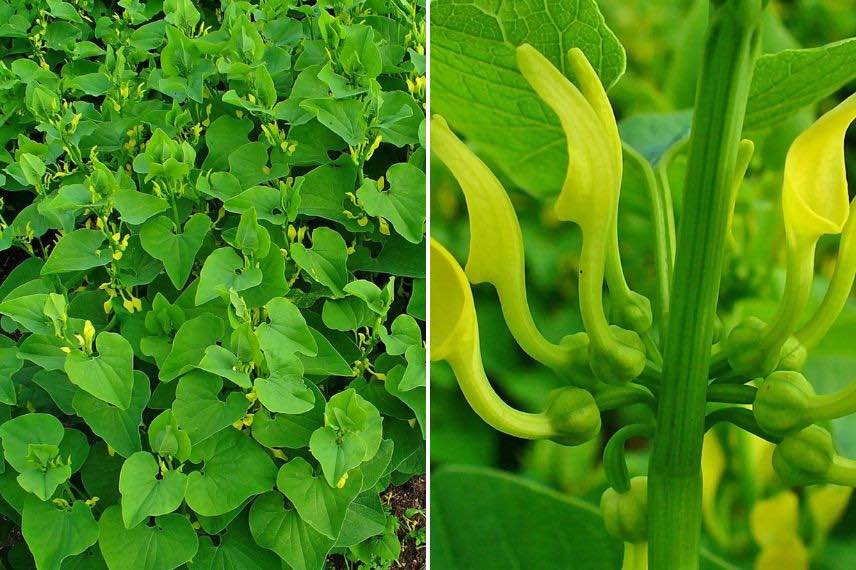
The non-climbing version: Aristolochia clematitis
What type of pot and size?
Choose a pot large enough for this climbing plant with vigorous growth, a twining habit, and running roots.
Aristolochia needs space for its roots. Choose a large and deep pot, at least 30 cm in diameter and depth, but don’t hesitate to opt for a pot 40–50 cm in diameter and depth.
As Aristolochia grows in well-drained soil, never waterlogged, but always moist during the growing period and the warmer and drier seasons, terracotta pots are recommended, as they allow better evaporation of moisture, thus reducing the risk of root rot. This will, however, require very frequent watering in spring and summer.
You may opt for a plastic pot to space out the watering a little more, provided you check that the potting mix does not retain water for too long after watering.
Make sure, whatever the material, that the pot has drainage holes to prevent water accumulation.
Aristolochia macrophylla is a climbing plant that clings with its twining stems. It will need a trellis, a stake, or an arch to climb. Install a support sturdy enough to bear the plant’s weight, as it can become heavy in full growth. A trellis fixed to the wall, or even several bamboo stakes placed in the pot, can work well.
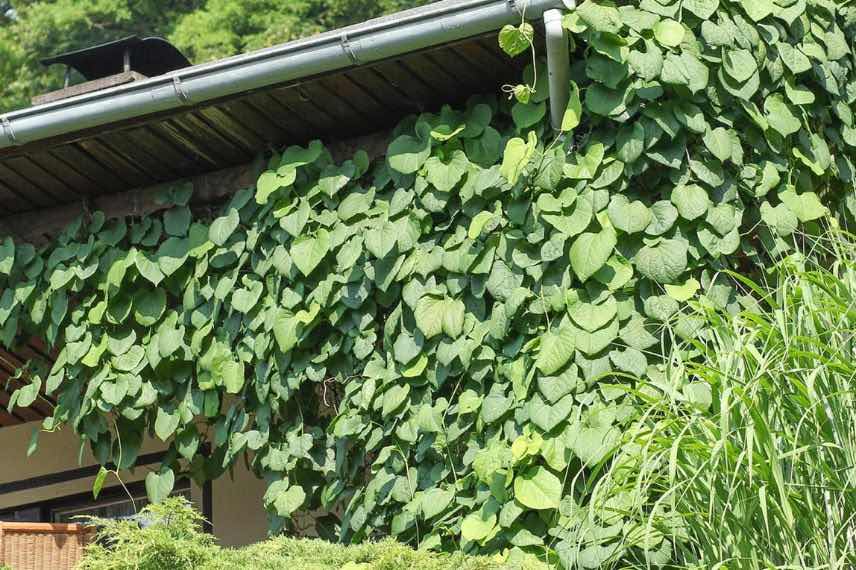 Not pruned, Aristolochia will spread widely (it will be more modest in a pot).
Which substrate?
Aristolochia is not particular about soil type as long as it is well-drained, but it prefers clay soils rich in organic matter. It tolerates lime.
In a pot, prepare a rich, well-drained growing medium with good water retention. Use a high-quality universal potting compost as a base, checking its water-retention capacity, indicated on the bag or in the online technical data sheet. A well-rotted compost addition, if you can obtain some, is ideal for improving structure, water retention while also aiding drainage, and providing nutrients. Otherwise, opt for an addition of vermicompost.
Add 20% of a drainage material such as perlite, vermiculite or river sand, for example. If you have a garden and clay soil, you can also use it up to 40% maximum in the mix, and in this case increase the amount of drainage material to 30%.
To prevent water stagnation, start by adding a drainage layer at the bottom of the pot (2 to 5 cm) with clay balls, or gravel. This will allow excess water to drain more easily and reduce the risk of root rot. Check from time to time that the drainage holes are not blocked, especially after several growing seasons.
Ideally plan for organic mulch.
When and how to plant?
In regions with a mild climate in the south of France, you can plant Aristolochia in early autumn, September–October, so that it can establish itself before the coming heat of the following spring and summer.
Otherwise, plant it between March and May after the cold and frosts have passed.
How to proceed?
- Pour a drainage layer a few centimetres deep at the bottom of the pot in the form of clay balls, gravel or broken terracotta.
- Soak the Aristolochia rootball for about 30 minutes.
- In a separate container, mix the different components of the substrate.
- Add substrate to the pot to cover about half of the container.
- Plant the Aristolochia.
- Top up with substrate, gently and evenly tamping it down.
- Fill up to a few centimetres below the rim of the pot and tamp down again.
- Water thoroughly.
- When the water has been absorbed, add a little more substrate if necessary, if any gaps have appeared.
- After a few minutes, water again.
- Ideally, apply a layer of a few centimetres of organic mulch to retain moisture in the substrate.
Where should Aristolochia be planted in a pot?
Aristolochia prefers a sunny or partly shaded position.
In cold regions, be sure to choose a wind-sheltered, warm position against a well-exposed wall. In the south, prefer a position that is shaded during the hottest hours.
Aristolochia dislikes winters that are too cold or periods of drought.
You can also grow it in a greenhouse or conservatory and plant it outdoors in summer.
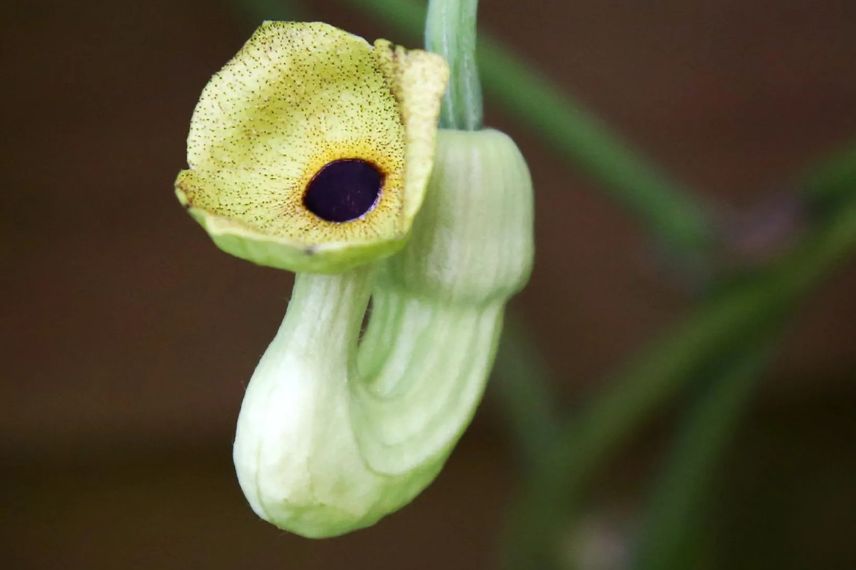 Aristolochia flower
Watering and fertilisers
Growing Aristolochia in a pot requires regular care to ensure the plant stays healthy and vigorous. Even though Aristolochia is robust, it needs tailored care to develop well and produce its magnificent foliage and its unusual flowers.
Watering
Aristolochia likes a slightly moist substrate, but it is essential not to overwater it. Water so as to keep the potting mix moist without excess. In summer, you may need to water two to three times per week, especially if the plant is exposed to full sun. In winter, however, reduce watering to once every 10 to 15 days, when the plant is in its rest period.
Before watering, check that the potting mix is dry to the top few centimetres. If the substrate is still moist, it is best to wait one or two days to avoid excess water, which can cause root rot.
Water directly at the base of the plant so that water reaches the roots. Avoid wetting the leaves, as this can attract fungal diseases.
Fertiliser
Aristolochia in a pot needs extra nutrients to compensate for substrate depletion over time. During the growing period, from March to September, apply a liquid fertiliser every 4 to 6 weeks.
Use a fertiliser rich in potash (for example, a fertiliser for flowering plants), as potash promotes flowering and strengthens the stems. Nitrogen-rich fertilisers, on the other hand, can stimulate lush foliage but limit flowering.
Dilute the fertiliser well to avoid burning the roots. Do not fertilise in winter, because the plant is in dormancy and does not need extra nutrients.
Care
- Prune gradually.
- In spring, if possible, fork in a good layer of compost at the base to promote growth, lighten and decompact the substrate.
- It is important to prune Aristolochia to control its growth, as it is a vigorous plant whose growth may require some restraint! At the end of winter, use a pruning shear to cut, if necessary, dry, brittle or dead shoots at their base, and prune about two-thirds of the branches.
- If Aristolochia becomes too invasive for its pot, consider shortening some shoots at the end of the season. You may also plan to repot into a larger pot every two to three years to give it more space.
Overwintering Aristolochia in a pot
Aristolochia is a hardy climbing plant, but it is an exotic plant that does not tolerate winter cold. Its rootstock is nonetheless hardy to around -10 to -12°C in good growing conditions. The foliage is damaged from -7°C. A good winter preparation will help your plant weather the cold season and rebound in spring.
In mild climates, simply apply a thick layer of organic mulch. Spread a layer of straw, dry leaves or wood chips on the substrate to protect the roots from freezing. Wrap the pot in burlap, bubble wrap or insulating materials, especially if the pot is terracotta, as that material conducts cold more readily. This helps protect the roots from temperature fluctuations. You can also raise the pot off the ground to insulate it from the cold.
In cold regions, consider bringing the pot indoors to a frost-free and well-lit place.
- In winter, Aristolochia goes into vegetative rest and needs less water. Gradually reduce watering as winter approaches, and water only to keep the substrate slightly moist, especially if it is indoors.
- Fertiliser applications should be suspended from autumn onwards. The plant does not need additional nutrients during its rest period, and fertiliser applications could even weaken the roots by causing a salt buildup in the substrate. Fertilising can be resumed in the spring when the plant shows new growth.
- When temperatures begin to rise in spring, gradually acclimatise Aristolochia to outdoor conditions to avoid a thermal shock. If it has spent the winter indoors, start by taking it outside for a few hours each day in a sheltered spot, gradually increasing the exposure time.
- Subscribe!
- Contents
Comments