


The best trees for sandy soils
Our selection tailored to different climates
Contents
Sandy soils, very well-drained and often nutrient-poor, can seem difficult to landscape in the garden, offering a fine balance between aesthetics, resilience and adaptability. Whether by the coast, where they must also tolerate salt spray, or in more inland areas, these trees will bring structure and character to a green space. Here is a selection of trees best suited to sandy soils, along with tips to help you make the right choice.

Trees for Mediterranean regions
In southern France, the Mediterranean climate imposes harsh conditions with long, hot and dry summers. To thrive in these sandy soils, often nutrient-poor and with poor water retention, trees must display great resilience.
Among them, the olive tree (Olea europaea) is indispensable, a symbol of the Mediterranean, with the ability to thrive in dry and well-drained soils while enduring long periods without water. Its silvery evergreen foliage and its small, hardy bluish-green leaves add charm to the garden.
Another pillar of the Mediterranean landscape, the majestic Holm oak (Quercus ilex), with dense evergreen foliage, easily establishes itself in rocky or sandy soils, providing shade and resilience to the intense heat. Slow-growing, it becomes majestic over time.
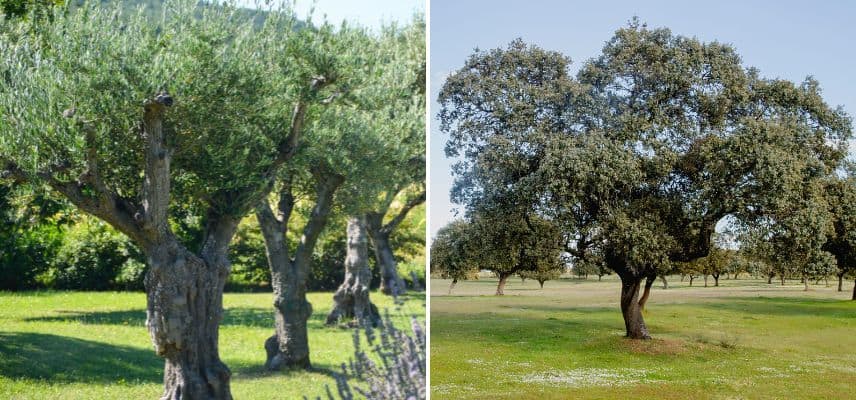
Olive tree and Holm oak
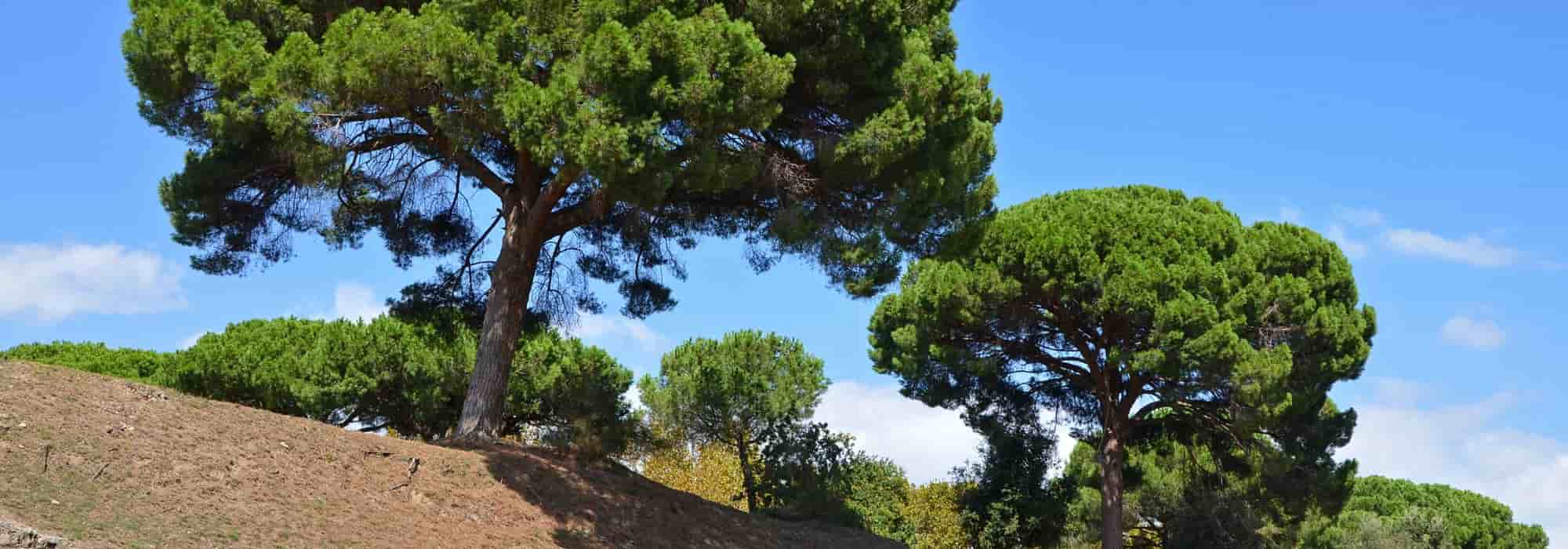
The umbrella pine (Pinus pinea), with its majestic umbrella-shaped silhouette, is another emblematic tree of the South, perfectly suited to sandy and nutrient-poor soils, while tolerating summer drought. It is worth noting that this species also thrives along the Atlantic coast, from north to south, provided the soil is well-drained.
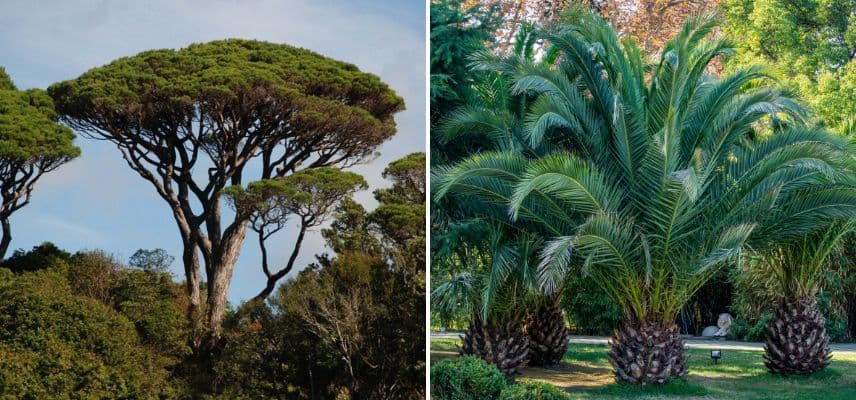
The umbrella pine and Canary Island date palm
If you prefer the exotic, the Phoenix canariensis (Canary Island date palm) makes a striking decorative choice, hardy against heat and able to adapt to sandy soils while enduring saline sea spray.
The umbrella pine and Canary Island date palm
The Provence Cypress (Cupressus sempervirens), appreciated for its slender habit and its ability to withstand dry, hot winds, is an excellent choice for shaping Mediterranean landscapes while adding a contemporary touch.
Enfin, Eucalyptus (Eucalyptus globulus) is a fast-growing tree, able to adapt to arid conditions. Its silvery leaves give off a pleasant, distinctive fragrance and its slender habit gives it an imposing presence in the landscapes. Moreover, its deep roots allow it to draw water from depth, ensuring its survival even during long periods of drought.
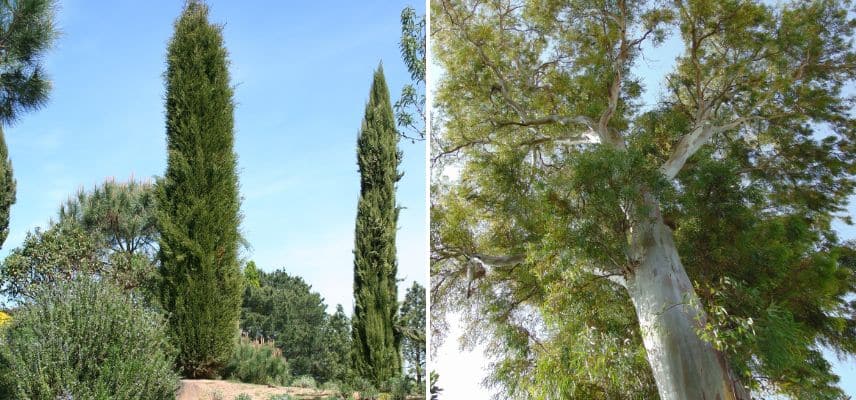
Provence Cypress and Eucalyptus globulus
Read also
10 perfect bushes for a seaside gardenTrees for the Atlantic coast
Coastal zones along the Atlantic coast, with their sandy soils and salt-laden winds, require trees capable of withstanding sea spray and harsh conditions.
The Tamarisk (Tamarix) is renowned for its slender branches bearing small pink or white feathery spikes, which appear in spring or summer depending on the variety. Very hardy in harsh conditions, it prefers poor, dry and sandy soils, and thrives particularly at the seaside thanks to its tolerance of sea spray and wind.
The Maritime Pine (Pinus pinaster), well known along the Atlantic coasts (notably in the Landes region, though it can also be found on the northern coasts) tolerates sandy soils well. This large, fast-growing evergreen conifer is often used for dune restoration and coastal areas.
Last, l’Strawberry Tree (Arbutus unedo), although more often associated with Mediterranean regions, can adapt to the cooler regions of the Atlantic coast, particularly in areas sheltered from strong winds. It bears white or pink flowers in autumn, followed by red fruits reminiscent of strawberries, which persist all winter. This small evergreen tree adds a touch of exotica while being hardy in inclement weather.
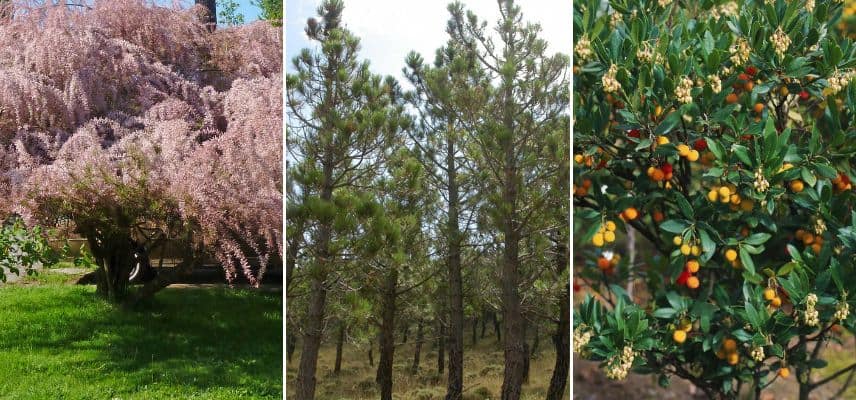
Tamarisk, Maritime Pine and Strawberry Tree
Trees for sandy soils and cooler regions
Even in cooler regions, where winters can be harsh, some trees adapt perfectly to sandy soils while offering robustness and beauty.
Among them, Field Maple (Acer campestre) is an excellent example. Hardy and able to withstand winter cold, it offers soft green foliage in spring that turns to golden yellow in autumn. Adapted to milder climates, it is found as much in northern France as in lowland regions.
Amelanchier (Amelanchier lamarckii), for its part, proves to be hardy and undemanding. Its foliage, initially bronze in spring, turns to orange-red in autumn, while its spring flowering, in delicate white clusters, lights up the gardens. Moreover, its edible berries attract birds and pollinators. An aesthetic and ecological choice.
The Flowering ash (Fraxinus ornus) is also highly appreciated for its spring flowering in creamy white clusters, which is very decorative, and it can withstand harsh winters while resisting summer drought well. This tree is particularly adapted to regions with a continental or lowland climate, where it provides shade and coolness in the gardens.
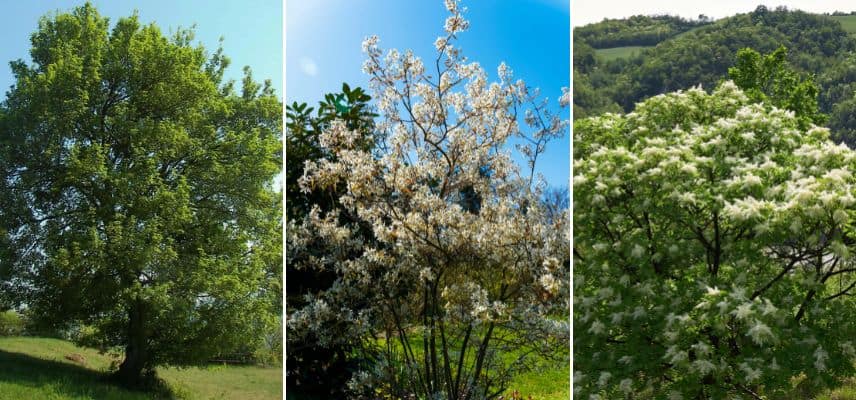
Field Maple, Amelanchier lamarckii and Flowering ash
Read also
10 evergreen shrubs for coastal gardensDecorative flowering trees
Even on sandy soils, some trees offer spectacular flowering.
How could one not think of Albizia (Albizia julibrissin), also known as the silk tree, which stands out for its pink plume-like flowers that appear in summer and add an exotic touch to gardens. It thrives particularly in regions with mild winters, such as the southwest and the French Riviera, but it is also found in Brittany and in regions benefiting from the Atlantic’s mild climate.
Another essential: wattle (Acacia dealbata), famous for its golden-yellow blooms, is a must on the French Riviera and the Atlantic coast (south of Brittany). Its drought tolerance makes it ideal for regions with a mild climate, though it can tolerate light frosts. In other regions, it can also be grown in pots and kept indoors over winter.
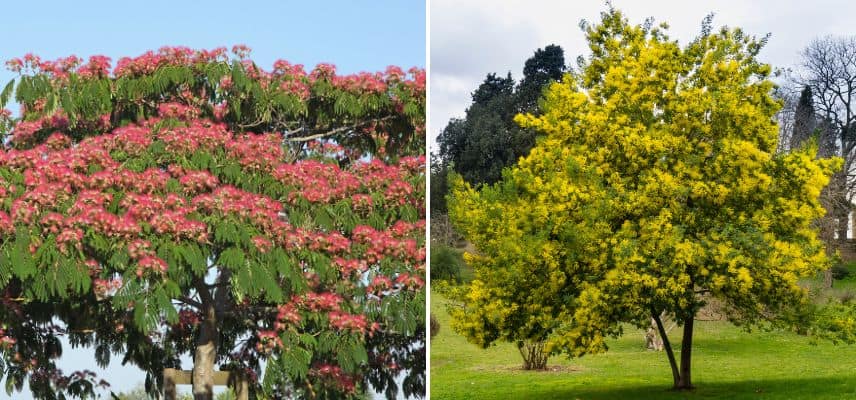
Albizia and Acacia dealbata
With its magenta-pink spring flowering, the Judas Tree (Cercis siliquastrum) is a true marvel for lovers of ornamental trees. Originating from Mediterranean regions, it thrives in sandy and rocky soils, but can also be planted further north in sheltered and sunny gardens. Its flowering is followed by heart-shaped leaves, lending a poetic touch to gardens.
The Sophora japonica, also known as the Pagoda Tree, is a majestic tree that flowers in summer, with beautiful clusters of fragrant white flowers. It thrives on both the Atlantic and Mediterranean coasts, where it adapts to poor and sandy soils.
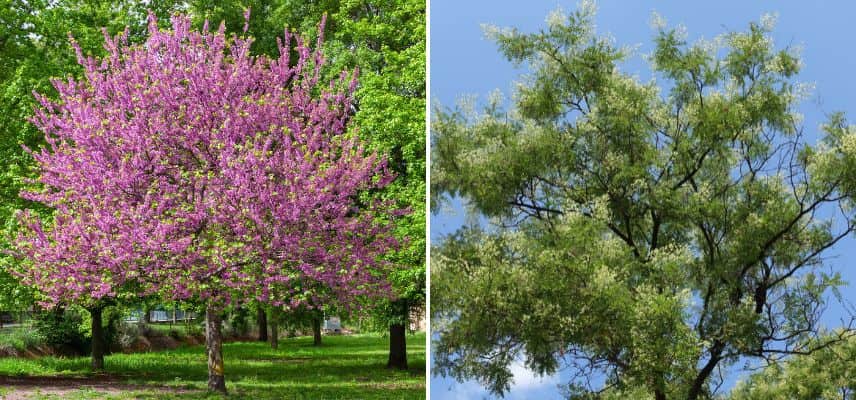
Hardy trees for (almost) any conditions
Some trees stand out for their ability to thrive in sandy soils while withstanding varied environmental conditions, whether drought, cold, or poor soils.
Black locust (Robinia pseudoacacia), for example, is renowned for its robustness. It adapts to almost all soil types, including sandy soils, and withstands drought and cold alike. It grows quickly, and its clusters of fragrant white flowers in spring add extra charm to the garden.
The Virginia juniper (Juniperus virginiana) is another champion of tough conditions. This evergreen conifer resists winds and drought very well. It is also suited to coastal environments, as it tolerates sea spray. Its blue-green needles provide colour all year round.
Finally, the Atlas cedar (Cedrus atlantica) is a majestic and robust tree, native to the Atlas Mountains. It tolerates cold winters, down to -15 °C, and dry summers. Its blue-green evergreen needles and imposing stature make it an ornamental choice for large spaces or parks.
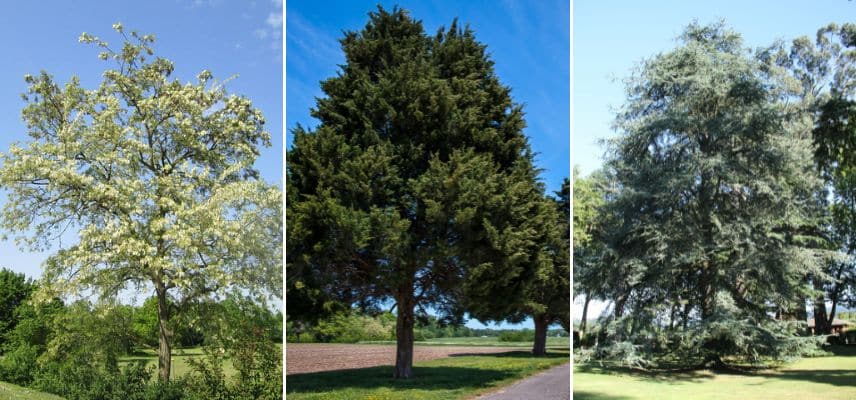
Black locust, Virginia juniper and Atlas cedar
- Subscribe!
- Contents
Comments