Eucalyptus globulus
Eucalyptus globulus
Eucalyptus globulus
Eucalyptus globulus
Eucalyptus globulus
Eucalyptus globulus
Eucalyptus globulus
Eucalyptus globulus
Eucalyptus globulus
Blue Gum, Southern Blue Gum, Tasmanian Blue Gum
Back-to-school special offer!
Get €10 off for every €50 you spend! And get up to €40 off on a single order.
How does it work?
1. Shop your favourites
Add your favourite plants to your basket. For every €50 you spend (excluding delivery charges, store credit and the plastic-free option), you’ll receive a €10 voucher.
€50 spent = €10 voucher
€100 spent = €20 voucher
€150 spent = €30 voucher
€200 spent = €40 voucher
2. Place your order
Once your basket reaches one of the spending thresholds, place your order. You can even choose your delivery date!
3. Receive your voucher
As soon as your order has been shipped, you’ll receive an email containing your personal voucher code and its value.
4. Use it on your next order
Your voucher is valid for 90 days from the date you receive it. It can be used once only, on a new order worth at least the value of the voucher, excluding delivery charges.
Please note: Vouchers can be combined with other offers, but cannot be split or refunded.
Why not try an alternative variety in stock?
View all →
Available in 1 sizes
Available in 1 sizes
Available in 3 sizes
Available in 1 sizes
Available in 3 sizes
Available in 2 sizes
Available in 5 sizes
Available in 2 sizes
Available in 1 sizes
Available in 1 sizes
This plant carries a 24 months recovery warranty
More information
We guarantee the quality of our plants for a full growing cycle, and will replace at our expense any plant that fails to recover under normal climatic and planting conditions.
Would this plant suit my garden?
Set up your Plantfit profile →
Description
Eucalyptus globulus or Blue Gum is one of the most imposing species of the genus and one of the most used for its essential oil. In less than 10 years, it can form a beautiful tree only in a mild, coastal climate, as its hardiness is very limited. It has a very decorative, green-blue juvenile foliage, which elongates and turns green in its adult form. Its cream-white flowering is quite insignificant amidst the mass of foliage, but its unique, massive, and often decorative trunk catches the eye from afar. It grows in full sun, in soils that are slightly or non-chalky, slightly moist but well-drained. A remarkable tree that will structure the landscape in gardens large enough to accommodate it.
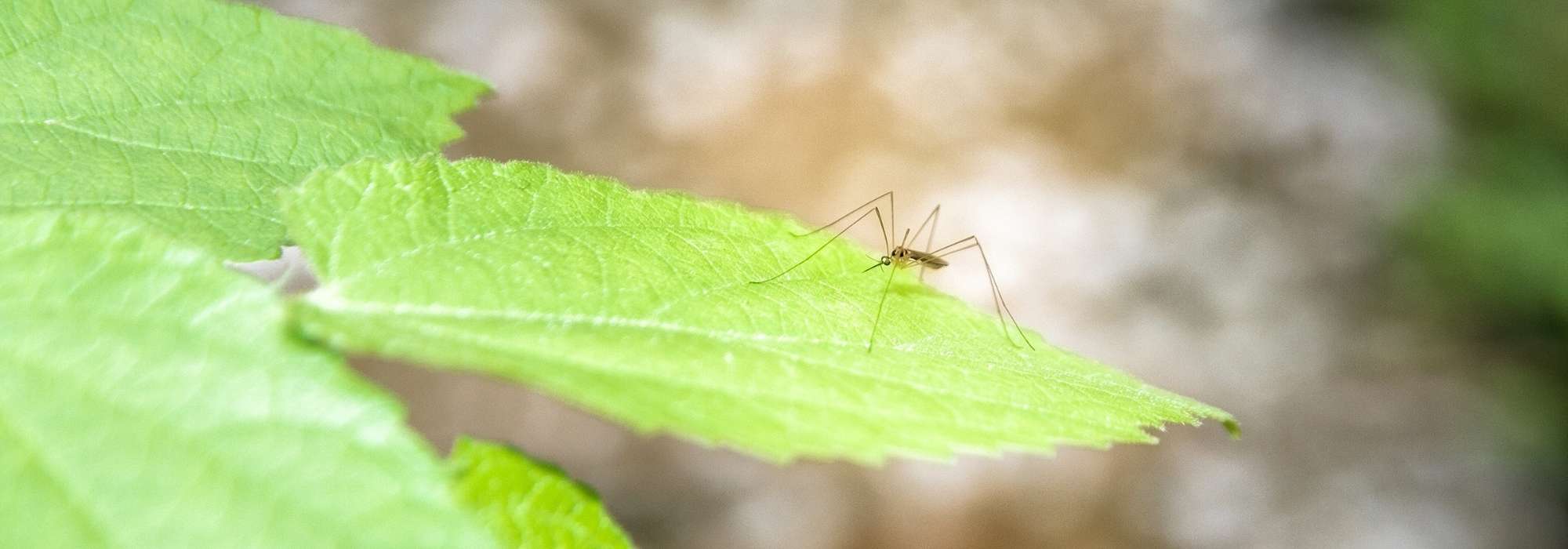
The Common Eucalyptus is a tree of the Myrtaceae family, like the Feijoa, the Callistemon, or the Myrtle, with a flowering characteristic of this family. The genus Eucalyptus, native to Australia, includes more than 800 species, among which are the tallest hardwoods in the world (Eucalyptus regnans). The Eucalyptus globulus is one of these giants. Native to southeastern Australia (Victoria state) and Tasmania, where it has been the emblem since 1962, it can reach a height of 70 m (229 ft 8 in)! It grows in full sun, in open forests, up to 1000 m (3280 ft 10 in) altitude. Its common name Blue Gum comes from the bluish colour of the bloom that covers the juvenile leaves. The English also call it the fever tree, as it can dry out marshes, thus preventing mosquitoes from proliferating.
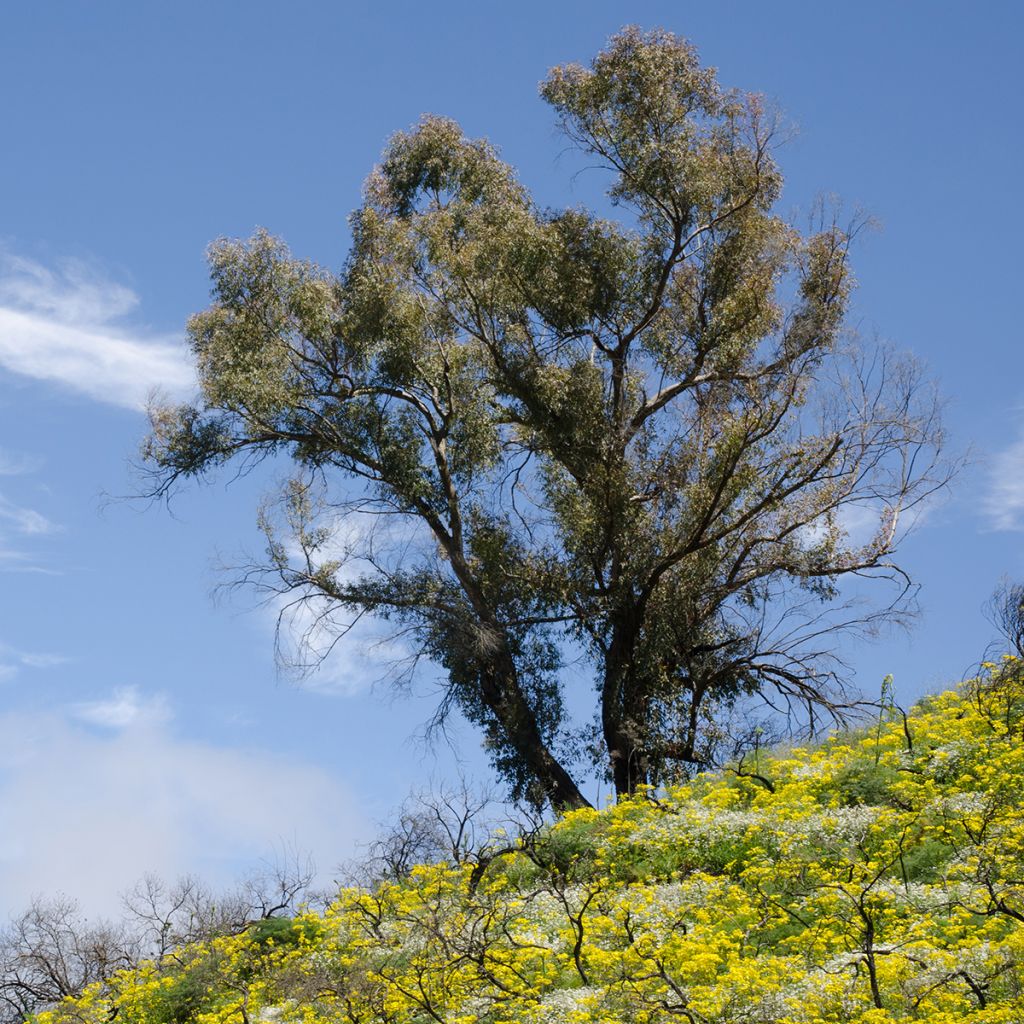
This impressive tree can only tolerate brief frosts of around -7°C (19.4 °F). 35 m (114ft) is probably the maximum height it will reach in southern climates, with a width of about 20 m (65 ft 7 in), far from Australian records, but still very impressive, making it suitable for very large gardens and parks.
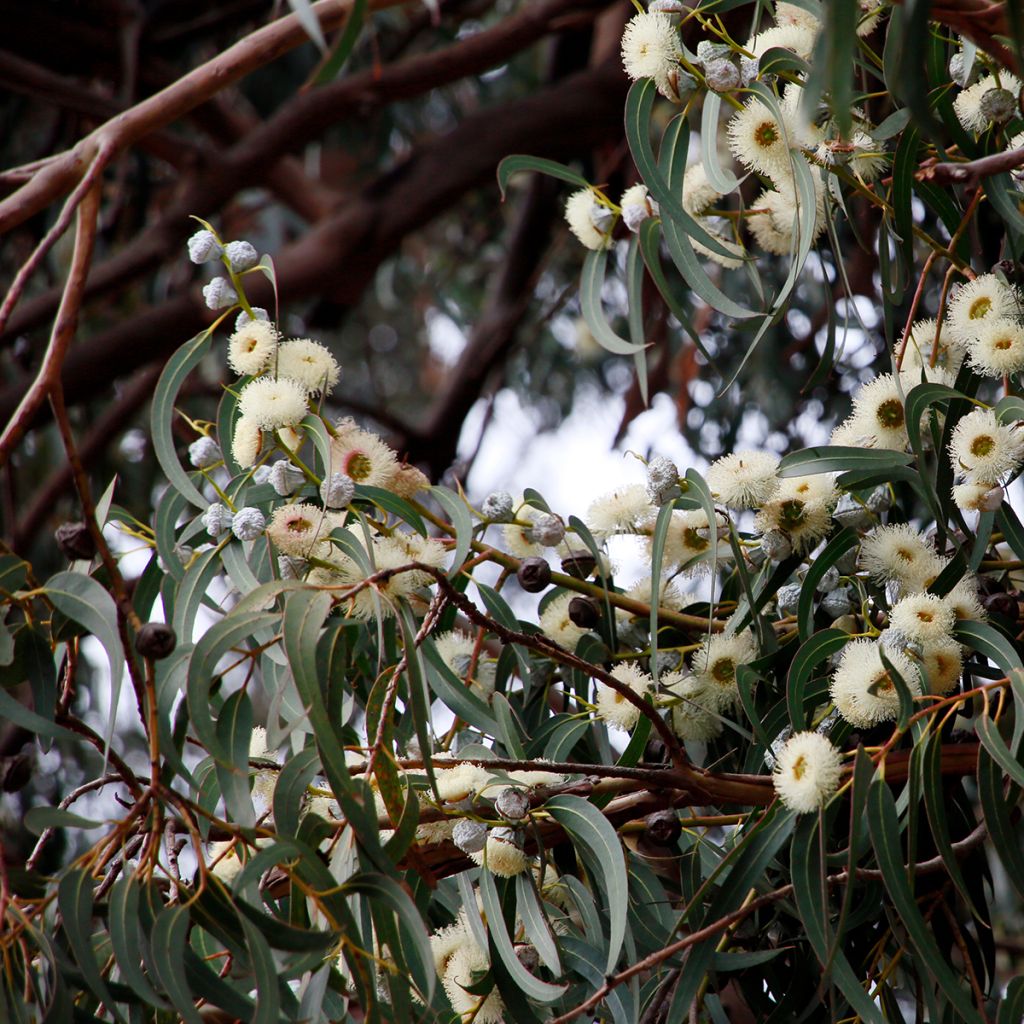
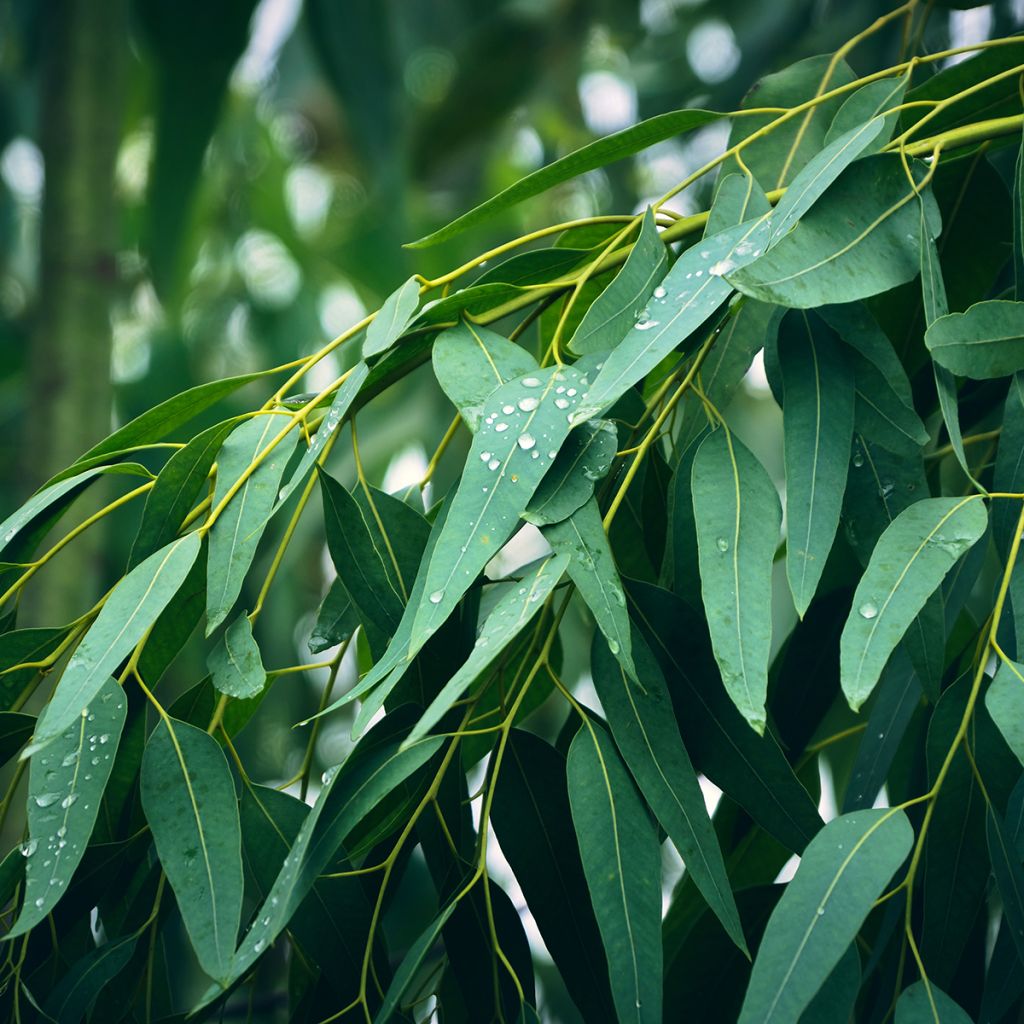
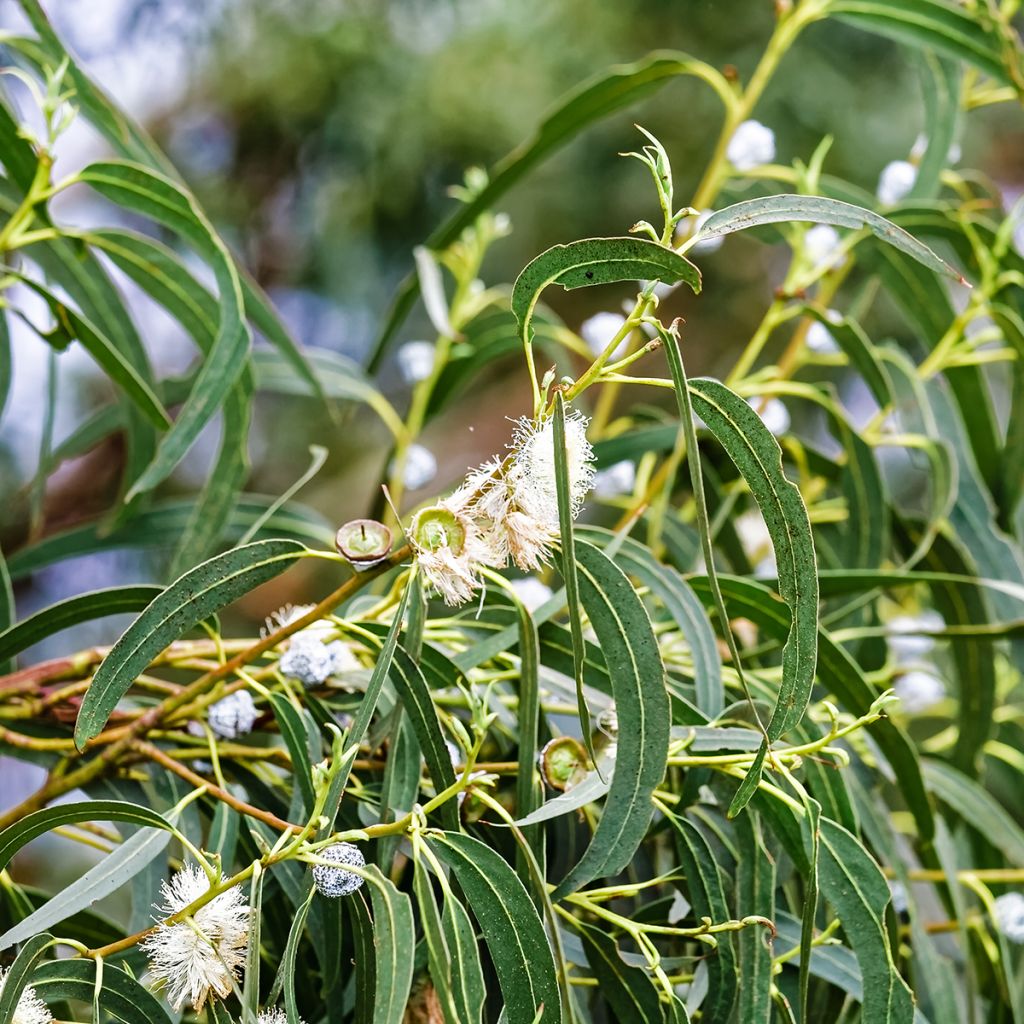
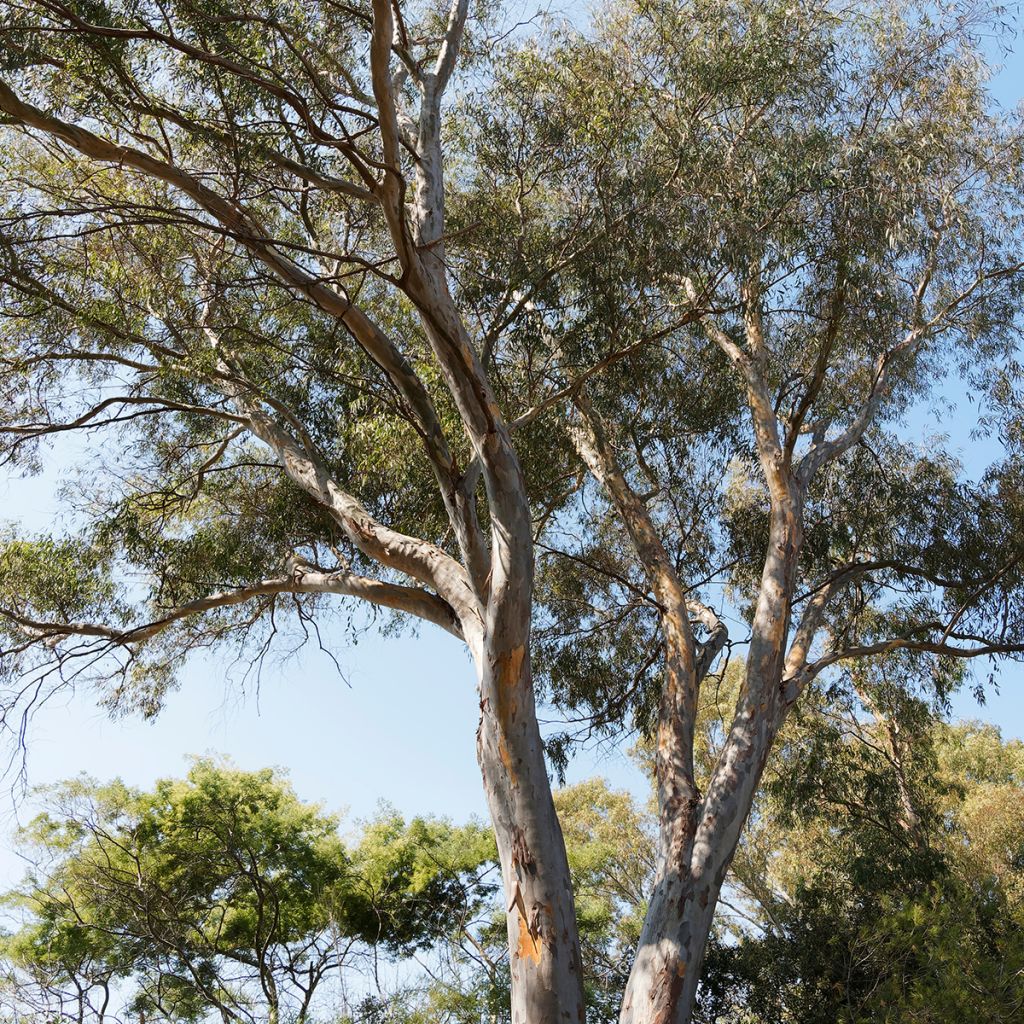
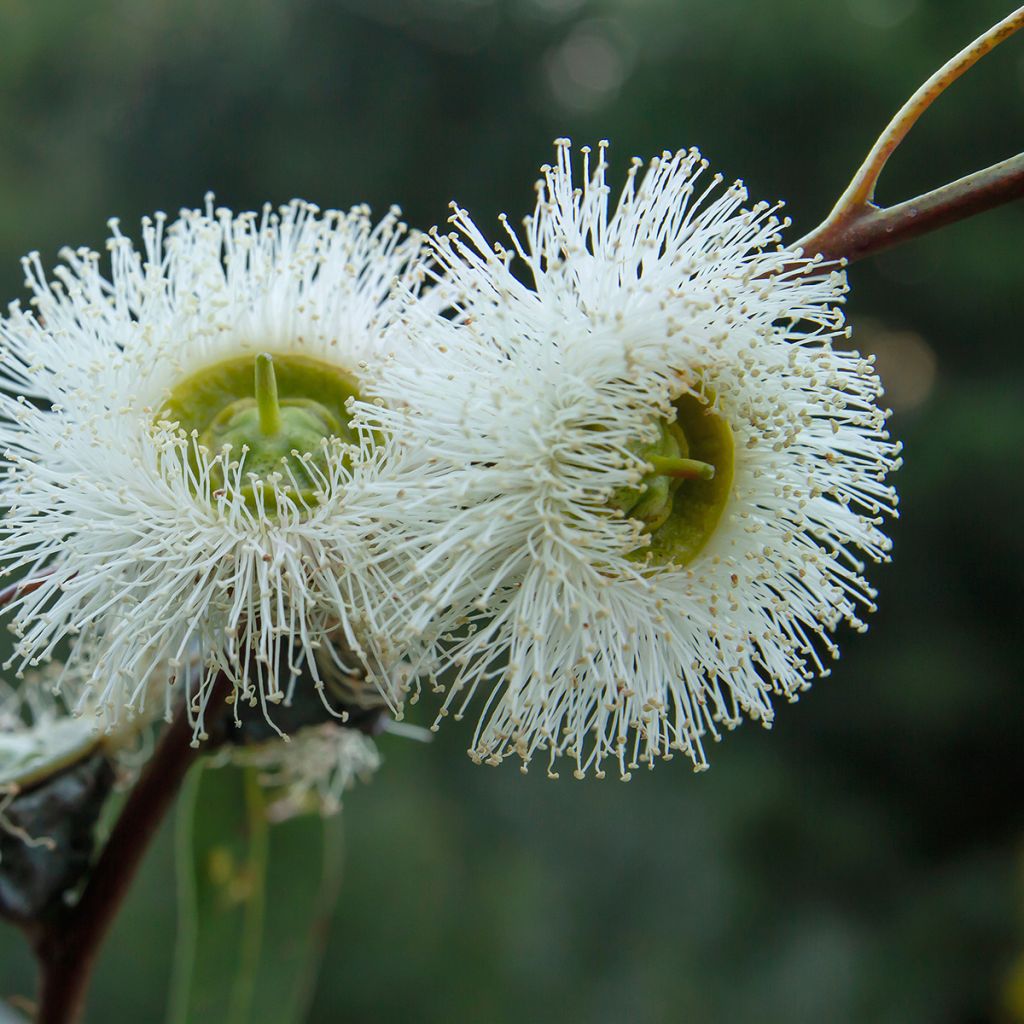
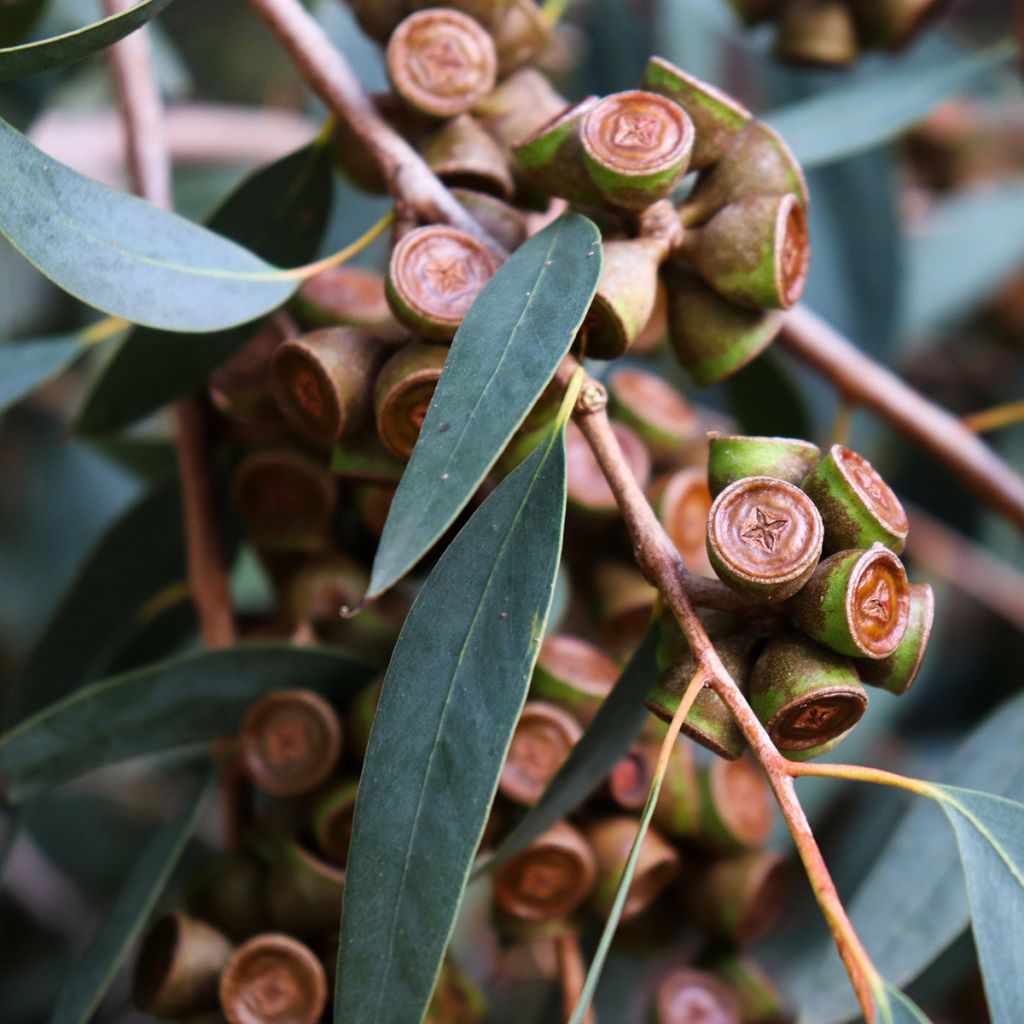
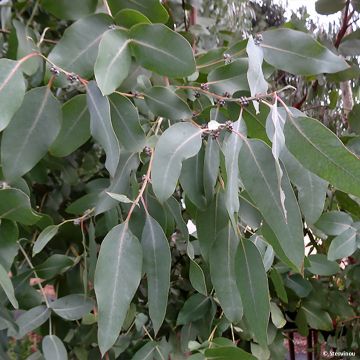
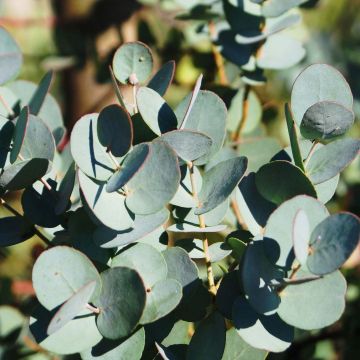
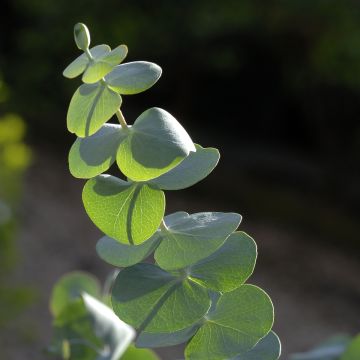
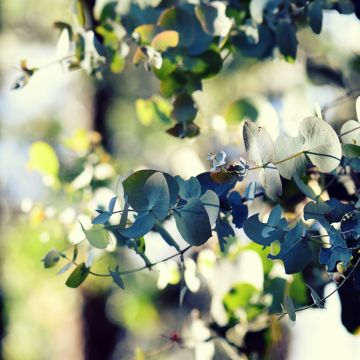
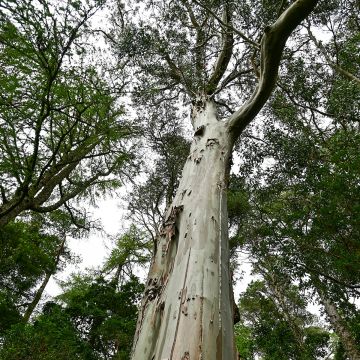
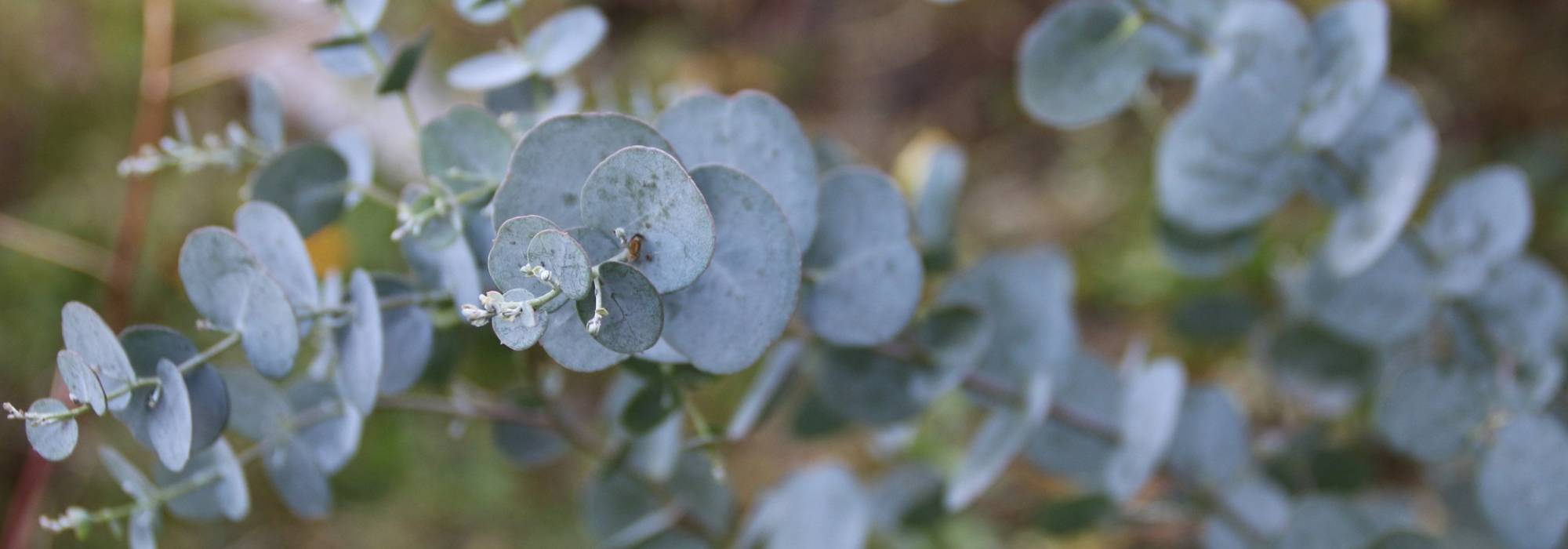
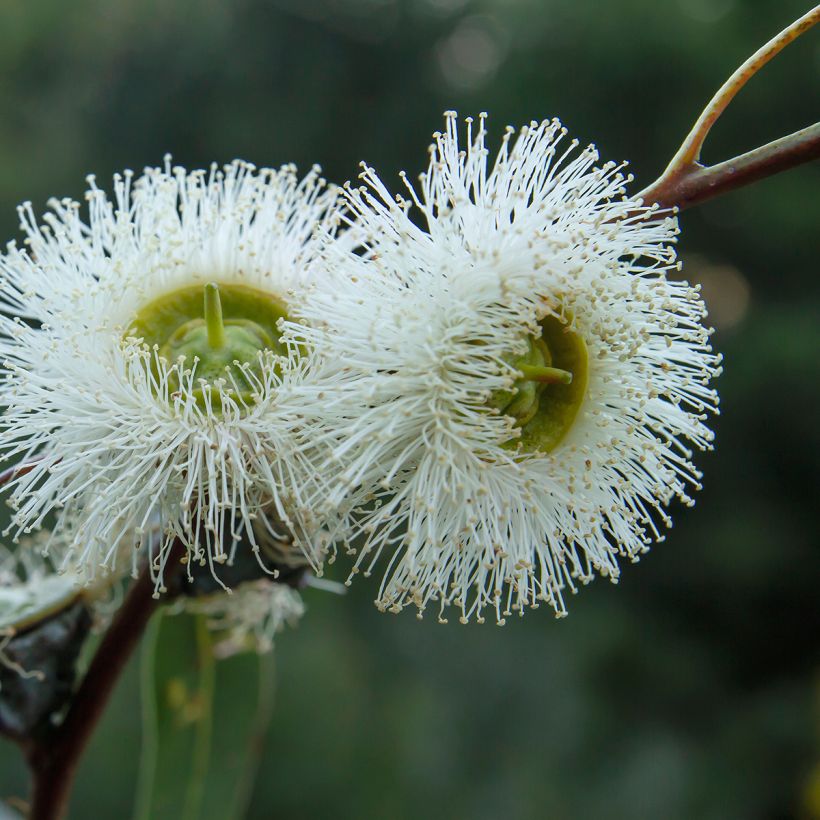
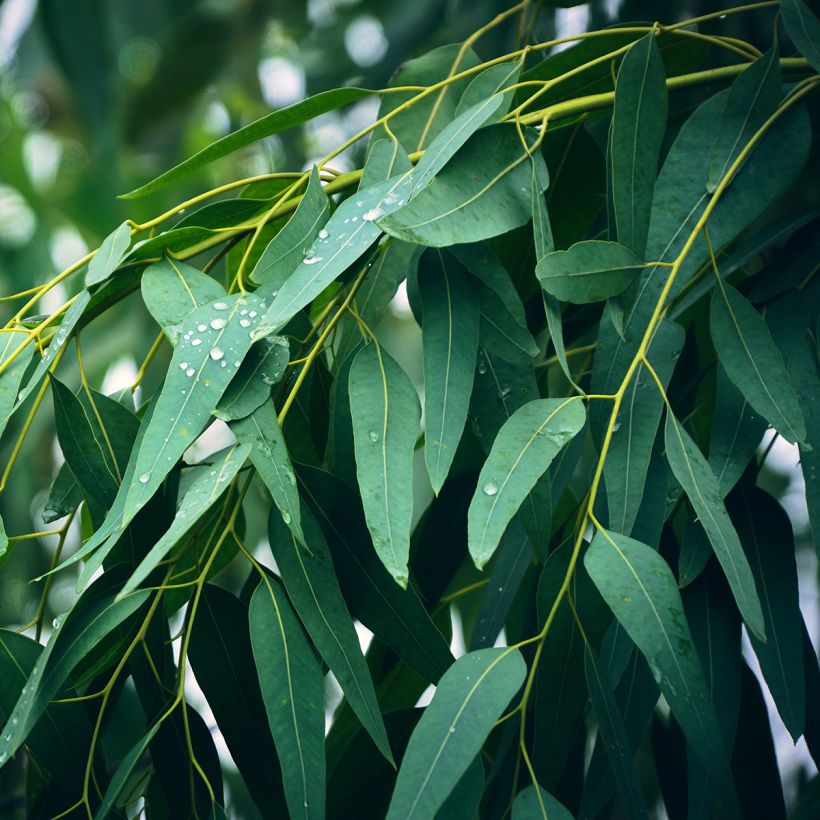
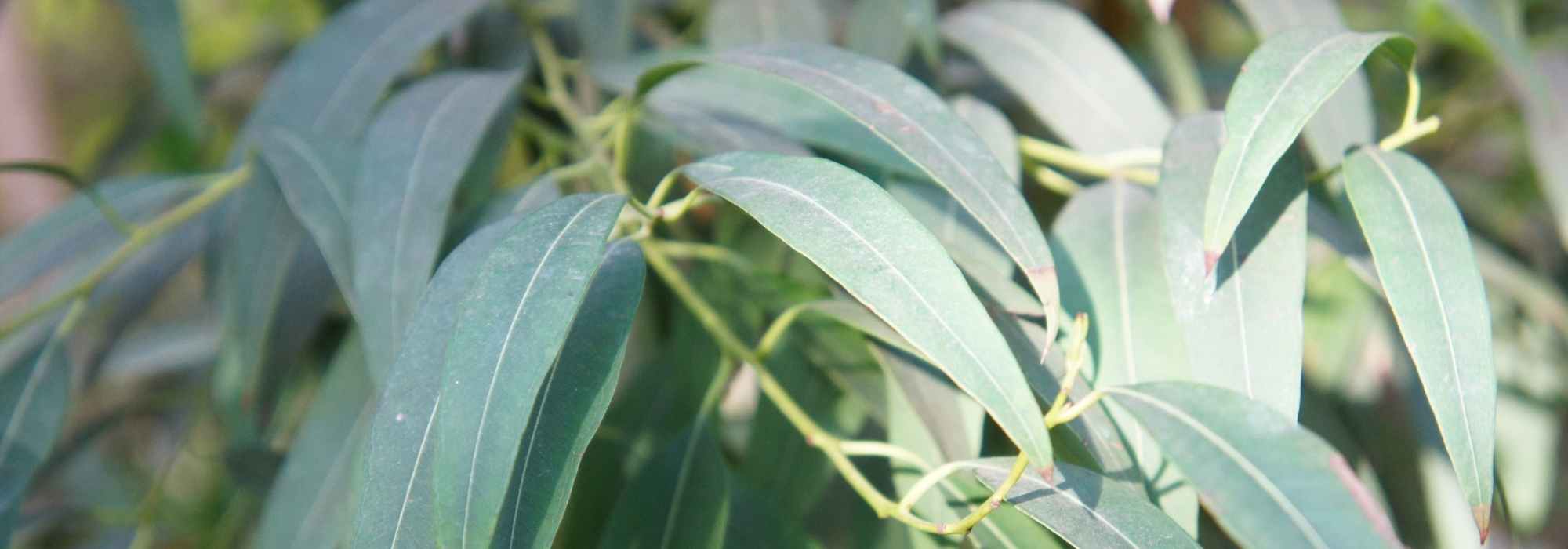
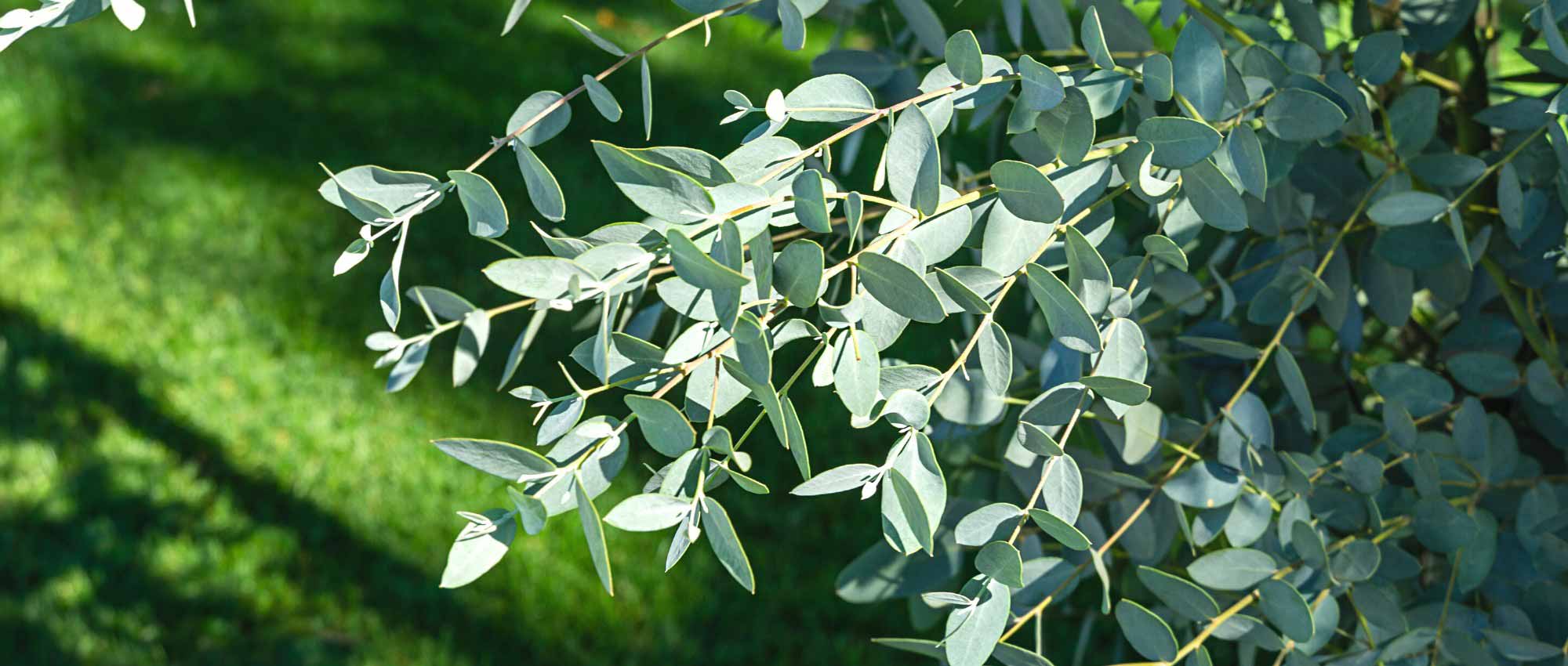
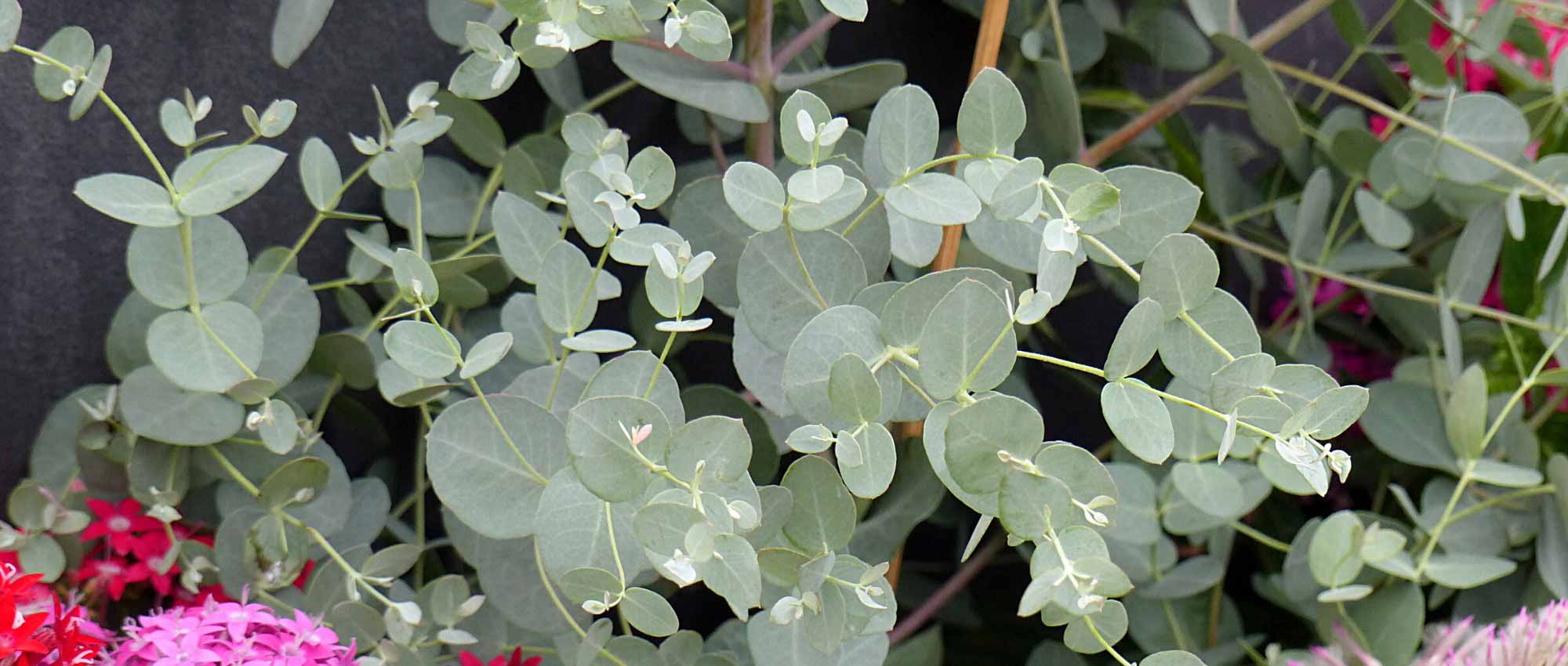
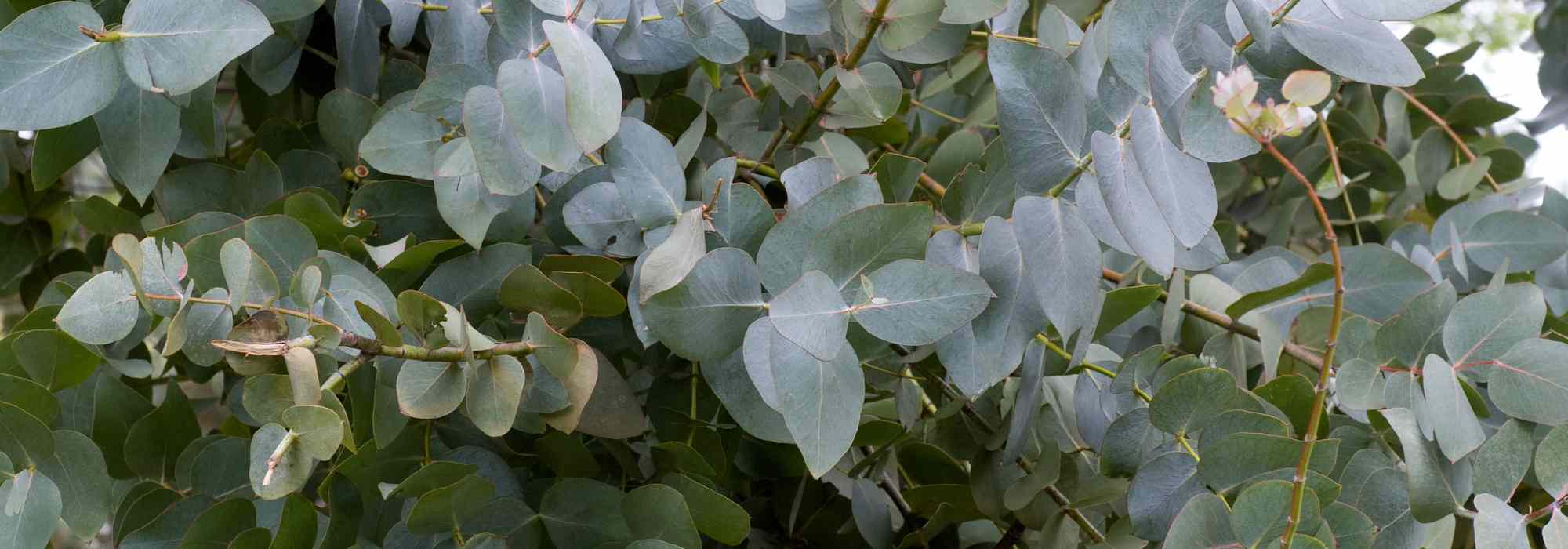
This Eucalyptus has two types of foliage. Juvenile foliage, consisting of opposite, sessile (non-petiolate), ovate leaves, 6 to 15 cm (2.4 to 5.9 in) long, and very aesthetic with their bluish, slightly silvery colour, and adult foliage which is narrower and longer (15 to 30 cm (5.9 to 11.8 in)), sickle-shaped and glaucous dark green. The flowering in late spring is insignificant and consists of solitary flowers about 2 cm (0.8 in) in diameter, forming a pompon of cream-white stamens. Appearing at the axils of the leaves, they are nectar-rich but too small to be considered decorative. The trunk is generally ornamental, it exfoliates in large flakes revealing a smooth, light-coloured bark in shades of beige, cinnamon, cream-white, and others. Indeed, there are several subspecies, each presenting slightly different shades... Generally straight and branching high up, the trunk often reaches a significant diameter, making this tree a master subject in the garden. Thanks to its astonishing growth rate (approximately 2 m (6 ft 7 in) per year), it only takes about 10 years to obtain a 20 m (65 ft 7 in) tall giant! It is therefore important to be aware of this when choosing its location (it should be kept away from the foundations of a house, as its water absorption capacity can quickly become problematic). Once well established, it will tolerate brief episodes of drought but will grow better if it can find sufficient water in the soil.
Eucalyptus globulus has the potential to become a monumental subject in a large space, adding an undeniable touch of exoticism. It is mainly used as a standalone plant due to its imposing dimensions and also because it competes strongly for water with other plants nearby. If the size of the garden allows, it can be planted alongside other trees with ornamental foliage, such as the Gleditsia triacanthos Sunburst, a Golden Honey Locust with leaves composed of a superb yellow that will echo the blue-green of the Eucalyptus. At its base, a Cercis canadensis Forest Pansy, a Judas Tree with purple foliage, will complete this contrasting scene.
Eucalyptus globulus in pictures
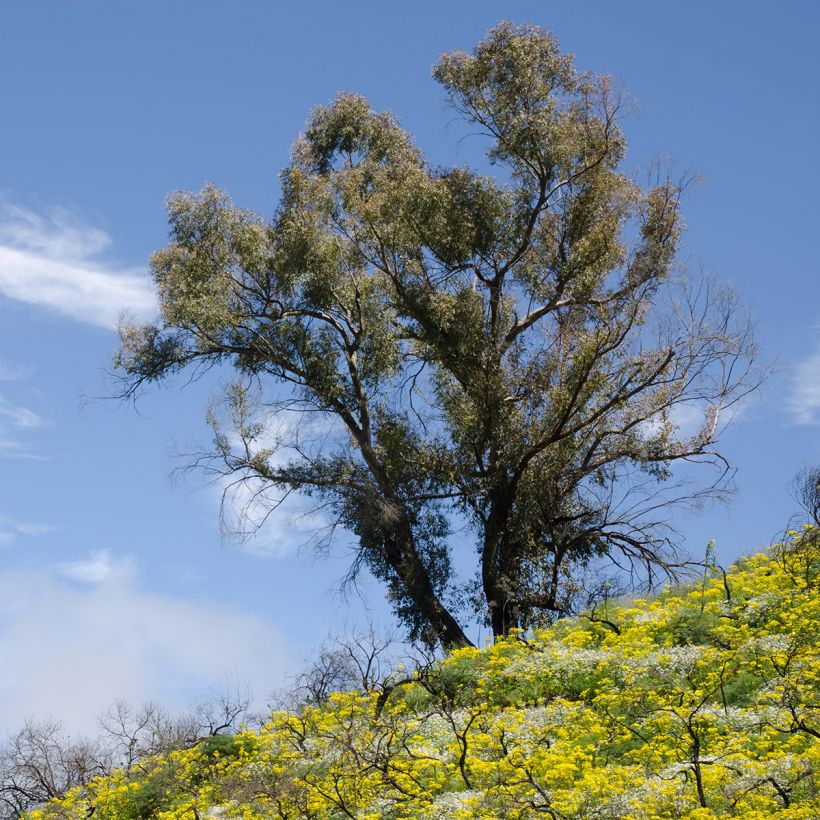
Plant habit
Flowering
Foliage
Botanical data
Eucalyptus
globulus
Myrtaceae
Blue Gum, Southern Blue Gum, Tasmanian Blue Gum
Australia
Planting and care
The Eucalyptus globulus grows in full sun, in neutral to acidic, fertile and rather sandy-clayey soil. It prefers moist but well-drained soil and can tolerate drier periods, but grows faster if it has access to water. Given its fast growth rate and imposing mature size, it needs enough space to establish itself, which is why it is often planted as a solitary tree in gardens or in avenues in large parks capable of accommodating it. Dig a planting hole of 60 cm (23.6 in) in all directions and add planting compost to the existing soil (50/50) unless your soil is already very humiferous. Soak the root ball in a bucket for 20 minutes, then place it in the hole and fill in around it. Water generously and then regularly in the first years.
It is highly resistant to diseases and generally requires no maintenance, only being susceptible to extreme dryness or excessive moisture, especially in winter.
Planting period
Intended location
Care
Planting & care advice


This item has not been reviewed yet - be the first to leave a review about it.
Recently viewed products
Haven't found what you were looking for?
Hardiness is the lowest winter temperature a plant can endure without suffering serious damage or even dying. However, hardiness is affected by location (a sheltered area, such as a patio), protection (winter cover) and soil type (hardiness is improved by well-drained soil).

The flowering period indicated on our website applies to countries and regions located in USDA zone 8 (France, the United Kingdom, Ireland, the Netherlands, etc.)
It will vary according to where you live:- In zones 9 to 10 (Italy, Spain, Greece, etc.), flowering will occur about 2 to 4 weeks earlier.
- In zones 6 to 7 (Germany, Poland, Slovenia, and lower mountainous regions), flowering will be delayed by 2 to 3 weeks.
- In zone 5 (Central Europe, Scandinavia), blooming will be delayed by 3 to 5 weeks.
In temperate climates, pruning of spring-flowering shrubs (forsythia, spireas, etc.) should be done just after flowering.
Pruning of summer-flowering shrubs (Indian Lilac, Perovskia, etc.) can be done in winter or spring.
In cold regions as well as with frost-sensitive plants, avoid pruning too early when severe frosts may still occur.
The planting period indicated on our website applies to countries and regions located in USDA zone 8 (France, United Kingdom, Ireland, Netherlands).
It will vary according to where you live:
- In Mediterranean zones (Marseille, Madrid, Milan, etc.), autumn and winter are the best planting periods.
- In continental zones (Strasbourg, Munich, Vienna, etc.), delay planting by 2 to 3 weeks in spring and bring it forward by 2 to 4 weeks in autumn.
- In mountainous regions (the Alps, Pyrenees, Carpathians, etc.), it is best to plant in late spring (May-June) or late summer (August-September).
The harvesting period indicated on our website applies to countries and regions in USDA zone 8 (France, England, Ireland, the Netherlands).
In colder areas (Scandinavia, Poland, Austria...) fruit and vegetable harvests are likely to be delayed by 3-4 weeks.
In warmer areas (Italy, Spain, Greece, etc.), harvesting will probably take place earlier, depending on weather conditions.
The sowing periods indicated on our website apply to countries and regions within USDA Zone 8 (France, UK, Ireland, Netherlands).
In colder areas (Scandinavia, Poland, Austria...), delay any outdoor sowing by 3-4 weeks, or sow under glass.
In warmer climes (Italy, Spain, Greece, etc.), bring outdoor sowing forward by a few weeks.
Shipping country and language
Your country of residence may be:
Your country of residence is:
For a better user experience on our website, you can select:
Your shipping country:
-
 Austria
-
 Belgium
-
 Bosnia & Herzegovina
-
 Bulgaria
-
 Croatia
-
 Cyprus
-
 Czechia
-
 Denmark
-
 Estonia
-
 Finland
-
 France
-
 Germany
-
 Greece
-
 Hungary
-
 Iceland
-
 Ireland
-
 Italy
Italy
-
 Latvia
-
 Liechtenstein
-
 Lithuania
-
 Luxembourg
-
 Malta
Malta
-
 Netherlands
-
 Poland
-
 Portugal
-
 Romania
-
 Serbia
-
 Slovakia
-
 Slovenia
-
 Spain
Spain
-
 Sweden
-
 Switzerland
Language:
-
French
-
 English
-
Spanish
-
Italian
-
German
-
Portuguese
-
Dutch
-
Finnish
My Account
Hello
My wish lists
My cart
Log in / Register
Existing customer?
This form is protected by reCAPTCHA - the Google Privacy Policy and Terms of Service apply.
New customer?
Create an account to track your orders, access our customer service and, if you wish, make the most of our upcoming offers.