


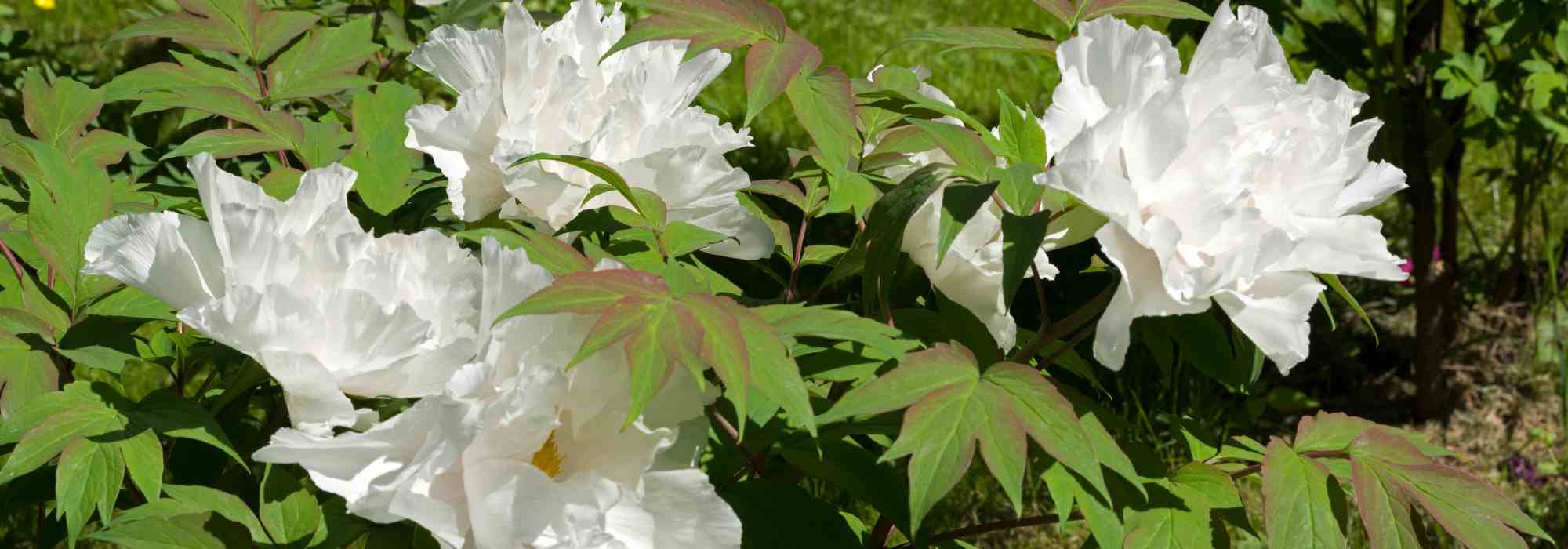
Parasitic diseases and pests of tree peonies
From causes to treatments: our tips
Contents
Peonies are among the hardier plants when it comes to disease. Shrub peonies, in particular, are robust when planted in the right conditions. But sometimes certain diseases affect them, such as fungal infections.
We detail in this article the main enemies that can compromise flowering or growth of a tree peony, with our advice on how to remedy them.
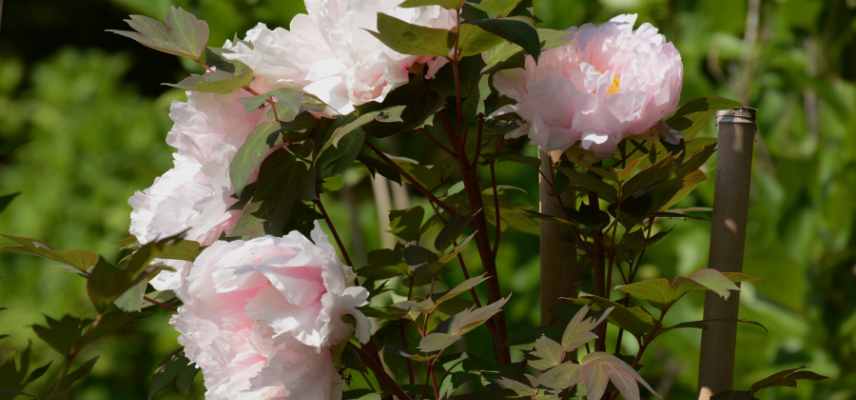
Fungal diseases of tree peonies
Botrytis or grey mould
Botrytis is more common on tree peonies (Paeonia suffruticosa), but it can also occasionally affect herbaceous and Itoh hybrids. Tree peonies are particularly susceptible in early spring, when the young shoots rot at their base due to dampness.
- Causes : this fungus is favoured by humid conditions and cool weather. It is particularly virulent during damp, cool springs; it thrives on plant debris and during wet seasons.
- Symptoms : wilting of stems and flower buds, which rot before opening, brown spots or a grey fuzz on the leaves, grey mould; the stems become soft and blacken.
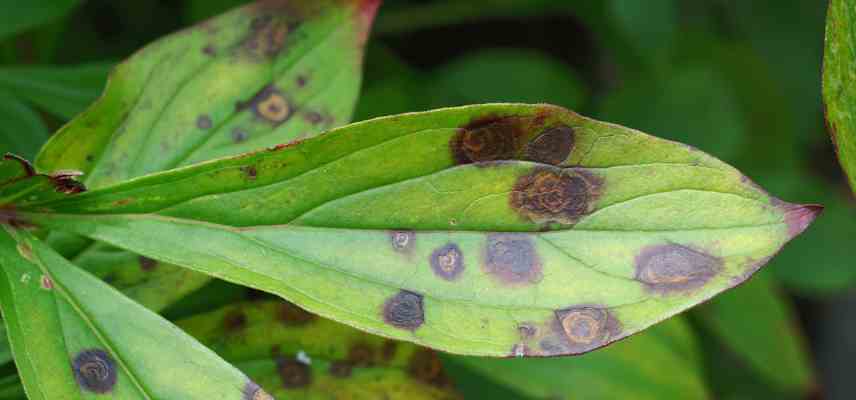
- Treatment : remove and destroy infected parts as spores survive in debris; avoid foliar watering; use a fungicide such as Bordeaux mixture (or copper- or sulphur-based products or a horsetail decoction) as preventive or curative. Ensure good air circulation between plants. Learn more in our full article on the Botrytis.
Phytophthora
It can appear when the soil is heavy, after repeated heavy rainfall.
- Causes : this fungus thrives in heavy, poorly drained soils; Phytophthora cactorum causes root rot and wilting, with here again symptoms of stem darkening.
- Symptoms : darkening and wilting of the stems (the stems may appear waterlogged or soft at the base) ; yellow then grey spots on the leaves ; root rot, but often not easily observable ; flower buds do not develop normally and eventually abort.
- Treatments : there is no effective curative treatment for Phytophthora. Prevention (see below, drainage and avoiding excess water) is crucial.
Powdery mildew
Powdery mildew, or white mould, affects tree peonies, herbaceous and Itoh hybrids, if warm, dry conditions persist over a long period. The problem is mainly cosmetic.
- Causes : the fungus grows whenever the weather is hot and dry, with high atmospheric humidity (dew, foliar watering).
- Symptoms : the leaves become coated with a white powdery coating;
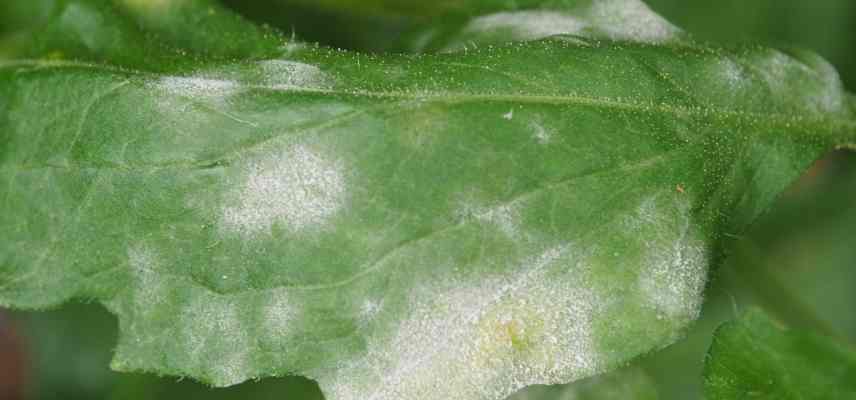
- Treatment : remove affected leaves; avoid foliar watering; treat preventively with fungicides or home remedies (1 teaspoon of baking soda dissolved in 1 litre of water, added a little liquid soap, neem essential oil, etc.). Learn more in our article Powdery mildew or the white disease.
Rust
Rust is less common on tree peonies than on herbaceous ones, but can appear with persistent moisture.
- Causes : the fungus appears on wet leaves;
- Symptoms : orange or brown spots, pustules, on and under the leaves;
- Treatment : remove and destroy infected leaves, avoid any excess moisture, and treat with 2% Bordeaux mixture or with a How to prepare horsetail decoction? Our simple and effective recipe as a preventive measure.
Lise also our article on rust.
N.B. : Other fungi such as Cladosporium (responsible for brown leaf spots) can occasionally affect tree peonies, but they remain very rare and .
Read also
The main diseases of peoniesParasitic pests of tree Peonies
Finally, a few pests can affect tree peonies, though rarely. Among them:
Wireworms and cutworms
Wireworms (larvae of beetles) and cutworms (larvae of noctuid moths) mainly attack the roots of herbaceous peonies, but can also affect young tree peonies if the soil is poorly prepared, very compact or poorly drained:
- Symptoms: holes may be visible in the roots; leaves curl or deform;
- Control: pyrethrum, nematodes to parasitise the larvae, or more radically transplant the peony to another part of the garden. See our page on the using pyrethrum in the garden for more information.
Aphids
Aphids attack both tree and herbaceous peonies, but shrubs, with their dense foliage, often provide more shelter to these parasites. They are easily recognised by their numerous colonies, often black in colour.
- Symptoms: distorted leaves, presence of honeydew, weakening of the plant;
- Control: water the plant with a strong jet to remove aphids if the infestation is small; in the case of a heavy attack, use a natural insecticidal spray (water and black soap spray at a rate of 2 tablespoons per 1 L of water, or diatomaceous earth) and introduce natural predators (ladybirds, hoverfly larvae).
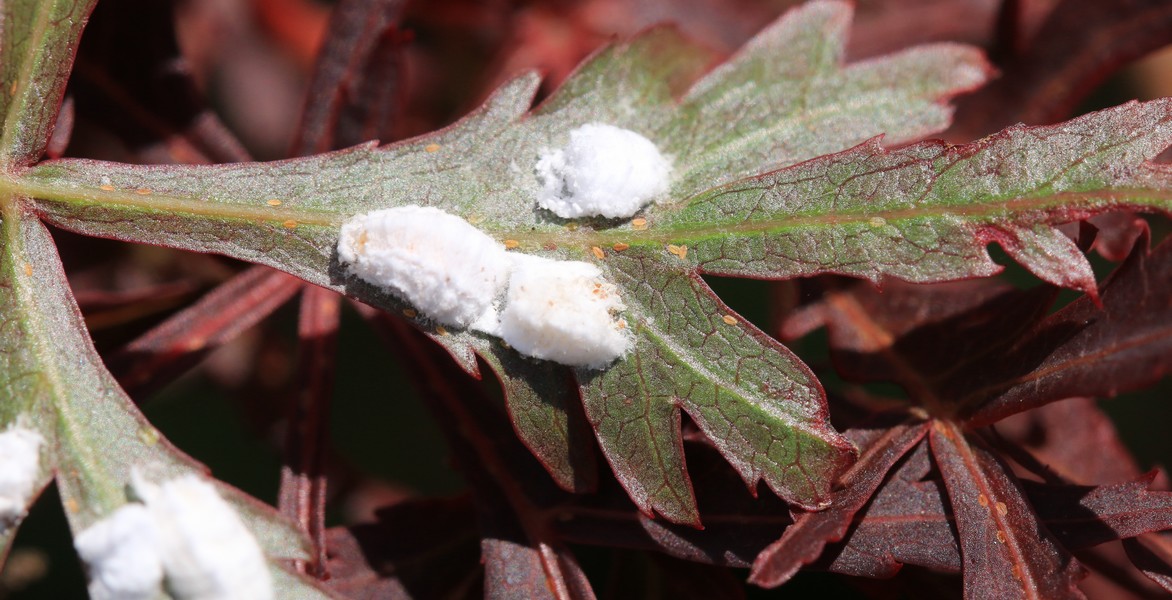
Scale insects
They are common on all peonies, but often more visible on the woody stems of tree peonies.
- Symptoms: white or brown shields on the stems; presence of honeydew; progressive weakening of the plant.
- Control: manually clean each stem with a soft brush and soapy water; apply a natural insecticidal (manure tea and decoctions) and introduce natural predators (ladybirds, hoverfly larvae).
How to look after a tree peony to prevent disease?
Healthy woody peonies are always less prone to parasitic infections or fungal diseases. Here is a summary of the best practices to follow with your woody peonies to spare them from the tiniest pest or the first disease that comes along!
- Planting: choose a sunny or partially shaded spot, with soil that is rich, deep and, above all, very well drained. For woody peonies, ensure to (unlike herbaceous ones, where the eyes should be 2–3 cm below the surface); finally, allow enough space between a woody peony and its surroundings to let air circulate (they become sizeable; allow ideally 1.5 m between each plant);
- Watering: always water at the base, avoiding wetting the foliage, and avoid excess water, which they detest. Remember that woody peonies than herbaceous peonies once established;
- Maintenance : remove diseased leaves and stems in autumn. Always clean your pruning tools with 70% alcohol before and after use, to avoid contamination risks when pruning the large spent blooms.
- Subscribe!
- Contents
Comments