


Pond and permaculture: how to integrate water into a resilient and living garden?
Our tips
Contents
Much more than a mere decorative feature, the permaculture garden pond, even a small one, plays an important role : it attracts beneficial wildlife, naturally regulates, limits the need for watering and gives structure to the garden. A true refugium for amphibians, pollinating insects and birds, it contributes to the water cycle and strengthens the garden’s self-sufficiency.
Discover how to design a sustainable pond, suited to permaculture, and which plants to choose to make it a living, harmonious and environmentally friendly space.

How to create a pond in your garden using permaculture?
Installing a pond isn’t just for large spaces. You often hear that a large pond is essential in permaculture… Granted, the bigger the pond, the more it contributes to the garden’s balance, but even a small pond can transform how your garden operates, boost its water self-sufficiency and, above all, support biodiversity.
Choosing the pond’s location
Ideally, it should be located in a slight hollow, capable of catching part of the rainwater run-off, while avoiding excess.
Prefer a site in partial shade, receiving 4 to 6 hours of sun per day. Too much shade limits the growth of aquatic plants, while permanent full sun promotes evaporation and imbalances in the water.
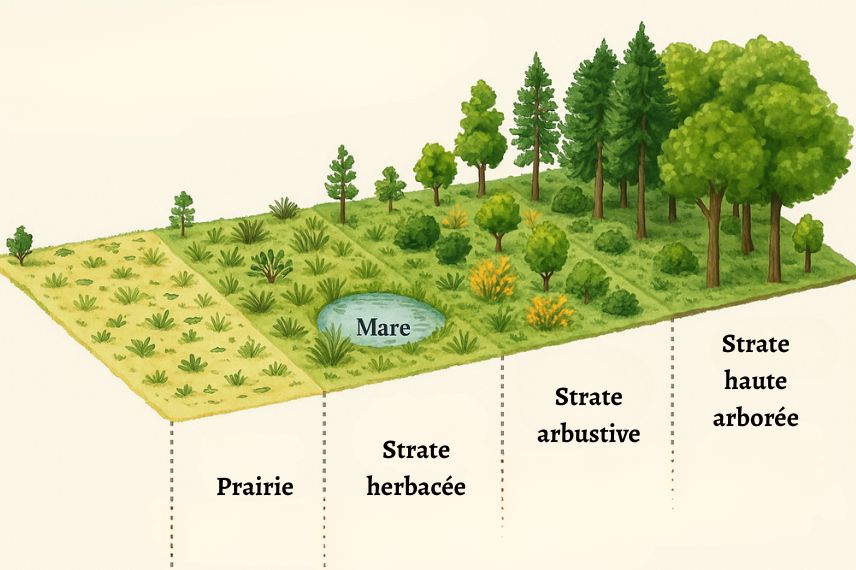
It is advisable to keep the pond away from the large trees of the arboreal stratum. Their roots can puncture the liner and leaf fall accelerates silt buildup. However, proximity to beds or low shrubs can protect the water from wind and encourage the arrival of small wildlife. In permaculture terms, the pond integrates ideally between the herbaceous stratum and the low arboreal stratum, where it benefits from partial sunlight without being overwhelmed by the large roots.
Small or large pond? What dimensions?
In permaculture, a pond of at least 3 m3 is ideal to suitably accommodate a wide range of plants and wildlife. But even a small pond, from 1 m3, is enough to attract biodiversity, to provide drinking water for birds and certain insects. The larger the pond, the more it stabilises its natural balance and its temperature across the seasons. The ideal is to tailor the pond’s dimensions to the space you have in your garden, keeping deep zones (at least 60 cm).
The steps to creating a pond in permaculture
Here are the steps to follow to create a durable pond that respects the ecosystem:
-
Observe the site over several months or seasons to identify water flow, light and topography.
-
Delimit the pond’s shape, favouring irregular contours that promote biodiversity.
-
Dig the pond in tiers, planning different zones :
-
a shallow edge (less than 20 cm) for marginal plants and access for small wildlife. Slopes should be gentle to allow animals to climb back onto the edge.
-
an intermediate shelf (40–60 cm) for emergent plants,
-
a deeper zone (at least 60–80 cm) which limits evaporation, stabilises the temperature and provides shelter for wildlife in summer and winter.
-
-
Install a sand bed : a layer of 5 to 10 cm of sand stabilises the bottom and eliminates irregularities that could damage the liner.
-
Lay a protective geotextile : this felt reinforces the durability of the liner by protecting it from stones, roots and potential rubbing.
-
Install a waterproof liner or a natural coating, ensuring its durability. EPDM liners are commonly used for their durability.
-
Fill the pond gradually, ideally with rainwater, gentler for wildlife and plants.
-
Plant the vegetation by choosing plants suited to each depth: marginal plants, filtering plants, emergent, floating or oxygenating. This vegetation balances the water, promotes biodiversity and limits algae growth.
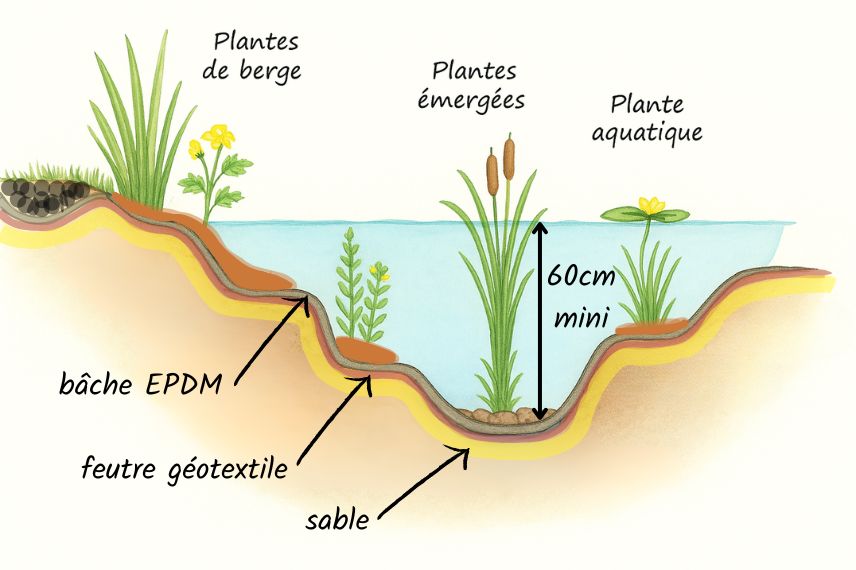
Cross-section view of a pond
Safety, especially for children : a pond can be dangerous. It is advisable to install :
- a discreet net or grille flush with the water’s surface,
- a fence (vegetated or physical),
- or any other solution suited to the space and the garden’s layout.
Vigilance remains essential, especially with young children nearby.
Read also
10 aquatic plants, submerged or floatingAquatic and marginal plants for a permaculture pond
In a natural pond, plants play a fundamental role in maintaining the water balance, filtration, thermal regulation and biodiversity. In permaculture, we favour plants suited to each depth zone, which interact with the medium and reinforce the garden’s self-sufficiency.
Here are the main categories of plants to install:
-
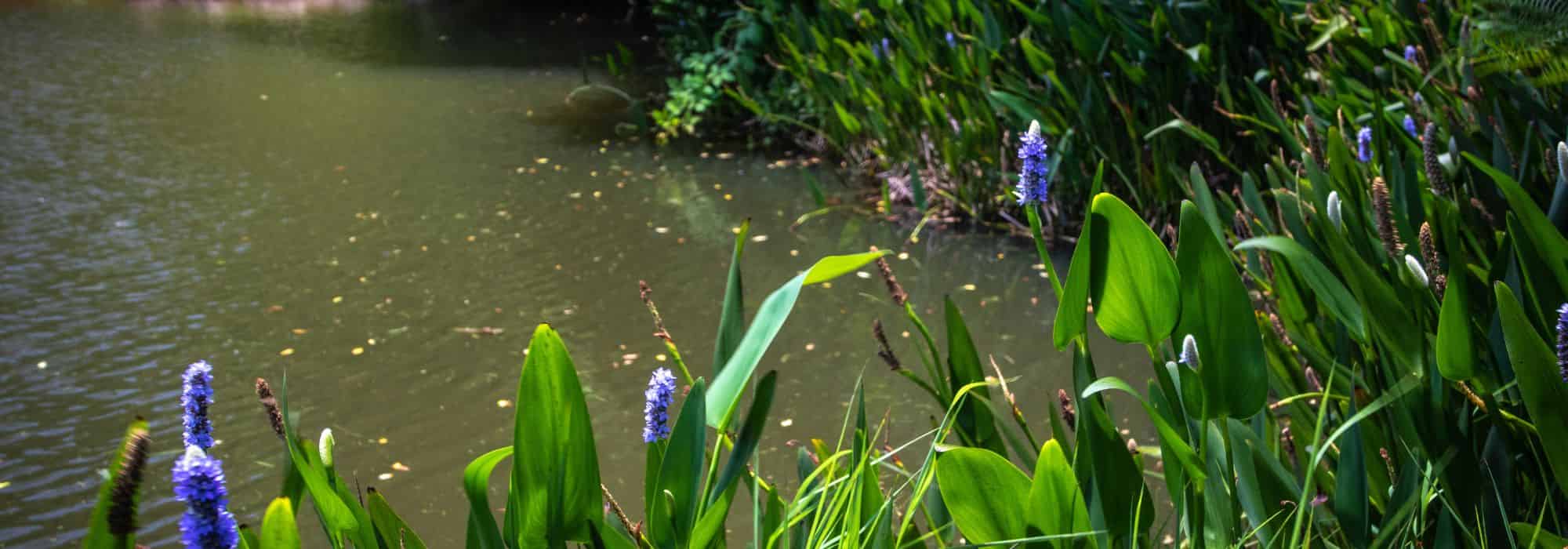
Shoreline plants, such as the marsh iris (Iris pseudacorus), the rushes or the carex, stabilise the edges of the pond, limit erosion and provide shelter for small animals. They structure the transition between the water zone and the rest of the garden.
-
Emergent plants, installed on the intermediate shelves, naturally filter the water and provide perches for wildlife. Among them, we find the cattails, the reeds or the purple loosestrife.
-
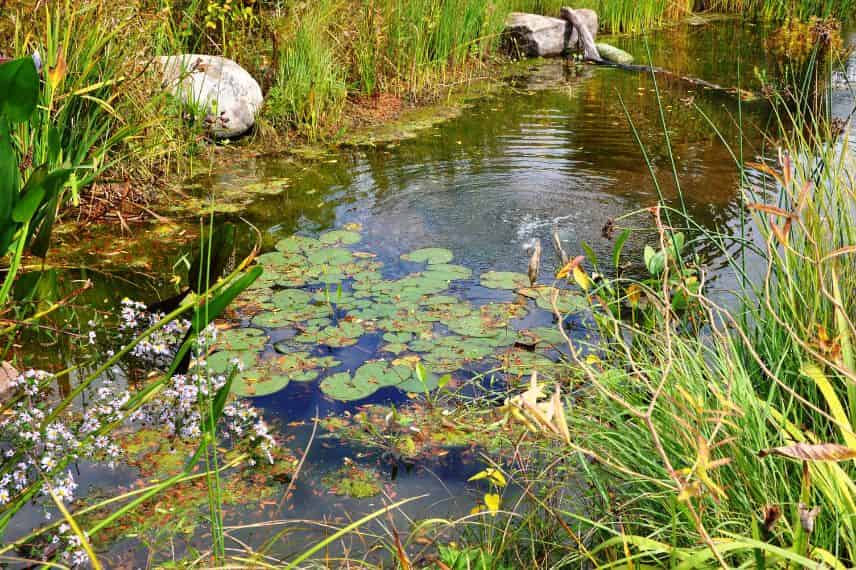
Floating plants, such as duckweed or water lilies, create beneficial shade on the surface, reducing evaporation and the growth of algae.
-
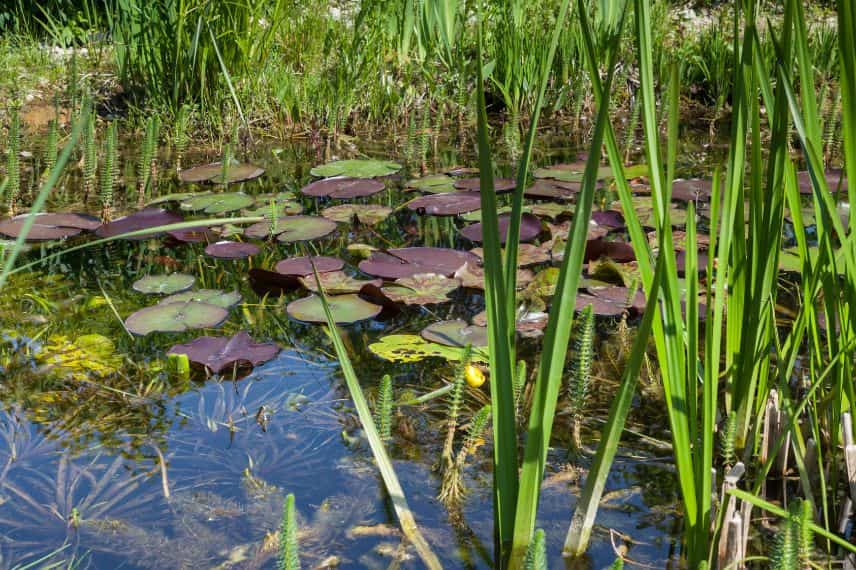
Oxygenating plants, submerged below the surface, contribute to the biological balance by enriching the water with oxygen, necessary for aquatic wildlife. Species such as Elodea or water-milfoil are suited to this use.
The combination of these plants, chosen according to the pond’s size and the weather conditions, allows you to create an autonomous and functional ecosystem, in harmony with permaculture principles. Locally sourced plants and those hardy to climate variations should be prioritised to minimise maintenance and guarantee the overall durability of the whole.
→ Find also all our pond perennial plants.
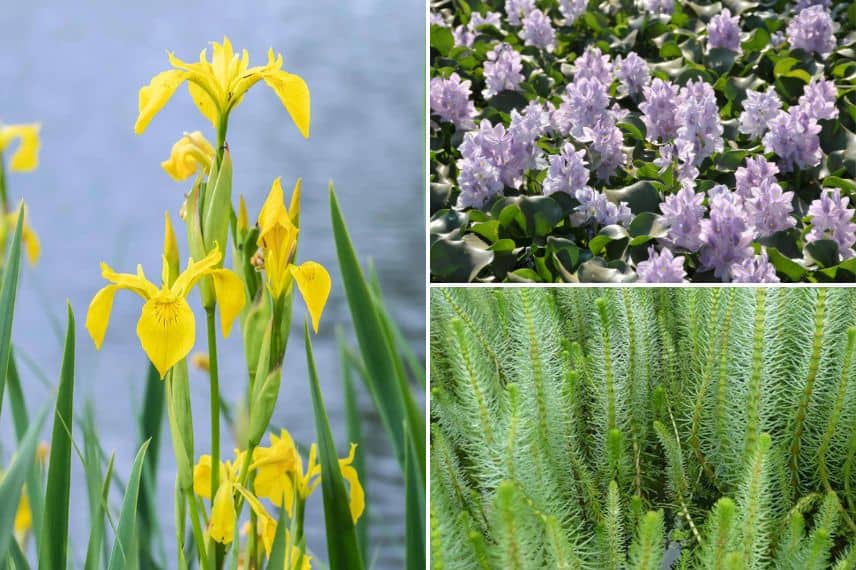
Marsh iris, water hyacinth and water-milfoil (Hippuris vulgaris)
The benefits of a pond in a permaculture garden.
A well-integrated pond in a permaculture garden helps to:
- Foster biodiversity by attracting a varied fauna: amphibians, beneficial insects, birds, some small mammals, and also many pollinators essential to the balance of the garden.
- Create a localised microclimate, by regulating temperature and humidity, which benefits neighbouring plants, especially during periods of drought.
- Store and make use of rainwater, a key element in permaculture, to reduce watering and conserve this resource.
- Support the natural water cycle, by slowing runoff.
- Structure the garden landscape, by adding a living water feature that complements the various plant strata and enhances habitat diversity.
Pond maintenance in permaculture
A well-designed pond, with suitable plants, requires little maintenance. In permaculture, we let nature take its course while safeguarding the balance.
Here are the essential steps for maintaining a pond in a simple and respectful way:
-
Remove dead leaves and plant debris, especially in autumn, to limit silt buildup.
-
Prune aquatic plants if they become invasive, keeping refugia for wildlife.
-
Monitor algae growth, often linked to a lack of filtering vegetation or too much direct light.
-
Top up the pond water, favouring rainwater to preserve the ecosystem’s health.
-
Create natural refugia, with stones, pebbles or branches, which offer refugia for wildlife.
-
Observe the pond’s balance, without intervening systematically, as a living ecosystem evolves with the seasons.
With these simple steps, the pond stays functional, living and integrated into the garden’s sustainable dynamics.
Questions about the pond in permaculture
Can a pond be installed without using a plastic liner?
Yes, it is possible to create clay ponds or use natural techniques, but this requires suitable soil and more know-how.
Does a pond attract mosquitoes?
A well-balanced pond, with young plants and natural allies such as dragonflies or frogs, naturally limits the proliferation of mosquitoes.
Does the pond use a lot of water?
On the contrary, it helps to store water and minimise losses through evaporation, especially if it is well integrated and planted.
- Subscribe!
- Contents
Comments