


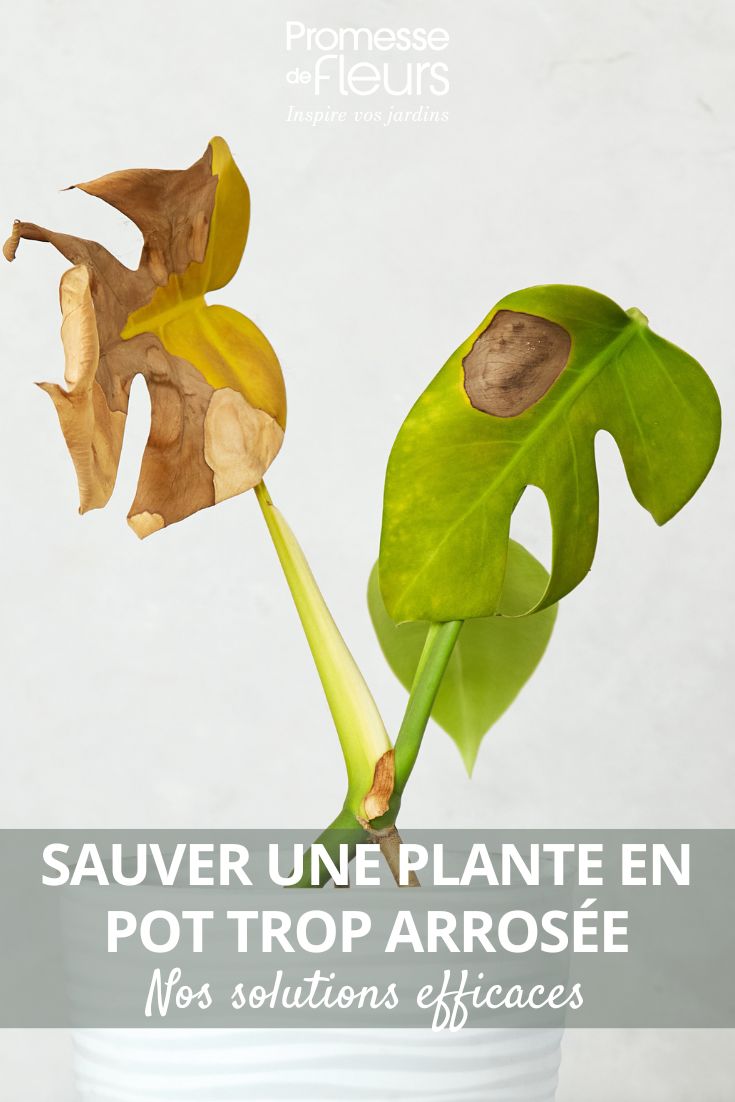
Saving an overwatered potted plant: our effective solutions
What to do when a plant is suffering after overwatering?
Contents
One of the most common mistakes when growing plants is overwatering. Managing watering is in fact a key point in ensuring the health of plants. If water is essential to the survival of plants, they do not all have the same needs according to their species and growing conditions. Potted plants, whether houseplants or outdoor plants, have different needs from those grown in the garden in the ground.
You’ve been watering too heavily and your plant is suffering? All may not be lost: A few steps can still save an overwatered potted plant. Also discover our tips and tricks for better managing the watering of your plants in the future.
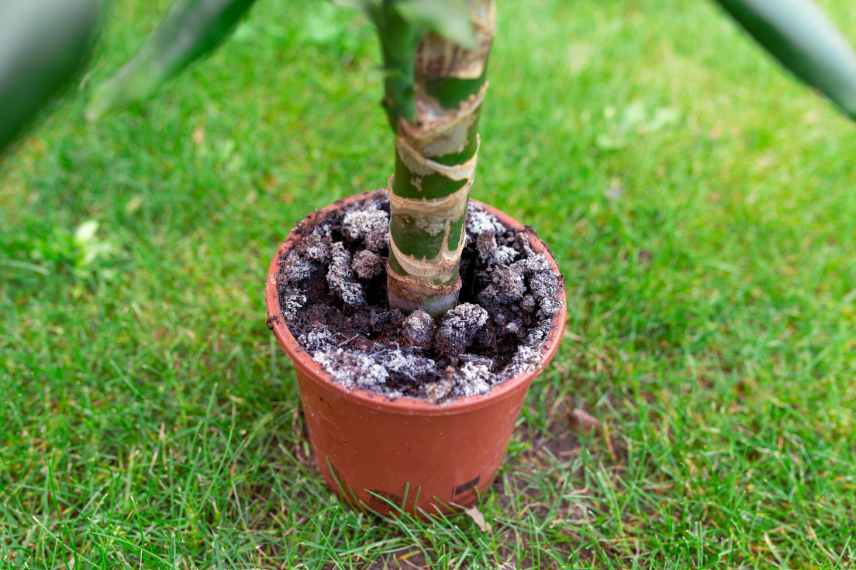
Overwatered potted plants always let us know

Observe the plant for signs of overwatering
To keep a plant healthy, observation is essential. This is what helps you quickly spot the symptoms of a problem and act before it becomes widespread. If a plant suffers from overwatering, it will develop several symptoms:
- its leaves will turn yellow;
- buds or flowers may rot;
- the plant appears soft and dull, with its overall shape drooping;
- growth is halted;
- the substrate (the soil in which it grows) smells bad, and fungi or algae appear on the surface.
If you notice several of these symptoms, the verdict is usually clear: the plant has been overwatered.
It is therefore at risk of completely rotting away and dying. Its roots may become unable to supply the essential nutrients needed for healthy growth, and it may develop cryptogamic diseases (fungi).
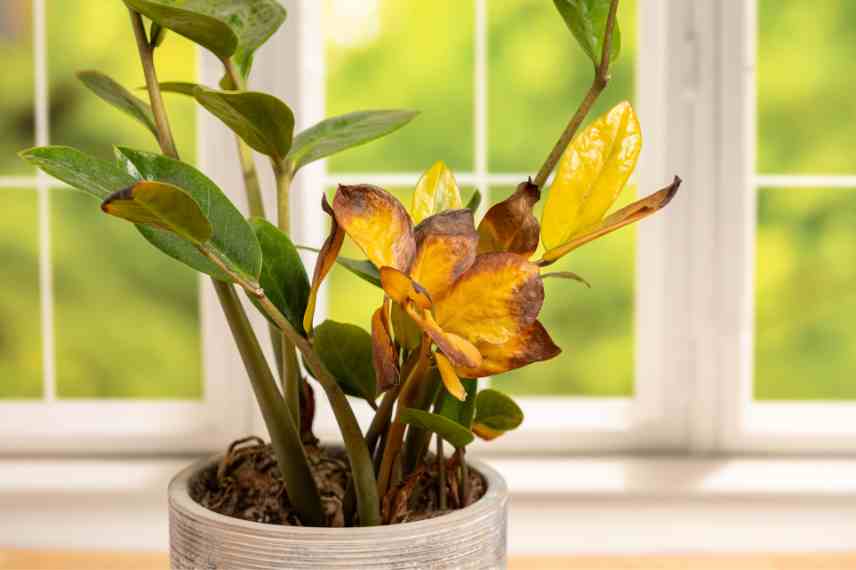
This Zamioculcas shows yellow leaves and a substrate that is probably rotten… But there is still time to act !
Read also
Is my plant thirsty or overwatered?Steps to take to rescue your overwatered plant
If symptoms have been spotted early, there’s still time to act to save the potted plant.
Start by removing the plant from its pot. Gently remove all the soil around the roots. You can gently rub it with your fingers to loosen it a little.
Next, inspect the roots. If a strong musty odour is present, it means they have already started to rot. Grab a well-sharpened and alcohol-disinfected pruning shear to limit the risk of spreading further diseases to your already weakened plant. Identify the soft, blackened sections of roots and cut them back to a healthy portion (firmer and lighter in colour). Also observe the plant’s aerial parts: are they damaged? If yes, disinfect your pruning shear again and prune back the shoots that lack vigour to a healthy section. The yellowed leaves should also be removed (leaves that have yellowed will not green up again).
Once this pruning is done, you can put the plant back in its pot. Choose a new dry container or clean the old one with lukewarm water and a few drops of washing-up liquid or white vinegar. In any case, the container must be perforated, to allow water to drain away and prevent further excess.
Use fresh potting compost suited to the plant’s needs (or a mix you prepare yourself from garden soil). Start by installing a drainage layer of about 3 cm at the bottom of the pot, made from clay balls, gravel or terracotta shards. This will again prevent water from stagnating around the roots. Place the plant back in the container, fill with substrate and firm with your fingers around the root ball. Wait 2 to 3 days before watering moderately again, ensuring water drains well from the pot. Have you placed a saucer or a cache-pot? Empty them promptly after 15 minutes if water still pools there.
In the weeks that follow, monitor your plant closely. If it isn’t too late, it should show signs of recovery: a sturdier silhouette, new leaves, etc. For future watering, wait until the substrate is dry to the touch 2–3 cm deep (for most plants) or completely dry (for cacti and succulents or Mediterranean plants).
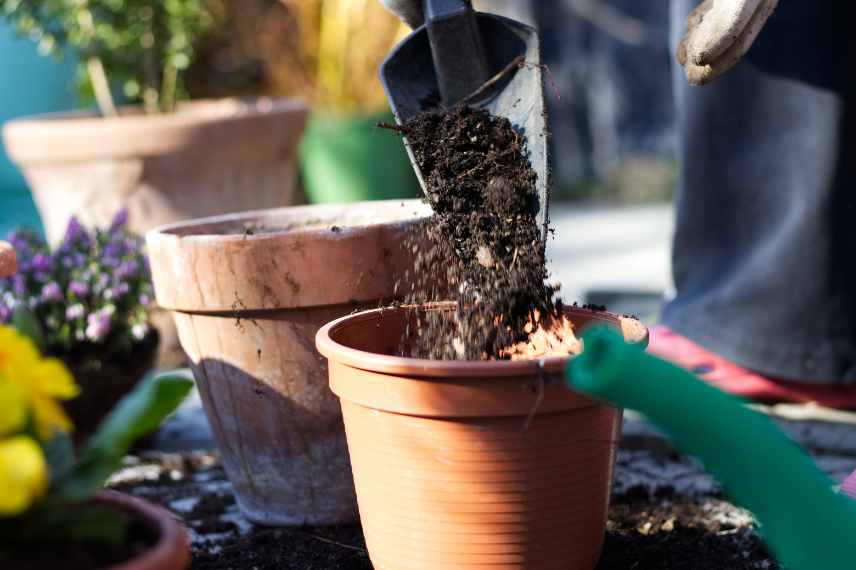
A brand-new, light substrate and a clean terracotta pot: you should start by restoring good planting conditions for the plant
How to better manage the watering of potted plants to prevent overwatering?
Good watering management is essential for keeping plants healthy. But it isn’t so simple to achieve, since it will depend on many factors:
- types of plants (some are thirstier than others);
- weather conditions (temperature, humidity, exposure…);
- type of pot and substrate.
To make watering easier, here are some tips to help you water your plants more effectively.
- If you tend to overwater, use terracotta containers. Their porous material allows water to evaporate more quickly, which helps prevent excess moisture.
- Remove the drainage trays or cachepots, in which the watering water tends to stagnate. If you still wish to use them, set an alarm for 15–20 minutes after watering to remember to empty them.
- Use a well-drained substrate (potting mix), which allows water to drain away without stagnating. If you use garden soil and it is heavy, mix it with draining elements (sand, clay balls, gravel…).
- For potted plants that enjoy having moist soil (which never dries out completely), test ollas. These irrigation pots allow the plant to be hydrated gradually by capillarity, reducing the risk of overwatering. You can find them in garden centres or make them yourself, for example by following our tutorial.
- Prefer bottom-watering, rather than top-watering. To do this, place your potted plant in a container or sink with a shallow layer of water at room temperature. Wait about twenty minutes for the plant to drink according to its needs, allowing the substrate to become evenly moistened by capillarity. To learn more about this method, read our article “Bottom-water a plant.”
- Group together plants with similar watering needs, to facilitate watering management.
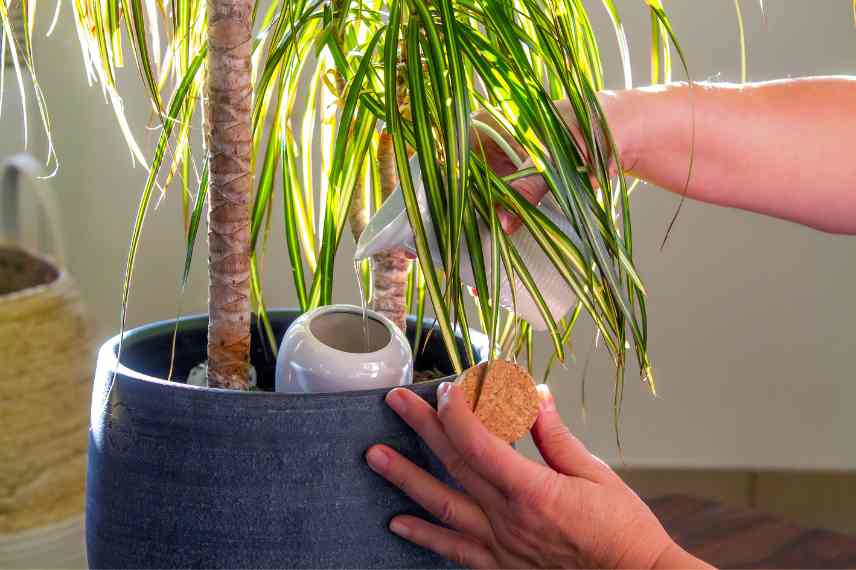
Mini ollas are handy for precise watering
- Subscribe!
- Contents
Comments