Protecting plants in winter: combating cold and dehydration
Effective protection against the cold to keep plants healthy
Contents
In winter, we mainly aim to protect our plants from cold and damp. However, some plants can suffer from dehydration, even during this cold season. To limit risks, it is necessary to identify the most sensitive plants and adapt their protective measures. Discover our tips in this article.

Plusieurs catégories de plantes sont particulièrement sensibles en hiver. En voici un résumé pratique pour jardiniers britanniques/irlandais, avec conseils de protection. Plantes tropicales et subtropicales (les plus fragiles) - Bananier (Musa), hibiscus tropical, bougainvillier, avocatier, mangue, dipladénia, géraniums d’ornement (Pelargonium) en extérieur. - Sensibilité : dommages dès les premières gelées, souvent dès autour de 0 à 5 °C selon l’espèce. - Protection : rentrer sous abri chauffé ou dans une véranda non chauffée mais hors gel, ou pailler et paqueter très soigneusement si impossibilité de rentrer. Palmiers et plantes exotiques - Beaucoup d’espèces de palmier (sauf quelques espèces rustiques comme Trachycarpus), ainsi que certaines agaves et yuccas exotiques. - Sensibilité variable : certains tolèrent de faibles gelées, d’autres sont détruits par des températures juste légèrement négatives. - Protection : paillage profond des racines, isolation du stipe (bâches respirantes, paille) et protection contre le vent froid. Arbres fruitiers sensibles - Agrumes (orangers, citronniers) et avocatiers ; lésions possibles à -2 / -4 °C selon espèce et vigueur. - Protection : culture en pots à rentrer, voile d’hivernage, chauffage ponctuel en verger amateur (lampes, bougies) pour situations précieuses. Plantes à feuillage persistant sujettes à la brûlure hivernale - Rhododendrons, camélias, lauriers-cerises, certains conifères à feuillage fin. - Problème : dessèchement foliaire par gel + vent (winter burn), surtout en exposition exposée. - Protection : paillage, brise-vent, arrosage automne sec mais régulier avant gel, voile anti-vent. Tubercules et bulbes sensibles au gel - Dahlias, cannas, bégonias tubéreux : tubercules sont gelés et détruits par le froid humide. - Protection : déterrer et hiverner au sec (dahlias, bégonias) ou pailler très épais en sol bien drainé. Jeunes plants et sujets récemment plantés - Jeunes arbres, arbustes et semis récents n’ont pas encore enracinement profond : plus vulnérables au gel et à la dessiccation. - Protection : paillage des racines, tuteur + voile, arroser avant gel si sol sec. Plantes en pots - Les racines chauffées/ refroidies plus vite : risques accrus de gel profond. - Protection : rentrer, regrouper au mur exposé au sud, isoler pots (paille, bulle, carton), surélever pour éviter gel par capillarité. Conseils pratiques généraux - Connaître rusticité des espèces et microclimat du jardin. - Pailler généreusement (10–15 cm) pour protéger racines. - Utiliser voile d’hivernage respirant pour protéger feuillage et floraison. - Arroser modérément avant gel si sol sec (évite dessèchement hivernal). - Éviter taille sévère juste avant l’hiver (favorise gel des nouvelles pousses). - Pour sujets précieux, privilégier hivernage à l’abri (garage, véranda hors gel). Si vous voulez, je peux dresser une liste adaptée à votre jardin (espèces que vous possédez, taille des pots, exposition) et proposer des mesures de protection précises.
While some plants are quite hardy and not especially vulnerable to cold or dehydration in winter, others are more sensitive. For, even though most plants are dormant and sap flow is slowed, wind and sun can still promote water evaporation. And if soil is frozen, plant cannot compensate for this lack of moisture.
First of all, this applies to slightly tender plants of average hardiness (around -12°C), such as some varieties of rose bushes.
But it is especially true for plants with evergreen foliage (which remains in place throughout year). This includes citrus trees, oleanders, Grevillea, Pittosporum and other Mediterranean plants. Naturally, they are often less resistant to frost. The fact their foliage does not fall also promotes dehydration by evapotranspiration. Indeed, shedding foliage to limit energy and water loss is one of the strategies deciduous plants use to better withstand cold season. That is why they are generally hardier. Evergreen plants therefore do not have this option. Young plants, even of fairly hardy species (rosemary, olive trees, Magnolia grandiflora…) will also be more sensitive to cold and dehydration, since they are not mature and not yet well established.
Finally, plants in pots are also more vulnerable, as they develop in a confined container. They are naturally less insulated against cold and dehydration.
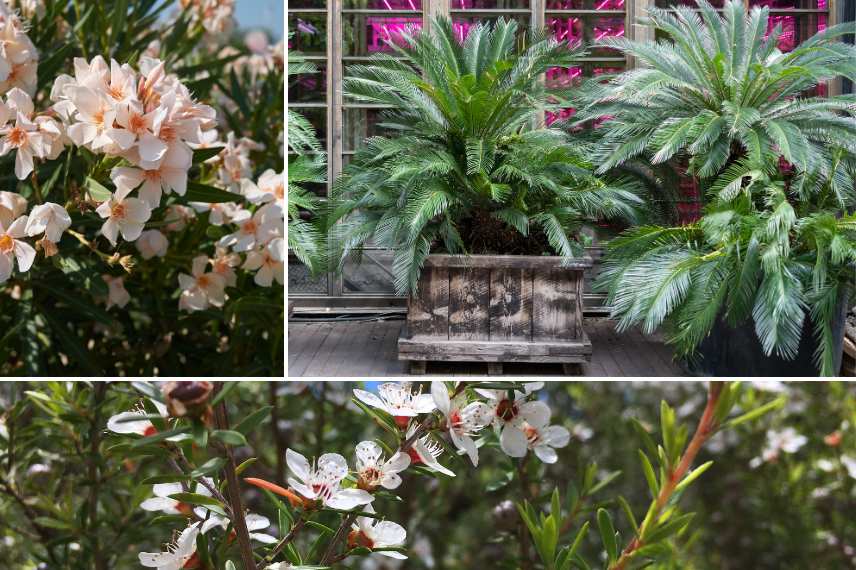
Mediterranean plants, in pots or tender specimens require special care in winter (oleander, Cycas and Leptospermum)
Read also
10 plants to protect in winterChoosing the right protection for plants
Fighting cold and dehydration effectively starts with choosing right winter protection.
In winter, depending on region and severity of climate, protection for plants can be installed:
- occasionally (one night here and there, when frosts are forecast);
- continuously (throughout entire cold season).
Easiest protections to install and find are fleeces. There are various models, differing in shape and thickness. Most are made of polypropylene or similar (plastic). Be sure to choose them according to thickness (typically 30 to 90 g/m2): higher weight provides more insulation from cold, but increases risk of dehydration.
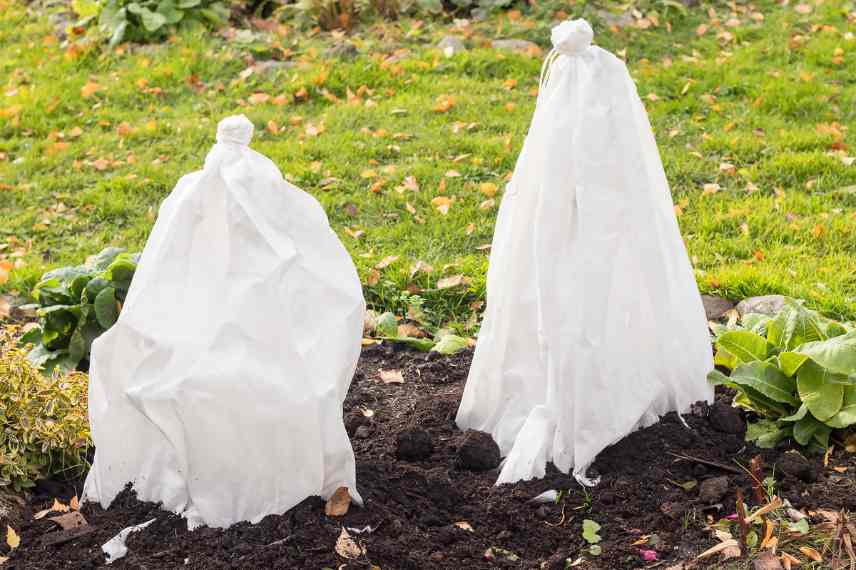
Traditional fleece is easy to find, sold by the metre or individually
For protecting low-growing plants, especially in the vegetable garden, favour accordion tunnels mounted on hoops, simpler to install and providing better air circulation.
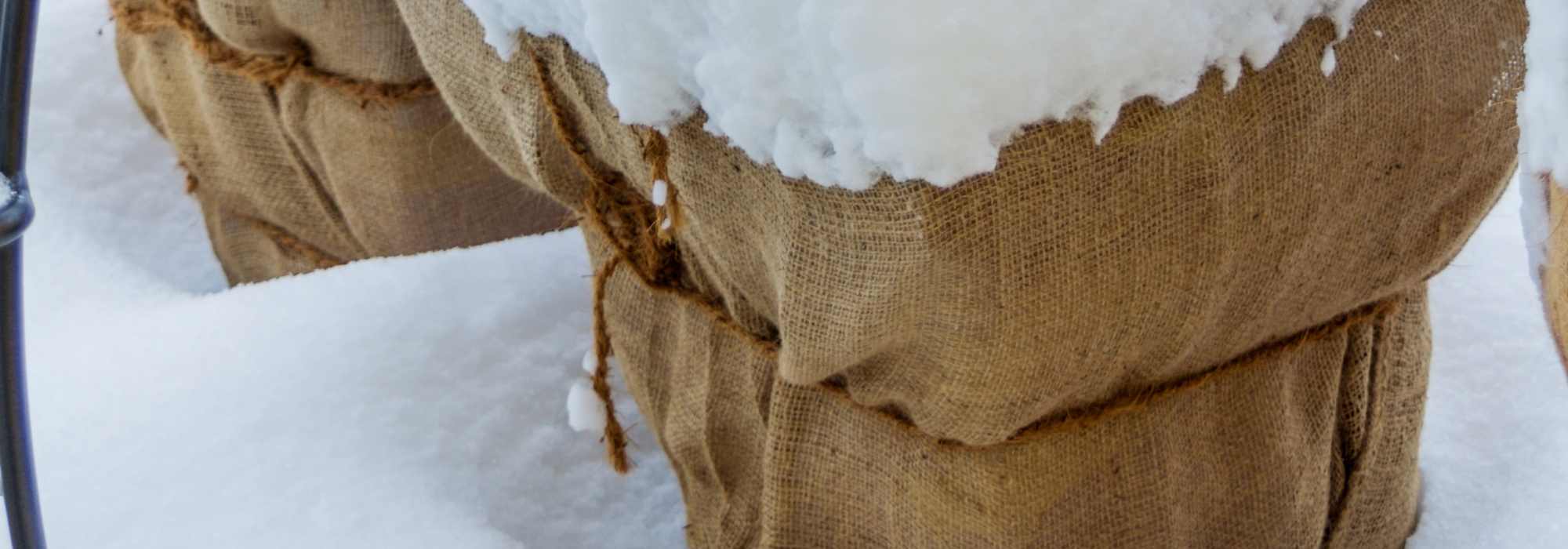
There are also woven rice-straw covers, which allow plants to breathe better and are more natural. They protect trunks of sensitive plants, such as palms, and can insulate pots or other containers. They are particularly suitable for frost-tender evergreens that cannot tolerate confined conditions. However, these covers are more expensive and harder to find in shops, but reusable for several years.
Conversely, avoid coverings that are too thick and insulating, which risk suffocating plant and encouraging dehydration: plastic bag, non‑perforated tarpaulin, bubble wrap, etc. They will promote condensation, with several harmful consequences: plant dehydration, increased risk of rot and disease.
When installing, avoid fastening fleeces tightly against plant: allow air circulation by using, for example, fleece clips or bamboo canes to keep cover away from aerial parts.
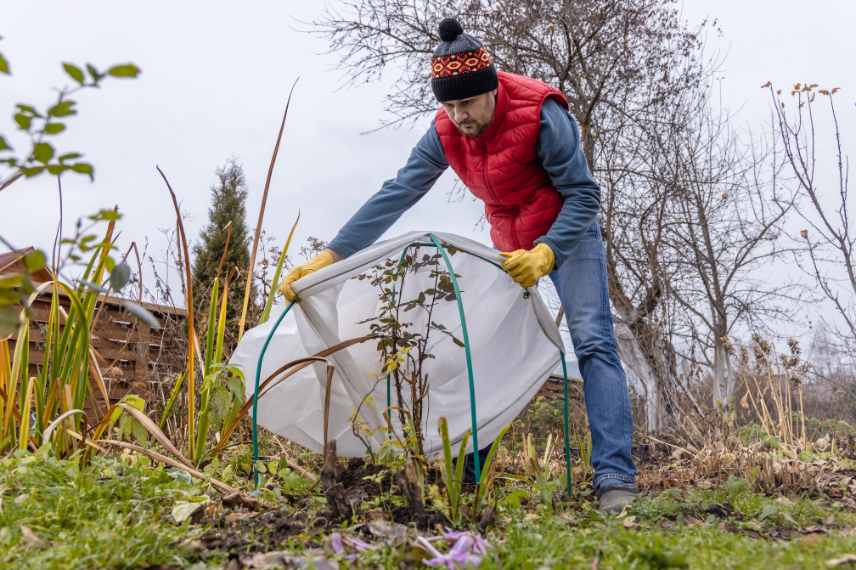
Install canes or hoops to keep fleece from touching plant
How to manage watering for protected plants
Whatever option you choose, putting protection in place requires a little organisation. A few days beforehand, before first frosts, water the young plant to ensure it is well hydrated. If heavy rain has already occurred and soil is already very wet, this is not necessary.
After frosts, if temperatures rise above freezing, it can also be useful to check soil condition: if it is dry, water again. Watering every three weeks to a month is generally sufficient in winter, but this frequency should obviously be adjusted to your growing conditions. If in doubt, feel the young plant’s soil: if it is dry in the first centimetres, this often indicates you can water.
Lay mulch around base of plants
The plants covered by winter covers will live, for more or less long periods, in a confined environment. This will encourage evaporation and therefore drying out.
As a precaution, consider installing a thick organic mulch at the base of your plants. On one hand, it will provide additional protection against cold by insulating the underground parts of the plant. On the other hand, it will reduce evaporation and help retain soil moisture for longer. Finally, by breaking down slowly, it will also contribute to soil fertility, supporting growth resumption in spring.
You can use different materials: dead leaves, RCW, plant husks, mulch fabrics, etc. Lay a good thick layer, at least 8–10 cm.
For more information, see our article: Which mulch should you use to protect plants against the cold?
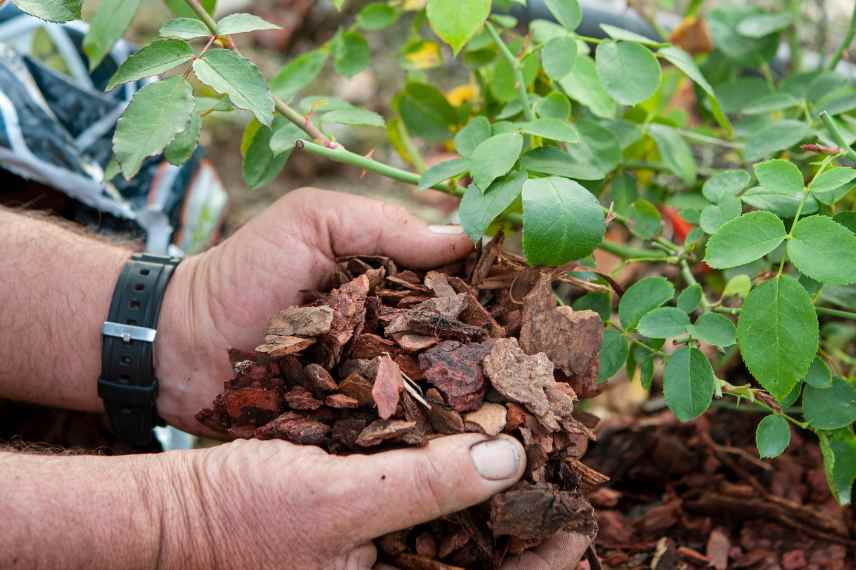
RCW applied at base of a young rosebush
Don't neglect potted plants
Before winter, ensure your plants in pots are placed in a position sheltered from strong, desiccating winds. Think about grouping them together to create a favourable microclimate, which will reduce the risk of dehydration.
The potting mix in containers dries out more quickly: therefore take care not to stop watering altogether, especially if pots are protected from the weather, as we recommend.
Also remember to isolate them from the ground by placing them on bricks or shims.
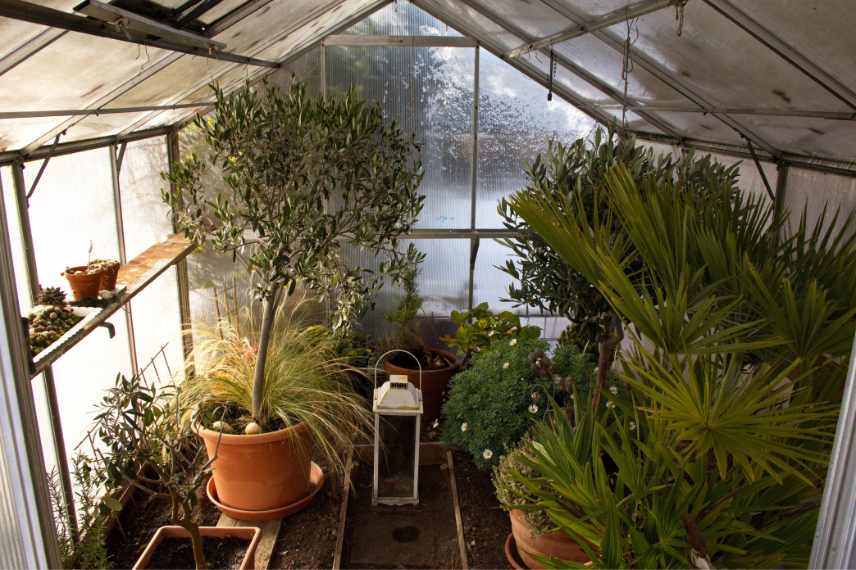
Even in a sheltered place such as a greenhouse, raise your plants in pots, or place them on wooden shims
Ventilate when temperatures rise
Another risk with winter protection is that plants may suffer heat stress if temperatures rise or on a very sunny day. Even though this requires some organisation, it is advisable to ventilate plants on pleasant winter days by opening protective coverings. This measure will limit risk of dehydration, as well as development of diseases. For this purpose, zipped covers are easier to manage.
Winter protective coverings should be removed at end of a cold spell in mild climates, or at start of spring in colder climates. However, watch out for late frosts.
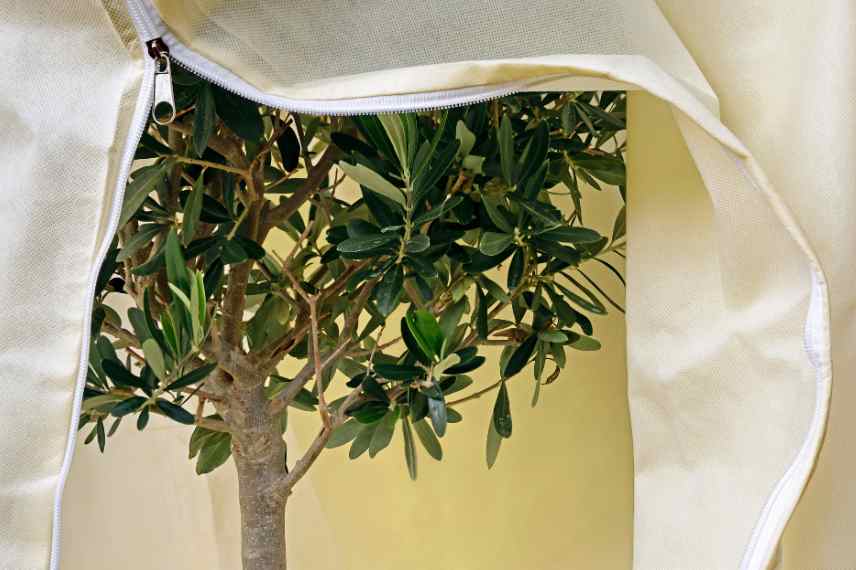
Zipped covers are very handy for easily ventilating plants on milder days
- Subscribe!
- Contents
This form is protected by reCAPTCHA - the Google Privacy Policy and Terms of Service apply.

































Comments