Calendula: a plant to grow for its medicinal properties
Origin, benefits, uses and cultivation
Contents
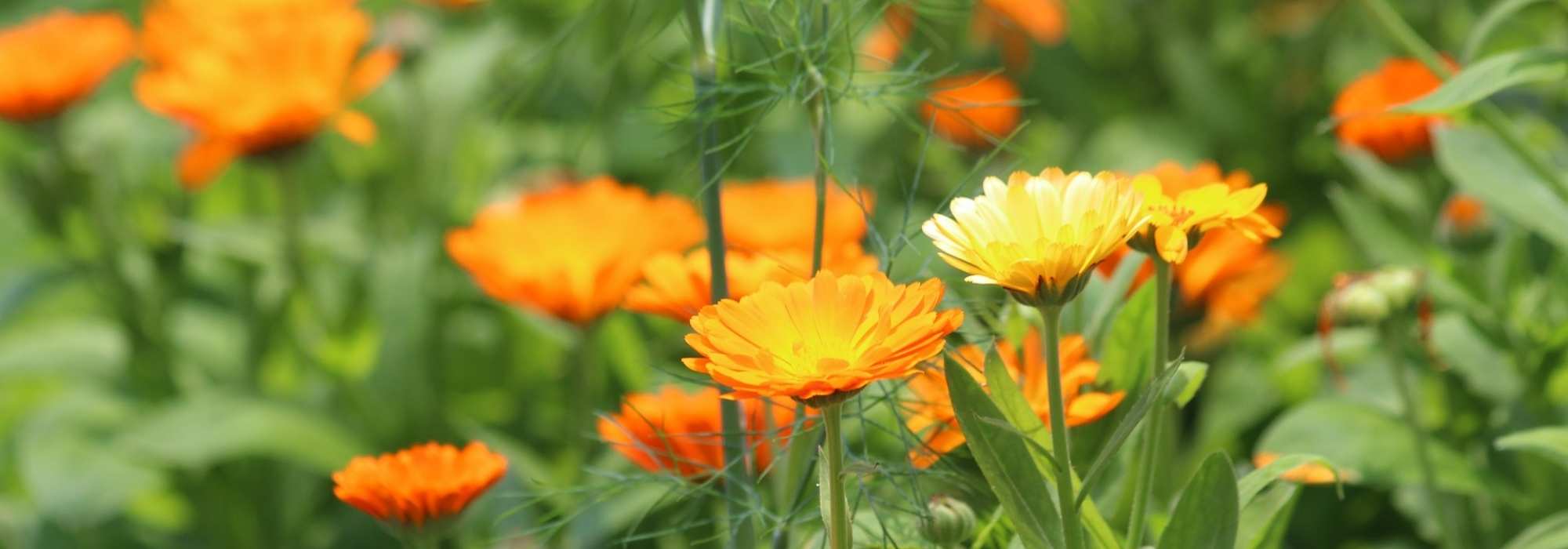
Marigold, or calendula — botanical name Calendula officinalis — is a bright annual plant, recognisable by its orange or golden-yellow flowers, found both in ornamental gardens and in natural vegetable gardens. But it is also an easy-to-grow medicinal plant. The petals of marigold flowers have been used for centuries in traditional herbal medicine. Today it is even one of the most valued plants in phytotherapy and natural cosmetics, whether for preparing an oil macerate, a calendula balm or an infusion.
Easy to grow, pot marigold fully deserves a place in your garden… and in your medicine cabinet. A look at a plant as beautiful as it is useful.

Origin and history of calendula
Calendula officinalis is a plant native to the Mediterranean basin. The term calendula is thought to derive from the Latin calendae, meaning ‘first day of the month’, in reference to its almost continuous flowering throughout the warm season. As for the word souci, it is believed to come from Late Latin solsequia, meaning ‘that which follows the sun’. Indeed, the marigold flowers open with sunlight and close when it fades.
In the Middle Ages, pot marigold was among medicinal plants grown to prepare ointments and remedies, notably to treat skin irritations. The petals of marigold flowers were also used in infusions, in oil macerates and even to dye fabrics yellow. This long tradition of use has led modern researchers to take a close interest in the active compounds of Calendula officinalis.
Today, cultivation of marigold remains widespread in natural gardens. Beyond its traditional uses, this plant is also appreciated by pollinators in our gardens and for the beauty of its flowers.
Health benefits of Calendula officinalis
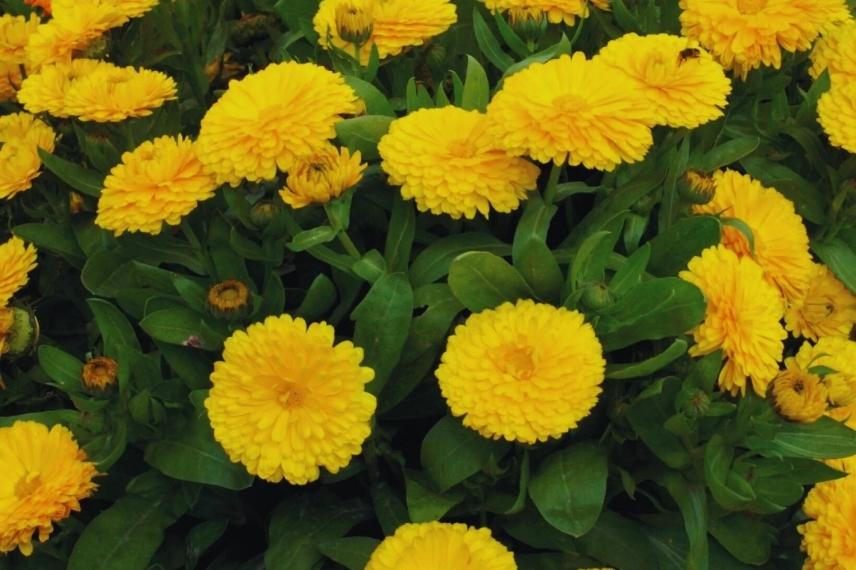
Benefits of Calendula are mainly linked to compounds present in its petals: flavonoids, carotenoids (responsible for its colour), triterpenes, etc. These compounds would explain the range of benefits of calendula recognised by traditional herbal medicine.
Soothing and wound‑healing properties for skin
Perhaps the best‑known benefit of the marigold flower: its action on the skin to help soothe irritation, speed healing of scrapes and relieve sunburn. Calendula ointment, made from an oil macerate of flowers, is a classic of natural skincare. It appears in first‑aid kits, facial care products and on changing tables to treat redness and nappy rash in infants. Calendula cream is also highly valued to hydrate and protect dry or sensitive skin, especially during winter.
Anti‑inflammatory and antioxidant action
Marigold flowers are thought to have anti‑inflammatory and antioxidant properties. For topical use, calendula oil can help reduce local inflammation and protect skin against oxidative stress. These properties explain why calendula balm is often recommended to help reactive skin, mild eczema or chapped skin.
Infusion for digestive comfort
Dried petals of Calendula officinalis can also be consumed as an infusion. This herbal tea develops a mild, slightly grassy flavour. In some traditions, this infusion is enjoyed for its contribution to digestive comfort. Petals can be used alone or combined with other plants such as chamomile or verbena.
⚠️ Precautions and contraindications
Although calendula is generally well tolerated, some precautions are necessary. People allergic to plants of the Asteraceae family (daisies, arnica, chrysanthemums…) may react to marigold flowers: it is advisable to test the product on a small area of skin before use.
Pregnant women should avoid internal use of calendula, notably as an infusion, unless advised otherwise by a medical professional.
If taking medication, always consult a healthcare professional before adding a plant to your routine. Use of calendula infusion should not exceed six consecutive weeks.
Information in this article is provided for informational purposes and does not replace medical advice.
How to use calendula flowers?
Calendula can be used in different ways at home. Once harvested and dried, marigold flowers can be used to make an infusion, an oil macerate or a calendula oil.
Marigold flower infusion
Simplest way to use marigold flowers is to prepare an infusion from dried petals.
- Pour simmering water over a teaspoon of fresh or dried marigold petals.
- Leave to infuse for about ten minutes before straining.
Infusion of Calendula officinalis can be drunk as a herbal tea, but is also used as a natural topical treatment. When cooled, it serves as a soothing lotion for sensitive or irritated skin, or as a gentle rinse for skin and hair.
Oil macerate or calendula oil
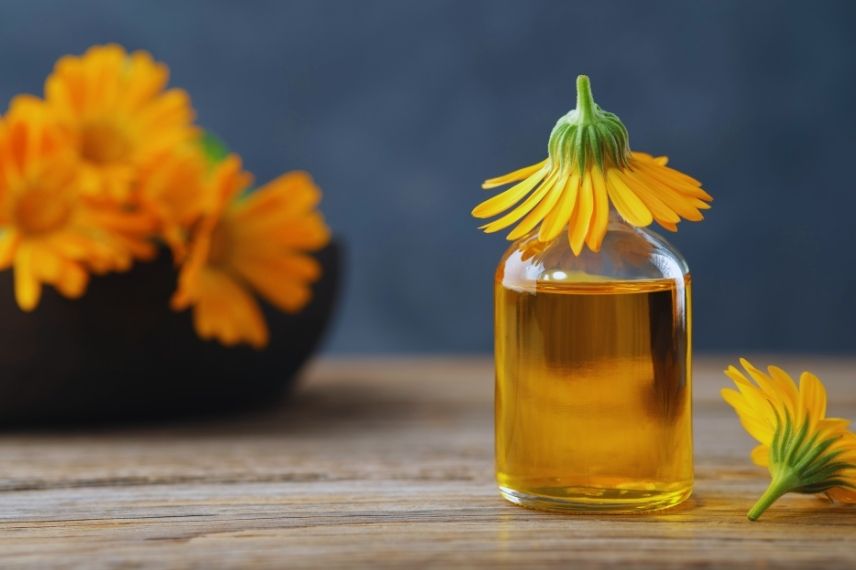
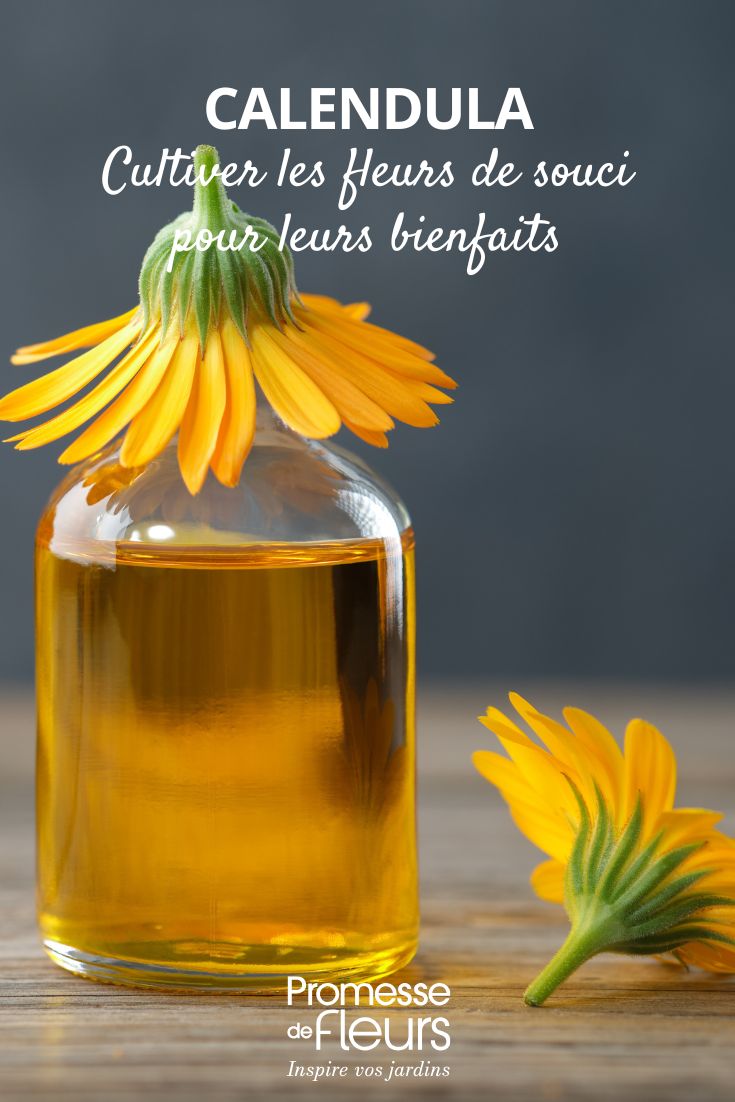
Marigold flowers are also widely used to prepare an oil macerate, often called calendula oil. This preparation is simple to make at home.
- Place dried petals of Calendula officinalis in a clean jar.
- Cover with a vegetable oil, such as sunflower, jojoba or sweet almond. Oil must completely cover flowers to avoid oxidation or mould development.
- Close jar and place in a bright spot, such as a windowsill, for two to three weeks. During this time, gently shake jar every two or three days. Gradually, oil takes on a golden-yellow hue.
- When maceration is complete, strain oil using a muslin cloth, coffee filter or clean gauze.
- Pour macerate into a tinted glass bottle, stored away from light and heat. Under optimal storage conditions, homemade calendula oil keeps for about six to twelve months.
Tip: add a few drops of vitamin E to extend shelf life.
Once filtered, this calendula oil can be used for a light massage on skin or as a base for other preparations. It is often used on sensitive, irritated or inflamed skin.
Calendula balm
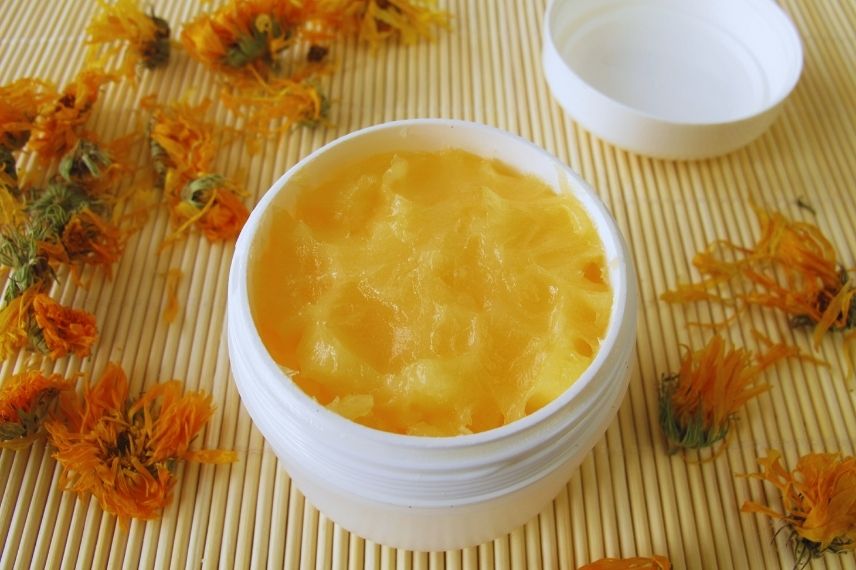
Using the oil macerate obtained, you can make a homemade calendula balm.
- Gently heat the calendula oil in a double boiler.
- Then add natural beeswax. Beeswax proportion varies according to desired consistency: a small amount gives a creamy balm, while a ratio of about 1/4 wax to 3/4 calendula oil yields a firmer consistency.
- Once wax has melted, pour still-liquid mixture into small clean pots, then allow to cool.
Once solidified, calendula balm keeps for several months in a hermetically sealed jar away from heat and light. Use balm sparingly on skin. Thanks to soothing and healing properties of Calendula officinalis, it is valued for calming sensitive skin, dry areas or minor skin irritations.
How to grow pot marigold at home?
Marigold is one of the easiest plants to grow in the garden. This annual grows quickly and produces numerous flowers throughout the growing season.
- Choose a sunny spot. Ordinary soil suits it perfectly, provided it does not remain too wet.
- Sow seeds of Calendula officinalis in spring, from March to May, once risk of severe frosts has passed.
- Place seeds in lightly worked, light, well-drained soil. They can also be sown in pots or window boxes.
- Cover lightly with soil (1 cm) and water. Germination usually occurs one to two weeks later.
- Afterwards, moderate watering is sufficient, especially during dry spells.
- Tip: to encourage production of new flowers, regularly remove faded blooms. This practice extends calendula flowering until first frosts and allows harvesting more marigold flowers.
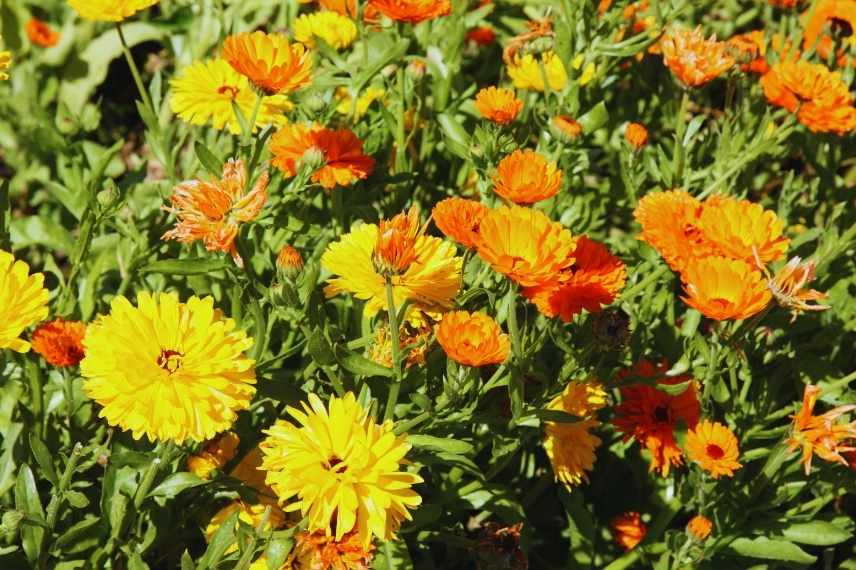
Harvest and storage of pot marigold flowers
- Harvest of calendula flowers is carried out when heads are fully open. Petals of calendula officinalis are generally picked in dry weather, around midday.
- To properly preserve calendula flowers, dry them in a dry, well-ventilated place away from light. Petals are spread in a thin layer to prevent any moisture.
- Once thoroughly dry, petals can be stored in an airtight jar, away from light, heat and moisture, for around one year. They can then be used to prepare infusions, oil or calendula balm throughout the year.
- Subscribe!
- Contents
This form is protected by reCAPTCHA - the Google Privacy Policy and Terms of Service apply.

































Comments