Diseases and parasitic organisms of Syngonium
Identification, prevention and natural solutions
Contents
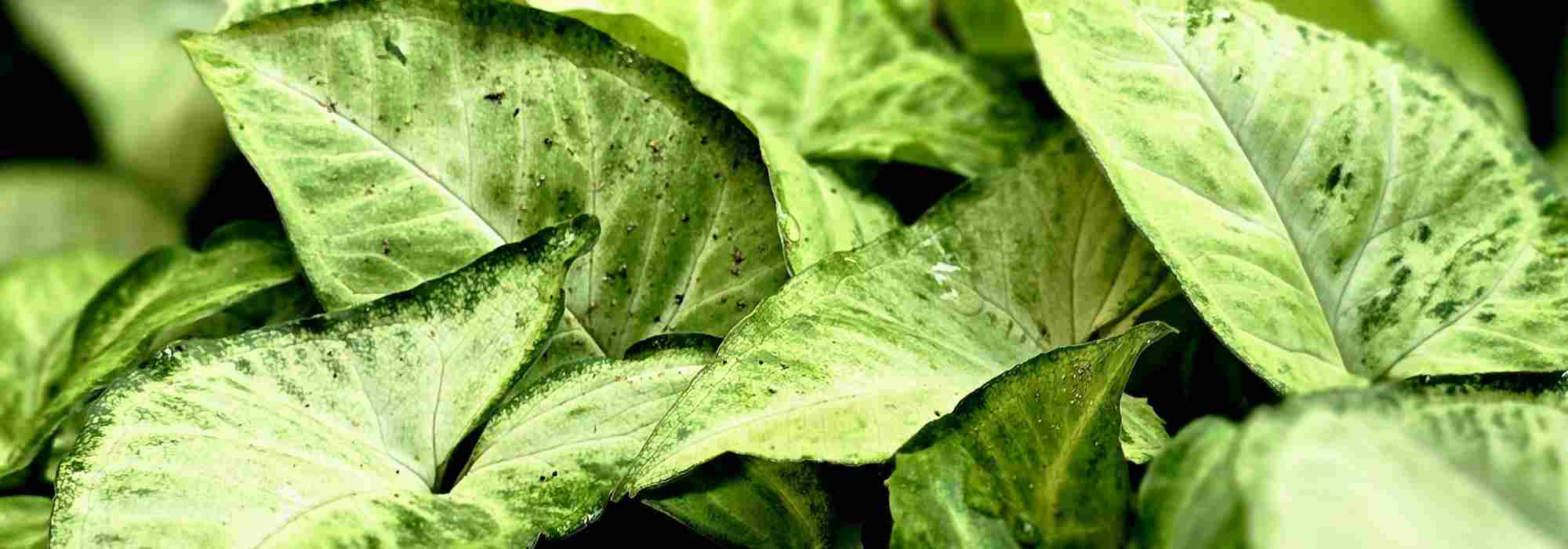
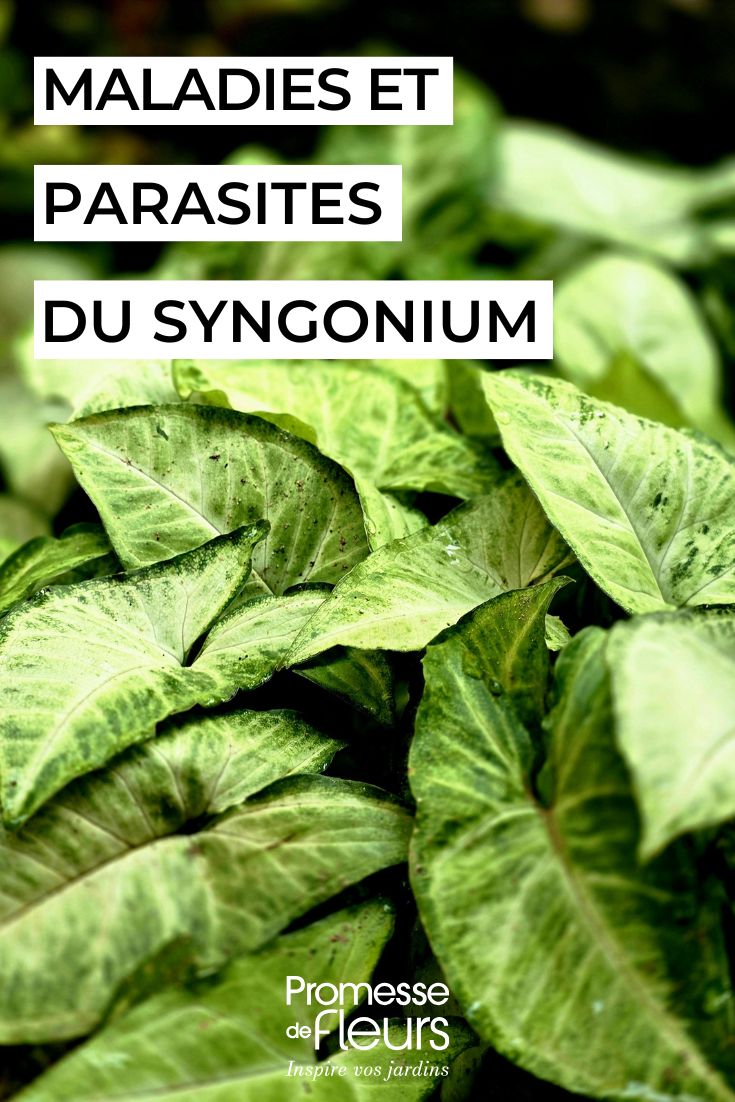
Syngonium, also called ‘arrowhead vine’, are houseplants that we love for their attractive triangular decorative foliage. It can be plain, variegated or coloured, depending on variety. These plants suit different rooms of the house, preferably in slightly humid conditions.
Syngonium is an undemanding plant, but it can be affected by pests or diseases. Let’s see how to identify symptoms, prevent risk of occurrence and treat the plant naturally to keep it healthy for longer.
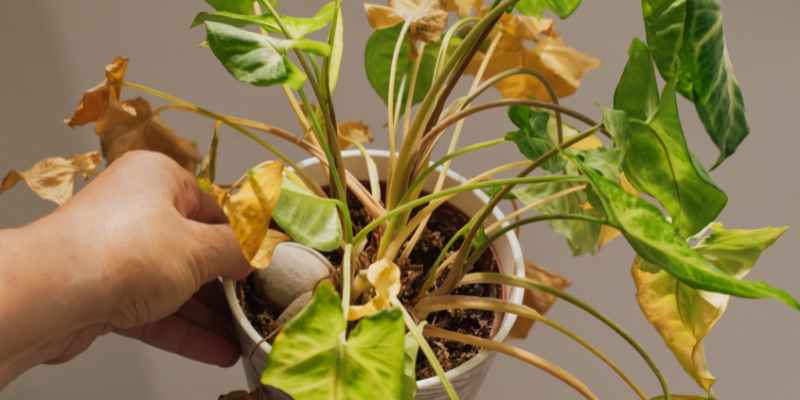
Overwatering is sometimes the only cause in houseplants such as Syngonium
Parasitic organisms of Syngonium
Syngonium can be affected by common indoor plant pests. These are insects or mites that feed on plant sap. An infestation can eventually cause plant decline. All tend to multiply fairly quickly and can spread to neighbouring plants. In addition, their bites can promote development of bacteria, viruses or fungi, causing disease.
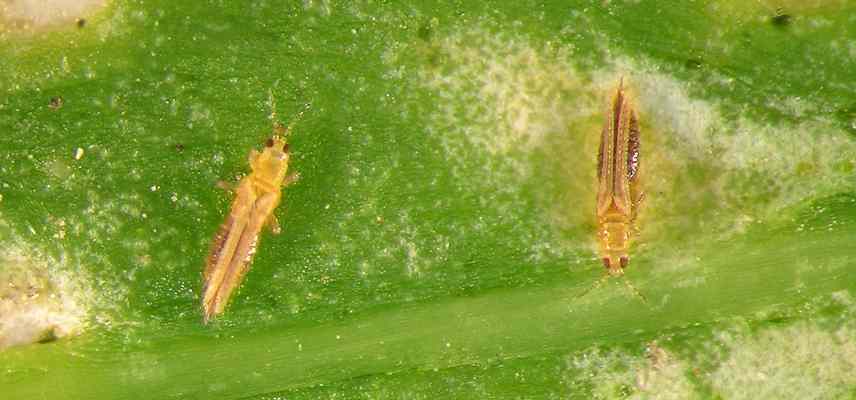
Thrips
These are tiny, elongated insects, black, brown or translucent in colour. Hard to spot, they often hide on the undersides of leaves or along stems. First symptoms? Yellow, brown or silvery discolouration on leaves. Young shoots can also be punctured before they even open. Small black dots, which are their droppings, may also be visible. Thrips are among the most feared pests, being difficult to detect early and equally hard to eliminate.
For more information, discover our article: Thrips: identification and natural treatment.
Mealybugs
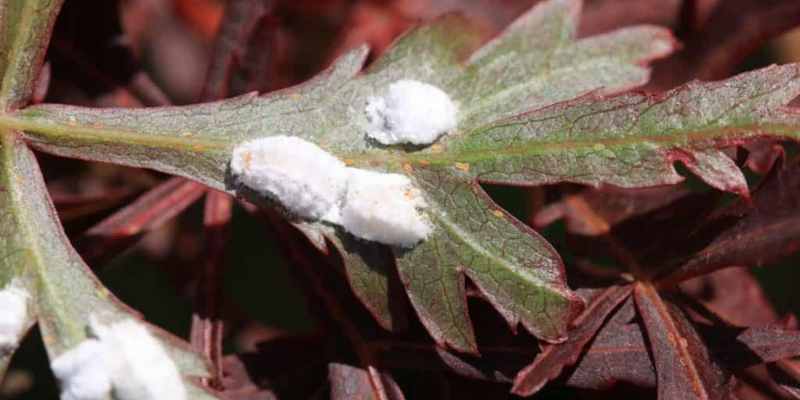
These are small insects covered in a white, cottony down, which gives them their name. This is what makes them easy to spot on leaves or along Syngonium stems. In terms of symptoms, mealybugs cause leaf yellowing and an overall slowdown in growth. But mealybugs pose another problem: by secreting honeydew, they encourage development of a fungal disease caused by a fungus. This is sooty mould, recognised by black, soot-like deposits it produces. This disease impairs photosynthesis and thus weakens the plant, possibly halting growth.
For more information, discover our article: Mealybug: identification and treatment.
Red spider mites
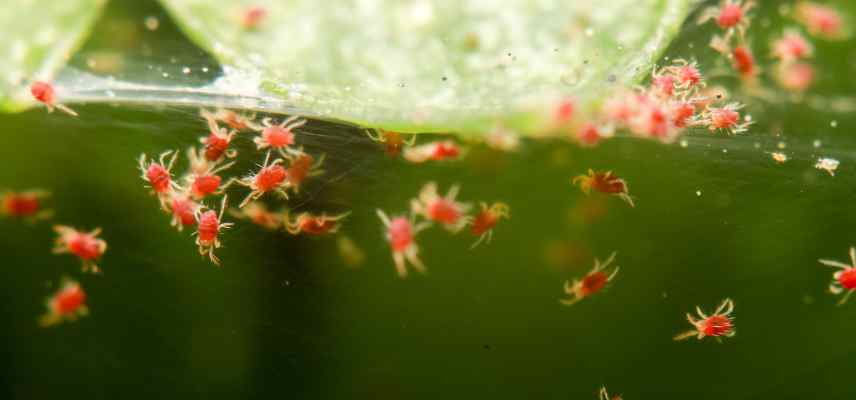
Red spider mites are also called red mites or tetranychid mites. These are not insects but mites. Almost impossible to see with the naked eye because of their tiny size, their presence is betrayed by the fine webbing that links the aerial parts of the Syngonium. You will also notice discolouration (yellow spots) and premature leaf drop.
For more information, discover our article: Red spider mite: identification and treatment.
Prevention against Syngonium pests
Prevention starts with regular checks. By looking carefully at plants, it is possible to counter early attacks much more easily. When watering or dusting Syngonium leaves, take a moment to inspect the above-ground parts.
Main indoor plant pests prefer warm, dry conditions. A humid atmosphere will limit their development. This suits Syngonium well, as it prefers warmer, more humid conditions. Native to tropical forests of Central and South America, it thrives in warm, humid conditions. Regularly mist foliage, ideally with rainwater or filtered water. You can also place the plant on a layer of clay balls, which will help retain moisture.
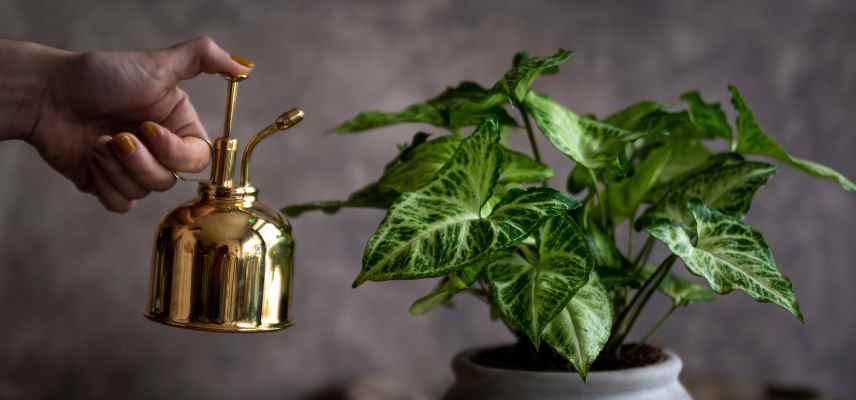
Misting is a good preventive measure
Make sure all Syngonium needs are met: if grown in good conditions, the plant will be naturally more resilient. Give it a bright position, but avoid direct sun which could damage the leaves. An east or west exposure is ideal. If placed behind a window, consider adding a light voile. Protect the plant from draughts and large temperature swings. It prefers a range of 18–25°C.
Natural solutions for pest attacks
First symptoms appeared? It is still possible to act. Start by placing Syngonium in the shower tray, bathtub or sink. Rinse all above-ground parts with water at room temperature. Allow to drain, then return plant to its environment. This action helps dislodge pests in early infestation.
If they persist, choose a natural treatment based on pure black soap. Mix 1–2 tablespoons in 1 litre of lukewarm water. Stir, then pour into a spray bottle. Spray affected areas, taking care to lift leaves and spray stems as well. This natural insecticidal treatment can be repeated after 7 days.
Against mealybugs, you can also use a cotton wool ball soaked in 70% alcohol to remove them if infestation is limited.
Cryptogamous diseases of Syngonium
Syngonium can be susceptible to certain cryptogamous or fungal diseases, that is, diseases caused by fungi. These are among the most common in the garden. Usually they are caused by an environment that is too humid and confined.
Root rot
This is a feared disease, as it can cause Syngonium to decline. Moreover, symptoms are generally visible only once the disease is well established, since it first affects the roots. They cause the roots to soften, then decay. The plant will gradually collapse and stop growing. Mould or algae may develop on the substrate and an unpleasant odour may be noticeable.
Leaf spots
Syngonium’s attractive foliage can be affected by brown, black or yellowish spots, sometimes surrounded by a paler halo. Leaves eventually drop.
Prevention against Syngonium cryptogamous diseases
Prevention against cryptogamous diseases is essential, as effective curative treatments do not always exist.
As with pests, first make a habit of inspecting your plant regularly. Then, pay particular attention to watering. Water regularly but without excess. The trick is to feel the top of the soil with your fingers. If it is dry for the first few centimetres, that is the sign it is time to water. If the plant sits on a saucer or in an outer pot, empty excess water after about twenty minutes.
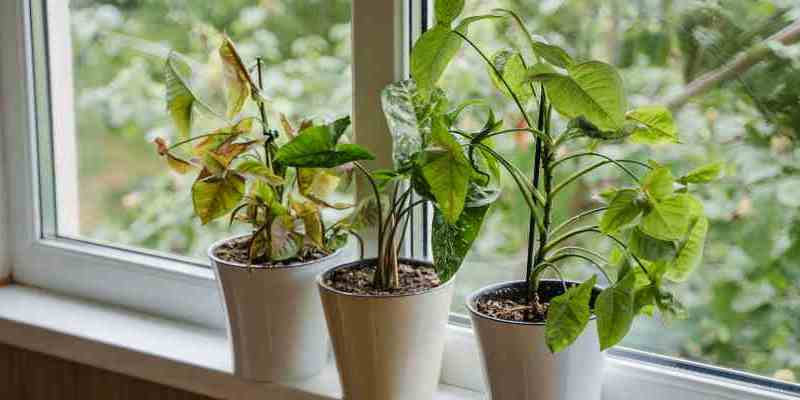
Check your plants regularly: a change in leaf colour is often one of the first visible signs
When potting, choose a well-draining substrate, that is, one in which water flows away without stagnating. It is also essential to use a pot with a drainage hole and to place a drainage layer at the bottom (using clay pebbles, gravel, shards of terracotta, etc.). This prevents roots from sitting in water. If you tend to overwater, favour terracotta pots, which allow the substrate to breathe better.
Finally, if you need to prune damaged leaves or stems to maintain a balanced habit, thoroughly disinfect your cutting tools beforehand with 70% alcohol. This helps limit the risk of disease transmission between plants.
Natural remedies in case of disease
If Syngonium is affected by root rot, it is essential to remove it from its pot. Inspect the roots and cut away all affected parts, back to healthy tissue. Replace the entire substrate, remembering to reinstall a drainage layer at the bottom of the container. If you keep the same pot, remember to clean it before returning the plant.

In case of leaf spots, remove all affected leaves. Reduce frequency of misting the foliage and, if necessary, place Syngonium in a more ventilated environment.
Additionally, you can consider a few sprays of nettle manure, appreciated for its fungicidal properties.
- Subscribe!
- Contents
This form is protected by reCAPTCHA - the Google Privacy Policy and Terms of Service apply.

































Comments