Diseases and pests of Pothos
Identification, prevention and natural solutions
Contents
Pothos (Epipremnum aureum) are very popular houseplants, valued for their lush foliage, rapid growth and climbing or trailing habit.
They can add a genuinely exotic touch to almost any room in the home and are easy to grow, ideal for beginners. However, disease development or pest presence can affect its growth and appearance. Discover how to identify symptoms, prevent problems and treat a Pothos naturally to keep it healthy.

Parasitic organisms affecting Pothos
Pothos can be targeted by different pests, quite common on indoor and outdoor plants. These are mites or insects that feed on its sap and can therefore affect its proper development and weaken it. Their feeding can also create entry points for other pathogens, such as bacteria, viruses or fungi.
Thrips
These small elongated and very mobile insects cause silvery discolouration on the leaves and a general slowdown in growth. New leaves struggle to unfurl and can brown before reaching maturity. Thrips are difficult to see as they are very small, dark or translucent in colour and tend to hide from the light. Symptoms are often noticed only once they are well established.
For more information, discover our article: Thrips: identification and natural treatment.
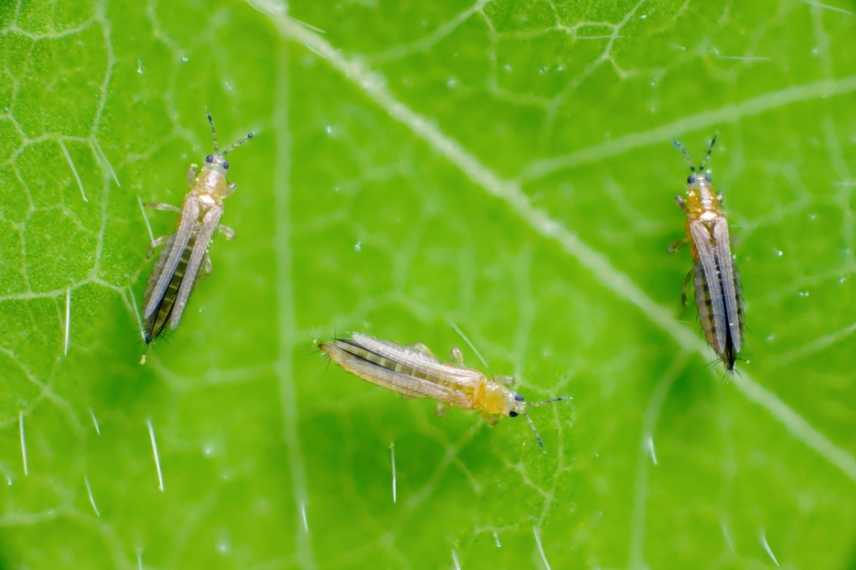
Thrips are almost invisible to the naked eye
Mealybugs
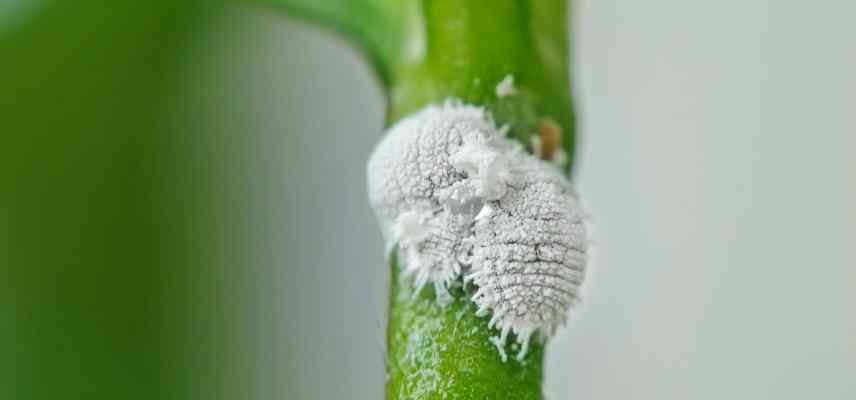
Among other pests, mealybugs are among the most common. They appear as small cottony white masses or small brown shells fixed to the stems and undersides of the leaves. Leaves turn yellow, the plant weakens and growth slows.
Their presence is often accompanied by a sticky deposit called honeydew, which promotes the development of a fungal disease caused by a fungus: sooty mould. You will then notice black powdery deposits reminiscent of soot on the aerial parts of Pothos. This can reduce photosynthesis, thereby negatively affecting growth and health.
For more information, discover our article: Mealybug: identification and treatment.
Red spider mites
Red spider mites, which are in fact mites, appear mainly when the air is too dry. They are difficult to see with the naked eye, but their presence is noticeable by fine webs and small yellow speckles on the leaves. The leaves become dull, dry and eventually drop.
For more information, discover our article: Red spider mite: identification and treatment.
Preventing pests on Pothos
To avoid pest proliferation, regular inspection is the first rule to apply. When watering Pothos or dusting foliage, check the undersides of the leaves and the stems. Once the plant is colonised, it is more difficult to eradicate unwanted pests.
Most pests favour dry, warm conditions. As a preventive measure, it can therefore be useful to mist the foliage with soft water. You can also place an organic mulch at the base of the Pothos, made from plant husks or clay beads. This helps retain substrate moisture by limiting evaporation, while also being decorative.
Finally, a Pothos whose needs are met will be less susceptible to pest attacks. To provide good growing conditions, ensure it is placed in a bright spot, but out of direct sunlight, which could cause leaf scorch, and sheltered from drafts. Water moderately, allowing the potting mix to dry between waterings.
Natural solutions for pest attacks
Pests established? Start by placing the Pothos in the bath or shower and wet its foliage with room-temperature water. If the infestation is limited, this action may be enough to dislodge the pests. Let the plant drain before returning it to its place.
Mealybugs can be removed using a cotton wool bud soaked in 70% alcohol. You can also use a natural insecticidal treatment based on black soap. Be sure to choose a pure black soap. Mix 1 to 2 tablespoons in 1 litre of warm water. Pour into a sprayer and shake lightly. Spray the foliage, targeting both upper and lower surfaces of the leaves. If necessary, repeat the application after 7 days.
Cryptogamous diseases of Pothos
Pothos can be affected by cryptogamous or fungal diseases caused by fungi. Excess watering or overly humid environments are usually to blame.
Root rot
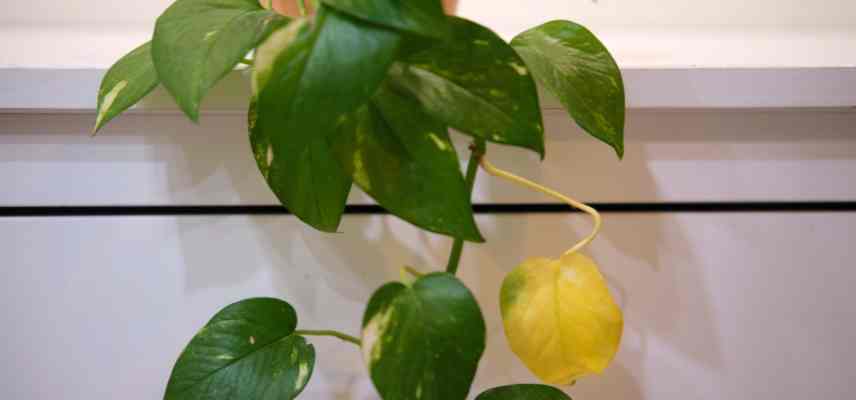
The most common disease you may encounter is root rot, which develops when plant is overwatered or placed in poorly draining substrate. It can be identified by dark brown or black roots that are soft and sometimes foul-smelling. At the same time, leaves yellow, become soft and plant appears to wilt even though soil is still moist.
Leaf spots
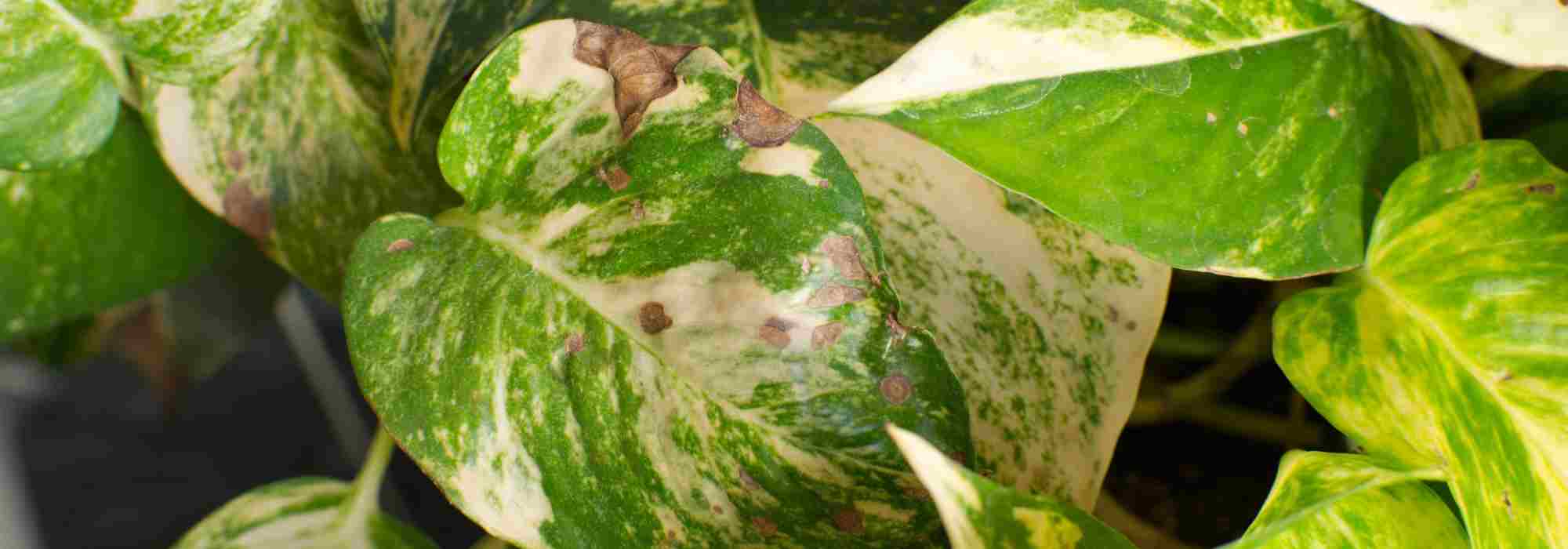
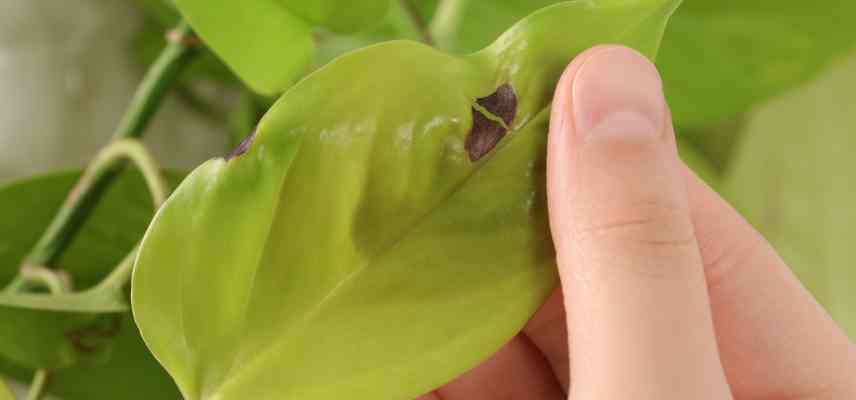
Pothos can also be affected by leaf spots caused by fungi or bacteria. This disease shows up as brown, black or yellowish spots on leaves, sometimes surrounded by a paler halo. It is often linked to excess moisture on foliage and poor air circulation. Affected leaves usually drop.
Preventing cryptogamous diseases in Pothos
As with pest management, careful attention to growing conditions is the foundation to avoid disease development.
First, place Pothos in a container with drainage holes, so excess irrigation water can drain away. If you tend to overwater, opt for terracotta pots, where water evaporates more quickly and which provide better aeration for substrate. Add a drainage layer about 3–5 cm thick, using gravel, terracotta shards or clay pebbles. This prevents roots from sitting in water in case of excess. Choose a well-draining substrate, in which water drains quickly. After watering, empty any saucers or cache-pots after about twenty minutes. Watering frequency should be adapted to plant’s environmental conditions. Wait until top few centimetres of soil are dry to the touch before watering again.
When pruning, to rebalance Pothos’ silhouette or remove damaged parts, always clean cutting tools with 70% alcohol before working. A simple habit to adopt to limit risk of disease spread between plants.
Repot every 2–3 years, depending on plant growth. In years without repotting, simply top-dress in spring, replacing top few centimetres of soil with fresh potting compost. You can also choose to apply fertilisers suitable for indoor plants.
Natural remedies for disease
If root rot occurs, remove plant from pot to cut away all affected parts (soft, blackened or bleached). Then use a new container or disinfect the old one before replanting in fresh potting compost.
In case of leaf spots, cut away all affected parts and do not leave them at plant’s base. Stop any foliar sprays and move plant to a location with better air circulation.
Nettle manure is a popular natural product prized for its fungicidal properties. It can therefore be tried when this type of disease develops. Ready-made products are available from garden centres, but you can also make it at home by following our tutorial: How to make nettle manure.
- Subscribe!
- Contents
This form is protected by reCAPTCHA - the Google Privacy Policy and Terms of Service apply.

































Comments