Glowworm in the garden: a formidable predator of snails
A precious, little-known beetle in our gardens
Contents
Do you know the glow-worm? Although its name is familiar, this small luminous insect is sometimes confused with the firefly, and fewer people know that it is a true friend of the gardener! What benefit does it bring to the garden? Why are there fewer of them in our countryside and towns? When does it begin its nightly awakening again? I looked into this not-quite-ordinary insect to better understand its way of life and try to spot it at dusk.
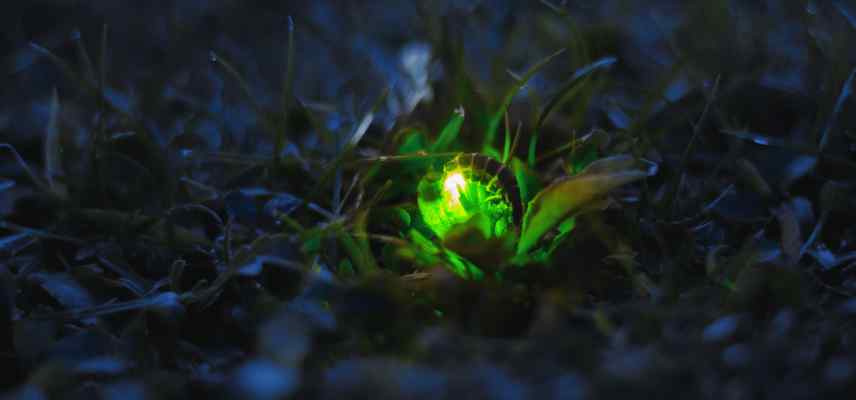
A green glow at night? You are not dreaming and are likely in the nocturnal company of glow-worms
Glow-worm, who are you?
Lampyris noctiluca by its Latin scientific name (from the Greek lampuris meaning to shine and noctis, night), the glow-worm is the common term referring mainly to the female of the lampyrid, a coleopteran in the family Lampyridae. It is not a worm but an insect. The entomological dictionary enlightens us: “In lampyrids, females are apterous (wingless) and have a larviform appearance, which explains their common name of ‘glow’ worms.” Lampyrids actually remain two years as larvae before becoming active to reproduce.
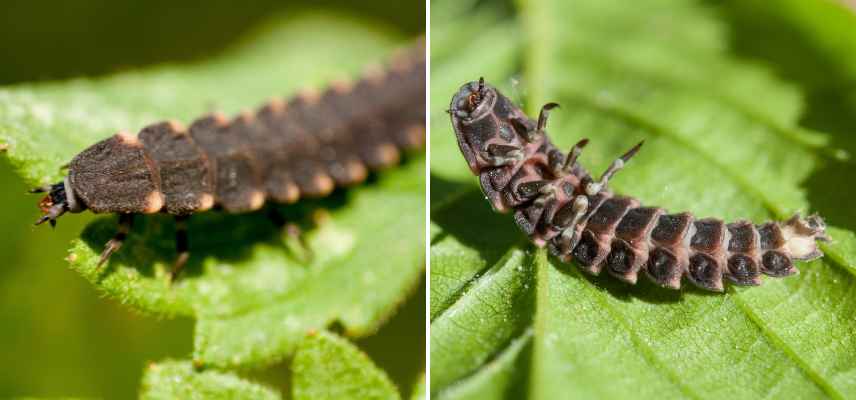
The female glow-worm, recognisable by her orange lateral spots and a larviform terminal region
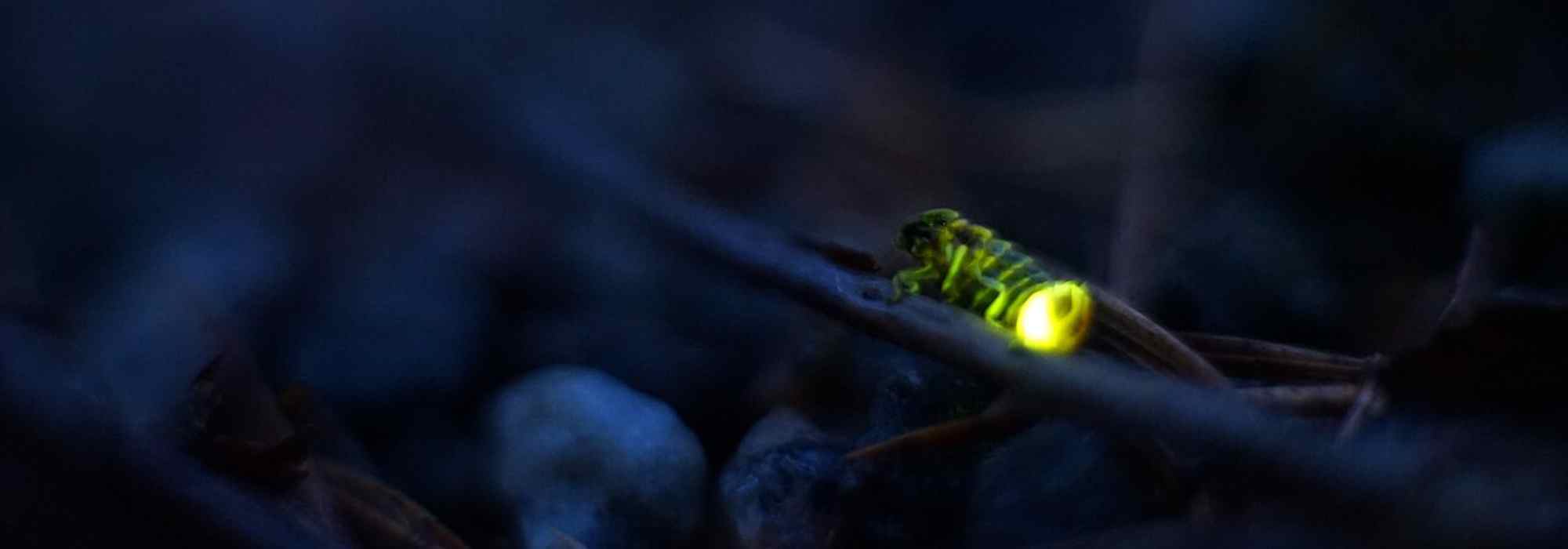
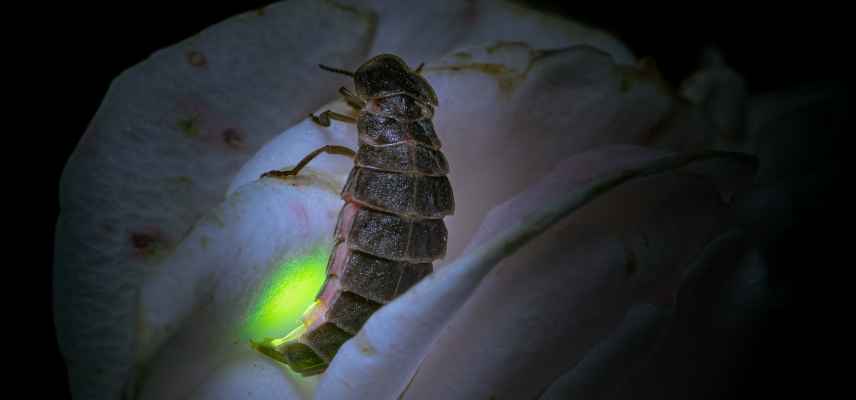
Only the female glow-worm is luminous, producing at night a characteristic yellow‑green colour, visible up to 5 metres to the naked eye (the male also emits light, but less intensely and less visibly). The female is also twice the size of the male.
This light production occurs under the terminal ventral part of the abdomen, which remains larviform in the adult, and to a lesser extent from other parts of the body. The glow-worm emits no heat, but it is this distinctive fluorescent glow that attracts males for the purpose of reproduction, a fairly unique fact among insects, which more often use pheromones. Only the male has a pair of wings and can fly, while the female can attract him by this original bioluminescence. On close inspection, the adult female shows orange lateral spots on the dorsal face of her segments, which are otherwise uniformly brown.
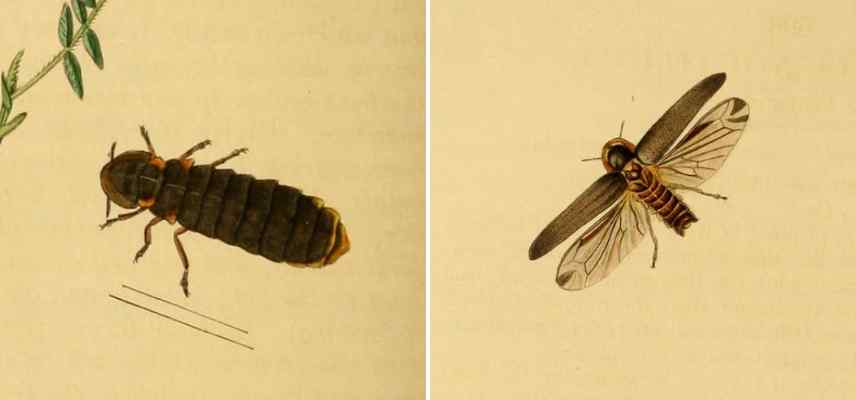
Lampyris noctiluca: female at left, male at right, botanical plate – 1838.
Beyond these morphological considerations and that unusual greenish bioluminescence—rare except in some marine organisms—the glow-worm is well known for its appetite for various gastropods. Glow-worms feed on snails and slugs, true benefactors for the vegetable patch… and the garden! They are primarily snail-eaters, with slugs also forming part of their larder, though slugs attract them less. Glow-worms inject a poison that allows them, very quickly, to paralyse their prey, anaesthetise them and then consume them without further ado.
N.B.: through misuse or linguistic distortion, people sometimes call the glow-worm a firefly. Fireflies, with which they might be confused, are dipterans (they bear a pair of wings), both male and female. This distinguishes them from glow-worms, as does the fact that they shine, or rather blink, intermittently through the night.
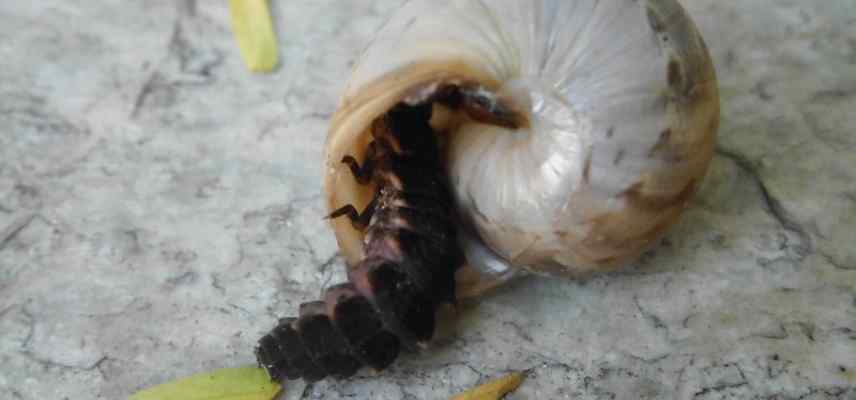
Glow-worms: true benefactors for our gardens!
When and where can it be observed?
It is from late spring to early summer, June to July, that fireflies are easiest to spot at night. Larvae resulting from mating emerge from the soil. Summer nights at new moon, when night is very dark, or at first or last crescent moon are best times to go searching, because fluorescent glow stands out better in near-total darkness.
Fireflies live in tall grass, close to areas rich in biodiversity: forests, wetlands, prairies, bocage and woodland edges, and any garden that promotes biodiversity. They are more easily seen at night in rural areas with little light pollution. In France, they are therefore still easily found in the Massif Central or the Morvan and mainly in regions with low urban density.
How to attract glow-worms to your garden?
There is no magic bullet, of course. However, one of the first things to do if you want the chance to attract them to your garden is to leave areas where small wildlife can take refuge, such as piles of wood or stone, and also parts of the garden left unmown, which are kept as fallow areas or as areas of differentiated mowing. If you have hedgehogs in your garden, you are more likely to spot a few fireflies on balmy summer nights.
In the following articles we offer practical tips and easy-to-implement ideas to attract fireflies to a garden:
further reading
Fine weather is on its way, and evening outings in your garden to watch hedgehogs out and about are also a good opportunity to take an interest in glow-worms. It’s also a time of year when you can savour the song of crickets in the evenings in northern France.
Are you lucky enough to have them in your garden? Report them to the Glow-worm and Firefly Observatory, which records populations across France, and share this with us in the comments.
Olivier looked into light pollution in our gardens, why and how to reduce it in order to further preserve nocturnal life in towns as well as in the countryside. Read his advice again!
Finally, this France Info article looks at the rarity and gradual disappearance of glow-worms in Europe.
Intrigued by bioluminescence? Discover these 5 other bioluminescent animals that glow in the dark and fluorescent mammals.
- Subscribe!
- Contents
This form is protected by reCAPTCHA - the Google Privacy Policy and Terms of Service apply.

































Comments