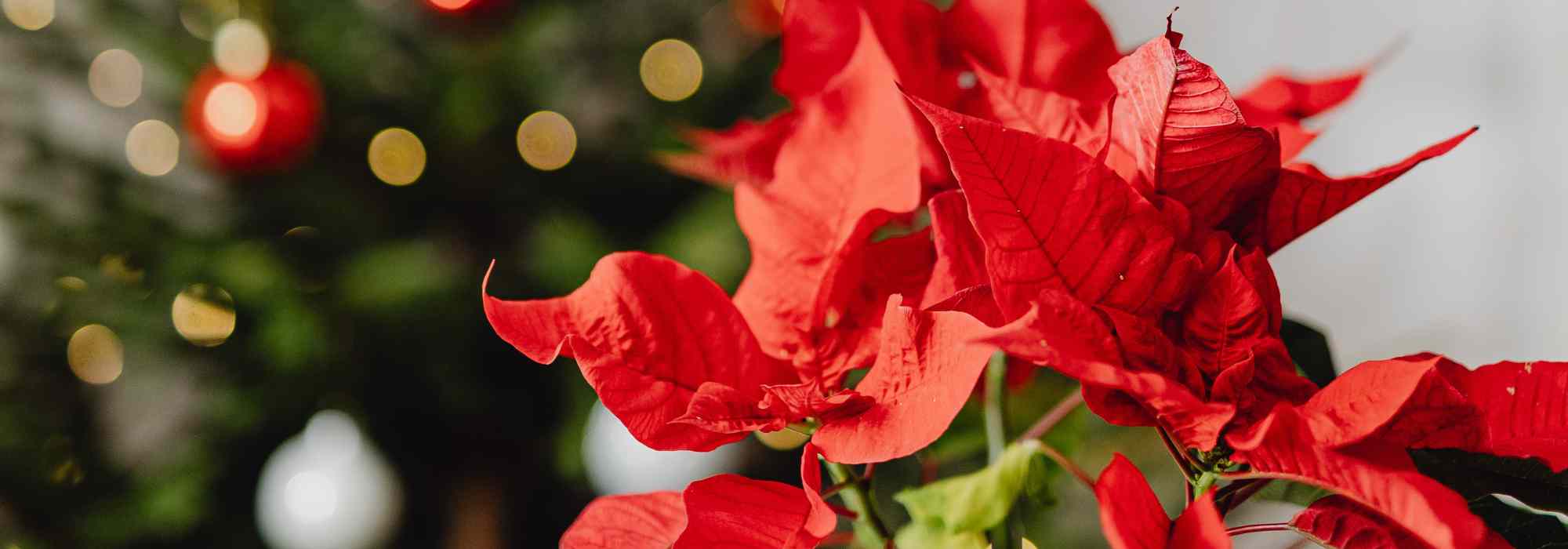
Poinsettia: common mistakes to avoid to keep it vibrant
Problems with exposure, substrate choice, watering or diseases
Contents
Poinsettia (Euphorbia pulcherrima), also known as “Christmas rose”, is one of the must-have houseplants in winter. Its seasonal colours, often red and green, brighten interiors and fit perfectly into Christmas décor. Remember that its showy aspect actually comes not from the flowering, which is yellowish-green, but from the plant’s bracts. They are the bracts that surround the flower, as with the bougainvillea.
But often this plant is no longer as showy after the festivities and sadly begins to decline. Let’s look at the most common cultivation mistakes and how to keep a beautiful Poinsettia year‑round.
Ignoring light
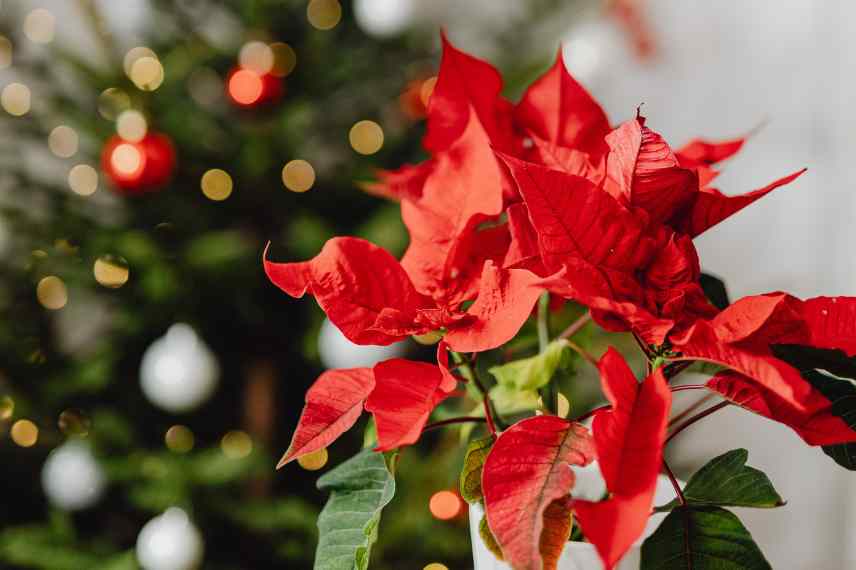
Poinsettia originates from Mexico, but it is a short-day plant: it requires only 8 to 10 hours of light per day. This makes it possible to grow it indoors in winter without any problem. A common mistake is placing the plant in too shady a spot. To develop well, Poinsettia does need light. However, it does not like hot, direct sun. If this is rare in winter, bear it in mind for other seasons and make sure to keep the plant away from windows or add a sheer light-filtering curtain.

Place poinsettia in a draught...
To give it light, it might be tempting to place Poinsettia behind a window or near front door. However, like many indoor plants, it is susceptible to draughts. It prefers a steady temperature of around 20°C. A cold snap or a sudden large temperature fluctuation can cause rapid leaf loss and decline. Choose a spot away from doorways to outside and from windows that are frequently opened for ventilation.
…or next to a source of intense heat
There’s no doubt it brightens the room and is really well showcased, that pot of poinsettia placed next to the fireplace or even on the stove! But such an excessively hot, dry location will encourage the plant to dry out and will inevitably cause it to wither over time.
So keep it away from any intense heat source: oven, radiator, fireplace, etc. In very dry interiors, place it on a bed of clay pebbles to retain moisture, or mist the foliage.
Getting Poinsettia watering wrong
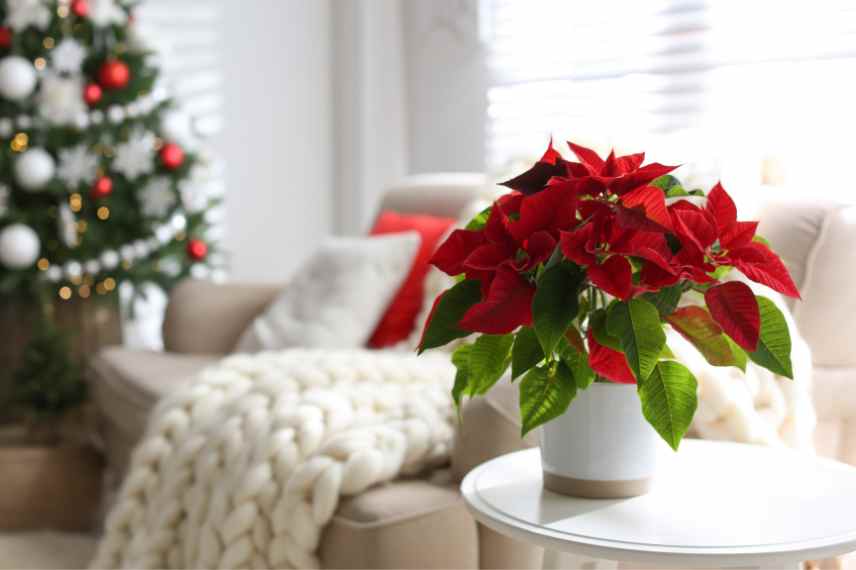
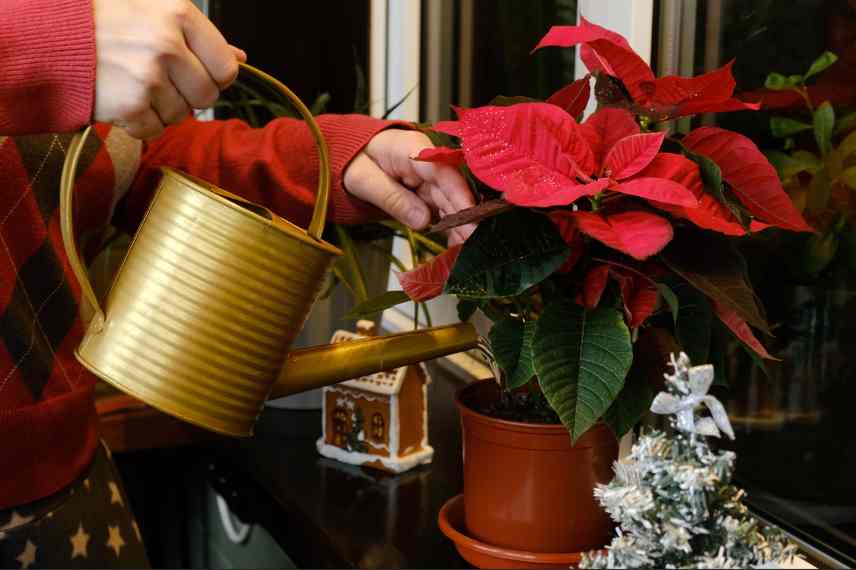
Poinsettia needs water: it likes its soil to stay moist but not waterlogged. Overwatering — watering that happens too often, or leaving water to stand in the saucer or outer pot — is another common mistake that can harm a poinsettia’s health. But underwatering, or soil that dries out, is just as detrimental.
To find the right balance, the trick is to feel the soil with your fingers: if the surface is dry, it’s time to water. Frequency will depend on room temperature. In winter, our homes are sometimes heated more than at other times of year because of radiators, stoves, fireplaces, ovens, etc. So watering every 5 to 7 days may be necessary. About 20 minutes after watering, remember to empty the saucer or outer pot. Finally, use water at room temperature: as mentioned, poinsettia does not like sudden temperature changes. Cold water could therefore encourage leaf loss.
If the leaves droop, this may be a sign of underwatering. If white mould or fungal growth appears on the surface of the soil, it is more likely a sign of overwatering.
Using unsuitable soil
In its natural medium, Poinsettia can reach several metres in height. But indoors it will only reach 50 to 80 cm. Two cultivation mistakes can impair its health at repotting :
- choosing a container without drainage holes ;
- placing the plant in a heavy, suffocating substrate.
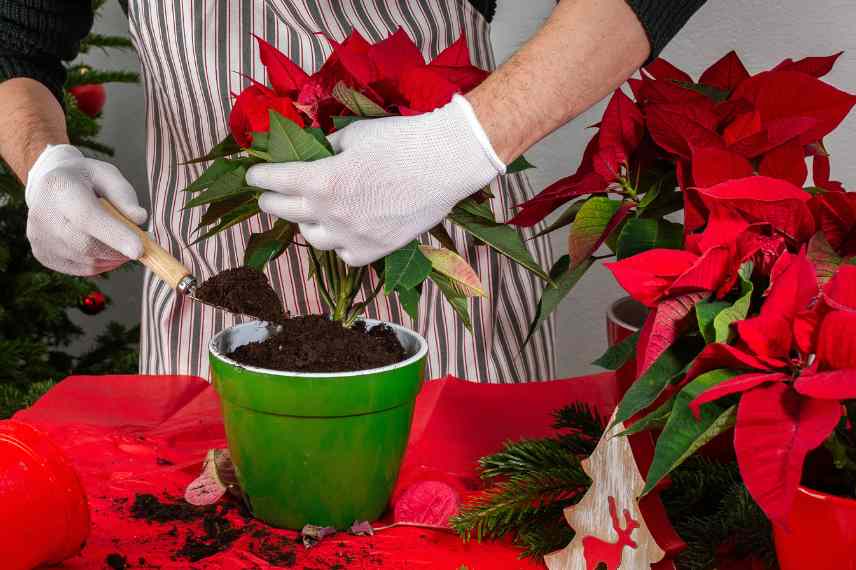
These are indeed the surest ways to cause roots to rot. So be sure to choose a pot with holes that allow water to drain. Choose a potting compost for planters and pots or a potting compost for flowering plants. If you use garden soil, mix it with sand so that it drains well.
Allow parasitic organisms to establish themselves
Pests or diseases will weaken the plant and can eventually lead to its decline. As a precaution, check your Poinsettia regularly to spot any symptoms and act before they spread.
In our often very dry homes in winter, red spider mites and scale insects find ideal conditions to settle in. Dislodge them by running the plant under a shower at room temperature. If necessary, spray with a natural insecticidal solution made from pure black soap (one tablespoon diluted in 1 litre of lukewarm water). Whiteflies are also common and can be removed in the same way.
Neglecting care after the festive season
Poinsettia is not an annual that inevitably dies straight after the festive season. To keep a plant looking vibrant for a long time, don’t leave it completely without care. It will need a few specific actions to continue developing and to flower again the following autumn.
- Once flowering has finished, prune the plant back to about 15 cm above soil level. This will allow it to retain a nice, compact silhouette. Use cutting tools disinfected beforehand.
- Repot Poinsettia in spring into a new container about 2 to 3 cm wider in diameter than the rootball. Ensure the base has drainage holes. Place a drainage layer at the bottom of the pot made of gravel or clay pebbles. Then fill with a suitable potting mix (see paragraph above).
- Apply solid or liquid fertiliser for indoor plants or to stimulate flowering in summer.
- In autumn, for about 2 months, the plant must be kept in darkness, without artificial light, for at least 14 hours each day. This is the key for it to then develop beautiful colourful bracts and flower again. For this, you can cover it with a large outer pot.
- Subscribe!
- Contents
This form is protected by reCAPTCHA - the Google Privacy Policy and Terms of Service apply.

































Comments