Prolonged heatwave, forgotten watering, poorly managed absence for balcony plants, pot left on the terrace before going on holiday: all situations that can leave a rootball completely dry, bone-dry… And a plant limp, in very poor condition.
What to do and how to revive a plant whose substrate has become light and utterly parched? We explain everything to save your potted plant when it seems to have given up the ghost!
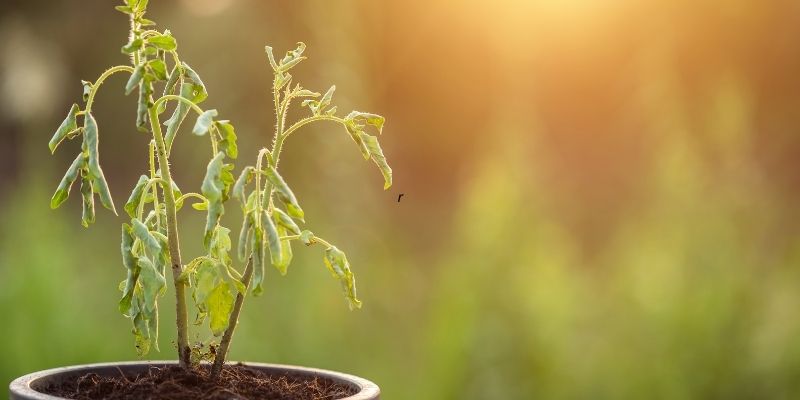
Signs
Apart from soil that is totally dry, emptied of every last trace of moisture, a plant facing lack of water reacts with several stratagems. Visually:
- Leaves hang limp, stems are softened, shapeless, water absent from vessels no longer ensuring vital turgor. In short, the plant is limp…
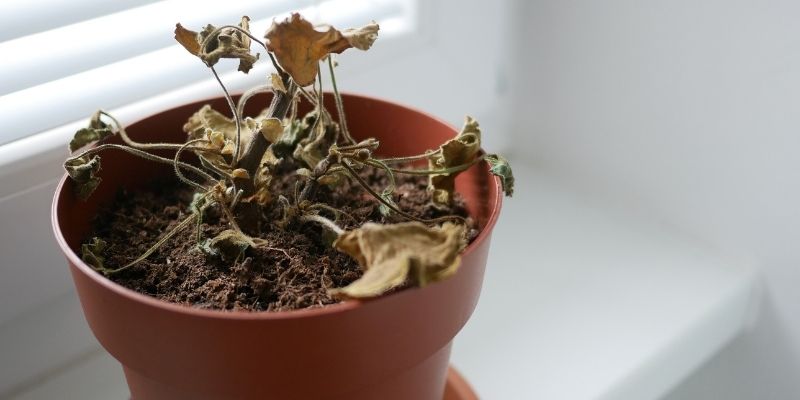
- In the worst case, it has dropped part of its foliage to reduce evapotranspiration and the whole plant has browned.
To check extent of the damage, pull the plant gently by its collar: if it offers no resistance and you can see a dry rootball from top to bottom of the pot, act quickly, especially since pot size is limited.
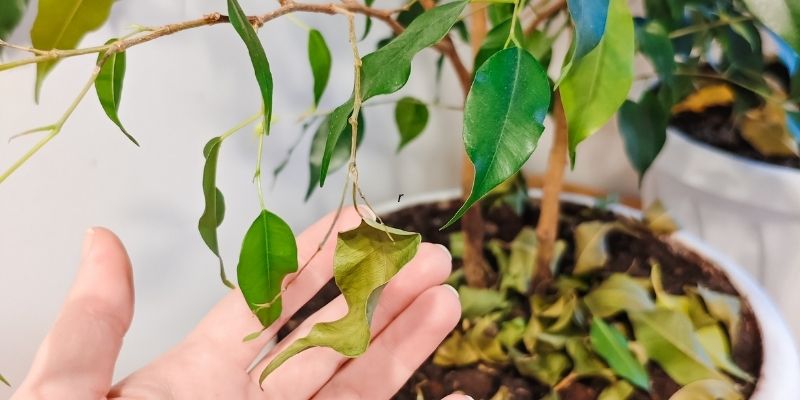
First aid: basin soaking (bottom-watering)
Much like humans, it is vital for a plant to rehydrate in such an extreme case. For potted plants this is done by placing them in a larger container. This is called bottom-watering, usually performed to thoroughly wet the rootball before planting.
This rescue operation allows deep rehydration of the substrate. Indeed, classic top-watering with a watering can would be totally ineffective. Water cannot reach the roots or the heart of the rootball; it would run off rather than penetrate and properly moisten the soil.
Bottom-watering is therefore the first step to moisten, much as you would soak a rum baba (apologies for the culinary reference, but it is illustrative).
- To avoid a second shock, this time thermal, fill the basin with water at room temperature.
- Place the plant without removing it from its pot, and leave it to soak for around fifteen minutes (± depending on container size). Water should reach top of pot without completely submerging it.
- Check surface moisture with your finger to ensure substrate has absorbed water right to bottom of pot.
- Once basin soaking is complete, allow pot to drain completely.
Adjust technique and soaking time according to plant type: a cactus and an hosta – deliberately chosen as opposites regarding water needs – will not require same amount of water to recover, nor same rehydration time. Hosta, a large-leaved plant, will be basin-soaked, but cactus should only be misted or given a moderate watering if tissues have become shrivelled.
Rehydration options also include misting. Large-leaved plants (some houseplants such as Monstera or bird of paradise) also benefit for immediate cooling effect. Stomata, tiny pores on leaf surface, will benefit directly.
Priority No. 2: cut affected parts of the plant
Very often, the plant has protected itself from water loss by coping with evapotranspiration: it has either lost all or part of its foliage, or developed yellow or brown colouring on leaves to limit photosynthesis. Those leaves will not recover.
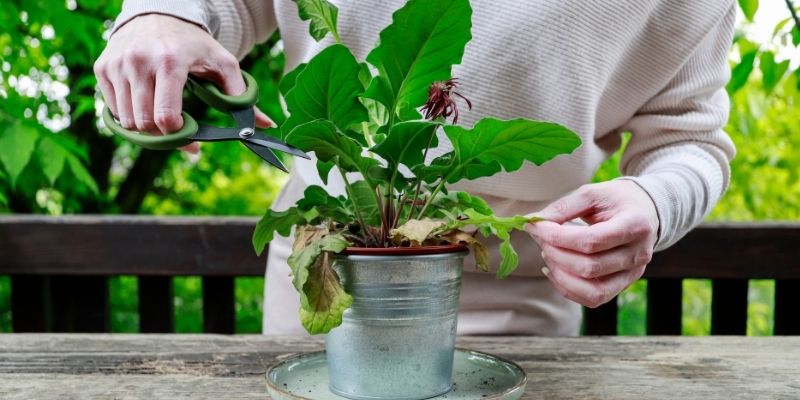
Prune with clean, disinfected pruning shear all dead, dry or necrotic parts — essential to give plant a chance to regrow. But do this on leaves, stems and flowers only after plant has been rehydrated. Sometimes the whole plant must be cut back. Take care not to cut right to base: leave about 2 cm of stem if plant is completely dry.
Although plant may look beyond revival, root condition is what matters: if roots are still firm and not desiccated, plant has good chance of recovering.
Action No. 3: place plant in shade
Do not leave plant, whatever the species, in sun after this treatment. It has undergone water stress and must recover in shade, out of direct sun, and sheltered from wind. Leave it there for a few days before returning it to its usual exposure.
Step No. 4: resume watering gradually
Key at this stage is to avoid risk of rot — that would be ironic! So resume moderate watering adapted to each plant type. Remember plants cope better with drought than with overwatering.
To do this, return to normal watering rhythm, generally once or twice a week. During severe heatwaves such as those now occurring across the country, always water in morning to avoid adding further stress to plant.
Tip from Gwenaëlle: plants are tougher than we think! I had a case of an eupatorium (a moisture-loving plant) that I hadn’t yet planted out; it stayed in its terracotta pot on the terrace after the first unannounced May heatwave. Result: disastrous state, a blackened, seemingly irrecoverable plant and a very dried-out rootball. Applying this method, my little perennial produced new leaves two weeks later and then resumed growth. Of course flowering was delayed, but the plant was very much alive!

































Comments