


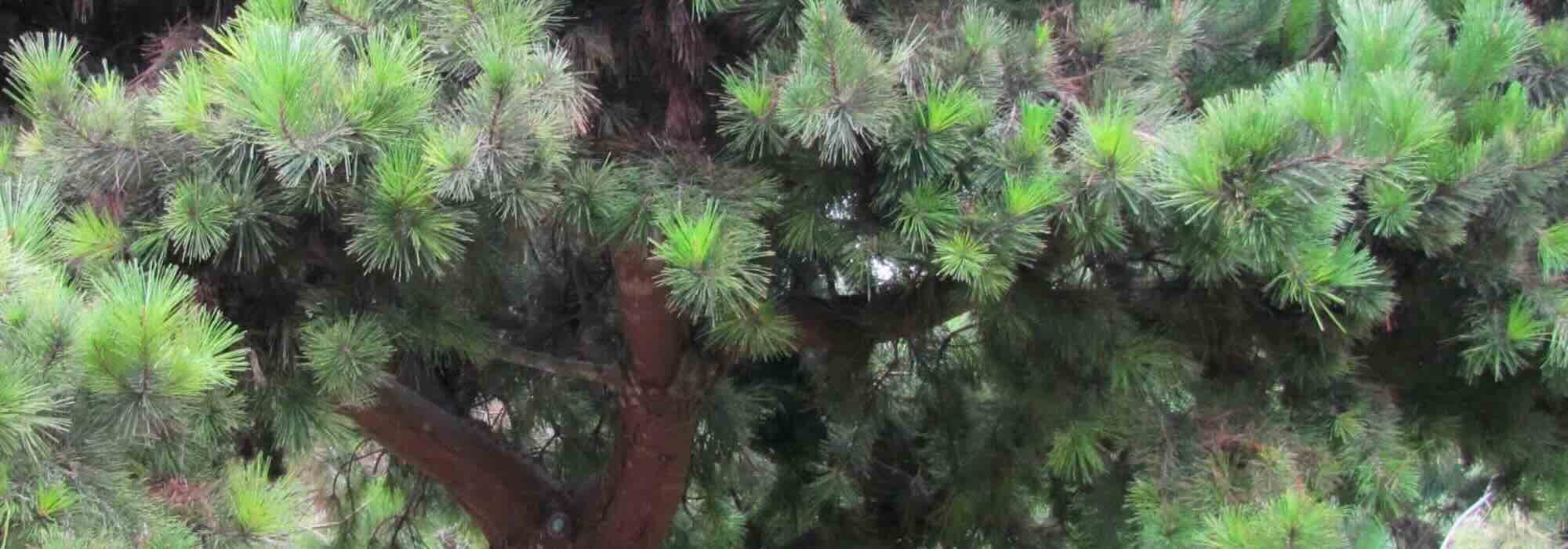
Green-leaved conifers: the best varieties
Our picks for the garden or a terrace
Contents
Conifers are valuable allies in the garden. With their evergreen foliage, they provide a touch of greenery all year round, even in the depths of winter. But not all conifers look the same! Some form dense, screening hedges, others become majestic trees with a slender habit, while others still creep along the ground to elegantly dress empty spaces. Their diversity of shapes, sizes and colours allows them to be used in multiple ways.
Among the green foliage conifers, here is a selection of interesting varieties, classified according to use criteria or specific cultivation conditions. And a first chapter to recap the main conifer species, to help you navigate more easily.

What are the different evergreen conifers?
Not easy to get your head around such a vast family. Conifers are trees and bushes, most with evergreen foliage. There is a great variety, each with its shapes, sizes and uses. From the majestic Christmas pine to the small bush pruned into a ball, conifers adapt to all spaces, large or small. Here’s an overview of the main types of conifers found in our gardens.
Pines (Pinus)
The pine is undoubtedly one of the most iconic conifers. It is recognisable by its long needles grouped in bundles and its characteristic pine cones. Pines prefer well-drained soils and tolerate dry climates, which makes them hardy and easy to grow.
Firs (Abies)
Often mistaken for the spruce, the fir is distinguished by its flat, soft needles and its straight trunk. Unlike the spruce, its cones grow upwards. The fir favours cool climates and soils rich in humus.
Spruces (Picea)
At first glance, the spruce resembles the fir, but its needles are stiffer and its cones hang downwards. Spruces prefer cool climates and struggle with drought. They lend themselves well to windbreak hedges.
Cedars (Cedrus)
Majestic and imposing, the cedars are perfect for giving character to a large garden. Their tiered branches and dense foliage provide welcome shade. The cedar grows slowly but lives for a long time!
Cypresses (Cupressus)
They are best known as compact hedges and columnar trees in Mediterranean landscapes. The cypresses are valued for their rapid growth and their dense foliage, ideal for creating privacy in the garden.
Thuja (Thuja)
Another hedge champion, the thuja is a hardy conifer with dense evergreen foliage. It is easy to prune, making it a popular choice for privacy hedges. However, it is sometimes criticised for its uniformity and vigorous growth.
Yews (Taxus)
The yew is a slow-growing conifer, but a master of patience. Its longevity is impressive and it tolerates pruning well. Unlike other conifers, the yew tolerates shade very well.
Junipers (Juniperus)
This conifer has many faces: creeping, bushy or upright. The juniper is hardy and undemanding, and it even grows in poor soils.
Sequoias (Sequoiadendron)
The sequoias are true giants! These mythical trees are the largest in the world. In Europe, they are planted as ornamental trees in parks and large gardens. Their thick bark helps them resist fire.
Cryptomerias (Cryptomeria)
This Japanese-origin conifer is highly prized for its ornamental qualities. The foliage of the Cryptomeria changes colour in winter, turning bronze or purple, which sets it apart from other conifers with strictly green foliage.
Evergreen conifers with green foliage to be planted as solitary specimens
Many species and varieties can form beautiful trees as standalone specimens, very tall or more modest. Just four interesting specimens.
One of the few deciduous conifers, this Metasequoia forms a majestic tree with a regular conical habit. In favourable conditions it can reach a height of 40 m with a 10 m spread, and with very rapid growth. Its fern-like foliage is soft to the touch, light green in spring, with magnificent tones of gold and pinkish copper in autumn. Plant it in sun, in moist, well-drained soil, preferably not overly calcareous.
Pinus insignis (radiata) or Monterey pine
A Californian pine with a conical habit, very elegant. This handsome conifer, of medium size with rapid growth, reaches 10 to 15 m in height and bears glossy green foliage all year round, consisting of straight, slightly twisted needles. Salt-spray resistant, it is one of the best pines for the Atlantic coast.
Chamaecyparis nootkatensis ‘Pendula’
Finally, a cultivar with a weeping habit, very romantic, the Nootka Cypress Pendula—a large conifer with a very graceful appearance, with an erect conical habit and drooping branches, from which hang draperies of a deep green. This hardy conifer reaches about 20 m in height with a spread of 8 m. It can be planted as a standalone specimen or in small groups.
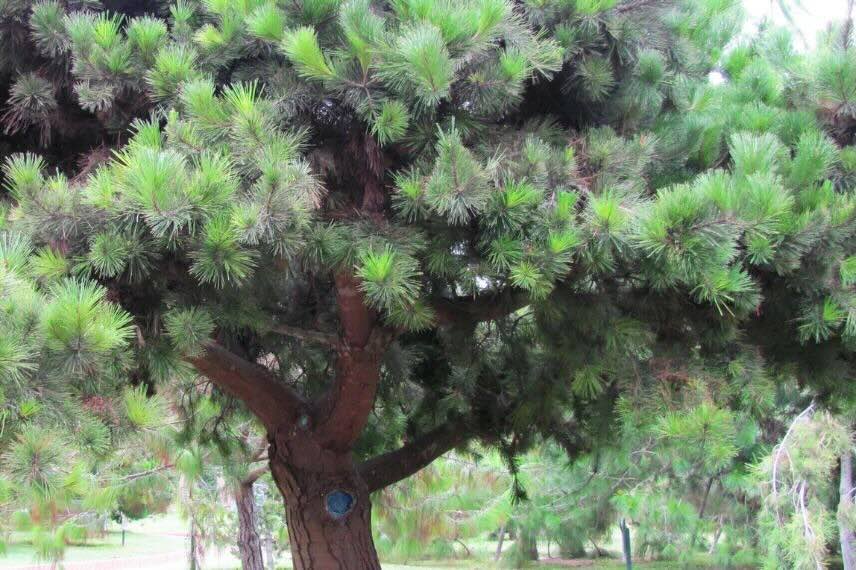
Pinus radiata
Green-leaved conifers for hedging
Conifers are often used for hedges, though they deserve to break out beyond them to take over the entire garden, and are very handy for providing a durable, evergreen, low-maintenance cover. For this use, choose specimens with a columnar habit. Among green foliage, Thuja occidentalis ‘King of Brabant’ with medium-green, fairly bright foliage is a safe bet. The Juniperus scopulorum ‘Skyrocket’ with glaucous, blue-grey foliage, particularly narrow, proves very useful in small gardens.
For hedges in mild Atlantic or Mediterranean climates, Casuarina equisetifolia is an astonishingly fast Australian pine for forming hedges resistant to salt spray and insensitive to saline soils, with very fine foliage reminiscent of horsetails.
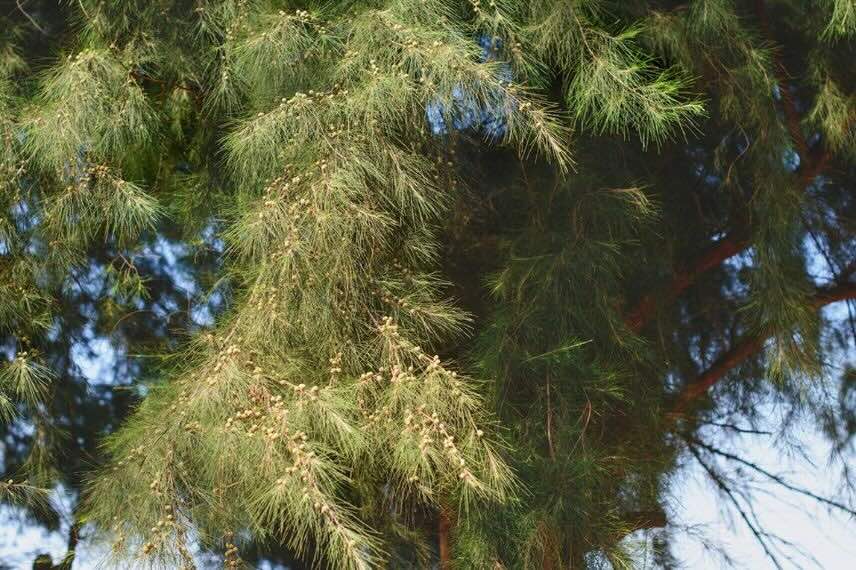
Casuarina equisetifolia
Conifers with green foliage for rockeries
Creeping conifers with a creeping habit, unrivalled for covering the soil and making a statement.
You’ll find plenty of creeping junipers among them, and you should also consider the Siberian creeping cypress or Microbiota decussata, awarded an Award of Garden Merit by the RHS in England. Spreading, prostrate in habit, it does not exceed 40 cm in height, but eventually spreads to 2.5 m. It is hardy and thrives in the toughest conditions. It bears trailing shoots at their tips with yellow-green scales, turning bronze in winter.
The Pinus mugo ‘Mops’, also RHS-awarded, is a small mountain pine that, over time, forms a very dense, spreading mass with a woolly texture and a somewhat irregular habit. Its dense, ascending shoots are clad with relatively short needles in a vivid green. Very low-maintenance, it tolerates ordinary soil and a sunny aspect.
Also awarded, the Picea mariana ‘Nana’ is a black spruce with an initially globose habit that later becomes a domed, spreading form. Its somewhat bristly shoots resemble dense little brushes bearing short needles in a beautiful blue-grey-green shade. It is valued for its stout silhouette and the unusual texture of its foliage.
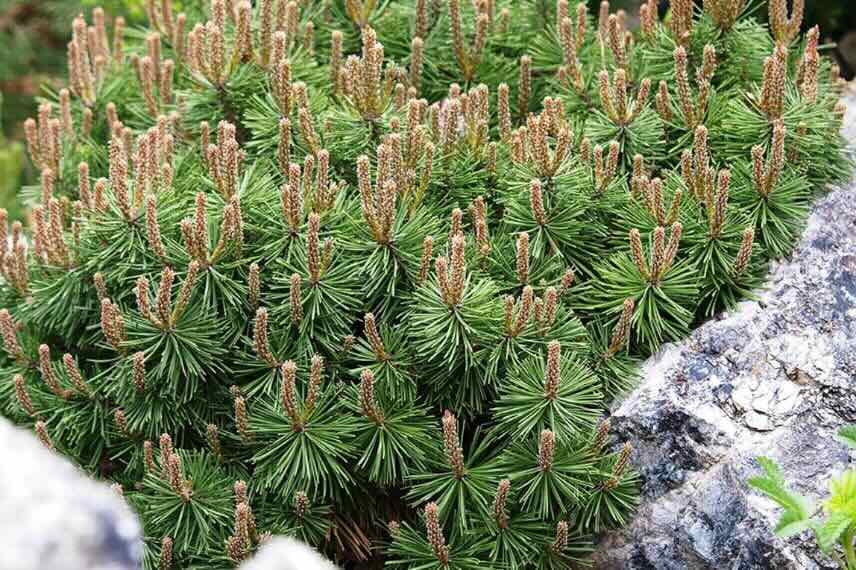
Pinus mugo ‘Mops’
Green-leaved conifers for borders.
For borders and beds, choose distinctive varieties that stand out, with a medium height and not too wide. They add a lot of structure and texture to a bed.
Choose, for example, a very distinctive weeping form, such as this Larix kaempferi ‘Stiff Weeping’. This Japanese larch does not exceed about 2 m in height and 1 m in width, and its drooping branches are covered with blue-green needles from spring to summer.
Another characterful conifer, the Pinus strobus ‘Green Twist’ is a dwarf Weymouth pine with a rounded habit. Its long, soft, curling needles are blue-green in colour. In the middle of a bed or in a small border, it offers its texture and its lovely blue-tinted colour with modest dimensions: 1 m to 1.2 m in all directions at maturity.
The Chamaecyparis obtusa ‘Lycopodioides’ is a Japanese Hinoki false cypress with an irregular globose habit, and branches of variable appearance, occasionally flattened or crisped. The very dense foliage, initially light green, then glossy dark green, consists of flattened non-prickly needles. It reaches 2 m in height and 1.5 m in width over time.
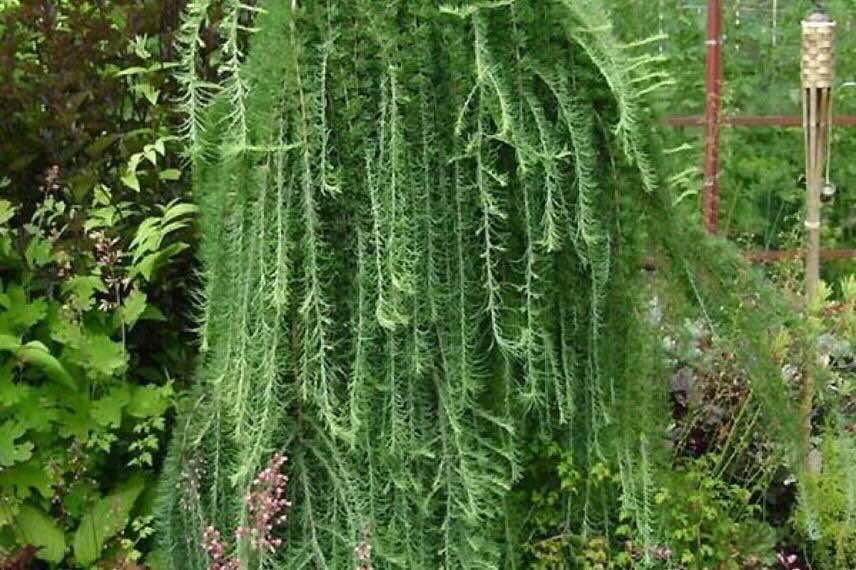
Larix kaempferi ‘Stiff Weeping’
Small evergreen conifers for pots
For pots, choose from our selection above or in the dedicated category on our shop. Select varieties not too tall, not exceeding 2 to 3 m, ideally not creeping, even if small creeping specimens in a large rectangular tub can certainly do the job. Also pay attention to cultivation conditions, suited to your climate and avoid species that are too water-hungry.
For example, the Cryptomeria japonica ‘Green Pearl’, globose in form. Also round, but more irregular and bristly, the Chamaecyparis obtusa ‘Lycopodioides’. The Pinus nigra ‘Marie Brégeon’, with an architectural habit and bristly needles, is relatively undemanding in its cultivation needs.
Green-leaved conifers for shade or calcareous soil
For shade
In shade, choose yews or some Tsuga species, from Canada or the West. Also look at the Snow Podocarpus, very adaptable, or the Pinus mugo ‘Green Column’. In a humid mountain climate, your choice could fall on the handsome Picea jezoensis var. hondoensis.
For calcareous soil
Finally, in calcareous soil, which is not the preferred soil type for many species, yews are still in the running. Also look at the Chinese Juniper or Juniperus chinensis ‘Stricta’, the Austrian Black Pine or Pinus nigra ‘Nana’, the handsome Swedish Juniper or Juniperus communis ‘Suecica’ or also the Juniperus horizontalis ‘Jade River’.
- Subscribe!
- Contents
Comments