


Top 7 most beautiful water irises with bi-coloured or multicoloured flowers
To brighten up damp areas in the garden
Contents
With their elegant flowers, water irises bring a distinctive touch to moist gardens, to cool, damp soils and the banks of water features. Among them, the bi-coloured and multicoloured flowers stand out for their original and contrasting colour palette. Whether to adorn the edge of a pond or enhance a border, these irises captivate with their astonishing nuances. Discover 7 water irises with bi-coloured and multicoloured flowers, perfect for transforming your garden into a dazzling floral display.

Siberian iris - Iris sibirica 'Dance Ballerina Dance'
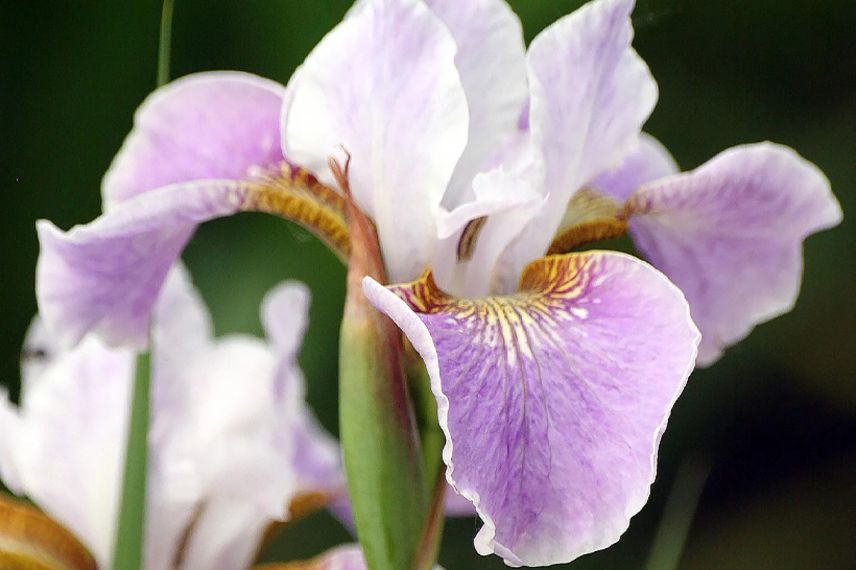
The Iris sibirica ‘Dance Ballerina Dance‘ offers in spring two-tone flowers, white and lilac pink, with a touch of bronze in their centre. It forms a dense clump of linear green leaves, reaching 50 to 60 cm in height. Easy to grow, this Siberian iris thrives in full sun or partial shade in warm climates, and adapts to all soils, provided they stay fairly moist.
The Siberian iris, native to damp meadows of Europe and Asia, is a protected species in France. Its horticultural varieties, such as ‘Dance Ballerina Dance’, have larger and more varied flowers than the wild type. This variety produces elegant flowers in May–June, reaching about 80 cm in height, with lilac-pink sepals marked with bronze-brown and white petals, creating a lovely contrast.
Plant this iris in groups for a spectacular effect, or pair it with varieties such as Iris sibirica ‘Sparkling Rose’ or ‘Rikugi Sakura’. Once established, it tolerates drought but prefers a moist soil. Its flowers are also highly valued in cut flower arrangements.
Read also
Japanese iris: to grow and care forSiberian iris - Iris sibirica 'Paprikash'
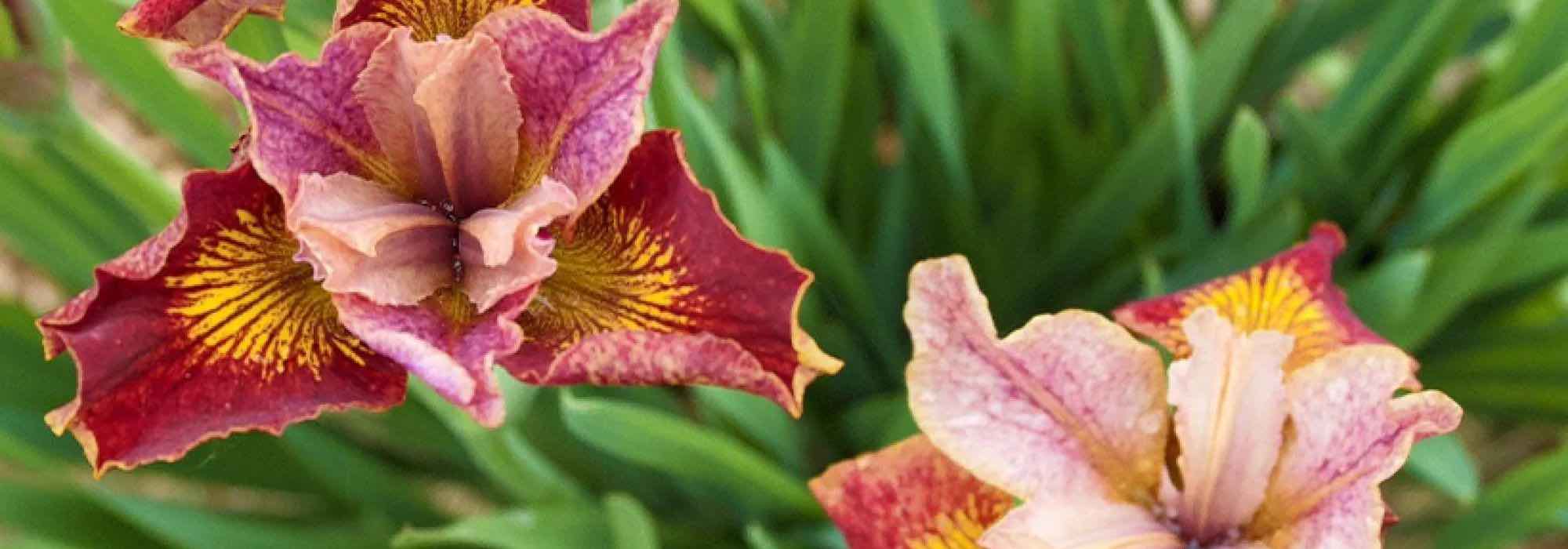
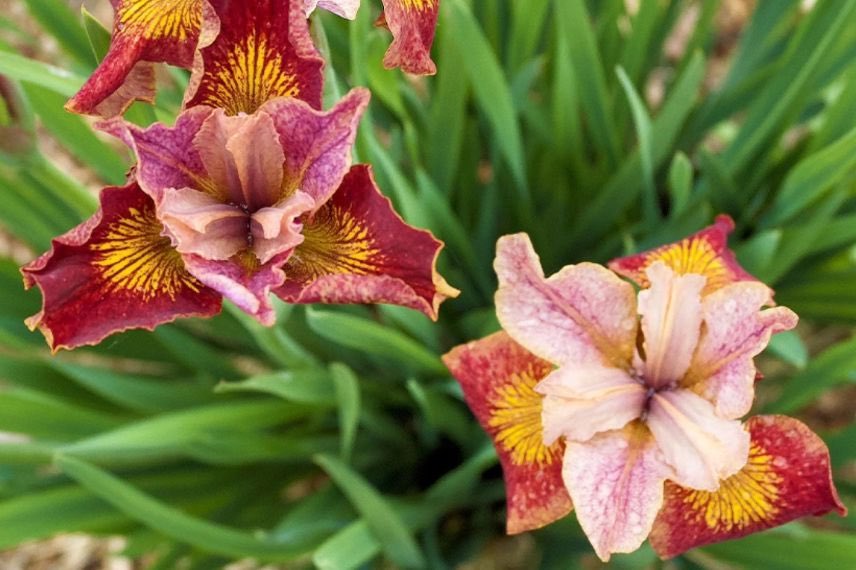
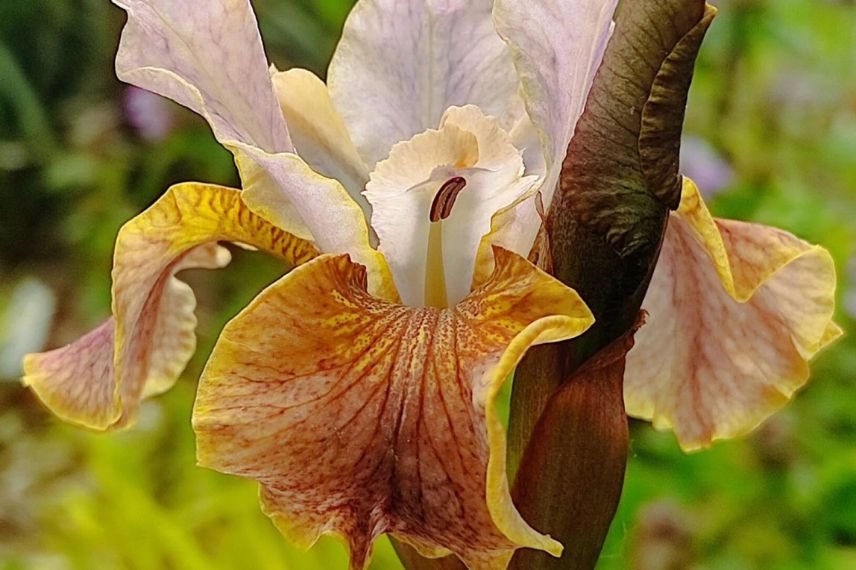
Iris sibirica ‘Paprikash’ charms with its large flowers in spicy hues and its light sweet scent. Its spring flowering is borne on short stems, emerging from a dense clump of grey-green leaves. It grows to about 50 cm tall, for both the flowers and the foliage. Its flowers, which appear from May to June, are distinguished by apricot sepals speckled with red, topped by pale apricot styles and small pale yellow petals veined with purplish-red.
The species Iris sibirica, appreciated for its graceful flowers and architectural foliage, thrives in moist soil. Very hardy and adaptable, it thrives in garden soil that stays cool in summer. ‘Paprikash’ finds a place in romantic, English or contemporary gardens.
This iris pairs harmoniously with perennials such as daylilies, camassias and Monbretias with yellow, orange or red flowers.
Japanese water iris - Iris laevigata 'Mottled Beauty'
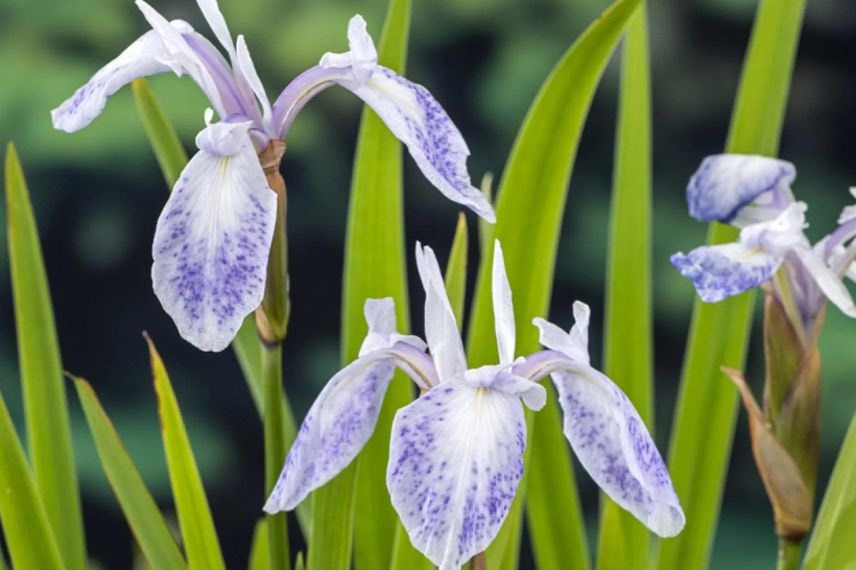
Iris laevigata ‘Mottled Beauty’ brightens the summer with its delicate white flowers, speckled with blue-violet to varying degrees, and sometimes quite heavily. This hardy perennial forms clumps of dense, bright green foliage in spring, reaching up to 80 cm in height. In July and August, its elegant flowers, composed of three upright petals and three drooping sepals, 8 cm in diameter, appear above the foliage. Ideal for damp areas, in non-calcareous soil, this iris tolerates permanent immersion of its rootstocks, up to 15 cm deep, and thrives especially on the banks of ponds or in heavy, clay soils.
Originating from Japan, the Iris laevigata has been cultivated for centuries for its beauty and elegance, while being easier to maintain than its cousin Iris ensata. When planted in bulk, ‘Mottled Beauty’ adds a distinctive decorative touch to pond margins or in submerged pots. This iris pairs perfectly with other aquatic plants such as cotton-grasses or Caltha palustris, or carpeting perennials such as Veronica beccabunga, which will brighten pond borders with small blue flowers.
Siberian iris - Iris sibirica 'Colonel Mustard'
The Iris sibirica ‘Colonel Mustard’ is a Siberian iris variety with warm caramel, golden bronze and pale yellow tones, enhanced by a subtle touch of mauve at the centre. Its elegant flowers appear in June and July, borne on upright stems that rise above a dense clump of grey-green leaves.
‘Colonel Mustard’, reaching up to 1 metre in bloom, forms a dense and vigorous clump. This iris spreads by rootstocks and its deciduous foliage dies back in winter to re-emerge each spring. It pairs beautifully with perennials such as astilbes or delphiniums, adding vibrant splashes of colour to moist borders or mixed borders.
Perfect for the edges of water features, this iris brings grace and elegance to contemporary, romantic or English gardens. It prefers acidic to neutral soils, rich and well-drained, while tolerating ordinary soils as long as they remain moist.
Japanese iris - Iris ensata 'Caprician Beauty'
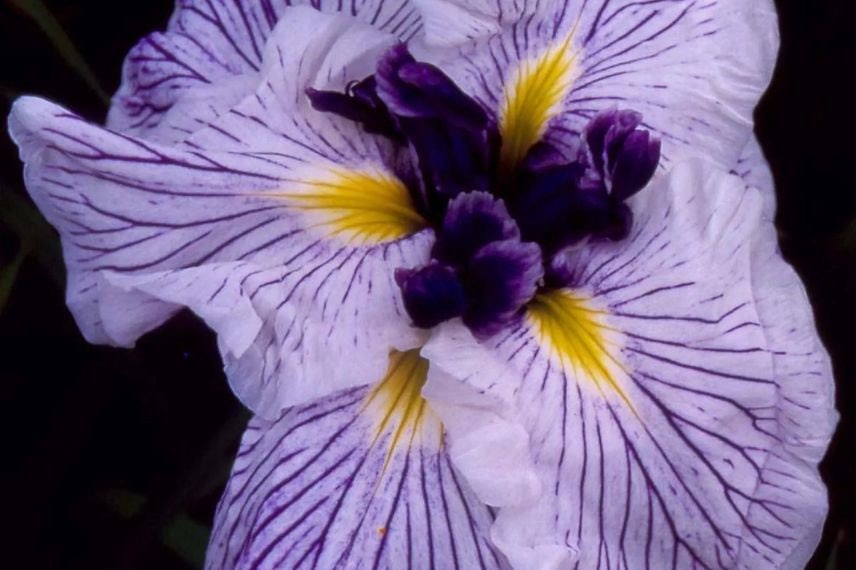
Iris ensata ‘Caprician Beauty’ is a magnificent variety of Japanese water iris, with large two-colour flowers of 12 cm in diameter. Its broad white sepals veined with ultramarine blue open widely around a heart marked with a small golden-yellow macule, accompanied by darker petals, almost purple. ‘Caprician Beauty’ forms a dense, upright clump, with medium-green deciduous foliage. It reaches 70 cm in height when in bloom, with flowering lasting about three weeks from May to August.
Originating from the wetlands of Japan, the Himalayas and Siberia, the species Iris ensata likes acidic and peaty soils, and requires a good supply of water during the growing season. However, it tolerates prolonged winter waterlogging poorly. Adapted to non-calcareous and damp soils in summer, this rhizomatous perennial is ideal for banks and wetlands.
This water iris is ideal along the edge of ponds or basins, where its feet can be in the water during the summer. It thrives in heavy, moist but well-drained soil, and can be planted in a shallow depression or on a bank. Pair it with perennials such as Darmera peltata, astilbes, summer snowflake, and columbines.
Siberian iris - Iris sibirica 'Tipped in Blue'
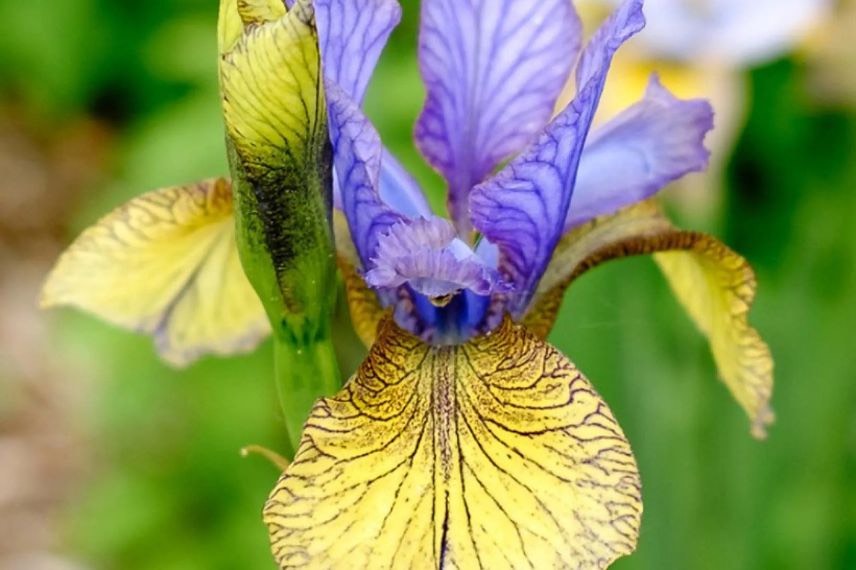
Iris sibirica ‘Tipped in Blue‘ is a variety with magnificent bi-colour flowers measuring 15 cm across. Its sepals are a bright primrose yellow, enhanced with lavender-blue veins, with the petals carried upright in this sky-blue shade. This graceful flowering, which appears in May–June, provides a soft, elegant, refined contrast. It forms striking, vigorous clumps of grey-green leaves and reaches 1 m in height at full bloom.
“Tipped in Blue” is perfect for enhancing the edges of water features and for contemporary or romantic garden styles. It prefers rich, moist, well-drained soils, where it thrives with little maintenance.
The Iris sibirica ‘Tipped in Blue’ is a hardy and elegant plant, well suited to acidic to neutral soils. Its bi-colour flowers, borne on flowering stems above its slender foliage, bring a touch of lightness to the garden. It pairs harmoniously with other moisture-loving perennials, such as daylilies, Hostas or other water irises and easily finds a place in a mixed border or along a stream bank.
Japanese iris - Iris ensata 'Dinner Plate Tiramisu'
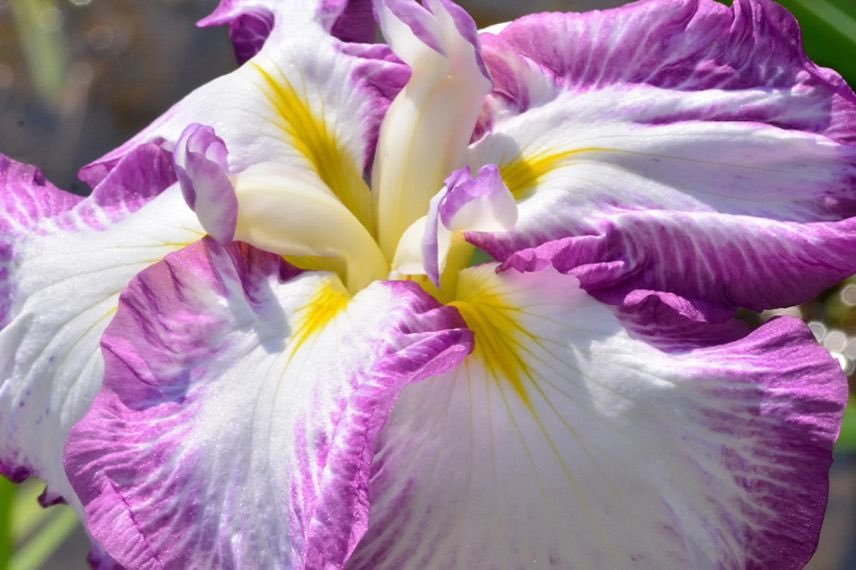
Iris ensata ‘Dinner Plate Tiramisu‘ is an impressive variety with enormous plate-like flowers, as large as a plate. Its single- to double flowers, pure white, are edged and speckled with purple-pink, with small lemon-yellow spots brightening the centre. Flowering takes place in June–July, on flowering stems rising above dense, upright foliage.
The ‘Dinner Plate Tiramisu’ variety, with flowers 15 cm in diameter, reaches about 60 cm in height and slowly spreads via its rhizomes over the years.
This iris pairs ideally with other moist-area plants, such as Anemone rivularis, Lysimachia and Ligularia, for example. Together, they create natural and colourful scenes at the edge of ponds, in depressions or in soils heavy and well-humidified by capillary action. Native to Asia’s wetlands, Iris ensata prefers acidic and peaty soils, with a preference for water-rich environments during the flowering period. However, in winter, it is important to protect its rhizomes from prolonged submergence.
- Subscribe!
- Contents
Comments