


White-flowered hellebores: perfect for winter!
Bright flowerings to easily grow in the garden or in pots
Contents
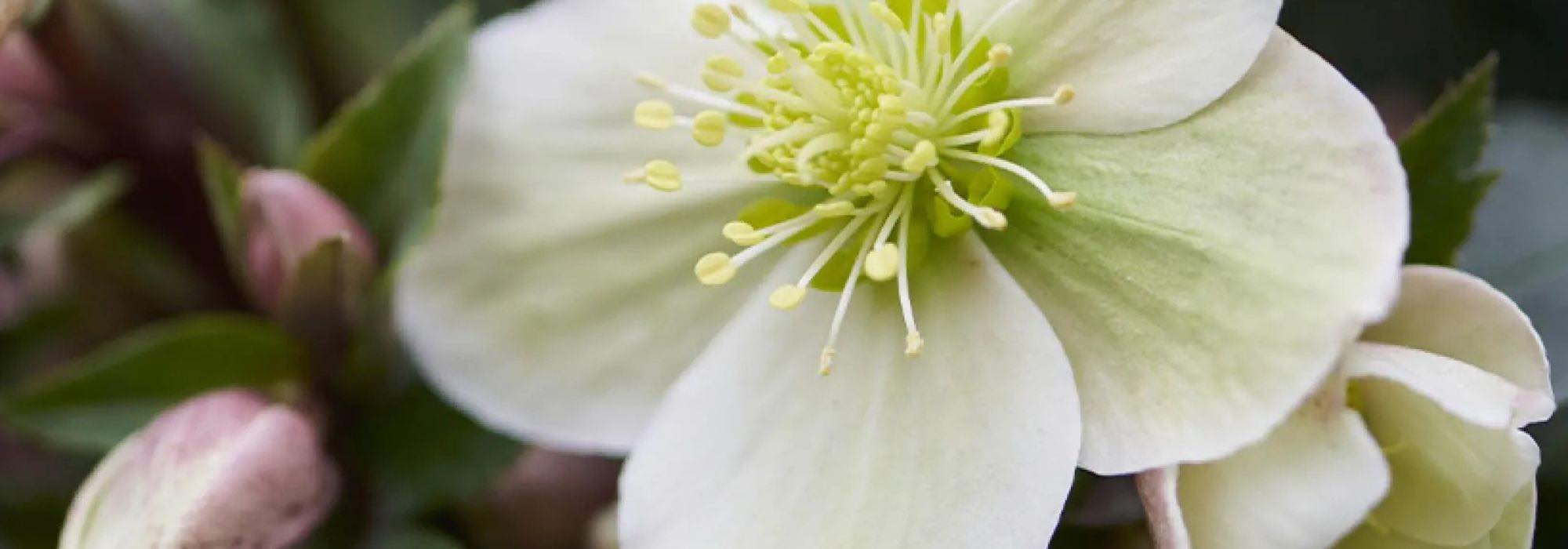
We often think of winter as a sad and monotonous season in the garden. However, many plants are unfazed by the cold and lack of light. They can indeed bloom during this less competitive period, becoming true stars of the garden. This is the case with hellebore, also known as “Christmas roses” or “Lenten roses.” These perennials can bloom from autumn to spring, depending on the variety.
There is something for everyone: single or double flowers, in shades of pink, purple, yellow, green, or white. White is a particularly easy colour to pair in the garden, bringing light and a touch of refinement or romance. In hellebores, it can be enhanced by a contrasting centre, maculate patterns, or coloured edges.
Discover our favourite white-flowering hellebores, sorted by various criteria: flowering period, flower shape, or foliage. Their easy cultivation and great hardiness allow them to thrive in all our regions, both in the garden and in pots.
To learn more about growing hellebores, check out our dedicated guide Hellebores: planting and cultivating them.

Early flowering white hellebores
These are the first to flower as autumn arrives. If you want to enjoy a garden with long-lasting flowering for months, these hellebores will help ensure the transition between summer and winter. Feel free to incorporate them into your borders, beds, or autumn containers.
For example, choose the Oriental hellebore ‘ViV Gianina’, one of the very first to bloom from September. It produces double flowers of pure white, warmed by a heart of yellow stamens.
On the other hand, ‘ViV Olivia’ will reveal itself from November through the heart of winter. This variety features single flowers with a very natural appearance, of a delicate cream white. It showcases a heart of protruding pale yellow stamens.
Let’s also mention ‘ViV Wanda’, an early variety with a long flowering period. It indeed provides a display from November to February. This Oriental hellebore first produces pink buds, which open into white corollas that take on pinkish hues over time. Slightly larger than its counterparts, it forms a bush reaching 60 cm in height.
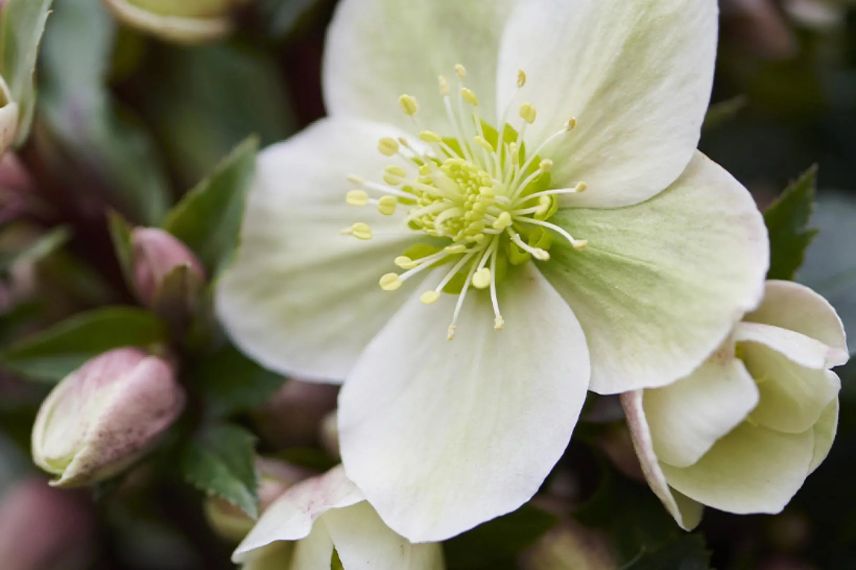
Hellebore ViV Olivia
Read also
7 hellebores with green flowersLate-flowering white hellebores
One will need to be a bit more patient to admire the flowering of these hellebores, which wait for winter to be well established. They are perfect candidates to ensure the transition between winter and spring. Feel free to pair them with early-flowering bulbs, such as snowdrops, for a very poetic, immaculate display.
Among these hellebores, let’s mention ‘White’, a variety with pure white single flowers, featuring a warm yellow centre. They are cup-shaped and ideal for brightening dark areas of the garden. This hellebore flowers between February and April.
For its part, the Helleborus hybridus ‘Mrs Betty Ranicar’ reveals its pure white double flowers from February until mid-spring.
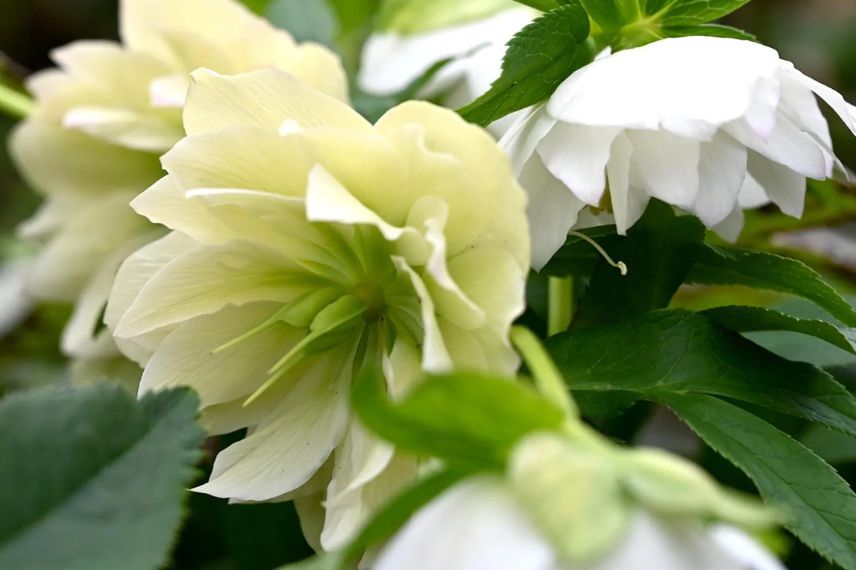
Hellebore ‘Mrs Betty Ranicar’
The most floriferous
Some hellebores will prove particularly generous, flowering almost continuously for months, from the beginning of winter to spring. Choosing these perennials will ensure a lively garden with minimal effort.
This is the case with Helleborus lemperii ‘Lisann’, a hybrid that blooms from October. Its flowers will continue until February, providing several months of flowering. It features large single flowers of immaculate white, forming a corolla with a contrasting green centre, from which yellow stamens emerge. Charming in mid-winter, when its foliage is dusted with a bit of frost, creating a beautiful harmony with the blooms.
The ‘Linn’ variety has the same qualities. It blooms for a long time, for almost half the year, between November and April. It is the result of a cross between Helleborus niger and Helleborus orientalis, allowing it to extend the flowering periods. It produces large single cream-white flowers with a contrasting centre.
Let’s also mention the ‘ViV Amalia’ oriental hellebore, a compact and floriferous variety. It delights us with its blooms from October to March. It reveals double flowers of pure white, with a green and yellow centre.
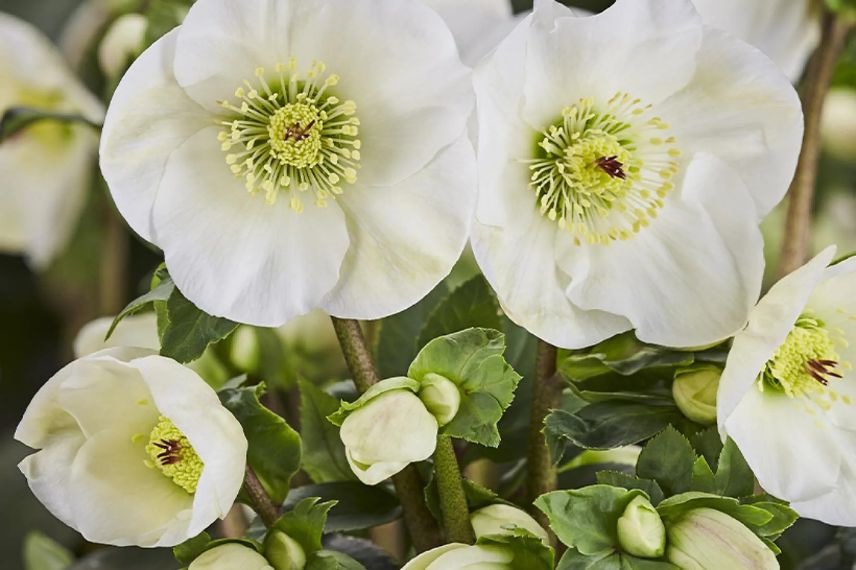
Helleborus lemperii ‘Linn’
Double-flowered white varieties
These are hellebores with numerous petals, giving them a touch of originality and a sophisticated or romantic appearance.
Let’s mention in particular the Oriental hellebore ‘Double White’. Its flowers have a frilly appearance and can resemble those of the water lily. Perfect for the garden, in pots, but also in your winter bouquets. Flowering occurs at the end of the cold season, from February to April.
‘Double White with Red Edge’ indicates its specificity in its name: its well-formed white flowers are composed of petals delicately edged in red. This gives it a graphic and poetic air. A touch of colour that heralds the gradual return of fine days at the end of winter.
For its part, ‘Pure White Anemone’ produces white flowers, with a centre composed of a cream-white collar, adding a sophisticated touch. Their downward-leaning habit prevents this centre from rotting, even in heavy rain. Flowering occurs between February and April.
Finally, ‘Double White Spotted’ has the particularity of producing very double flowers, white speckled with purple. A rather original colour contrast that will brighten the garden between February and April.
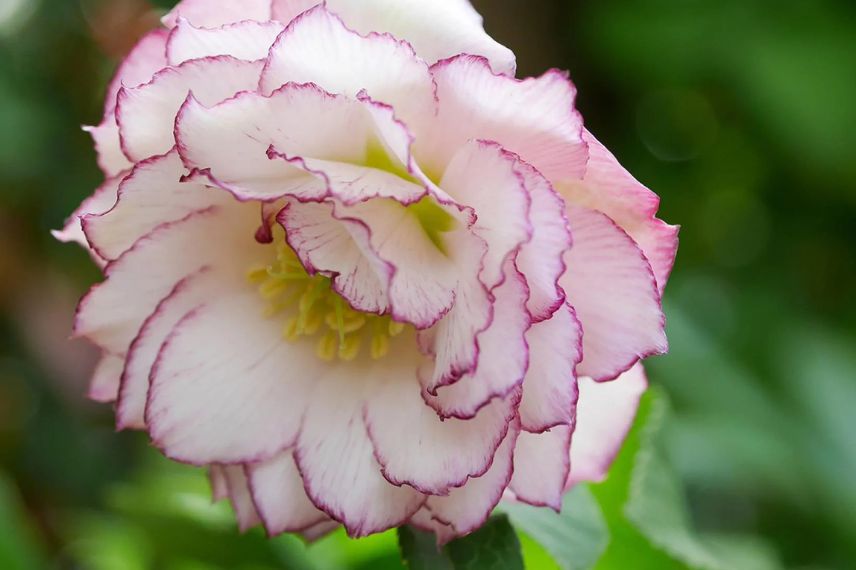
Oriental hellebore ‘Double White with Red Edge’
More colourful varieties
You find white flowerings a bit monotonous? These hellebores might change your mind. For a more colourful touch, opt for these varieties that blend several shades.
This is the case with the highly floriferous ‘ViV Valeria’, which not only blooms abundantly between October and February but also offers changing flower colours: starting as cream white, they gradually take on pink hues, then red. Truly little paintings! It is a compact variety, measuring only 35 cm in all directions. It is perfect for small spaces (especially borders) and for pots that will brighten up terraces and balconies with limited exposure.
Let’s also talk about the oriental hellebore ‘Grace Elisabeth’. At the end of winter and the beginning of spring, it rewards us with cup-shaped flowers in pale pink, delicately tinged with green. A very soft pastel flowering, like a little dragée.
The oriental hellebore ‘Picotee’ prefers to show us cream white flowers veined with pink, which will easily brighten up the shaded areas of the garden.
‘Frozen Sven’ further accentuates the contrasts, with its white flowering heavily veined with purplish pink. Its cup-shaped flowers appear between February and April.
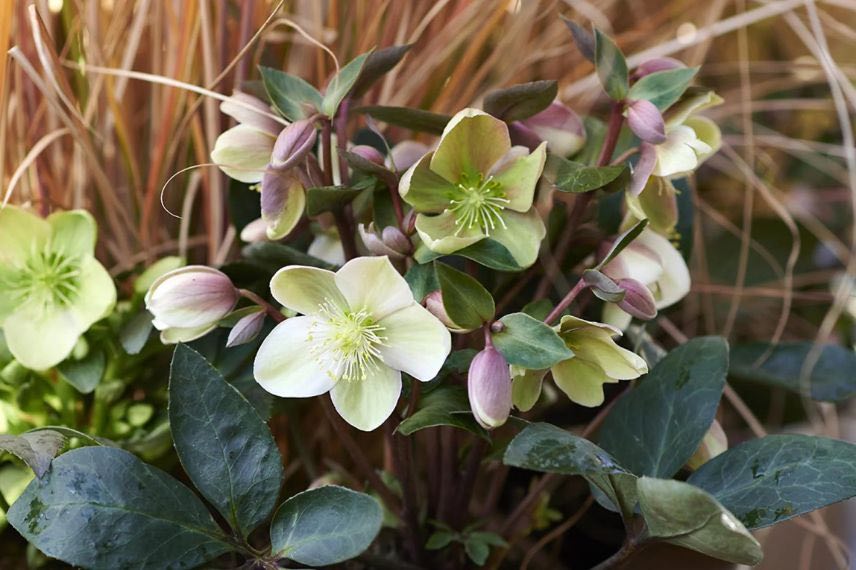
Oriental hellebore ViV ‘Valeria’
Ornamental foliage
The foliage is one of the other decorative qualities of hellebores. It is indeed evergreen, remaining beautiful in every season. Some varieties feature attractive, finely cut foliage, while others even opt for variegated leaves.
Among them, discover the Helleborus ericsmithii, a hybrid resulting from the crossbreeding of three species. Its flowering occurs from January to April, featuring slightly fragrant flowers that start as ivory white and gradually take on a pink hue. Its green foliage is characterised by silver marbling, making this perennial even more luminous and interesting for brightening up dark areas. It can also tolerate sunny exposures, provided they are not scorching.
Let’s not forget the Helleborus x ericsmithii ‘Magic Leaves’, whose originality lies in its white marbled foliage. It beautifully complements the cream-white flowering, which occurs between December and March. A small variety (30 cm in all directions), suitable for both the garden and pots.
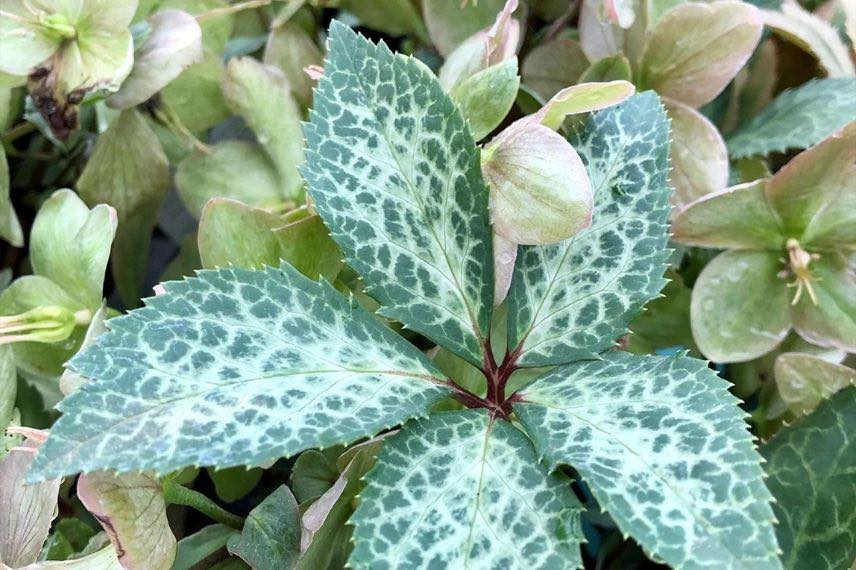
Hellebore Magic Leaves
- Subscribe!
- Contents
Comments