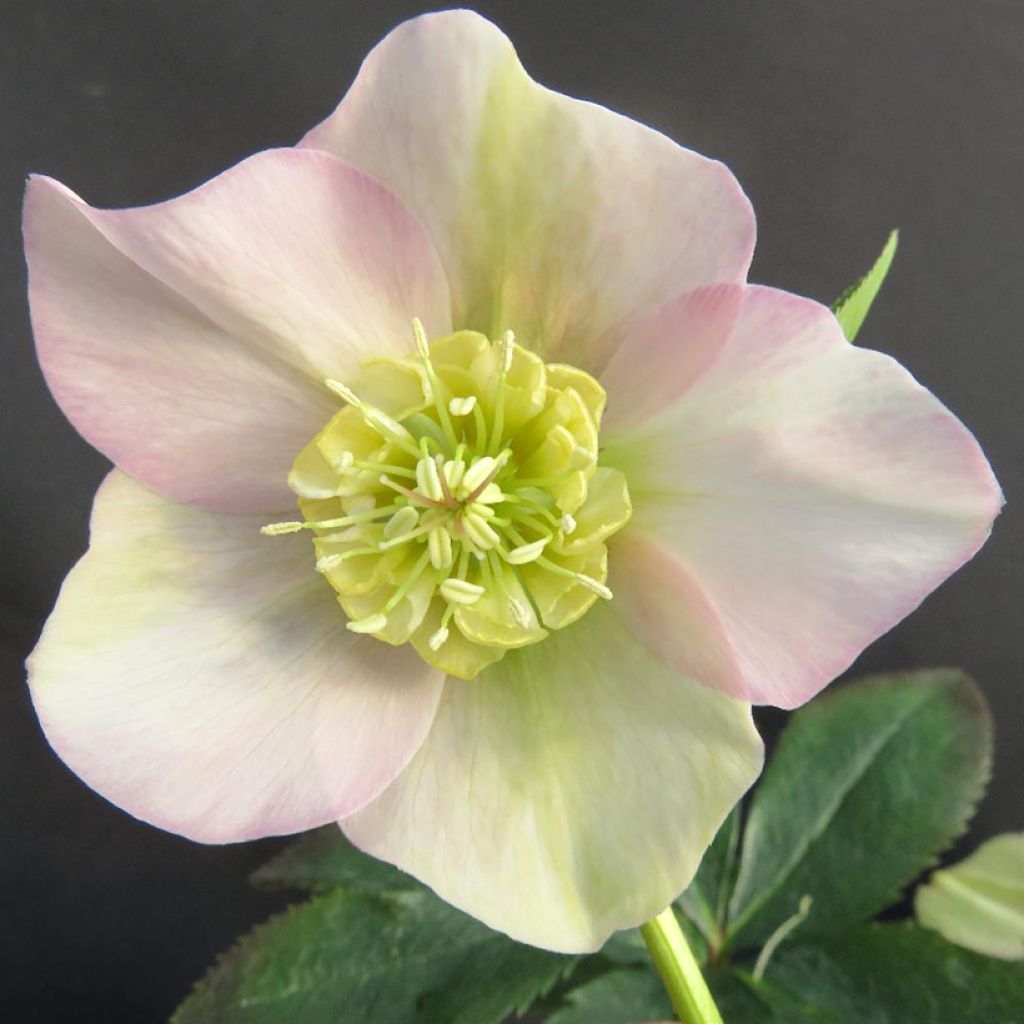
Helleborus x hybridus Grace Elizabeth
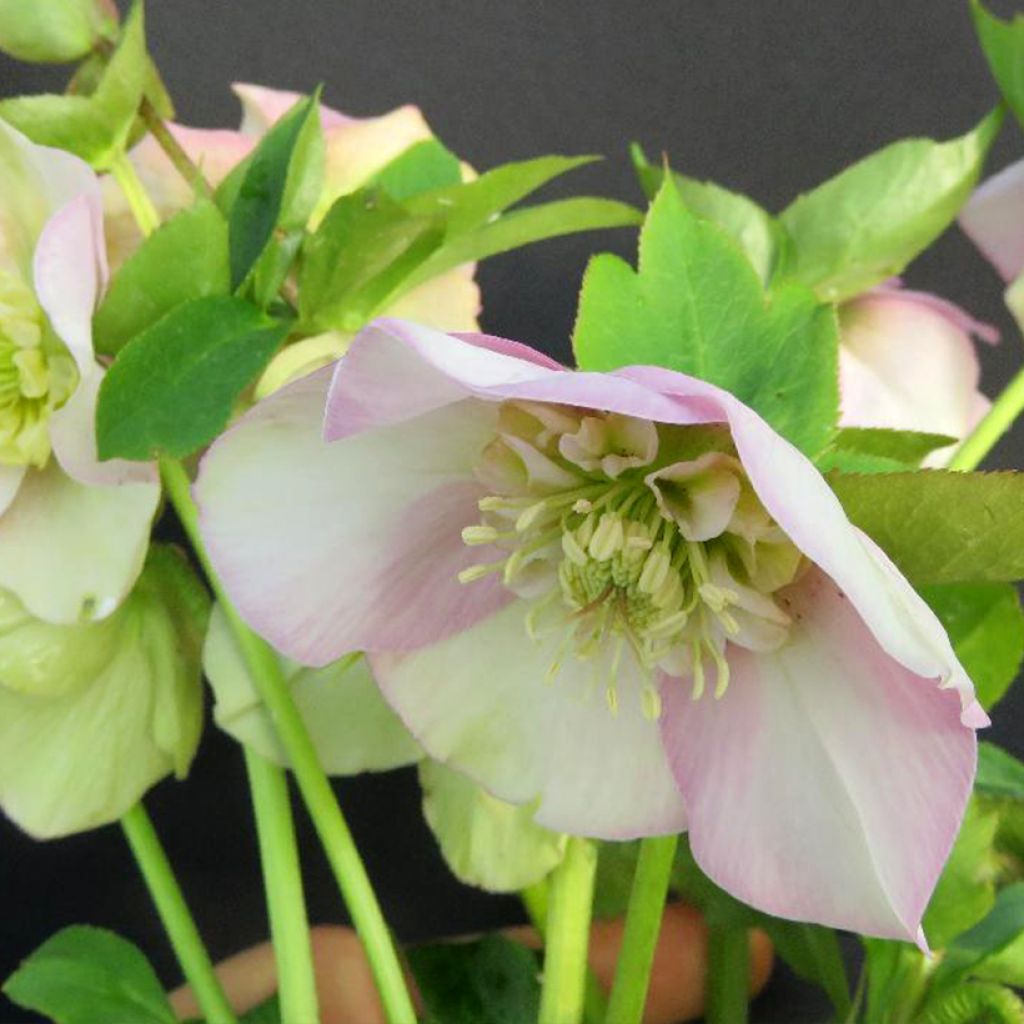
Helleborus x hybridus Grace Elizabeth
Helleborus x hybridus Grace Elizabeth
Helleborus orientalis Grace Elizabeth
Lenten Rose
Back-to-school special offer!
Get €10 off for every €50 you spend! And get up to €40 off on a single order.
How does it work?
1. Shop your favourites
Add your favourite plants to your basket. For every €50 you spend (excluding delivery charges, store credit and the plastic-free option), you’ll receive a €10 voucher.
€50 spent = €10 voucher
€100 spent = €20 voucher
€150 spent = €30 voucher
€200 spent = €40 voucher
2. Place your order
Once your basket reaches one of the spending thresholds, place your order. You can even choose your delivery date!
3. Receive your voucher
As soon as your order has been shipped, you’ll receive an email containing your personal voucher code and its value.
4. Use it on your next order
Your voucher is valid for 90 days from the date you receive it. It can be used once only, on a new order worth at least the value of the voucher, excluding delivery charges.
Please note: Vouchers can be combined with other offers, but cannot be split or refunded.
Why not try an alternative variety in stock?
View all →
Available in 0 sizes
Available in 1 sizes
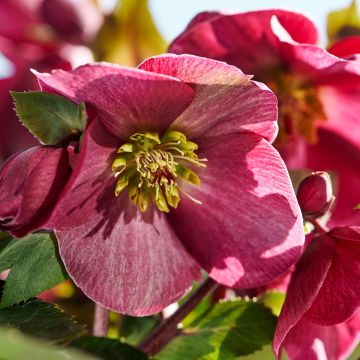
Available in 1 sizes
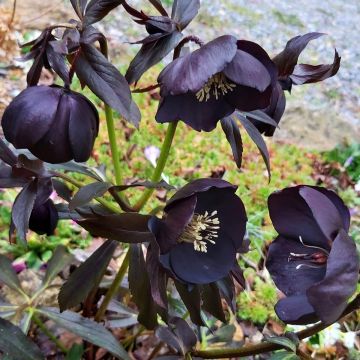
Available in 1 sizes
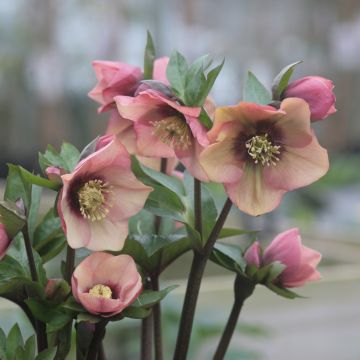
Available in 1 sizes

Available in 1 sizes
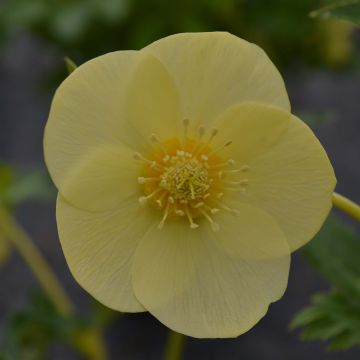
Available in 1 sizes
Available in 1 sizes
Available in 1 sizes
Available in 1 sizes
This plant carries a 12 months recovery warranty
More information
We guarantee the quality of our plants for a full growing cycle, and will replace at our expense any plant that fails to recover under normal climatic and planting conditions.
Would this plant suit my garden?
Set up your Plantfit profile →
Description
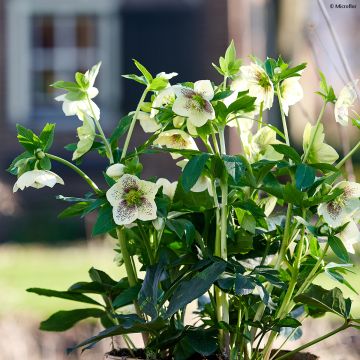
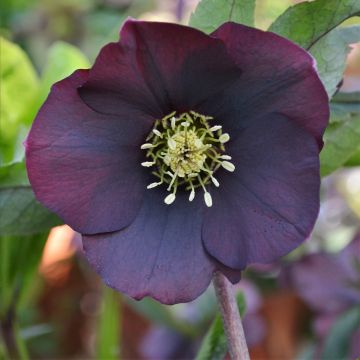
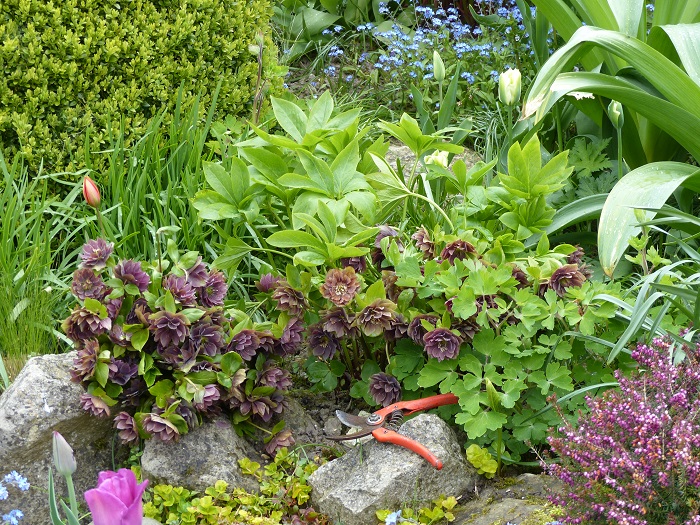
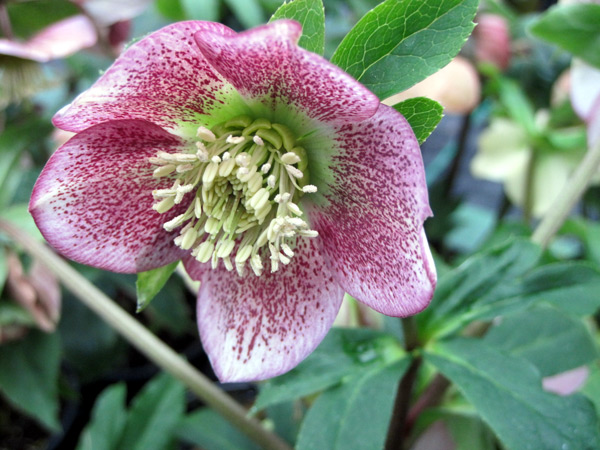
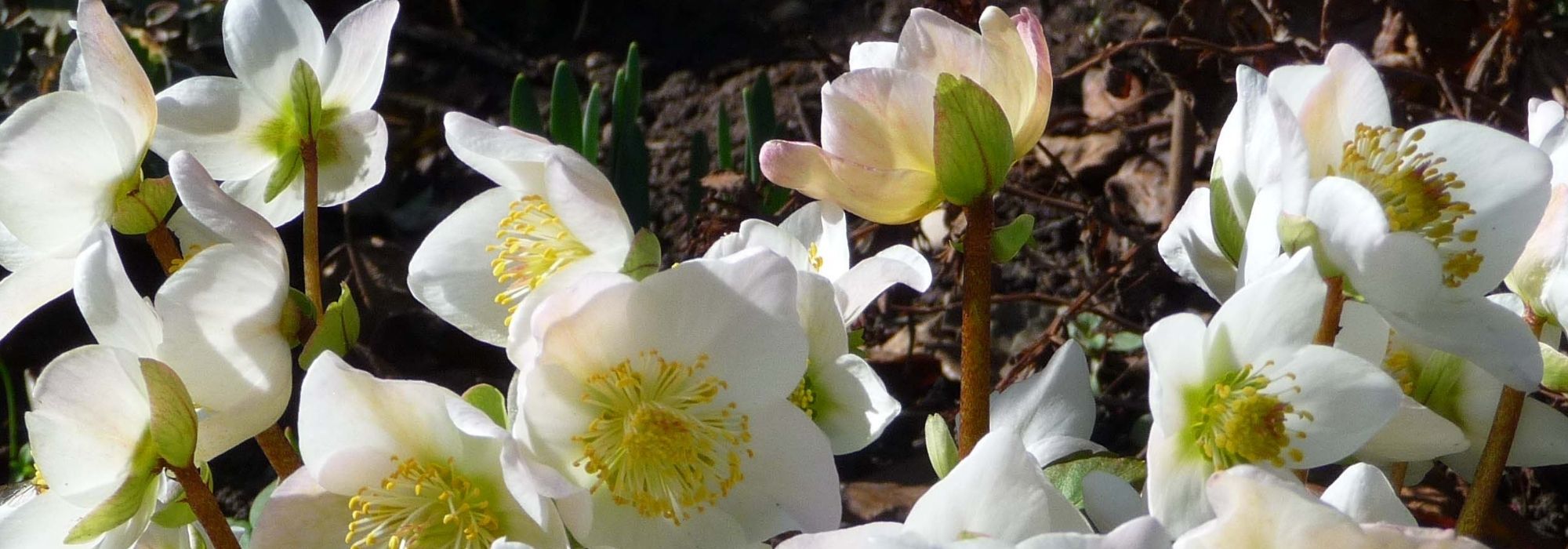
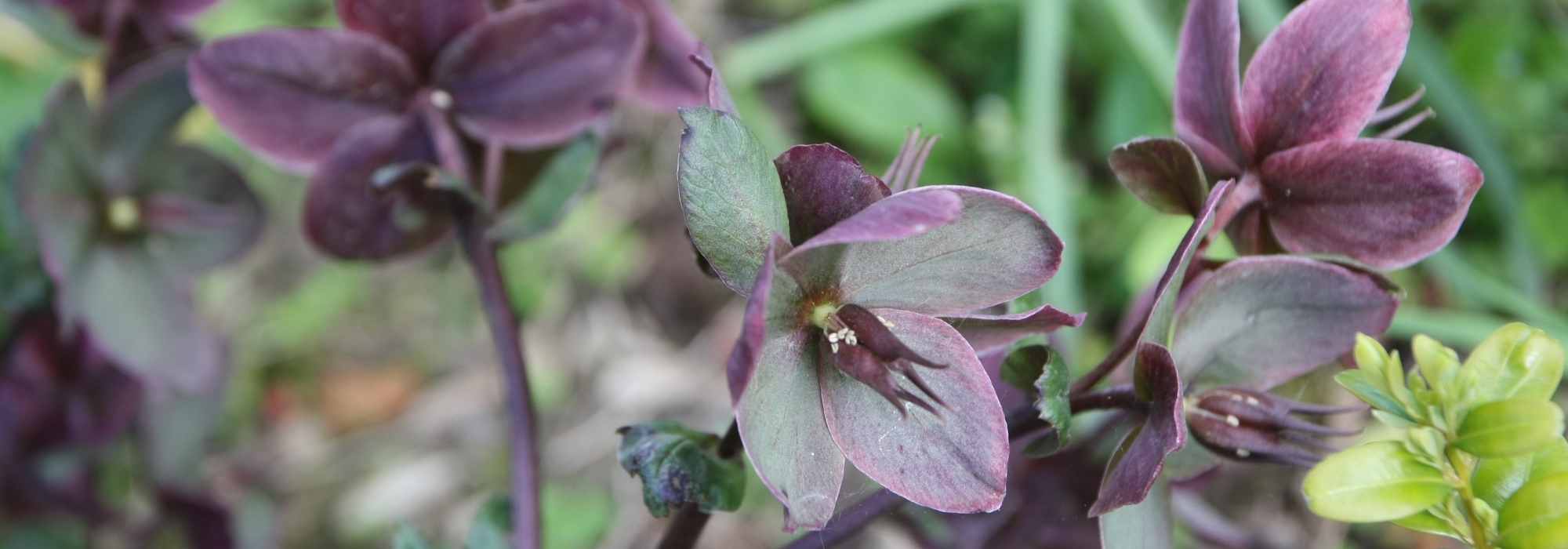
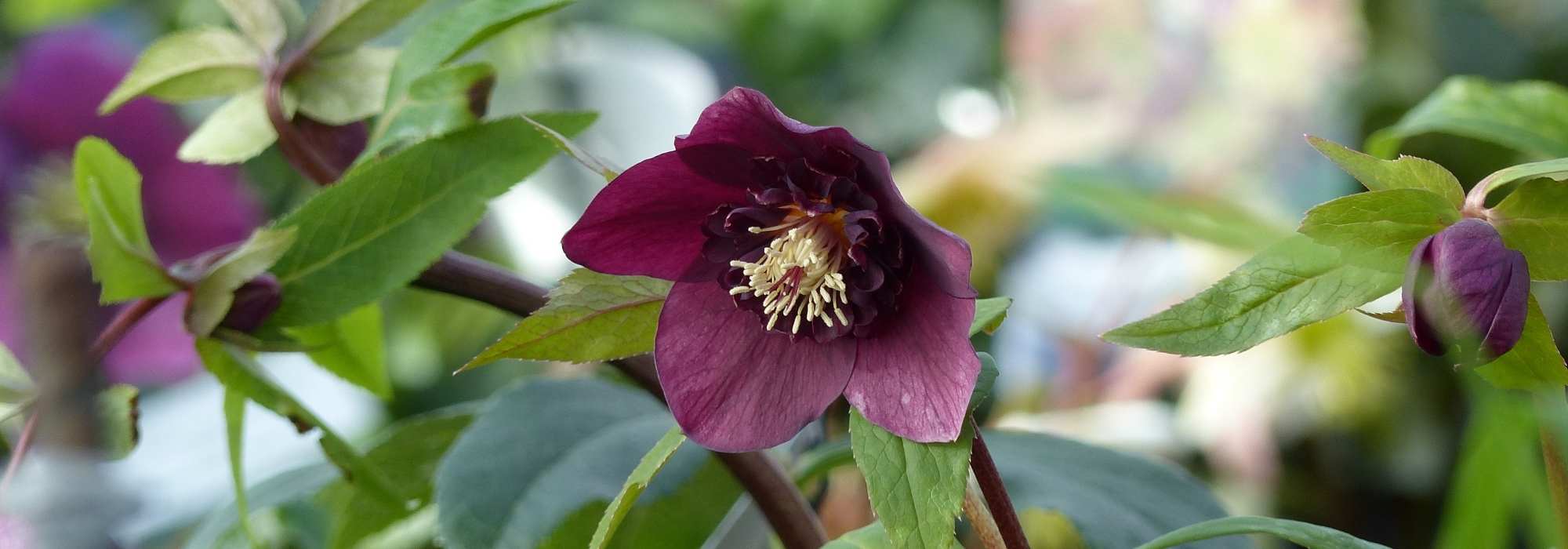
Heleborus x hybridus 'Black' is a variety of Christmas rose that is particularly dark, with almost black single cup-shaped flowers only slightly warmed by orange highlights. The dark colour of the petals contrasts with almost white stamens at the centre of the flower. This robust and very hardy perennial can be grown in borders and under shrub beds, as well as in pots to decorate the terrace or balcony. Easy to grow, even in heavy soil, it will thrive in shade or non-scorching sun.
Originating from Greece, Turkey, and the central and eastern Caucasus, Oriental Hellebore, sometimes called Lenten Rose, is a perennial plant in the Buttercup family that hybridizes very easily with other species to produce many hybrids with varied colours and forms. No variety names are given to these hybrids, they are distinguished by their shape and colour characteristics. Oriental Hellebore is a hardy plant that can withstand temperatures down to -15°C (5°F), naturally growing in forests, thickets, and clearings up to an altitude of 2,000 m (2,187 yards). The 'Black' variety forms a compact and leafy clump about 40 cm (16in) in all directions. It consists of palmate, evergreen basal leaves, slightly toothed, dark green and shiny, 30 to 40 cm (12 to 16in) long, composed of 7 to 9 leaflets. They only live for 8 months and are regularly replaced by new leaves.
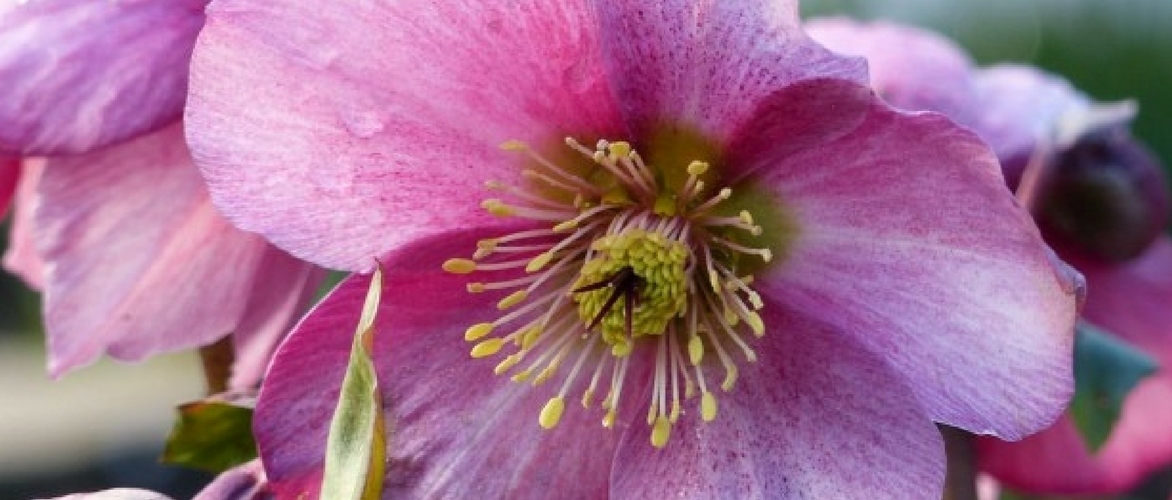
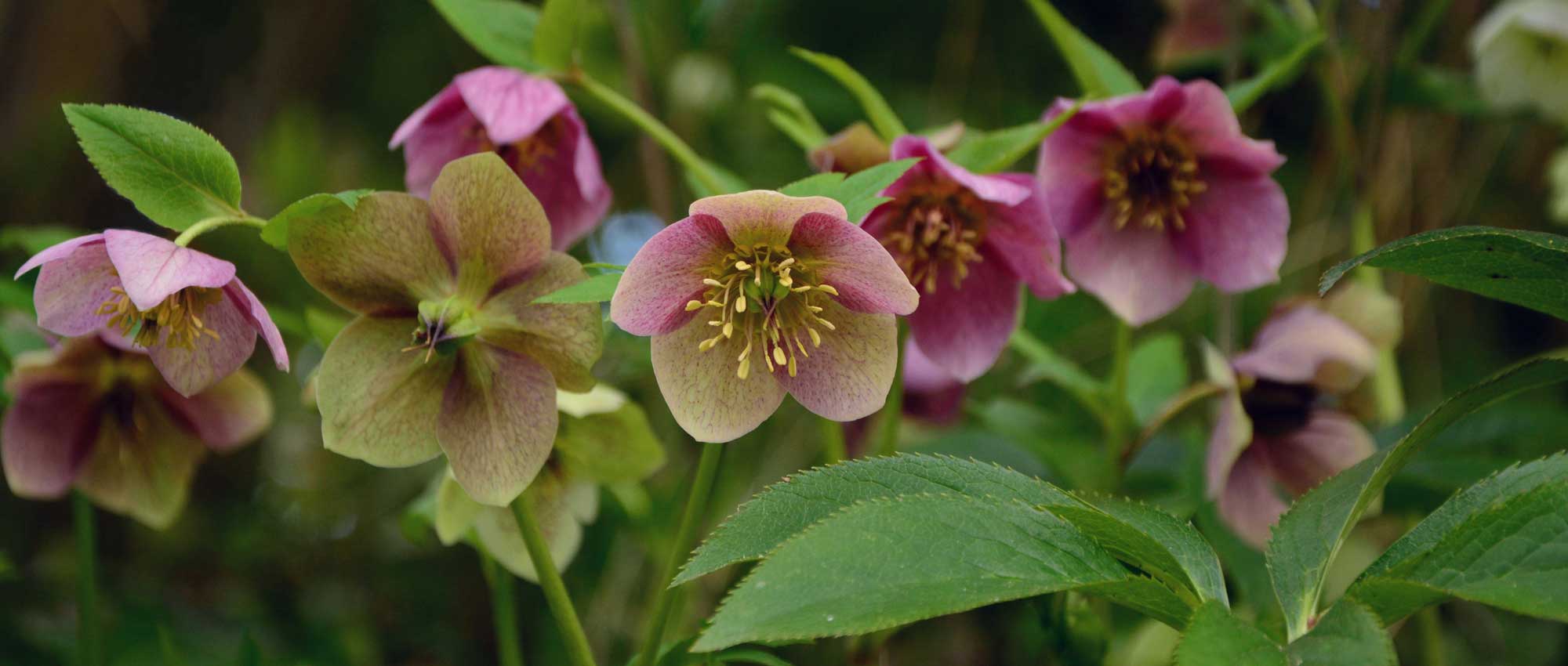
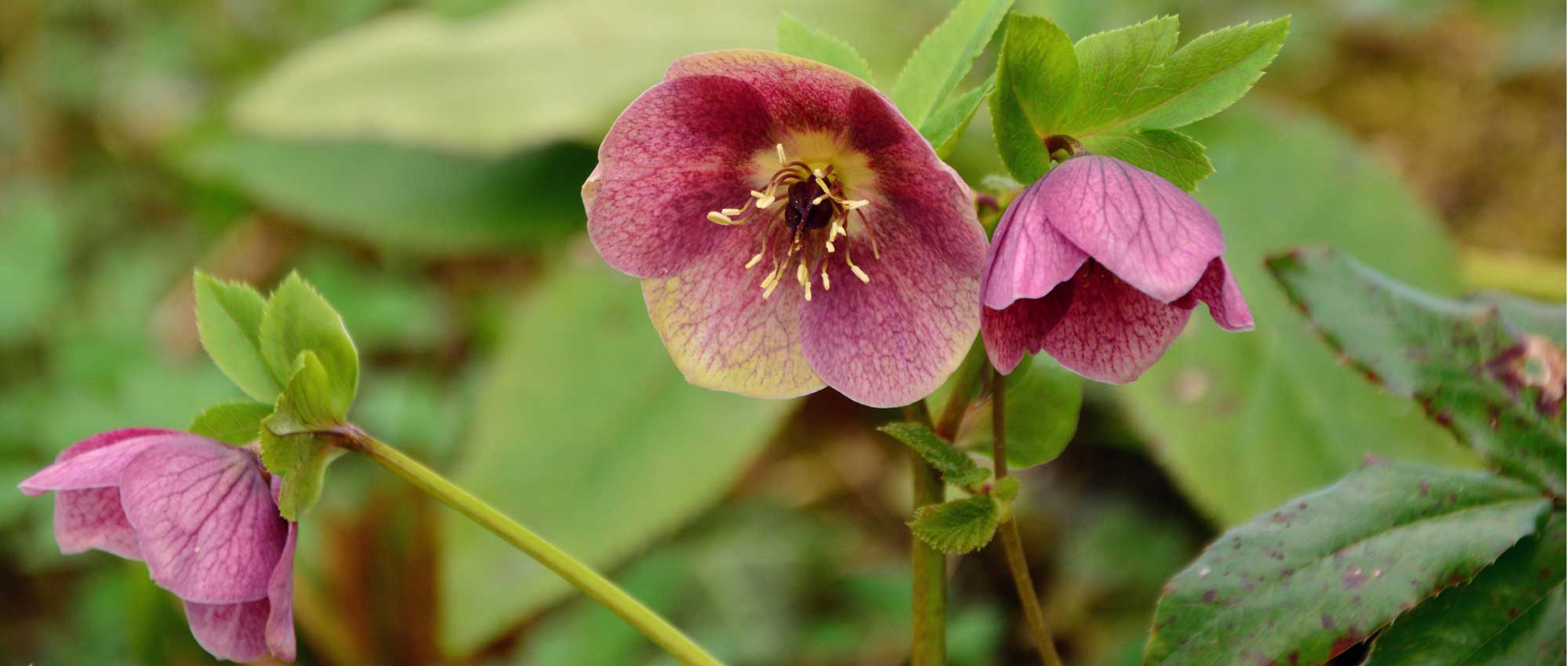
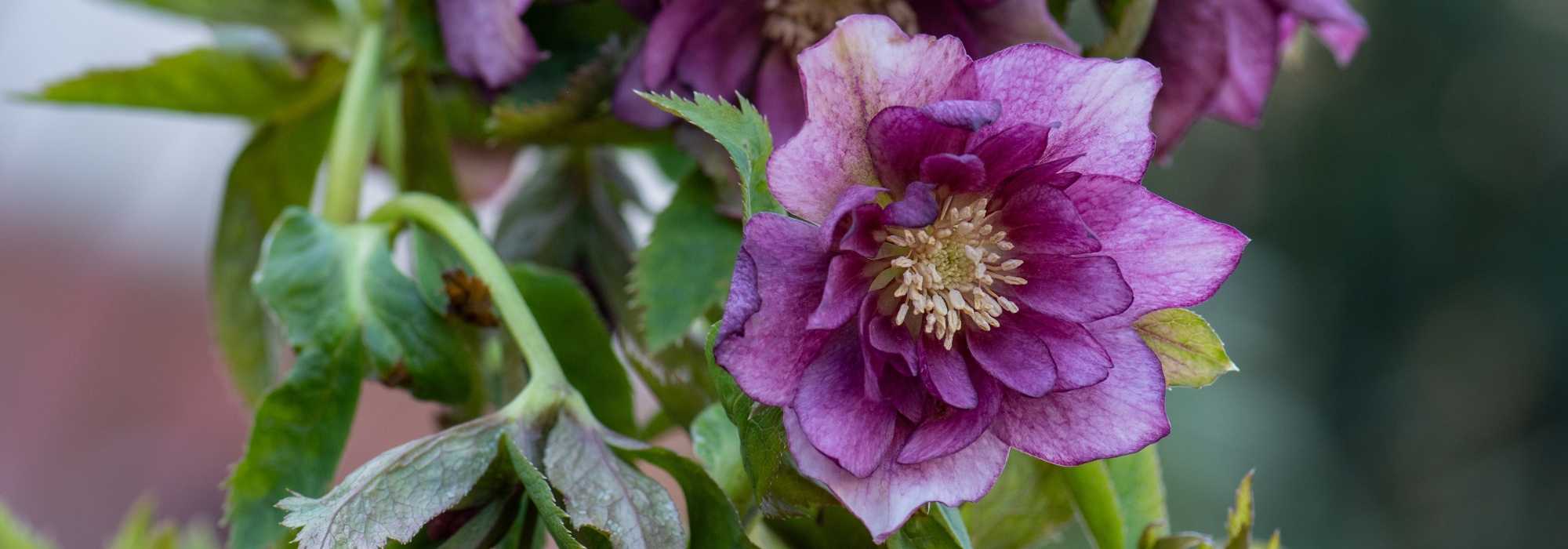
Between February and April, clusters of flowers 5 to 7 cm (2 to 3in) in diameter form, simple and cup-shaped with a very light bouquet of stamens at their centre. They are inclined downwards, allowing water to slide off like an umbrella to protect the heart of the flower from rotting. The Hellebore is a plant that does not like to be moved once established, as the young plants take some time to flower. The seeds are sown by ants.
Use hellebores like the elements of an old tapestry, mixing them with woodland plants in brighter colours. They are highlighted when planted near Pieris, moderate-sized rhododendrons, under conifers (especially on windy sites), and surrounded by primroses, wood anemones, corydalis, dicentras, cardamines, or spring-flowering bulbs and snowdrops. You can also accompany them with ferns and shade-loving irises to create a beautiful contrast a little later in the season. They can be planted in groups, like a bouquet, in shade near the entrance of the house to enjoy their early flowering up close. They are suitable for cut flowers and in beds, borders, or even containers... Over time, Hellebore flowers do not wilt like the majority of other flowers but dry up, often in beautiful shades.
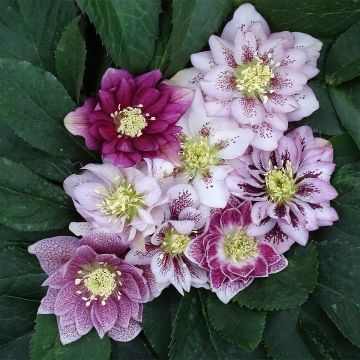
Each seed-sown Hellebore has a unique flower colour: so slight variations in colour may exist between two plants, which is normal and unavoidable. However, if the difference is too significant and distorts the desired effect, we will refund or replace the affected plant.
Flowering
Foliage
Plant habit
Botanical data
Helleborus
orientalis
Grace Elizabeth
Ranunculaceae
Lenten Rose
Cultivar or hybrid
Planting and care
Helleborus x hybridus Black grows in any rich, light or clayey soil, without too much limestone, in partial or light shade, sheltered from cold and prevailing winds. Avoid direct sunlight during the hottest hours in the south. This perennial can be planted from early autumn to spring, between February and April. It thrives in deeply worked soil mixed with organic matter. To feed, use bone meal or another organic fertilizer. Water well after planting and then add a layer of mulch 2 to 5 cm (1 to 2in) thick. Regularly remove faded leaves to improve flowering. Make sure to maintain a planting distance of 30 to 40 cm (12 to 16in) between each plant to promote their development. Hellebore does not tolerate stagnant water which may cause rotting.
The roots should not completely dry out in summer. Hellebores can be affected by a fungal disease transmitted by aphids, called black spot. Remove old leaves from deciduous species or spotted leaves from evergreen species when flower buds appear. Remove faded flowers after the seeds fall. They can also suffer from grey rot or die from collar rot due to poor growing conditions, in excessively wet situations.
On a balcony or terrace, plant them in pots 4 to 5 times larger than their size, as they need space to develop their root system. Most hellebores can withstand temperatures down to -15°C (5°F) without suffering, allowing them to adapt to almost all regions.
Planting period
Intended location
Care
Planting & care advice
-
-
-
-
-
-
-
-
This item has not been reviewed yet - be the first to leave a review about it.
Recently viewed products
Haven't found what you were looking for?
Hardiness is the lowest winter temperature a plant can endure without suffering serious damage or even dying. However, hardiness is affected by location (a sheltered area, such as a patio), protection (winter cover) and soil type (hardiness is improved by well-drained soil).

The flowering period indicated on our website applies to countries and regions located in USDA zone 8 (France, the United Kingdom, Ireland, the Netherlands, etc.)
It will vary according to where you live:- In zones 9 to 10 (Italy, Spain, Greece, etc.), flowering will occur about 2 to 4 weeks earlier.
- In zones 6 to 7 (Germany, Poland, Slovenia, and lower mountainous regions), flowering will be delayed by 2 to 3 weeks.
- In zone 5 (Central Europe, Scandinavia), blooming will be delayed by 3 to 5 weeks.
In temperate climates, pruning of spring-flowering shrubs (forsythia, spireas, etc.) should be done just after flowering.
Pruning of summer-flowering shrubs (Indian Lilac, Perovskia, etc.) can be done in winter or spring.
In cold regions as well as with frost-sensitive plants, avoid pruning too early when severe frosts may still occur.
The planting period indicated on our website applies to countries and regions located in USDA zone 8 (France, United Kingdom, Ireland, Netherlands).
It will vary according to where you live:
- In Mediterranean zones (Marseille, Madrid, Milan, etc.), autumn and winter are the best planting periods.
- In continental zones (Strasbourg, Munich, Vienna, etc.), delay planting by 2 to 3 weeks in spring and bring it forward by 2 to 4 weeks in autumn.
- In mountainous regions (the Alps, Pyrenees, Carpathians, etc.), it is best to plant in late spring (May-June) or late summer (August-September).
The harvesting period indicated on our website applies to countries and regions in USDA zone 8 (France, England, Ireland, the Netherlands).
In colder areas (Scandinavia, Poland, Austria...) fruit and vegetable harvests are likely to be delayed by 3-4 weeks.
In warmer areas (Italy, Spain, Greece, etc.), harvesting will probably take place earlier, depending on weather conditions.
The sowing periods indicated on our website apply to countries and regions within USDA Zone 8 (France, UK, Ireland, Netherlands).
In colder areas (Scandinavia, Poland, Austria...), delay any outdoor sowing by 3-4 weeks, or sow under glass.
In warmer climes (Italy, Spain, Greece, etc.), bring outdoor sowing forward by a few weeks.
Shipping country and language
Your country of residence may be:
Your country of residence is:
For a better user experience on our website, you can select:
Your shipping country:
-
 Austria
-
 Belgium
-
 Bosnia & Herzegovina
-
 Bulgaria
-
 Croatia
-
 Cyprus
-
 Czechia
-
 Denmark
-
 Estonia
-
 Finland
-
 France
-
 Germany
-
 Greece
-
 Hungary
-
 Iceland
-
 Ireland
-
 Italy
Italy
-
 Latvia
-
 Liechtenstein
-
 Lithuania
-
 Luxembourg
-
 Malta
Malta
-
 Netherlands
-
 Poland
-
 Portugal
-
 Romania
-
 Serbia
-
 Slovakia
-
 Slovenia
-
 Spain
Spain
-
 Sweden
-
 Switzerland
Language:
-
French
-
 English
-
Spanish
-
Italian
-
German
-
Portuguese
-
Dutch
-
Finnish
My Account
Hello
My wish lists
My cart
Log in / Register
Existing customer?
This form is protected by reCAPTCHA - the Google Privacy Policy and Terms of Service apply.
New customer?
Create an account to track your orders, access our customer service and, if you wish, make the most of our upcoming offers.