How to get rid of red spider mites on indoor plants?
Solutions to eradicate these mites
Contents
Caring for houseplants is a pleasure for those who love them. And often, the slightest sign of weakening, pest attack or poor health is quickly noticed. Yet some enemies are less visible or detectable to the naked eye, but no less formidable! Among these pests is the red spider mite.
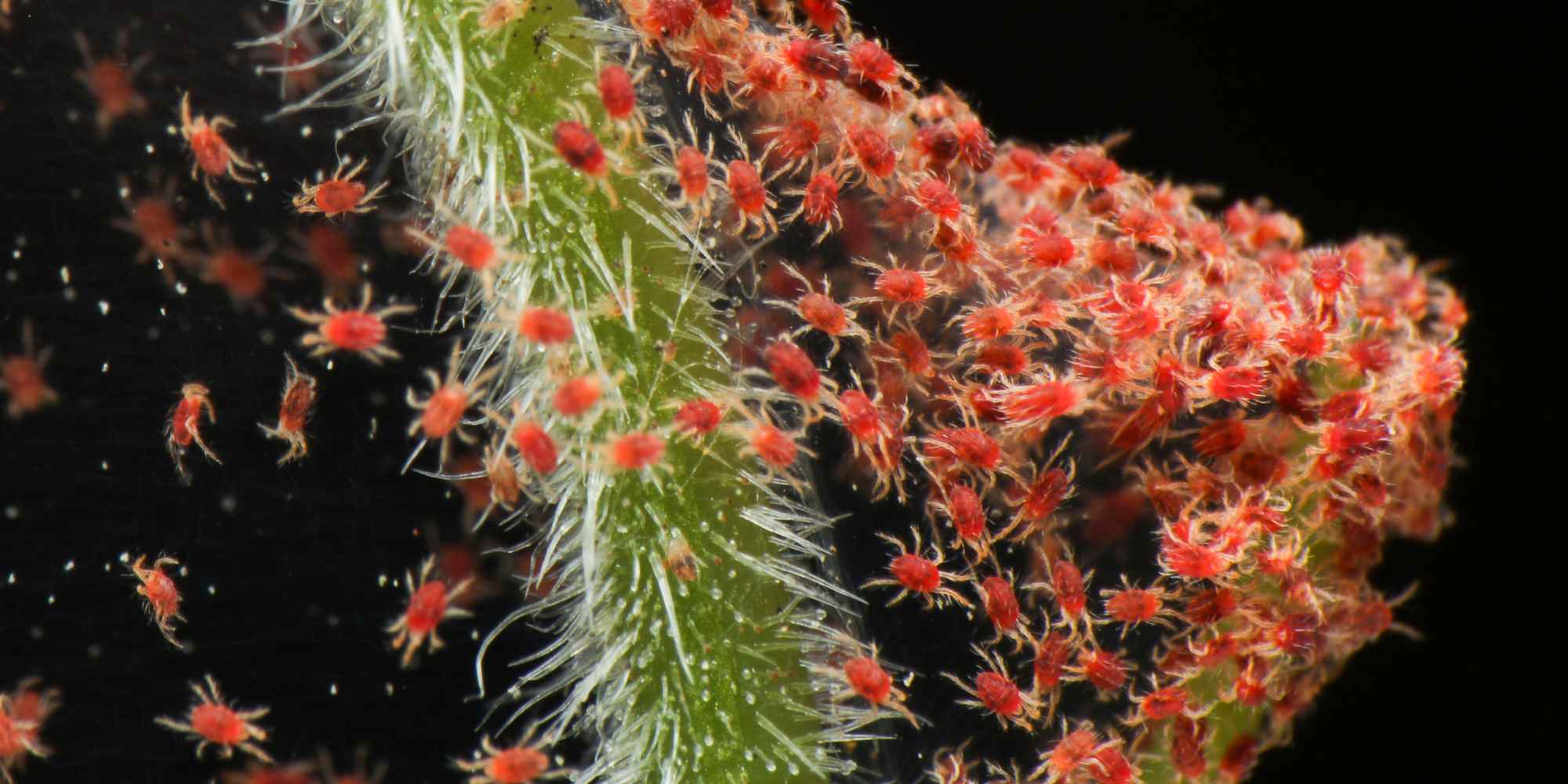
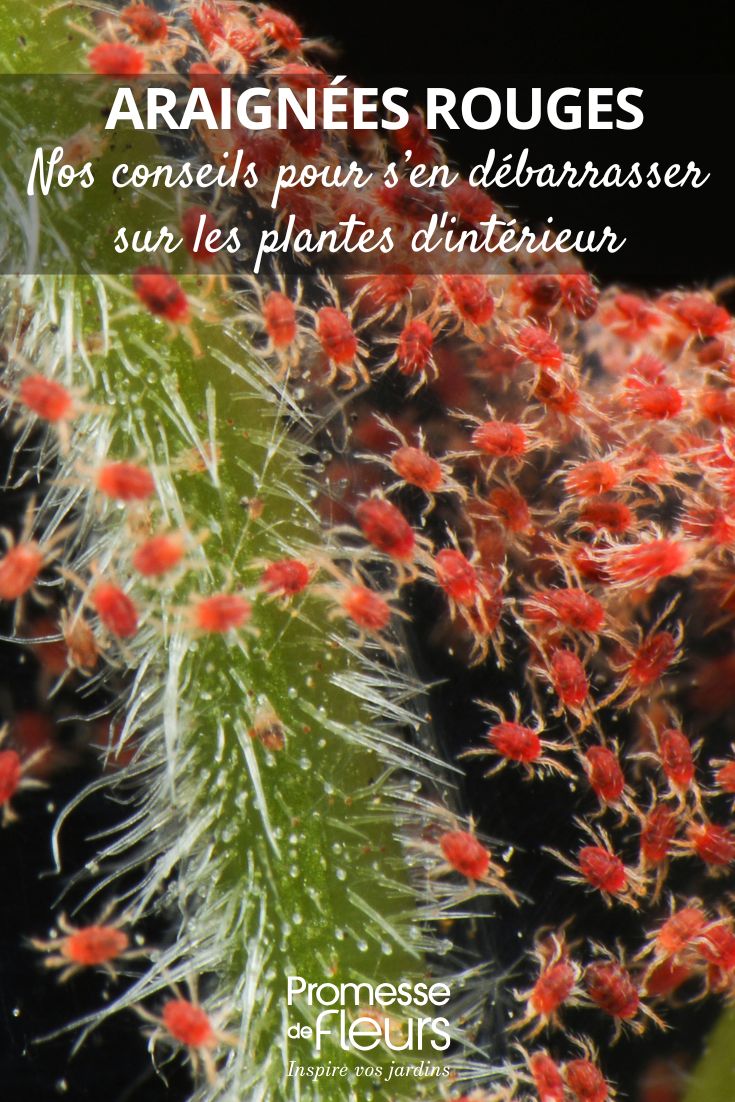
Contrary to what its name suggests, the red spider mite is not a spider, but a weaving tetranychid mite (Tetranychus urticae). These tiny invaders feed on plant sap, weakening foliage until the plant dies if nothing is done.
Discover how to identify, treat and prevent red spider mite infestations to save your houseplants.

How can you be sure it's red spider mite?
Before deploying the whole arsenal to fight this enemy, you must first be sure it’s really the culprit! Especially since red spider mites measure less than half a millimetre, so tiny and invisible to the naked eye. In addition, they often live on the underside of leaves.
However, some slightly more visible signs are unmistakable :
- Leaf discolouration : the first sign is often the appearance of tiny white or yellow specks on the upper surface of leaves. That’s where the mite has pierced the leaf to suck sap.
- Widespread yellowing : if the infestation progresses, leaves become dull, turn completely yellow and eventually fall.
- Fine webs : unlike house spiders, red spider mites weave extremely fine, dense webs, often located at the junction of leaves and stems or beneath leaves. They serve as protection and as a “bridge” for moving around.
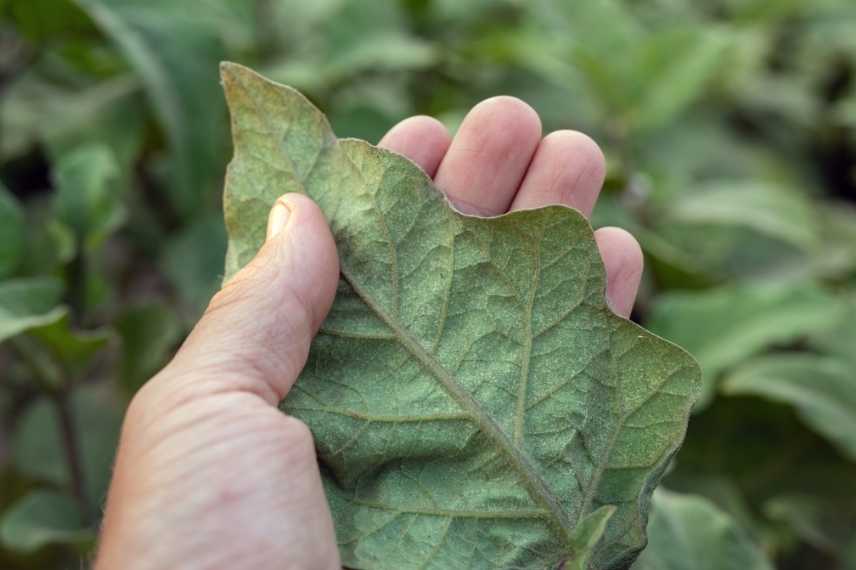
The first sign is often the appearance of tiny white or yellow specks
To confirm diagnosis, simply place a white sheet of paper under the plant and shake it. Generally, red spider mites dislodge easily from foliage and fall onto the paper, becoming slightly more visible.
Why red spider mites have invaded your plants — and what to do Causes - Hot, dry conditions and dusty leaves favour red spider mite (Tetranychus urticae) outbreaks. - Stressed plants (underwatered, nutrient-deficient or overcrowded) are more vulnerable. - Greenhouses, conservatories and warm, sheltered outdoor spots provide ideal conditions. - Overuse of broad‑spectrum insecticides can kill natural predators, allowing mites to explode. - New plants or potting compost can introduce mites to a collection. How to recognise an infestation - Fine webbing on leaves, stems and between branches. - Tiny pale dots or stippling on upper leaf surfaces; leaves may become yellow, bronze or bronzed and drop. - Very small moving specks visible with hand lens; close inspection often shows orange or red adults. Immediate actions (quick control) - Isolate affected plants to prevent spread. - Blast plants with a strong jet of water (outdoors or in shower) to remove mites and webs. - Wipe leaves with damp cloth to remove dust and eggs. - Prune out heavily infested shoots and dispose of them (do not compost). Cultural and preventive measures - Increase humidity around plants (misting, pebble trays, humidifier) — mites prefer dry air. - Improve air circulation and avoid overcrowding. - Keep plants healthy with correct watering and feeding. - Regularly inspect plants, especially underside of leaves and new growth. - Quarantine new plants for a week or two before introducing to collection. Organic and chemical controls - Insecticidal soaps and horticultural oils (neem oil, paraffin/white oils) can be effective — spray thoroughly, including leaf undersides; repeat at 7‑10 day intervals as required. - Biological control: predatory mites (e.g. Phytoseiulus persimilis, Neoseiulus spp.) are excellent in greenhouses and conservatories. - Miticides (acaricides) may be necessary for severe outbreaks — rotate actives to avoid resistance and follow label instructions. - Avoid broad‑spectrum insecticides that kill predators, which can worsen mite problems. Safety and application tips - Test any spray on small part of plant first to check for sensitivity. - Follow product label for dilution and safety precautions. - Repeat treatments until no live mites or new webbing observed (several applications often needed because eggs survive initial sprays). - Clean greenhouse surfaces and remove plant debris to reduce refuges for mites. If problem persists - Send clear photos or a sample to local garden centre or plant clinic for identification and tailored advice. If you want, tell me whether plants are indoors, in a greenhouse or outside and I’ll suggest specific products and a step‑by‑step treatment plan.
Obviously, red spider mites did not end up on your plants by chance. They are attracted by specific environmental conditions typical of indoor conditions in winter:
- Heat: red spider mites multiply at a tremendous rate as soon as temperatures exceed 20°C.
- Dryness of the air: this is the key factor. Heating dries the air, creating a desert-like climate ideal for these mites, which dislike humidity.
- Confinement: poor air circulation allows populations to stagnate and proliferate on the same plant.
Natural methods to act quickly
At the first signs of infestation, act quickly. A few simple measures are essential before deploying the full range of more targeted treatments. They may be sufficient if infestation is light.
Isolation to begin with
The first golden rule is toisolate the infected plant. Red spider mites move easily from pot to pot via draughts or on your clothes. Place the plant in a separate room, preferably cooler, to induce a thermal shock unfavourable to red spider mites.
Cold shower
If the cold has not been enough to eliminate these mites, move on to a more radical treatment: a shower. As red spider mites dislike water, simply place your plant in the shower or bath and spray it with a lukewarm jet of water. Make sure to focus on the undersides of the leaves, where they hide and lay their eggs. This shower physically removes a large part of the population and destroys the webs.
Increasing humidity levels
Because dry air often leads to the appearance of red spider mites, simply increase humidity levels. Two methods are very effective :
- Mist your plants daily with limescale-free water.
- Place pots on trays filled with clay pebbles and water, ensuring the base of the pot does not sit directly in the saucer.
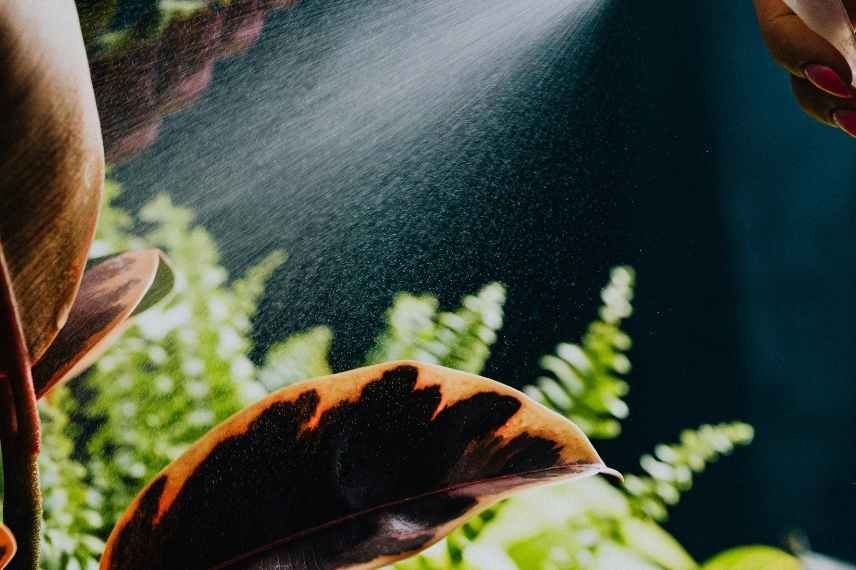
To combat red spider mites, increase humidity levels.
Read also
Misting indoor plantsNatural treatments to control red spider mites
If all these mechanical methods have failed, opt for natural treatments, commonly used to eliminate pests of houseplants, such as aphids, scale insects or even thrips.
It is crucial to note that treatment must be applied over a period of two to three weeks. Indeed, red spider mite’s life cycle is very short, only a few days in hot weather. If you stop treatment as soon as adults are no longer visible, remaining eggs will hatch and infestation will flare up again.
Black soap solution
The black soap is a contact insecticide that suffocates mites.
-
Mix 2 tablespoons of liquid black soap into 1 litre of lukewarm water.
-
Spray over whole plant, especially under leaves. Repeat every 3–5 days for two weeks to break reproductive cycle.
Neem oil
It is arguably one of the most effective treatments in organic farming. Neem oil contains azadirachtin, a compound that disrupts insects’ hormonal system and prevents them from feeding and reproducing.
-
Recipe: 1 teaspoon neem oil + a few drops of washing-up liquid to emulsify in 1 litre of water.
-
Never apply neem oil in full sun, as it may scorch leaves.
Garlic decoction
Garlic has powerful acaricidal and repellent properties. Recipe is simple: boil 100 g chopped garlic in 1 litre of water. Leave to infuse for 24 hours, strain and spray undiluted onto plant.
Organic control as ultimate solution
If infestation is really severe, or if red spider mites have become established in a greenhouse, conservatory or winter garden, biological control is a very effective solution. This biological control relies on the use of natural enemies, namely another mite species, Phytoseiulus persimilis. It is a nightmare for red spider mites.
This predatory mite feeds exclusively on red spider mites. Once larvae are introduced onto the plant, they move over the leaves in search of prey: eggs, larvae and adult red spider mites. Once red spider mites have been eradicated, the predator dies of starvation, leaving no trace.
However, it is important to note that these predatory mites are effective from 20 °C upwards and in an environment where relative humidity is at least 60 %. 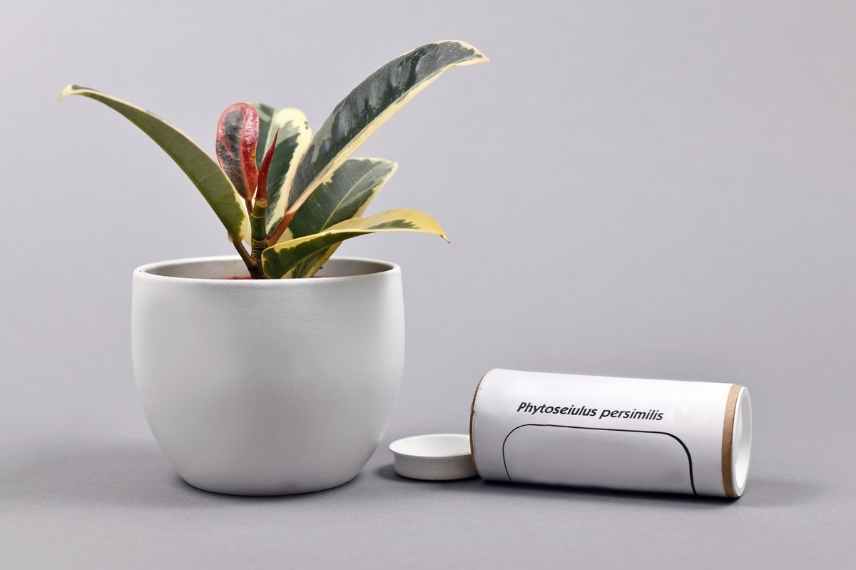
Prevention is better than cure
Healthy plant is naturally more resistant. To prevent pests returning, create an environment hostile to these critters.
Regular cleaning of leaves
Dust that builds up on leaves is not merely unsightly; it acts as a protective carpet for mites. It clogs stoma, the plant’s pores, and creates a dry microclimate under which red spider mites can spin their webs unnoticed.
- Use a soft microfibre cloth dampened with soft water. For plants with textured leaves, a small soft brush or paintbrush can help.
- Besides removing potential larvae, you optimise photosynthesis, making plant stronger against pests.
Humidity management
Red spider mites are physiologically unable to multiply rapidly in an environment where humidity exceeds 60%. It’s their Achilles’ heel.
- Fill a wide saucer with clay pebbles and pour water to half height. Set the pot on top. Continuous evaporation creates steady humidity around foliage.
- Mist the underside of leaves regularly, especially in warm weather or when heating is on.
Systematic quarantine
Most common mistake is adding a new plant straight into collection. Even a plant bought from a high-end garden centre can carry invisible eggs.
- Keep any new purchase in a separate room for at least two weeks.
- Inspect leaves with a magnifier and, if in doubt, give a preventive shower with black soap.
Importance of ventilation
Stagnant air is an incubator for pests. In dense arrangements of pots packed close together, red spider mites move from leaf to leaf by simple contact.
- Avoid leaves of two different plants touching. This creates corridors for mites.
- Open windows to create a slight air movement. Mites hate draughts that dry their webs and disrupt their life cycle.
Prudent fertilisation
People often think adding lots of fertiliser helps plant defend itself. Sometimes the opposite happens: excess nitrogen promotes very rapid growth of soft, sap-filled tissues. That sap is more dilute and easier for mites to suck, making plant particularly attractive. It is therefore better to use balanced fertilisers and to strictly respect winter rest periods when nutrient needs are almost nil.
- Subscribe!
- Contents
This form is protected by reCAPTCHA - the Google Privacy Policy and Terms of Service apply.

































Comments