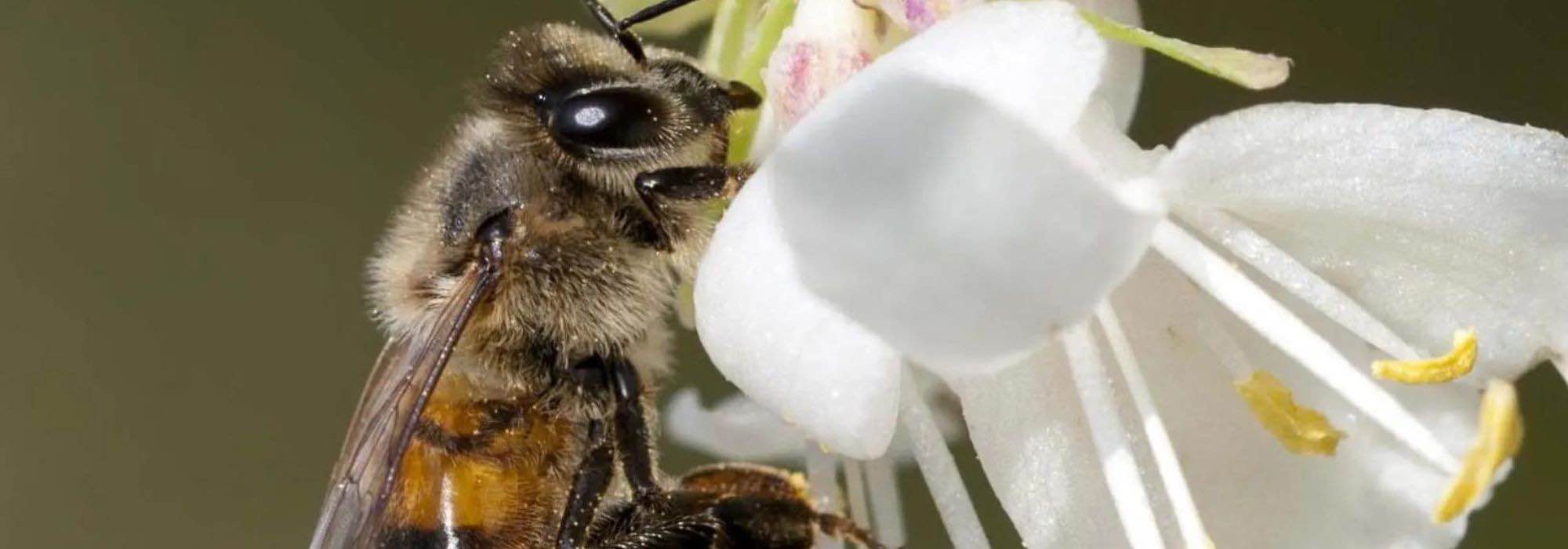
Melliferous shrubs: a valuable ally for biodiversity
For all situations, seasons and climates
Contents
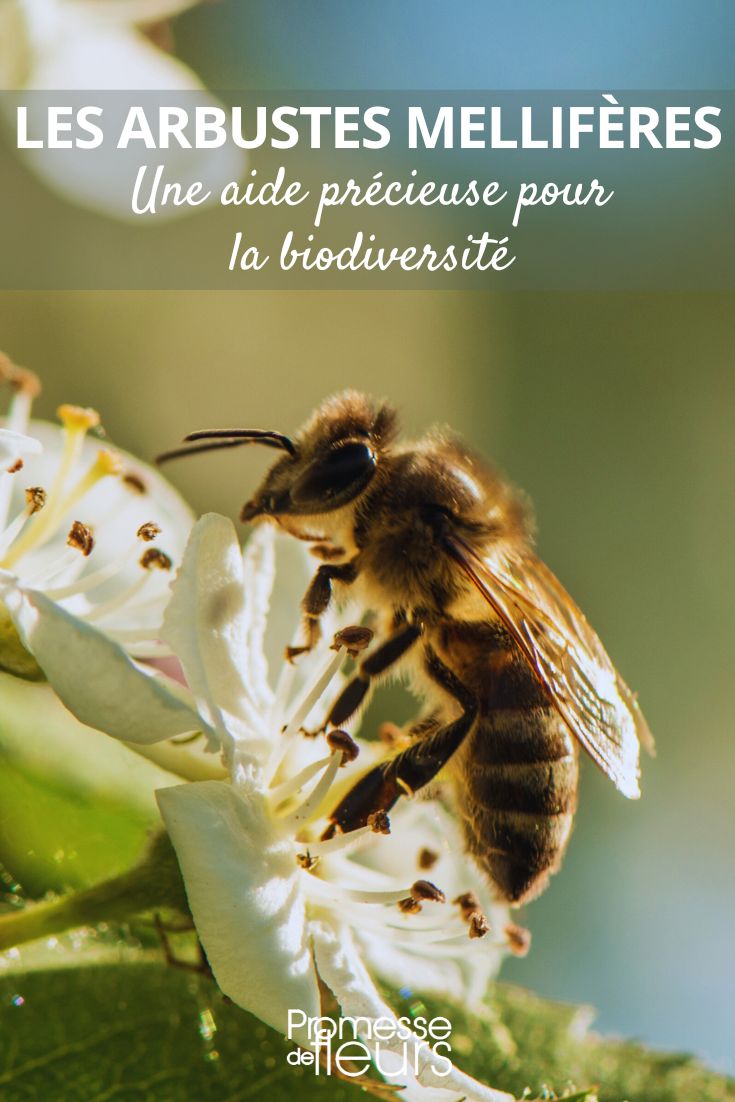
Attracting pollinators to your garden is essential to promote biodiversity and ensure good pollination of plants. Melliferous shrubs play a key role in this ecosystem, providing abundant pollen essential for survival of bees and other pollinating insects. In addition to their ecological benefits, these shrubs add a touch of beauty and colour to the garden with their spectacular flowering. In this article, we present a selection of the best melliferous shrubs, including those suitable for winter or shady positions.

Depending on the season
In spring
Hawthorn is a particularly melliferous shrub, whose flowering opens in mid-spring, between April and June. Its white or pink flowers, grouped in corymbs, attract a multitude of pollinators, especially bees. High pollen content makes hawthorn a quintessential melliferous plant. It contributes to production of quality honey and promotes biodiversity in the garden. Hawthorns populate our countryside and are easy to grow in the garden, undemanding about soil type provided soil is well drained. To make the most of its flowering umbels, plant in full sun or partial shade.
Beyond its spring flowering, it produces small red berries in autumn that provide food for birds. Its density and thorns make it an excellent defensive hedge and a refuge for wildlife.
Photinia fraseri (and its cultivars) is also a champion at attracting bees and pollinators, provided it is allowed to grow freely without pruning. Although frequently seen in hedges, it is also interesting to grow as a shrub in a mixed border or as a small specimen tree. Photinia offers an attractive flowering in mossy clusters of creamy-white, slightly scented blooms, much visited by bees. Give it light, fairly deep soil. Once established, it tolerates summer drought well.
In summer
Ceanothus blooms hum with activity in summer (or in spring depending on species and varieties). It is generally the deciduous ceanothus that flower in mid-summer. These shrubs offer a profusion of blue, white or pink flowers, gathered in clusters, that attract bees and other pollinating insects. Easy to grow, ceanothus adapt to various soil types, though they prefer well-drained, slightly acid to neutral soil. They particularly thrive in sunny positions and are drought-resistant once established. Deciduous summer-flowering varieties, more cold-hardy than evergreen ones, are however less tolerant of summer drought.
Vitex or chaste tree flowers from July to October in long panicles of blue, mauve or white on upright shoots. Also nicknamed “pepper trees”, their textured foliage gives off a peppery scent. Highly prized by pollinators, they also have decorative foliage. Plant in full sun in well-drained soil; they tolerate drought and sea spray. They are hardy only in southern half of France and on the western coast, as they are susceptible to severe frosts.
In autumn
Autumn sees several shrubs of the Araliaceae family come into flower, with fine melliferous qualities. In September and October, Fatsia, or Japanese Aralia, with exotic foliage, produces small white pompon flowers followed by round black fruits. It prefers a shady position and cool, light, non-calcareous soil, and is hardy down to about −12°C. Aralia elata forms a large shrub with deeply divided foliage, flowering in large white clusters in late summer and autumn. A true scented mist buzzing with bees, it prefers partial shade or morning sun, sheltered from strong winds. It grows in fresh to moist, fertile soil, although poor soil seems to produce hardier specimens with greater longevity.
In winter
In winter, mahonia takes centre stage with spectacular winter flowering, in clusters of yellow or orange flowers depending on variety, followed by blue berries. The sweet scent of its flowers complements its bright display and visiting foraging insects take notice. Mahonia grows in any soil type except compact, very wet soils. It is hardy and thrives in shade or partial shade. Its foliage, also spectacular, is spiny except in some varieties.
Lonicera frangrantissima is a winter-flowering honeysuckle with superbly scented white flowers, with notes of jasmine and lemon. During this part of the year when flowers are scarce, this non-climbing shrub is a boon for bees. Undemanding, it grows in any well-drained soil, in full sun in the north or in partial shade in the south, in a sheltered spot that is ideally sunny over winter.
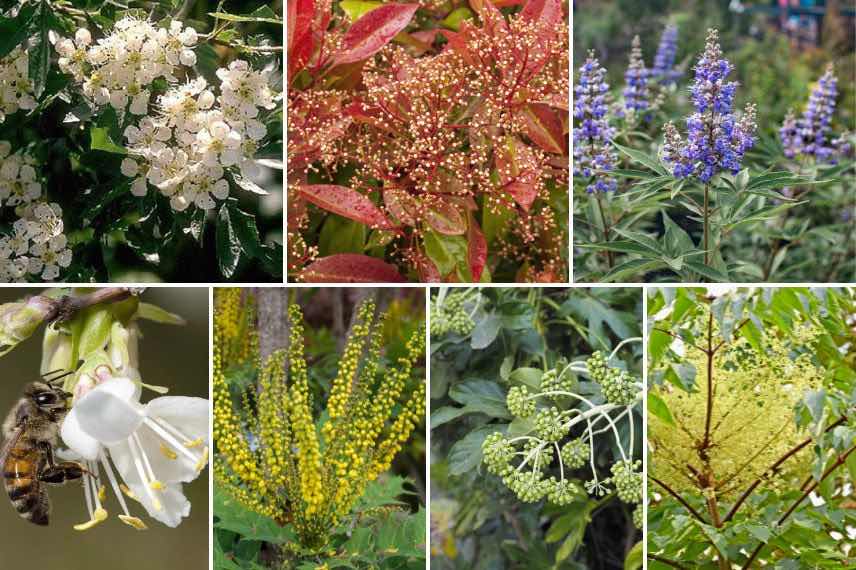
Clockwise from top left: Hawthorn, Photinia, Vitex, Aralia elata, Fatsia, Mahonia, Lonicera frangrantissima
Depending on exposure
While most shrubs with very melliferous flowering prefer sun, even full sun, there are a few exceptions. As mentioned in the previous chapter, Araliaceae prefer partially shaded or shaded positions, as do Mahonias.
In shade, especially in the south, the pyracantha, known as firethorn, is a hardy shrub with evergreen foliage and sharp thorns. Its attractive flowering occurs in May–June as a multitude of small white flowers much visited by bees. In autumn, abundant fruiting produces a profusion of berries with colours ranging from red to orange depending on the species. Pyracantha adapts easily to all soil types and thrives in partial shade, even in shade in warm climates. It can withstand summer drought perfectly once well established.
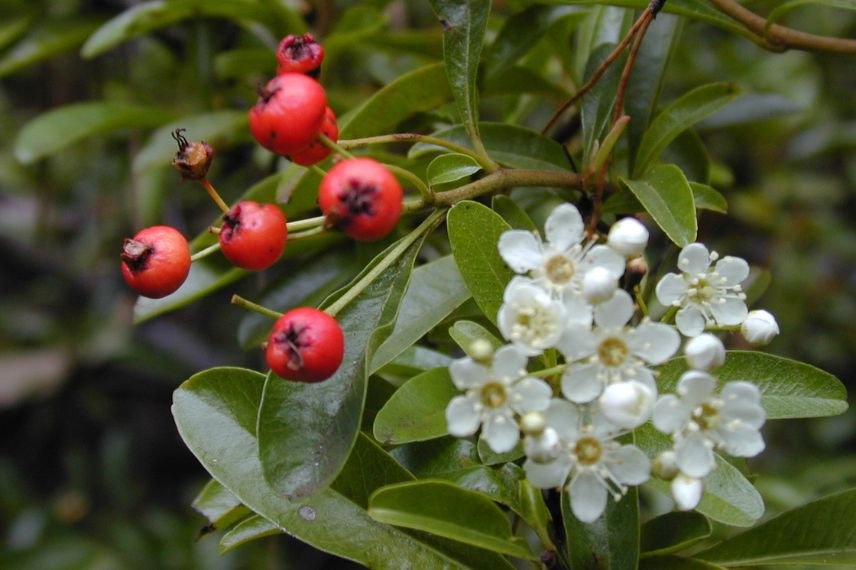
Pyracantha is floriferous and melliferous even in shade
Depending on soil type or climate
On calcareous soil
Many melliferous shrubs native to the Mediterranean appreciate calcareous soils. Among those mentioned earlier, Vitex is one.
Hawthorn also tolerates calcareous soil well. Another shrub of the same family is a champion for pollen: Crataegus azarolus, or azarole, a deciduous, slightly thorny fruit tree that produces a pretty white spring flowering (with a rather unpleasant scent). Flowering occurs in April as clusters or corymbs of very small whitish flowers much visited by bees. Azarole only produces its tart-flavoured fruits under Mediterranean conditions. Hardy, it tolerates summer drought and calcareous soils well.
On acidic soil
Spring- or summer-flowering depending on species and variety, spiraeas, much appreciated in the garden, grow in acidic to neutral, rather cool, well-drained soil, in full sun or partial shade. However, they also adapt to poorer, drier soils and tolerate some lime. From April to August depending on species, clusters of small flowers ranging from pure white to pink attract many pollinators.
Physocarpus are also very melliferous shrubs with white or slightly pink corymbs flowering between May and July. Fairly fast-growing, physocarpus are planted in rich, friable, deep soil, preferably neutral to acidic, in full sun or partial shade. They only dislike excess lime and languish in poor soils.
On poor soil
On poor soil, consider the pollinator magnet that is the Spanish broom. Its golden-yellow spring flowering is extremely fragrant and heady. Spartium junceum can be planted in any well-drained soil, even stony, sandy or poor. It is indifferent to soil pH, which may be acidic or very calcareous. It does, however, require full sun and dislikes heavy, clayey, waterlogged soils. Beware: it can become genuinely invasive in ideal conditions.
Golden-chain or Laburnum anagyroides is a large shrub that can quickly reach 8 m in every direction. It produces long pendulous racemes of brilliant golden-yellow, highly melliferous and fragrant flowers between May and July. Very hardy, it grows in any well-drained soil, poor and calcareous. It prefers sun or partial shade, ideally sheltered from wind.
Evergreen ceanothus grow in well-drained, even poor and very dry soil.
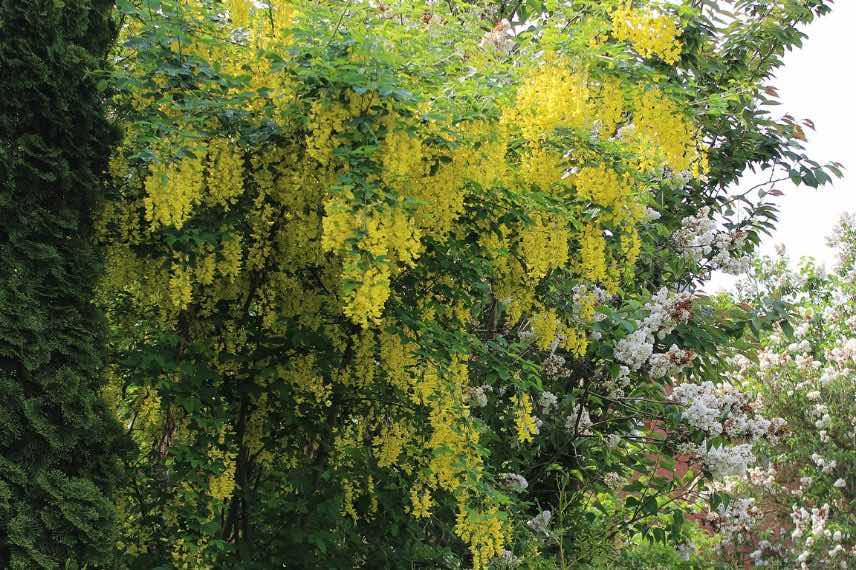
Laburnum, or cytisus, is marvellous on calcareous soil, very melliferous
In cool climates
Rowan or Sorbus aucuparia does not tolerate drought and favours cool climates; it occurs as far north as Iceland and boreal Asia. It is a tree that dislikes very bright light and high temperatures. It prefers rich, cool but well-drained soil with little lime. From May to June, a profusion of small white flowers in corymbs appears on this shrub, known for its berries favoured by birds.
- Subscribe!
- Contents
This form is protected by reCAPTCHA - the Google Privacy Policy and Terms of Service apply.

































Comments