
Melocactus azureus - Blue melon cactus
Melocactus azureus - Blue melon cactus

Melocactus azureus - Blue melon cactus

Melocactus azureus - Blue melon cactus

Melocactus azureus - Blue melon cactus
Melocactus azureus - Blue melon cactus
Melocactus azureus
Melon cactus
Back-to-school special offer!
Get €10 off for every €50 you spend! And get up to €40 off on a single order.
How does it work?
1. Shop your favourites
Add your favourite plants to your basket. For every €50 you spend (excluding delivery charges, store credit and the plastic-free option), you’ll receive a €10 voucher.
€50 spent = €10 voucher
€100 spent = €20 voucher
€150 spent = €30 voucher
€200 spent = €40 voucher
2. Place your order
Once your basket reaches one of the spending thresholds, place your order. You can even choose your delivery date!
3. Receive your voucher
As soon as your order has been shipped, you’ll receive an email containing your personal voucher code and its value.
4. Use it on your next order
Your voucher is valid for 90 days from the date you receive it. It can be used once only, on a new order worth at least the value of the voucher, excluding delivery charges.
Please note: Vouchers can be combined with other offers, but cannot be split or refunded.
Home or relay delivery (depending on size and destination)
Important: You may be charged customs duties by your country’s customs authorities upon delivery.
Schedule delivery date,
and select date in basket
This plant carries a 30 days recovery warranty
More information
We guarantee the quality of our plants for a full growing cycle, and will replace at our expense any plant that fails to recover under normal climatic and planting conditions.
Description
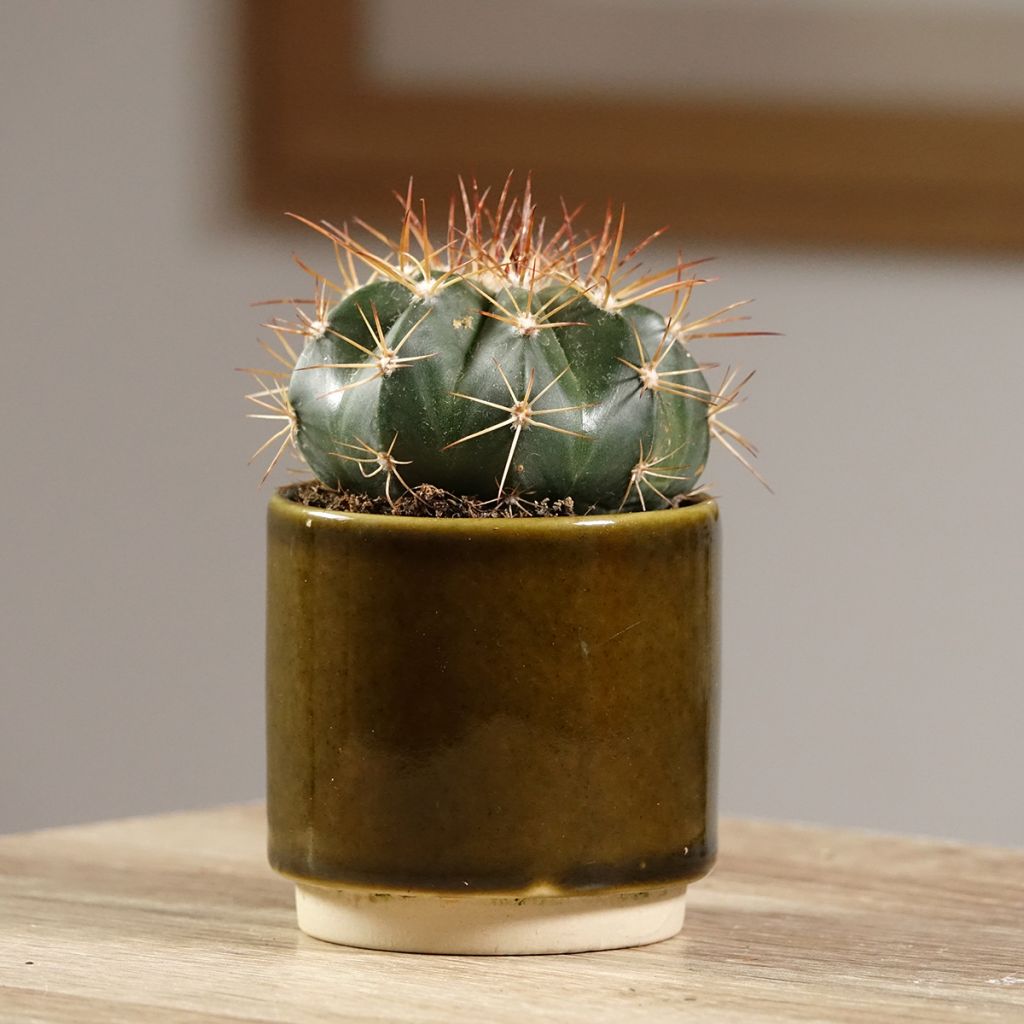
Melocactus azureus, sometimes called the blue melon cactus, is a botanical species sought after for its blue-grey colour and for its cephalium; it develops a terminal pink to reddish felt when mature, from which the flowers and fruits emerge. This decorative indoor cactus species is well-characterised botanically. It thrives in very bright rooms, heated all year round, or in a warm temperate greenhouse. It is also interesting for its unique growth habit, very different from more common cacti.
Belonging to the Cactaceae family, Melocactus azureus is a species described in 1971, endemic to the state of Bahia in Brazil. It grows in the seasonally dry tropical biotic region of the Caatinga, on well-exposed rocky limestone outcrops. Botanical synonyms are reported in the literature, notably Melocactus krainzianus.
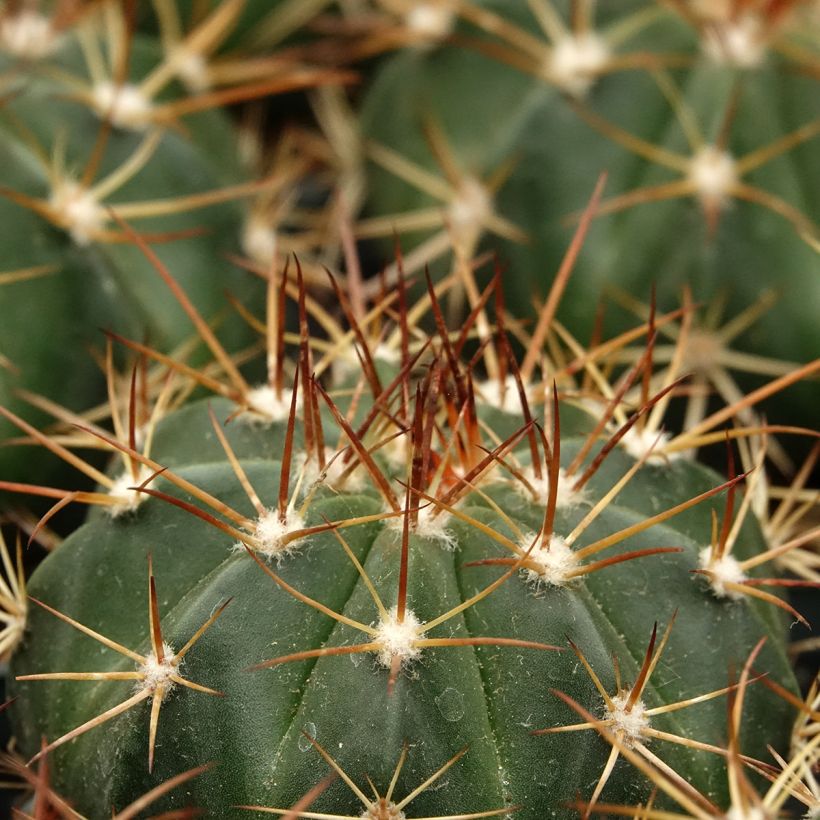
The plant forms a stem that is initially globose, becoming more or less cylindrical with age, 14 to 30 cm in height and 14 to 20 cm in diameter, sometimes more in older specimens. It has 9 to 10 deep midribs. The epidermis is frosted blue to blue-grey, or even slightly glaucous, depending on growing conditions. The robust thorns are initially reddish black, then take on a greyer hue as they age. On the mature stem, a pinkish-reddish terminal woolly and silky cephalium appears, which continues to grow while the body of the cactus changes little. The small, pink to magenta flowers measure about 1.5 to 2.3 cm in length. In the wild, they are followed by elongated, white to pale pink fruits. As with other Melocactus, the presence of the cephalium signals that the plant has entered its adult phase.
Indoors, this species requires very bright light, a few hours of direct sunlight, a constant temperature between 18 and 30 °C, and a dry or moderately humid atmosphere, around 40 to 60%. It tolerates cold poorly and proves more sensitive than many other cacti to temperature fluctuations and persistent humidity around the roots. It is therefore not the easiest cactus for beginners.
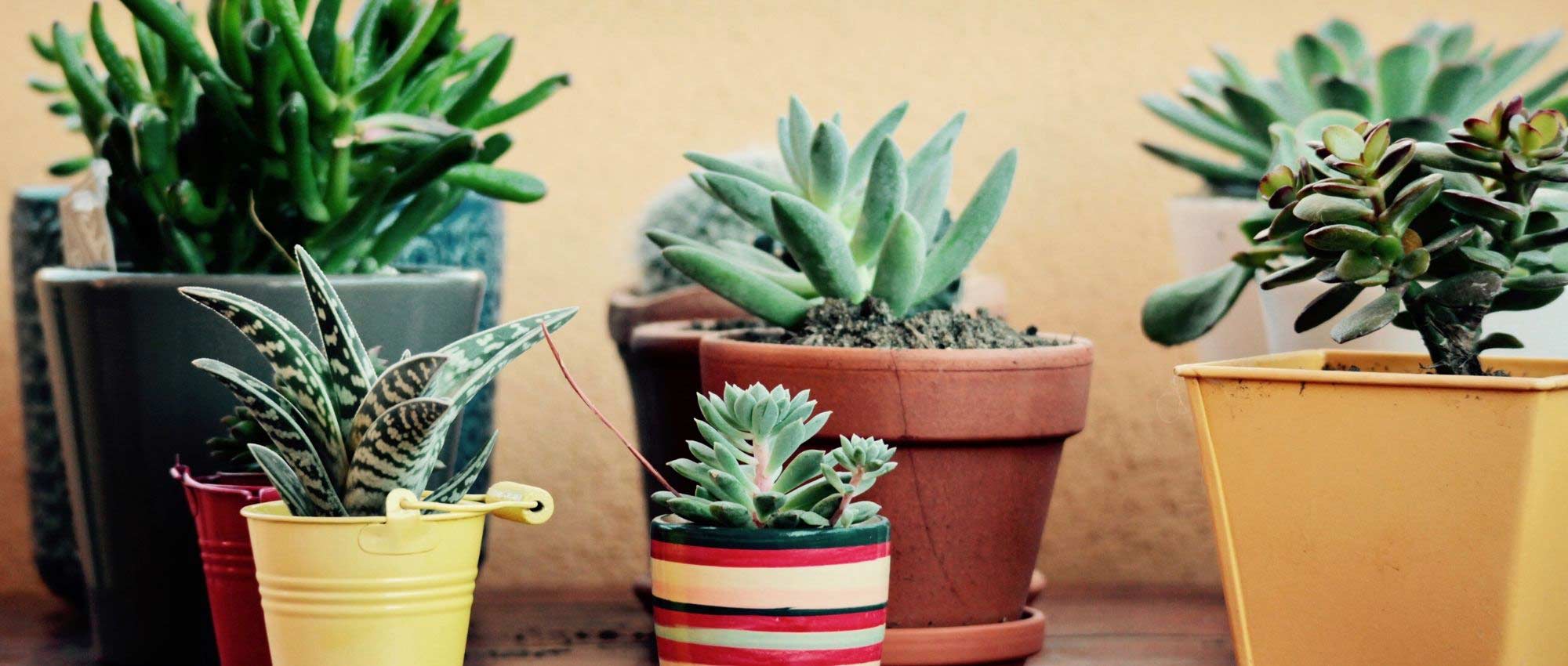
To accompany it, choose species that also enjoy strong light and a dry regime, for example, Gymnocalycium saglionis, Ferocactus glaucescens ‘Inermis’, Astrophytum myriostigma and Echinocactus grusonii.
Melocactus azureus - Blue melon cactus in pictures

Foliage
Plant habit
Flowering
Botanical data
Melocactus
azureus
Cactaceae
Melon cactus
North America
Safety measures
Location
Location
Maintenance & care
Watering tips
Potting advice, substrates and fertilisers
Houseplant care
Disease and pest advice
Maintenance & care
Planting & care advice
-
-
-

-
-
-

-

-

This item has not been reviewed yet - be the first to leave a review about it.
Recently viewed products
Haven't found what you were looking for?
Hardiness is the lowest winter temperature a plant can endure without suffering serious damage or even dying. However, hardiness is affected by location (a sheltered area, such as a patio), protection (winter cover) and soil type (hardiness is improved by well-drained soil).

The flowering period indicated on our website applies to countries and regions located in USDA zone 8 (France, the United Kingdom, Ireland, the Netherlands, etc.)
It will vary according to where you live:- In zones 9 to 10 (Italy, Spain, Greece, etc.), flowering will occur about 2 to 4 weeks earlier.
- In zones 6 to 7 (Germany, Poland, Slovenia, and lower mountainous regions), flowering will be delayed by 2 to 3 weeks.
- In zone 5 (Central Europe, Scandinavia), blooming will be delayed by 3 to 5 weeks.
In temperate climates, pruning of spring-flowering shrubs (forsythia, spireas, etc.) should be done just after flowering.
Pruning of summer-flowering shrubs (Indian Lilac, Perovskia, etc.) can be done in winter or spring.
In cold regions as well as with frost-sensitive plants, avoid pruning too early when severe frosts may still occur.
The planting period indicated on our website applies to countries and regions located in USDA zone 8 (France, United Kingdom, Ireland, Netherlands).
It will vary according to where you live:
- In Mediterranean zones (Marseille, Madrid, Milan, etc.), autumn and winter are the best planting periods.
- In continental zones (Strasbourg, Munich, Vienna, etc.), delay planting by 2 to 3 weeks in spring and bring it forward by 2 to 4 weeks in autumn.
- In mountainous regions (the Alps, Pyrenees, Carpathians, etc.), it is best to plant in late spring (May-June) or late summer (August-September).
The harvesting period indicated on our website applies to countries and regions in USDA zone 8 (France, England, Ireland, the Netherlands).
In colder areas (Scandinavia, Poland, Austria...) fruit and vegetable harvests are likely to be delayed by 3-4 weeks.
In warmer areas (Italy, Spain, Greece, etc.), harvesting will probably take place earlier, depending on weather conditions.
The sowing periods indicated on our website apply to countries and regions within USDA Zone 8 (France, UK, Ireland, Netherlands).
In colder areas (Scandinavia, Poland, Austria...), delay any outdoor sowing by 3-4 weeks, or sow under glass.
In warmer climes (Italy, Spain, Greece, etc.), bring outdoor sowing forward by a few weeks.
Shipping country and language
Your country of residence may be:
Your country of residence is:
For a better user experience on our website, you can select:
Your shipping country:
-
 Austria
-
 Belgium
-
 Bosnia & Herzegovina
-
 Bulgaria
-
 Croatia
-
 Cyprus
-
 Czechia
-
 Denmark
-
 Estonia
-
 Finland
-
 France
-
 Germany
-
 Greece
-
 Hungary
-
 Iceland
-
 Ireland
-
 Italy
Italy
-
 Latvia
-
 Liechtenstein
-
 Lithuania
-
 Luxembourg
-
 Malta
Malta
-
 Netherlands
-
 Poland
-
 Portugal
-
 Romania
-
 Serbia
-
 Slovakia
-
 Slovenia
-
 Spain
Spain
-
 Sweden
-
 Switzerland
Language:
-
French
-
 English
-
Spanish
-
Italian
-
German
-
Portuguese
-
Dutch
-
Finnish
My Account
Hello
My wish lists
My cart
Log in / Register
Existing customer?
This form is protected by reCAPTCHA - the Google Privacy Policy and Terms of Service apply.
New customer?
Create an account to track your orders, access our customer service and, if you wish, make the most of our upcoming offers.