Lomandra longifolia Miner's Gold
Lomandra longifolia Miner's Gold
Lomandra longifolia Miner's Gold
Lomandra longifolia 'KM-MG24' Miner's Gold
Spiny-headed Mat Rush
Back-to-school special offer!
Get €10 off for every €50 you spend! And get up to €40 off on a single order.
How does it work?
1. Shop your favourites
Add your favourite plants to your basket. For every €50 you spend (excluding delivery charges, store credit and the plastic-free option), you’ll receive a €10 voucher.
€50 spent = €10 voucher
€100 spent = €20 voucher
€150 spent = €30 voucher
€200 spent = €40 voucher
2. Place your order
Once your basket reaches one of the spending thresholds, place your order. You can even choose your delivery date!
3. Receive your voucher
As soon as your order has been shipped, you’ll receive an email containing your personal voucher code and its value.
4. Use it on your next order
Your voucher is valid for 90 days from the date you receive it. It can be used once only, on a new order worth at least the value of the voucher, excluding delivery charges.
Please note: Vouchers can be combined with other offers, but cannot be split or refunded.
Why not try an alternative variety in stock?
View all →
Available in 0 sizes
Available in 0 sizes
Available in 1 sizes
Available in 1 sizes
Available in 1 sizes

Available in 1 sizes
Available in 1 sizes
Available in 1 sizes
Available in 2 sizes

Available in 1 sizes
This plant carries a 12 months recovery warranty
More information
We guarantee the quality of our plants for a full growing cycle, and will replace at our expense any plant that fails to recover under normal climatic and planting conditions.
Would this plant suit my garden?
Set up your Plantfit profile →
Description
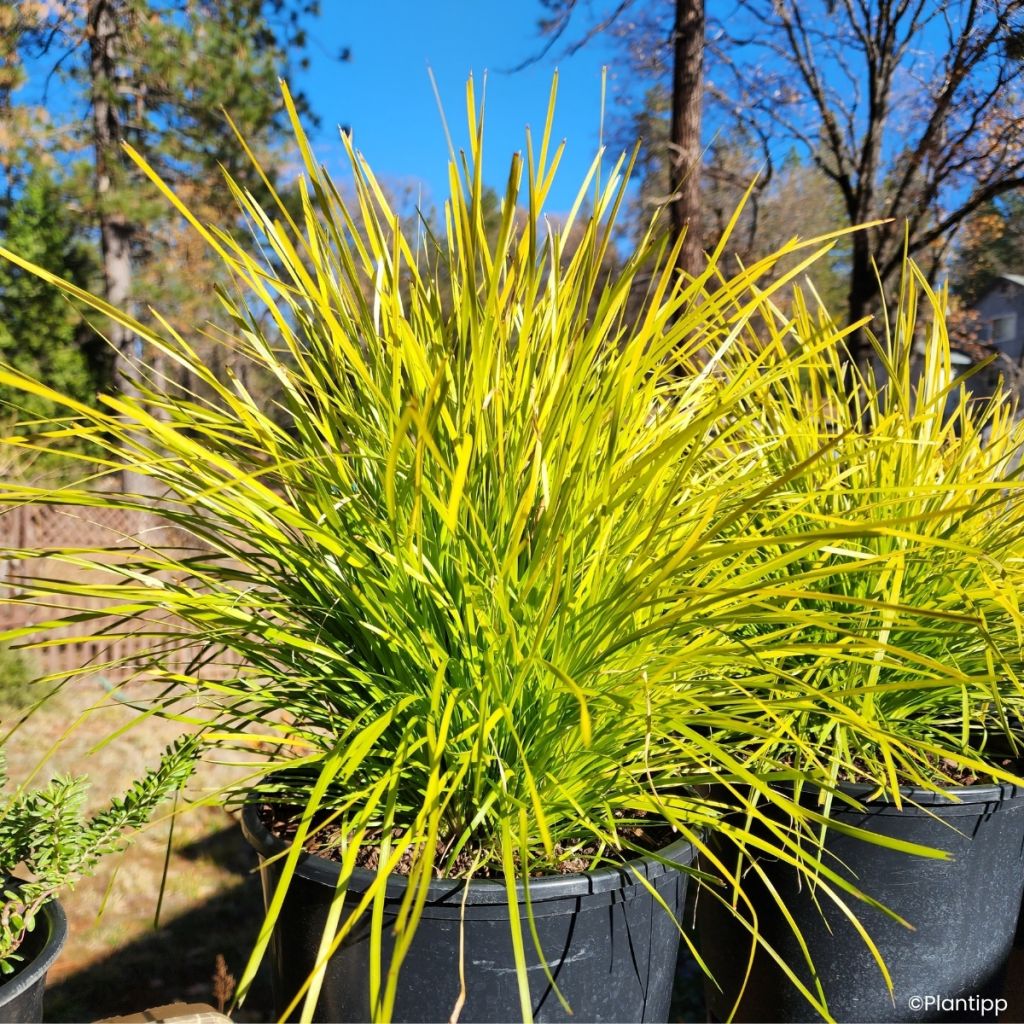
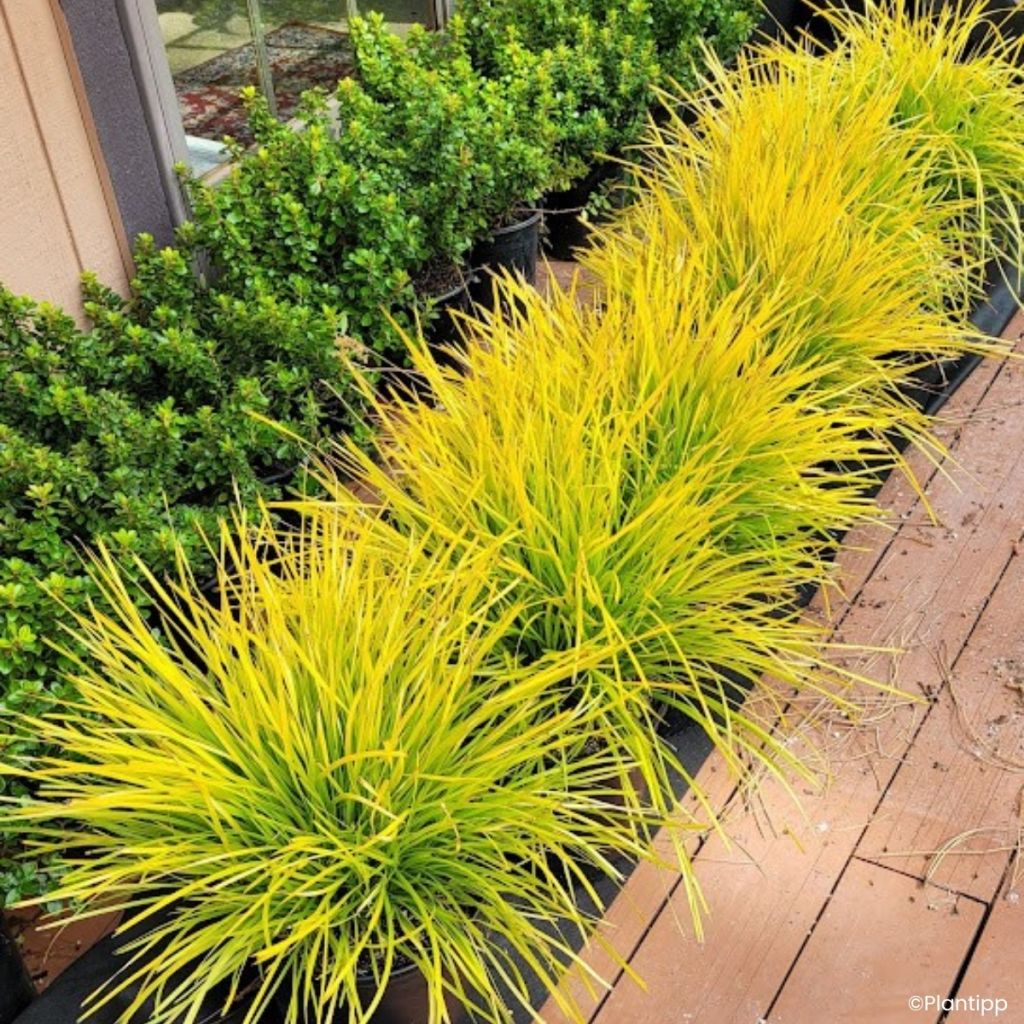
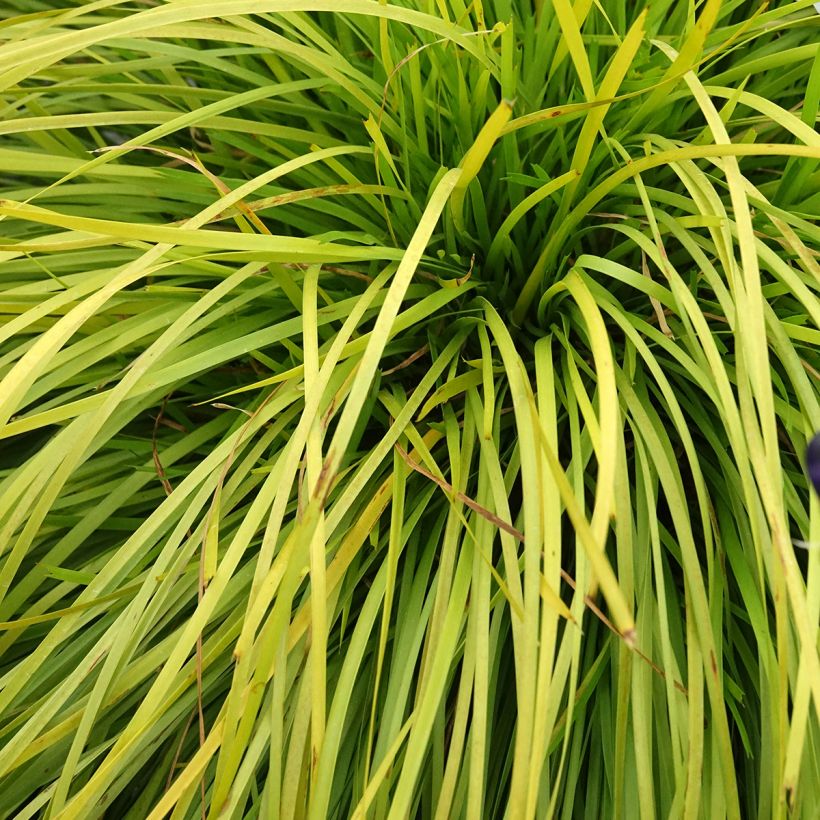
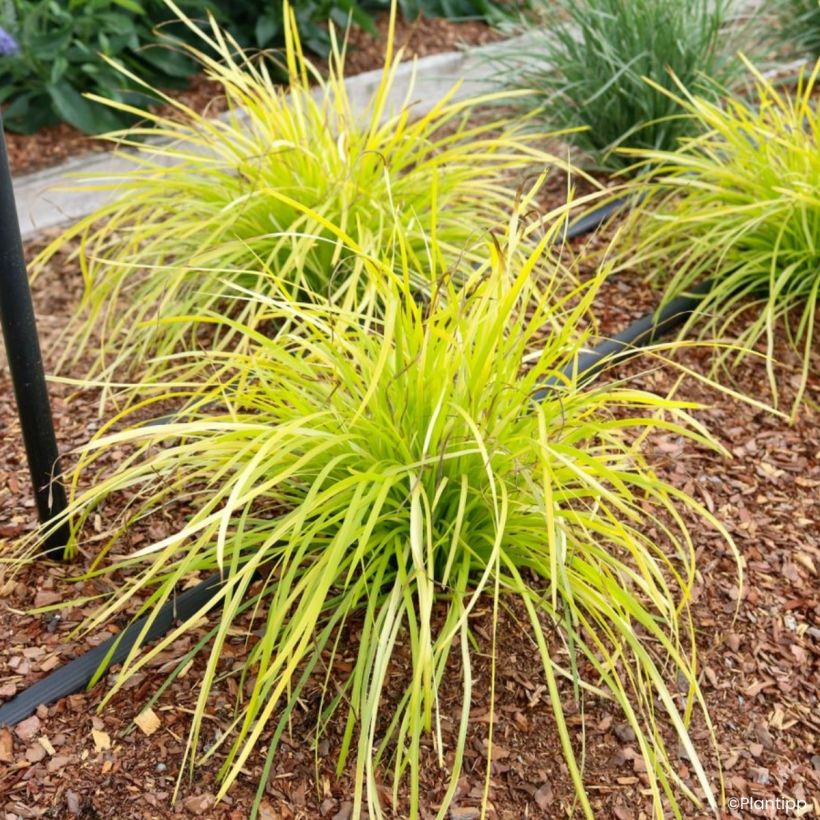
Lomandra longifolia 'Miner's Gold' is an evergreen perennial with golden foliage that brings light to a dry garden, a contemporary border, or a coastal garden. Its fine, flexible, trailing leaves form an elegant clump of warm yellow, decorative all year round. Undemanding and drought-resistant once established, this Lomandra can be grown both in the ground and in a pot. Its architectural form will enliven a terrace or a garden without watering.
The type species, Lomandra longifolia, belongs to the Asparagaceae family. It is referred to as basket grass or spiny-headed mat-rush, describing these grass-like perennials. The main botanical synonyms for the species are Xerotes longifolia, Lomandra longifolia subsp. exilis, Xerotes arenaria, and Xerotes longifolia var. macrocarpa. This plant is native to eastern and southeastern Australia, where it is found in coastal dunes, rocky slopes, open forest edges, and stream banks. It is a rhizomatous perennial, evergreen in winter.
'Miner's Gold' is a golden selection obtained by Keith and Jennifer Miner and registered under the code 'KM-MG24' in the Tuffy collection. It is distinguished by a more compact habit, its very regular clump-forming growth, and distinctly lighter foliage; the seeds are most often sterile, which limits self-seeding and makes it non-invasive. In the ground, the plant forms a rounded mass 50 to 60 cm in height and 75 cm to 1 m in width, with slow to moderate growth. The leaves are long, leathery straps 40 to 60 cm long, slightly prickly at their tip, chartreuse green to golden yellow in full sun, and a softer golden green in partial shade. Flowering occurs from May to July, a little earlier or later depending on the region. Short, upright spikes bear small creamy-yellow, lightly scented flowers. The plant is hardy down to -10°C in brief spells in very well-drained soil.
In 2025, 'Miner's Gold' was shortlisted for the RHS Chelsea Plant of the Year due to its originality and ornamental value.
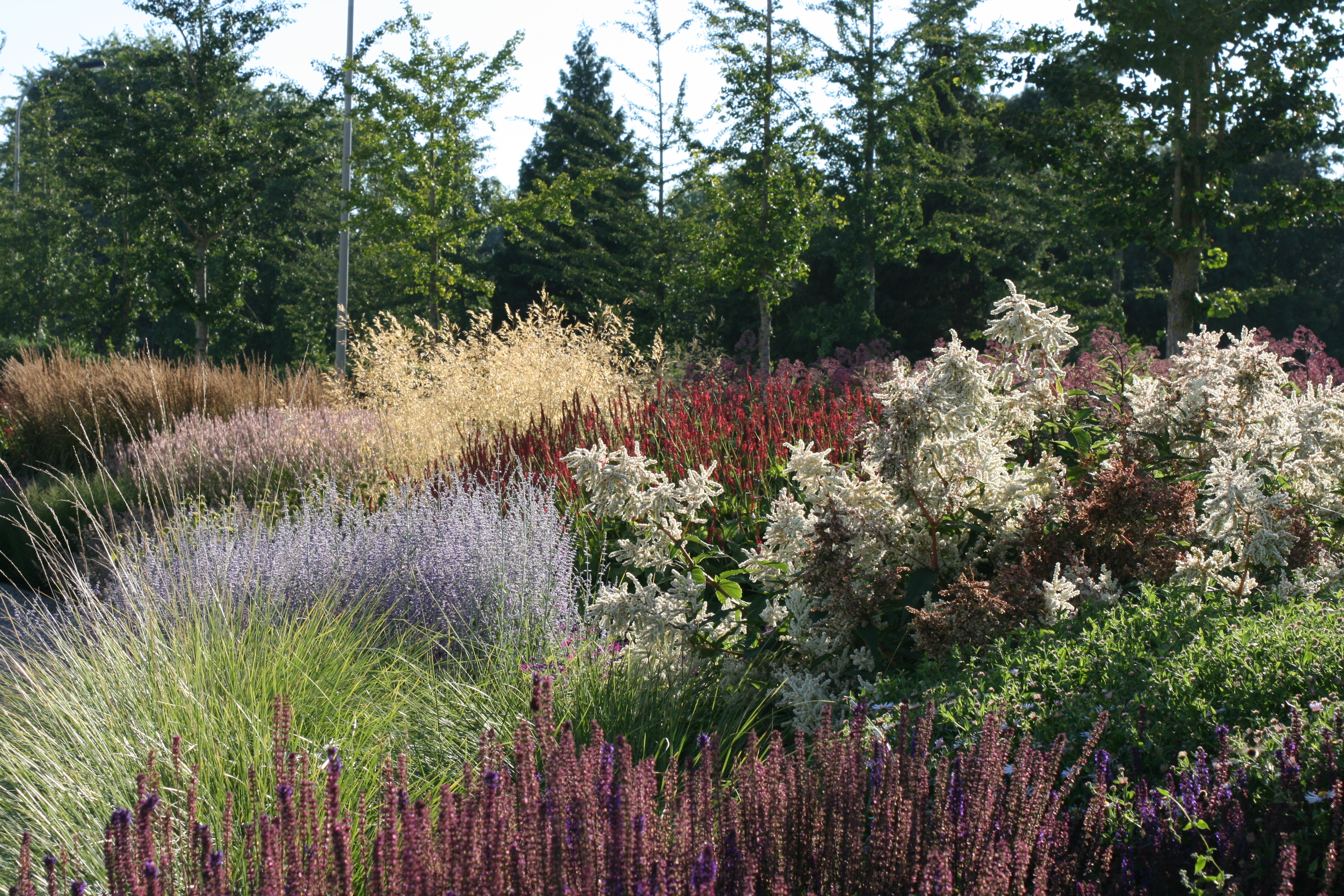
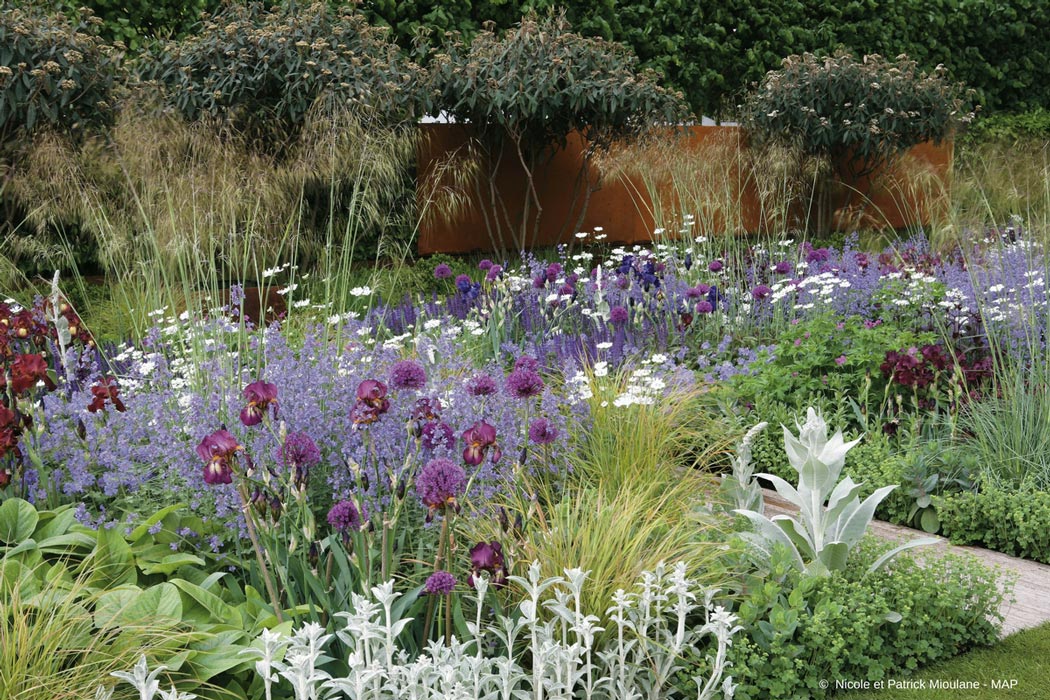
Lomandra longifolia 'Miner's Gold' adds texture and light to borders. Plant it in small, repeated clumps along a path, on a dry slope, or near a stone staircase. It is well-suited to coastal gardens or dry gardens. In cold climates, you can grow it in pots on a terrace or near an entrance, so it can be brought under cover in winter. You can pair its golden foliage with that of Lomandra White Sands®, the pink clouds of Muhlenbergia capillaris 'Ruby', and evergreen shrubs like Ozothamnus rosmarinifolius 'Silver Jubilee' or Pittosporum tenuifolium 'Tom Thumb'.
Report an error about the product description
Lomandra longifolia Miner's Gold in pictures
Flowering
Foliage
Plant habit
Botanical data
Lomandra
longifolia
'KM-MG24' Miner's Gold
Asparagaceae
Spiny-headed Mat Rush
Lomandra longifolia 'KM-MG24'
Cultivar or hybrid
Planting and care
Lomandra Miner's Gold is a plant with fairly low hardiness and can only really be grown in open ground in regions where temperatures do not drop below -9/-10°C. Elsewhere, container cultivation is more advisable, which will allow for controlled watering and overwintering protected from severe frosts in a bright location.
Plant your Lomandra in a trough or large pot, the bottom of which should be lined with gravel, pottery shards, or clay pebbles. The growing medium should be fertile and well-draining (1/3 leaf mould, 1/3 garden soil, and 1/3 sand, enriched with a handful of ground horn).
In open ground: position the plant in full sun if you live in a less sunny region, or in partial shade in very hot regions. Plant it in well-drained, light soil, even sandy or stony, but preferably not too lime-rich (acidic, neutral, or very slightly calcareous). Water regularly to help the plant establish.
Once well-established, Lomandra longifolia is content with rainwater, even in hot, dry summer regions.
In colder regions, a thick mulch will help protect the roots from frost in winter. Under these conditions, the foliage will be damaged once the temperature falls below -7°C, but the plant can regrow from the base in spring in case of a severe frost (down to -10°C).
Planting period
Intended location
Care
Planting & care advice
-
-
-
-
-
-
-
-
This item has not been reviewed yet - be the first to leave a review about it.
Recently viewed products
Haven't found what you were looking for?
Hardiness is the lowest winter temperature a plant can endure without suffering serious damage or even dying. However, hardiness is affected by location (a sheltered area, such as a patio), protection (winter cover) and soil type (hardiness is improved by well-drained soil).

The flowering period indicated on our website applies to countries and regions located in USDA zone 8 (France, the United Kingdom, Ireland, the Netherlands, etc.)
It will vary according to where you live:- In zones 9 to 10 (Italy, Spain, Greece, etc.), flowering will occur about 2 to 4 weeks earlier.
- In zones 6 to 7 (Germany, Poland, Slovenia, and lower mountainous regions), flowering will be delayed by 2 to 3 weeks.
- In zone 5 (Central Europe, Scandinavia), blooming will be delayed by 3 to 5 weeks.
In temperate climates, pruning of spring-flowering shrubs (forsythia, spireas, etc.) should be done just after flowering.
Pruning of summer-flowering shrubs (Indian Lilac, Perovskia, etc.) can be done in winter or spring.
In cold regions as well as with frost-sensitive plants, avoid pruning too early when severe frosts may still occur.
The planting period indicated on our website applies to countries and regions located in USDA zone 8 (France, United Kingdom, Ireland, Netherlands).
It will vary according to where you live:
- In Mediterranean zones (Marseille, Madrid, Milan, etc.), autumn and winter are the best planting periods.
- In continental zones (Strasbourg, Munich, Vienna, etc.), delay planting by 2 to 3 weeks in spring and bring it forward by 2 to 4 weeks in autumn.
- In mountainous regions (the Alps, Pyrenees, Carpathians, etc.), it is best to plant in late spring (May-June) or late summer (August-September).
The harvesting period indicated on our website applies to countries and regions in USDA zone 8 (France, England, Ireland, the Netherlands).
In colder areas (Scandinavia, Poland, Austria...) fruit and vegetable harvests are likely to be delayed by 3-4 weeks.
In warmer areas (Italy, Spain, Greece, etc.), harvesting will probably take place earlier, depending on weather conditions.
The sowing periods indicated on our website apply to countries and regions within USDA Zone 8 (France, UK, Ireland, Netherlands).
In colder areas (Scandinavia, Poland, Austria...), delay any outdoor sowing by 3-4 weeks, or sow under glass.
In warmer climes (Italy, Spain, Greece, etc.), bring outdoor sowing forward by a few weeks.
Shipping country and language
Your country of residence may be:
Your country of residence is:
For a better user experience on our website, you can select:
Your shipping country:
-
 Austria
-
 Belgium
-
 Bosnia & Herzegovina
-
 Bulgaria
-
 Croatia
-
 Cyprus
-
 Czechia
-
 Denmark
-
 Estonia
-
 Finland
-
 France
-
 Germany
-
 Greece
-
 Hungary
-
 Iceland
-
 Ireland
-
 Italy
Italy
-
 Latvia
-
 Liechtenstein
-
 Lithuania
-
 Luxembourg
-
 Malta
Malta
-
 Netherlands
-
 Poland
-
 Portugal
-
 Romania
-
 Serbia
-
 Slovakia
-
 Slovenia
-
 Spain
Spain
-
 Sweden
-
 Switzerland
Language:
-
French
-
 English
-
Spanish
-
Italian
-
German
-
Portuguese
-
Dutch
-
Finnish
My Account
Hello
My wish lists
My cart
Log in / Register
Existing customer?
This form is protected by reCAPTCHA - the Google Privacy Policy and Terms of Service apply.
New customer?
Create an account to track your orders, access our customer service and, if you wish, make the most of our upcoming offers.