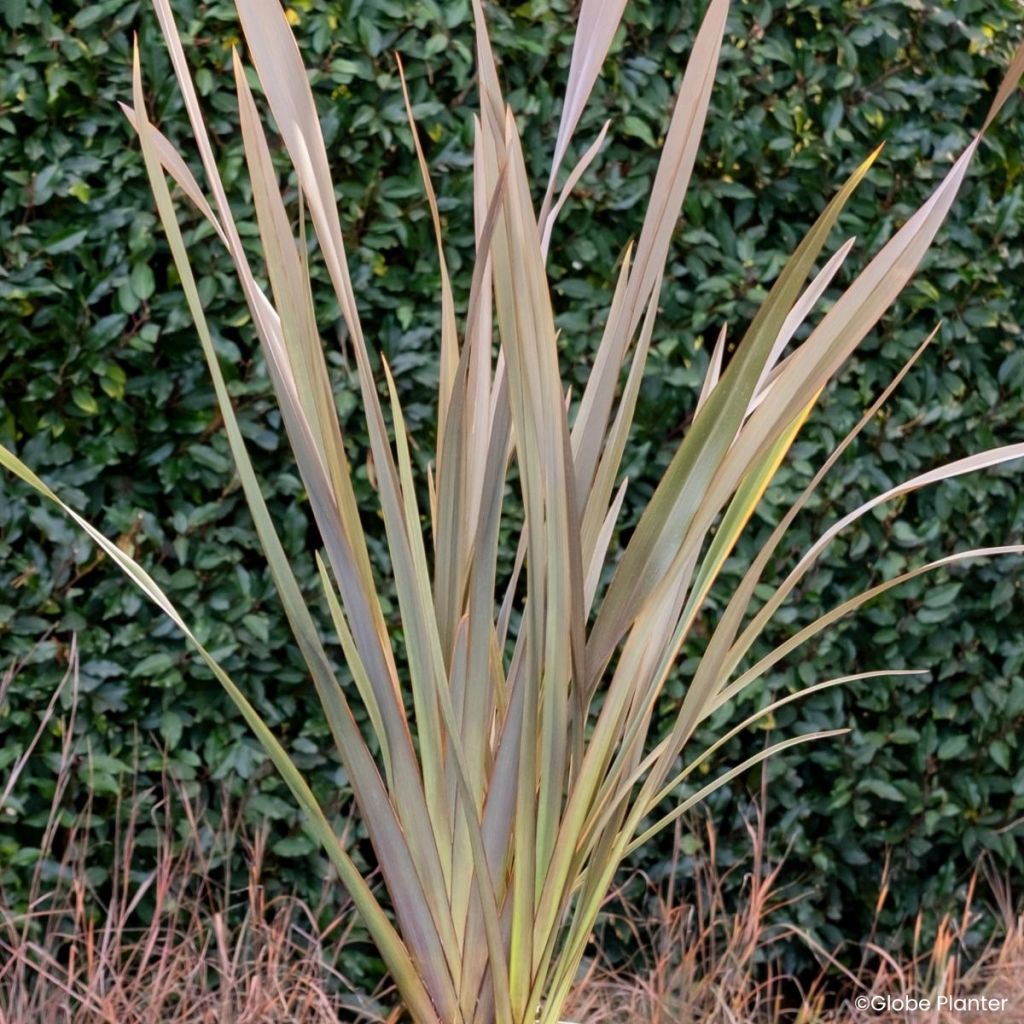
Phormium Pink Blush - New Zealand flax
Phormium Pink Blush - New Zealand flax
Phormium Pink Blush
New Zealand Flax, Flax Lily
Back-to-school special offer!
Get €10 off for every €50 you spend! And get up to €40 off on a single order.
How does it work?
1. Shop your favourites
Add your favourite plants to your basket. For every €50 you spend (excluding delivery charges, store credit and the plastic-free option), you’ll receive a €10 voucher.
€50 spent = €10 voucher
€100 spent = €20 voucher
€150 spent = €30 voucher
€200 spent = €40 voucher
2. Place your order
Once your basket reaches one of the spending thresholds, place your order. You can even choose your delivery date!
3. Receive your voucher
As soon as your order has been shipped, you’ll receive an email containing your personal voucher code and its value.
4. Use it on your next order
Your voucher is valid for 90 days from the date you receive it. It can be used once only, on a new order worth at least the value of the voucher, excluding delivery charges.
Please note: Vouchers can be combined with other offers, but cannot be split or refunded.
Why not try an alternative variety in stock?
View all →
Available in 1 sizes
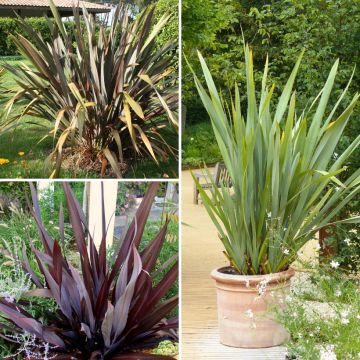
Available in 0 sizes
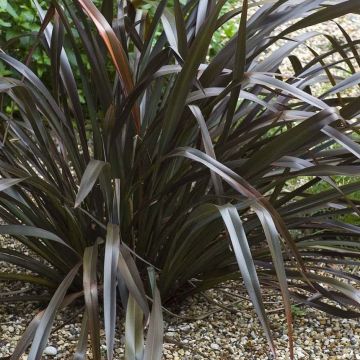
Available in 2 sizes
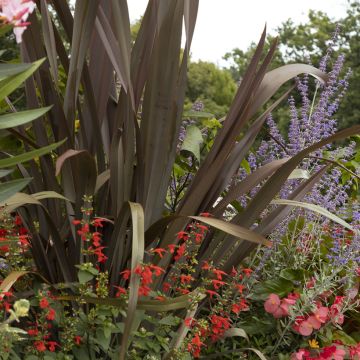
Available in 2 sizes

Available in 1 sizes
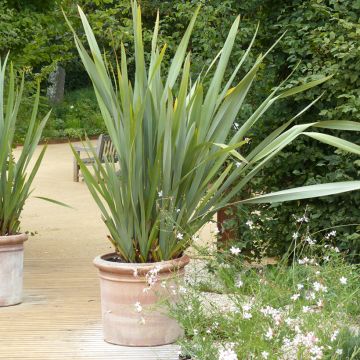
Available in 3 sizes

Available in 2 sizes
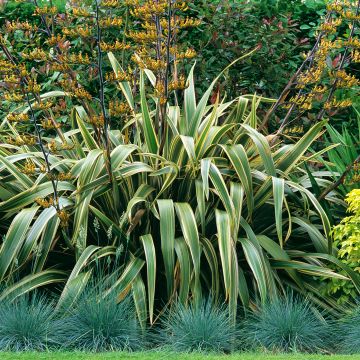
Available in 2 sizes
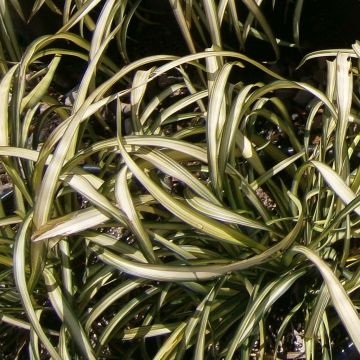
Available in 1 sizes

Available in 2 sizes
This plant carries a 12 months recovery warranty
More information
We guarantee the quality of our plants for a full growing cycle, and will replace at our expense any plant that fails to recover under normal climatic and planting conditions.
Would this plant suit my garden?
Set up your Plantfit profile →
Description
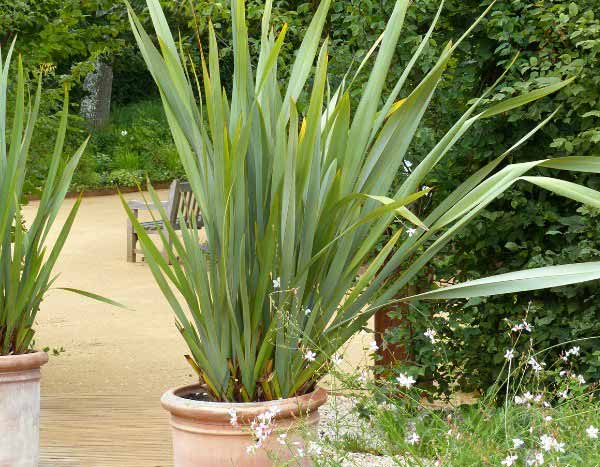
Phormium 'Pink Blush' is a hybrid variety of New Zealand Flax with soft colours and an extremely architectural silhouette. Its long, narrow leaves stand vertically, forming a very aesthetic, flared clump. The olive-grey green foliage, tinged with bronze, takes on original pinkish hues. Perfect for adding an exotic touch to the garden, this large evergreen perennial thrives in mild, humid Atlantic climates. In the south, it will need frequent watering, and elsewhere, it should be grown in a container to be overwintered away from severe cold.
Phormium is a genus of flowering plants that has been classified in different botanical families before joining the Asphodelaceae family, known for also hosting other ornamental genera, such as Aloe in mild climates, or the much hardier Kniphofias with equally spectacular flowers. The Phormium genus includes only two species native to New Zealand, of which the most imposing specimens can produce leaves up to 3 m long, and many hybrids and horticultural varieties, often with vividly coloured foliage.
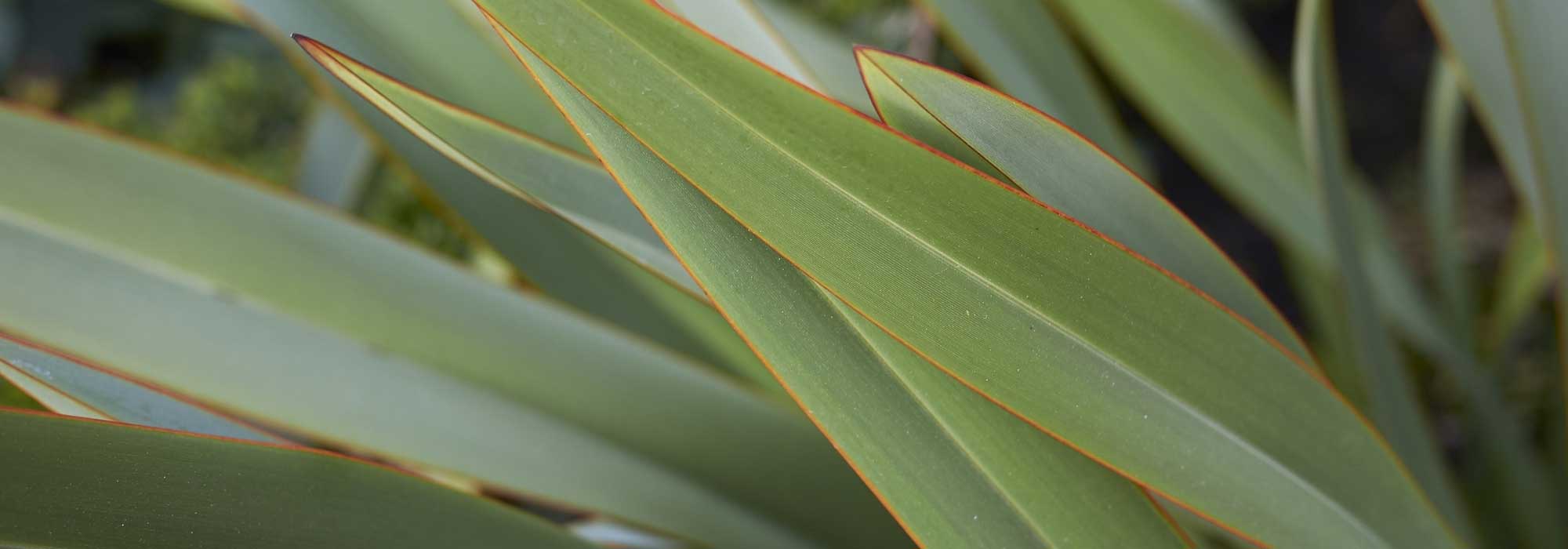
'Pink Blush' is a cultivar that is subtly coloured. This beautiful perennial forms a medium-sized clump, reaching 1.20 m in height and as much in width at maturity. The very narrow leaves are only a few centimetres wide, forming large, flexible straps with a pointed, but not prickly, tip. Overlapping at the base, somewhat like irises, the leaves form a slightly open fan, giving an erect clump with a flared top. This architectural signature is very recognisable and allows it to add character to a varied border. In Phormium 'Pink Blush', the leaf blades have a base colour of olive-grey green, tinged with bronze and a slight pinkish veil, hence its cultivar name. More discreet than some vividly coloured varieties, like 'Jester', or variegated ones, this cultivar is also easier to combine in a border. In summer (July-August), this perennial produces large spikes of equally refined small flowers, in a cream-white colour that matches the foliage well. The flowering attracts many pollinating insects, adding a utilitarian role to the aesthetics in the garden, promoting biodiversity. The flowers later develop into trailing, spiralled fruits.
Phormium 'Pink Blush' will appeal to lovers of distinction, more sensitive to architectural form than to bright colours. It will be more at home on the Atlantic coast than on the Mediterranean coast, where dry air will harm it, while the intense blue sky will visually overwhelm it. It will give the best results in a milder climate, combined with other plants sharing the same water needs. A plant of Hydrangea macrophylla 'Endless Summer The original', a Hydrangea with large blue flower heads, will be a good companion; its broad green leaves will create a soft contrast with the straps of the Phormium. A few clumps of Agapanthus with very sculptural flowering will also accompany your New Zealand Flax very well, as will some Heucheras in the foreground.

Flowering
Foliage
Plant habit
Botanical data
Phormium
Pink Blush
Asphodelaceae
New Zealand Flax, Flax Lily
Cultivar or hybrid
Planting and care
Phormium 'Pink Blush' is a plant with limited hardiness, best grown in the ground only in regions where frosts do not drop below -8°C. Elsewhere, container cultivation is more advisable, allowing for overwintering in a frost-free, cool, and bright room.
Place your Phormium in a tub or large pot with the bottom lined with gravel, pottery shards, or clay pebbles. The growing medium should be fertile and well-draining (one-third leaf mould, one-third compost, and one-third ordinary garden soil, enriched with a handful of crushed horn).
Position the plant in full sun. Water generously during the growing period so that the soil never dries out completely. Feed the plant with a "green plant" fertiliser diluted in the watering water, once a month. In winter, reduce water and fertiliser inputs, and allow the soil to dry out superficially between waterings.
In regions with a mild climate and light frosts, plant the Phormium in the ground in full sun in Atlantic areas, or possibly in light shade further south, in very well-drained but moist and fertile soil.
In summer, ensure the plant does not lack water. In winter, it will manage with rainwater alone.
If a severe frost is forecast, apply a thick mulch at the base of the plant and cover it with a winter fleece.
In colder regions, a thick mulch will help protect the roots from frost in winter.
Planting period
Intended location
Care
Planting & care advice
-
-

-
-

-
-

-

-
This item has not been reviewed yet - be the first to leave a review about it.
Recently viewed products
Haven't found what you were looking for?
Hardiness is the lowest winter temperature a plant can endure without suffering serious damage or even dying. However, hardiness is affected by location (a sheltered area, such as a patio), protection (winter cover) and soil type (hardiness is improved by well-drained soil).

The flowering period indicated on our website applies to countries and regions located in USDA zone 8 (France, the United Kingdom, Ireland, the Netherlands, etc.)
It will vary according to where you live:- In zones 9 to 10 (Italy, Spain, Greece, etc.), flowering will occur about 2 to 4 weeks earlier.
- In zones 6 to 7 (Germany, Poland, Slovenia, and lower mountainous regions), flowering will be delayed by 2 to 3 weeks.
- In zone 5 (Central Europe, Scandinavia), blooming will be delayed by 3 to 5 weeks.
In temperate climates, pruning of spring-flowering shrubs (forsythia, spireas, etc.) should be done just after flowering.
Pruning of summer-flowering shrubs (Indian Lilac, Perovskia, etc.) can be done in winter or spring.
In cold regions as well as with frost-sensitive plants, avoid pruning too early when severe frosts may still occur.
The planting period indicated on our website applies to countries and regions located in USDA zone 8 (France, United Kingdom, Ireland, Netherlands).
It will vary according to where you live:
- In Mediterranean zones (Marseille, Madrid, Milan, etc.), autumn and winter are the best planting periods.
- In continental zones (Strasbourg, Munich, Vienna, etc.), delay planting by 2 to 3 weeks in spring and bring it forward by 2 to 4 weeks in autumn.
- In mountainous regions (the Alps, Pyrenees, Carpathians, etc.), it is best to plant in late spring (May-June) or late summer (August-September).
The harvesting period indicated on our website applies to countries and regions in USDA zone 8 (France, England, Ireland, the Netherlands).
In colder areas (Scandinavia, Poland, Austria...) fruit and vegetable harvests are likely to be delayed by 3-4 weeks.
In warmer areas (Italy, Spain, Greece, etc.), harvesting will probably take place earlier, depending on weather conditions.
The sowing periods indicated on our website apply to countries and regions within USDA Zone 8 (France, UK, Ireland, Netherlands).
In colder areas (Scandinavia, Poland, Austria...), delay any outdoor sowing by 3-4 weeks, or sow under glass.
In warmer climes (Italy, Spain, Greece, etc.), bring outdoor sowing forward by a few weeks.
Shipping country and language
Your country of residence may be:
Your country of residence is:
For a better user experience on our website, you can select:
Your shipping country:
-
 Austria
-
 Belgium
-
 Bosnia & Herzegovina
-
 Bulgaria
-
 Croatia
-
 Cyprus
-
 Czechia
-
 Denmark
-
 Estonia
-
 Finland
-
 France
-
 Germany
-
 Greece
-
 Hungary
-
 Iceland
-
 Ireland
-
 Italy
Italy
-
 Latvia
-
 Liechtenstein
-
 Lithuania
-
 Luxembourg
-
 Malta
Malta
-
 Netherlands
-
 Poland
-
 Portugal
-
 Romania
-
 Serbia
-
 Slovakia
-
 Slovenia
-
 Spain
Spain
-
 Sweden
-
 Switzerland
Language:
-
French
-
 English
-
Spanish
-
Italian
-
German
-
Portuguese
-
Dutch
-
Finnish
My Account
Hello
My wish lists
My cart
Log in / Register
Existing customer?
This form is protected by reCAPTCHA - the Google Privacy Policy and Terms of Service apply.
New customer?
Create an account to track your orders, access our customer service and, if you wish, make the most of our upcoming offers.