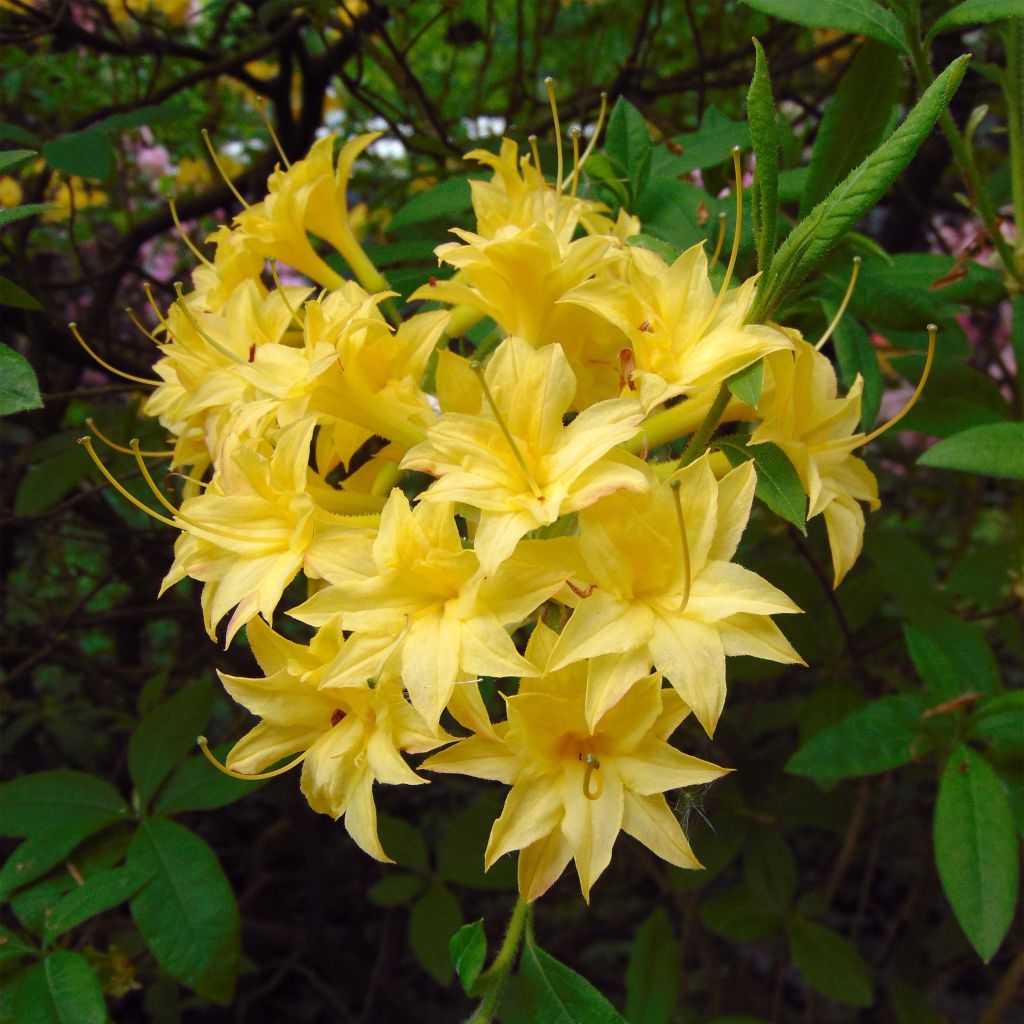
Azalea luteum Narcissiflora
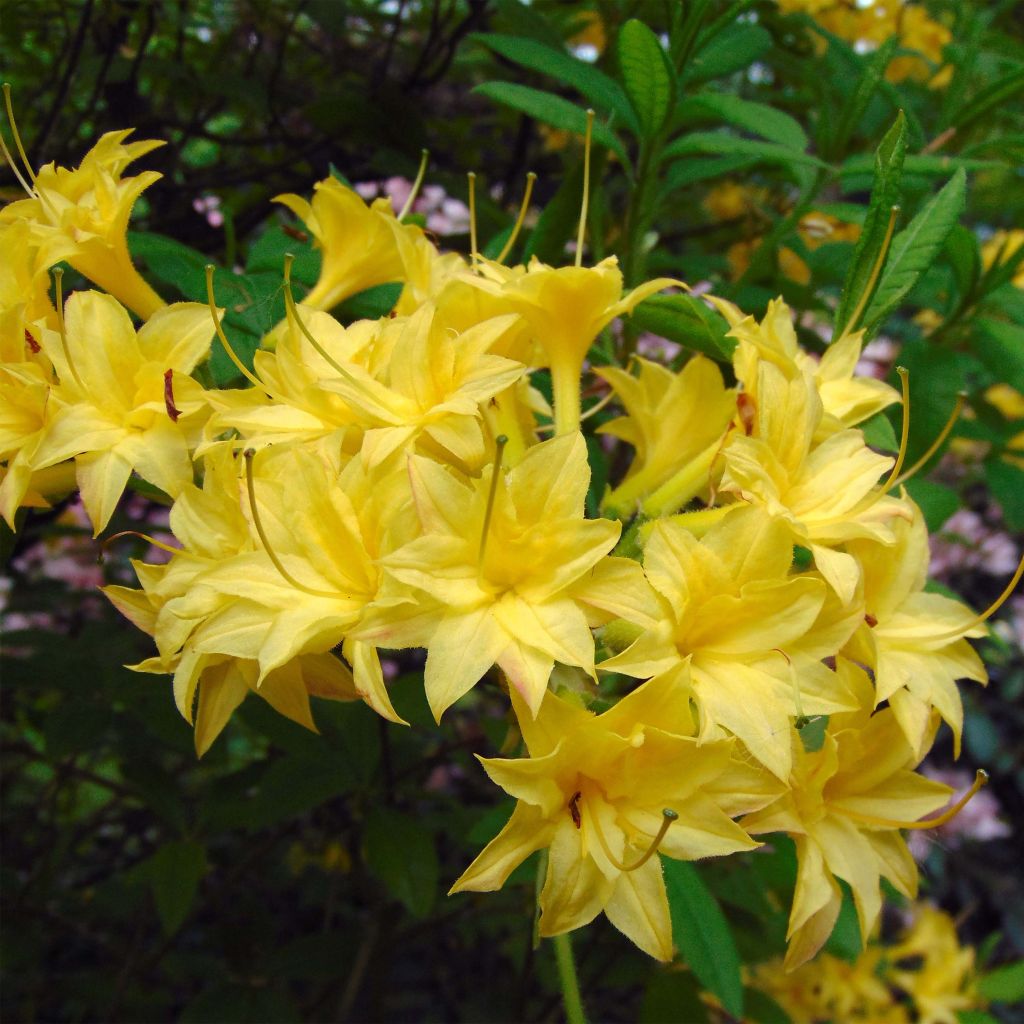
Azalea luteum Narcissiflora
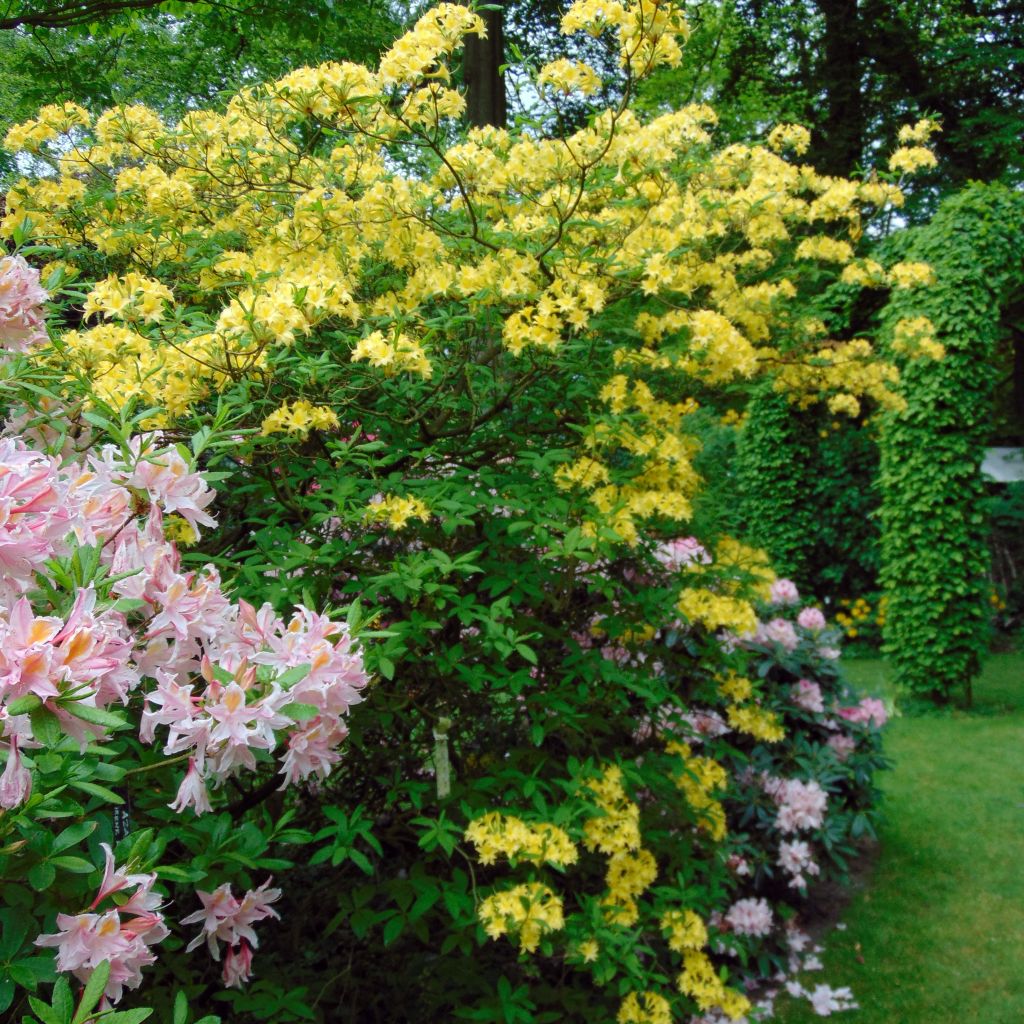
Azalea luteum Narcissiflora
Azalea luteum Narcissiflora
Rhododendron (Azalea) x luteum Narcissiflora
Yellow Azalea, Honeysuckle Azalea
Young plant received in very good condition. I immediately put it in a pot with heather soil and my soil. It seems to have settled well.
Jean-Michel, 23/03/2021
Back-to-school special offer!
Get €10 off for every €50 you spend! And get up to €40 off on a single order.
How does it work?
1. Shop your favourites
Add your favourite plants to your basket. For every €50 you spend (excluding delivery charges, store credit and the plastic-free option), you’ll receive a €10 voucher.
€50 spent = €10 voucher
€100 spent = €20 voucher
€150 spent = €30 voucher
€200 spent = €40 voucher
2. Place your order
Once your basket reaches one of the spending thresholds, place your order. You can even choose your delivery date!
3. Receive your voucher
As soon as your order has been shipped, you’ll receive an email containing your personal voucher code and its value.
4. Use it on your next order
Your voucher is valid for 90 days from the date you receive it. It can be used once only, on a new order worth at least the value of the voucher, excluding delivery charges.
Please note: Vouchers can be combined with other offers, but cannot be split or refunded.
Why not try an alternative variety in stock?
View all →
Available in 1 sizes
Available in 1 sizes
Available in 1 sizes
Available in 1 sizes
Available in 1 sizes
Available in 1 sizes
Available in 1 sizes
Available in 3 sizes
Available in 1 sizes
Available in 1 sizes
This plant carries a 24 months recovery warranty
More information
We guarantee the quality of our plants for a full growing cycle, and will replace at our expense any plant that fails to recover under normal climatic and planting conditions.
Would this plant suit my garden?
Set up your Plantfit profile →
Description
Rhododendron Narcissiflora is perhaps the best deciduous, yellow-flowered Azalea. This hardy, vigorous shrub blooms in spring with a profusion of fragrant, semi-double flowers, similar in shape and fragrance to some botanical narcissus flowers. This very hardy plant is also distinguished by its autumn foliage, which is highly ornamental at the end of the season. Unfortunately too little known and too little used, deciduous Azaleas are infinitely graceful plants that thrive in lime-free soil, and have many other qualities: they are at once fragrant, colourful, and elegant, and they are also less demanding in terms of soil and climate than their evergreen Japanese cousins.
Azaleas are actually Rhododendrons, but with flowers that have 5 stamens instead of 10. They are plants from the Ericaceous family, just like heathers, preferring mainly lime-free, acidic soils, and humid climates. The Narcissiflora Azalea is an old horticultural hybrid dating back to 1871, derived from Rhododendron luteum, a hardy and extremely robust Eurasian botanical species also known as Pontic Azalea. It is classified in the horticultural group of Ghent hybrid Azaleas.
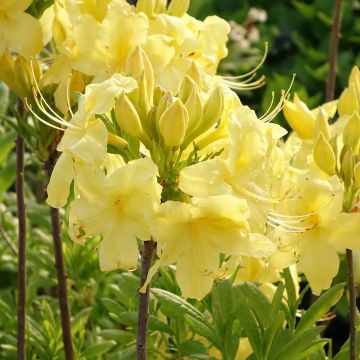
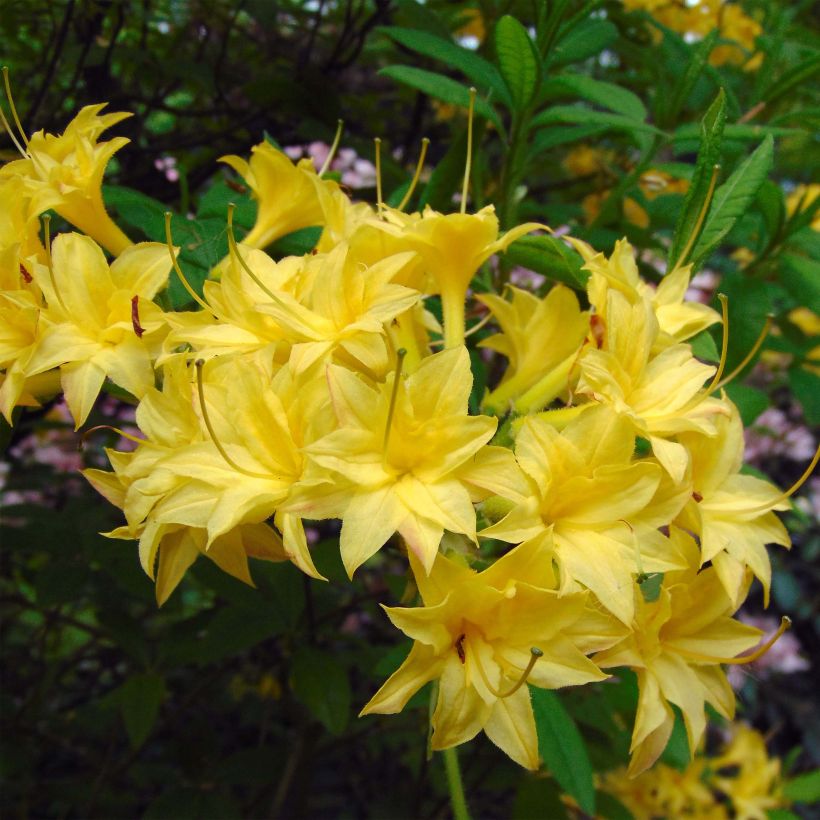
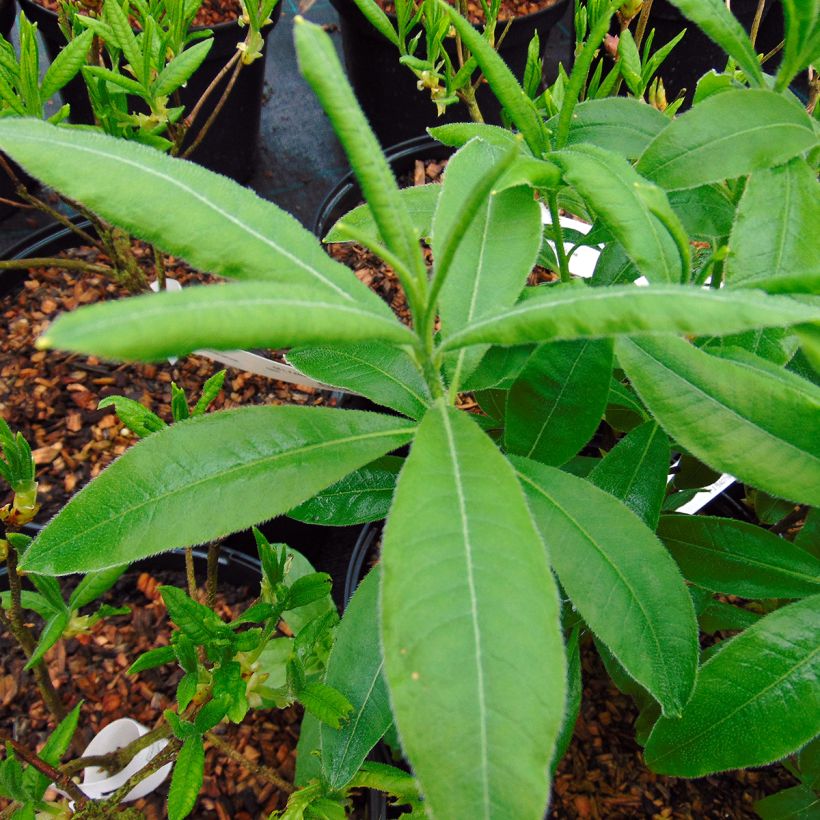
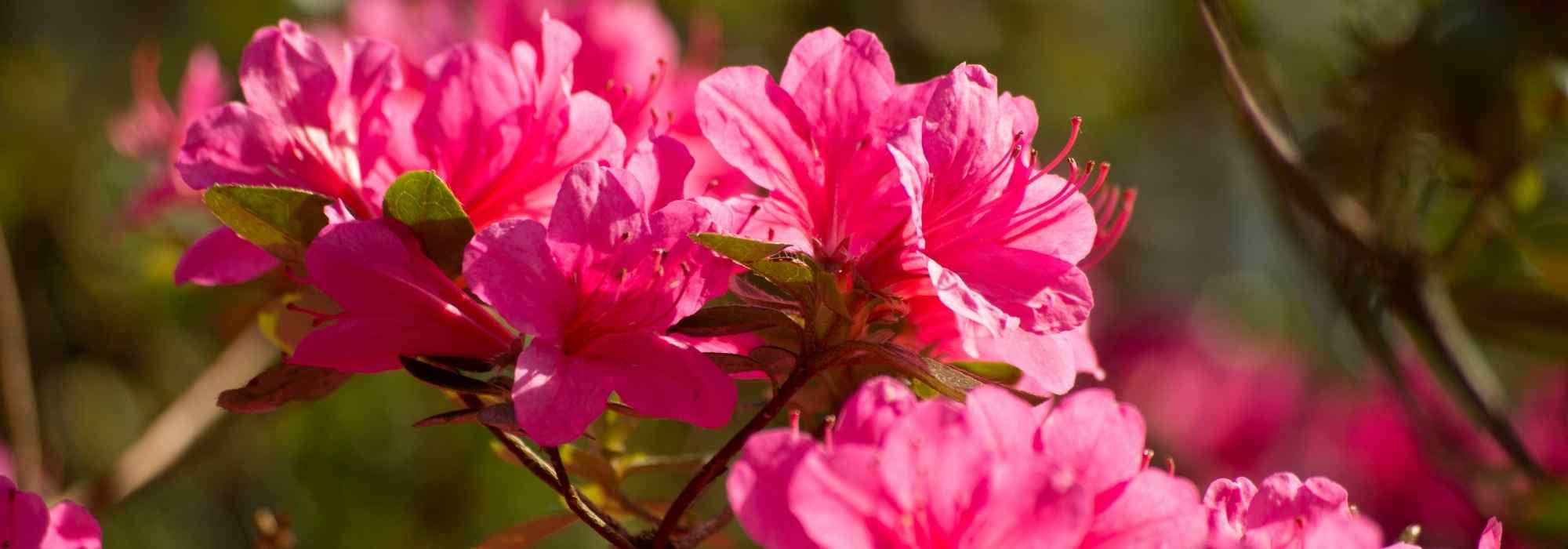
'Narcissiflora' is a rather slow-growing shrub with a bushy, branching habit that is rather spreading, both slender and very dense. By the age of 10, this azalea will be about 1.40 m (4 ft 7 in) in height and 1.20 m (3 ft 11 in) in spread. It can eventually reach up to 2 m (6 ft 7 in) by 1.75 m (5 ft 8 in) under ideal growing conditions. Its extremely fragrant flowers bloom over a long period from early April to late May, depending on the climate. The small star-shaped flowers, 4 cm (1.6 in) in diameter, seem almost double: they are composed of a corolla of soft yellow petals, surrounded by a calyx of the same yellow, and are grouped in terminal clusters. They are adorned with 5 long arched yellow stamens that contribute to the beauty of the flowers. The deciduous foliage consists of simple, oval-lanceolate leaves with smooth edges, alternately arranged on the branches. They vary from 5 to 10 cm (2 to 3.9 inches) in length, and their dark green summer colour turns to yellow-orange in October.
Chinese azaleas are quite hardy and tolerate sunny positions quite well, as well as heat, and occasionally dry soil depending on the hybrids. However, they will be at their best in cool climates, with distinct winters, planted in humus-rich, fertile, lime-free soil. They are beautiful shrubs for borders, with a very attractive, natural habit, blooming twice a year. They harmonize well with Japanese maples, which also change their appearance with the seasons, as well as Japanese camellias or their graceful, often fragrant, autumn flowering cousins, the C.sasanqua hybrids. 'Narcissiflora' will be magnificent when combined with other Chinese azaleas in shades of white, orange, peach or red. Plant it near the house to enjoy its fragrance. The undeniable beauty of deciduous Azaleas merits the changes needed to create the conditions they love. They can also be grown in a large, carefully chosen pot with suitable compost, and watered with non-alkaline water.
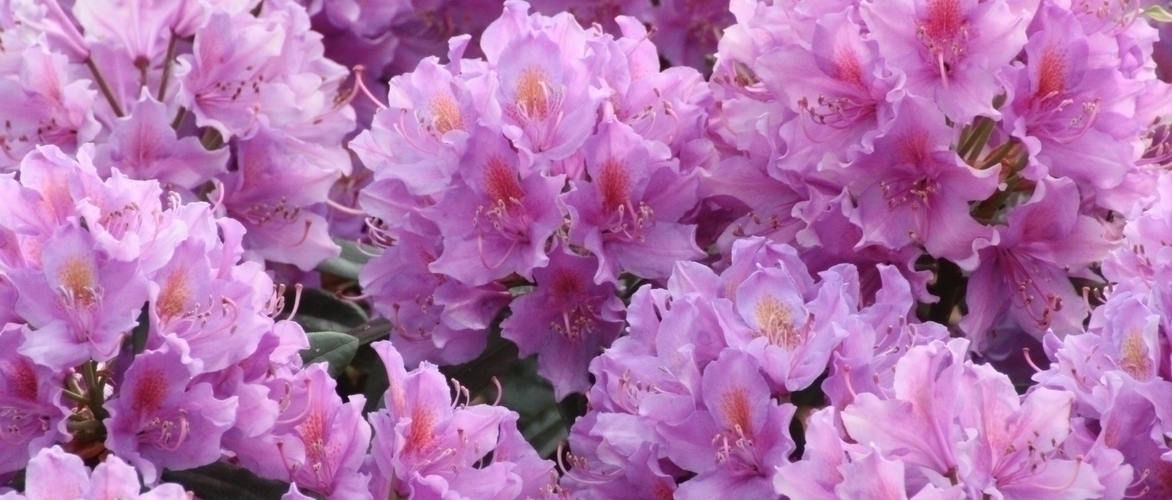
Azalea luteum Narcissiflora in pictures
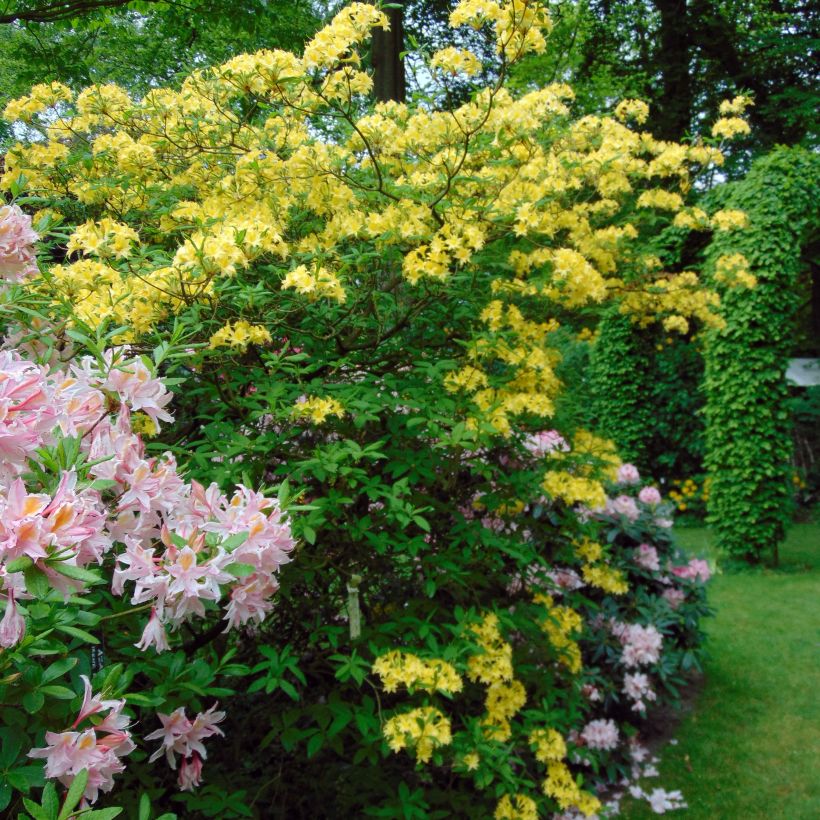
Plant habit
Flowering
Foliage
Botanical data
Rhododendron (Azalea)
x luteum
Narcissiflora
Ericaceae
Yellow Azalea, Honeysuckle Azalea
Cultivar or hybrid
Planting and care
The Narcissiflora Azalea thrives in a sunny location, unlike the Japanese Azalea, but its favourite position is in partial shade or east-facing for the morning sun, especially in very hot or sunny regions. Plant it in ericaceous or humus-rich soil, moist but well-drained, and above all, lime-free. Make sure not to plant the root ball too deep, it should be level with the ground. Water copiously during dry periods, at least once a week during the first year. In spring, apply fertilizer for ericaceous plants. Pruning is not essential but it is a good idea to prune lightly after flowering to keep the plant looking neat. Remove spent flowers to encourage new growth. The Azalea suffers from very few diseases when well-established outdoors. It can be attacked by weevils that eat the edges of the leaves and rootlets, and by the famous "Rhododendron lace bug", though not often causing significant damage. If the soil is chalky or poorly drained, or if the rootball is too deep, the leaves may turn yellow and eventually die.
Some cultivars are quite susceptible to powdery mildew.
Planting period
Intended location
Care
Planting & care advice
-
-
-
-
-
-
-
-
-
, onOrder confirmed
Reply from on Promesse de fleurs
Recently viewed products
Haven't found what you were looking for?
Hardiness is the lowest winter temperature a plant can endure without suffering serious damage or even dying. However, hardiness is affected by location (a sheltered area, such as a patio), protection (winter cover) and soil type (hardiness is improved by well-drained soil).

The flowering period indicated on our website applies to countries and regions located in USDA zone 8 (France, the United Kingdom, Ireland, the Netherlands, etc.)
It will vary according to where you live:- In zones 9 to 10 (Italy, Spain, Greece, etc.), flowering will occur about 2 to 4 weeks earlier.
- In zones 6 to 7 (Germany, Poland, Slovenia, and lower mountainous regions), flowering will be delayed by 2 to 3 weeks.
- In zone 5 (Central Europe, Scandinavia), blooming will be delayed by 3 to 5 weeks.
In temperate climates, pruning of spring-flowering shrubs (forsythia, spireas, etc.) should be done just after flowering.
Pruning of summer-flowering shrubs (Indian Lilac, Perovskia, etc.) can be done in winter or spring.
In cold regions as well as with frost-sensitive plants, avoid pruning too early when severe frosts may still occur.
The planting period indicated on our website applies to countries and regions located in USDA zone 8 (France, United Kingdom, Ireland, Netherlands).
It will vary according to where you live:
- In Mediterranean zones (Marseille, Madrid, Milan, etc.), autumn and winter are the best planting periods.
- In continental zones (Strasbourg, Munich, Vienna, etc.), delay planting by 2 to 3 weeks in spring and bring it forward by 2 to 4 weeks in autumn.
- In mountainous regions (the Alps, Pyrenees, Carpathians, etc.), it is best to plant in late spring (May-June) or late summer (August-September).
The harvesting period indicated on our website applies to countries and regions in USDA zone 8 (France, England, Ireland, the Netherlands).
In colder areas (Scandinavia, Poland, Austria...) fruit and vegetable harvests are likely to be delayed by 3-4 weeks.
In warmer areas (Italy, Spain, Greece, etc.), harvesting will probably take place earlier, depending on weather conditions.
The sowing periods indicated on our website apply to countries and regions within USDA Zone 8 (France, UK, Ireland, Netherlands).
In colder areas (Scandinavia, Poland, Austria...), delay any outdoor sowing by 3-4 weeks, or sow under glass.
In warmer climes (Italy, Spain, Greece, etc.), bring outdoor sowing forward by a few weeks.
Shipping country and language
Your country of residence may be:
Your country of residence is:
For a better user experience on our website, you can select:
Your shipping country:
-
 Austria
-
 Belgium
-
 Bosnia & Herzegovina
-
 Bulgaria
-
 Croatia
-
 Cyprus
-
 Czechia
-
 Denmark
-
 Estonia
-
 Finland
-
 France
-
 Germany
-
 Greece
-
 Hungary
-
 Iceland
-
 Ireland
-
 Italy
Italy
-
 Latvia
-
 Liechtenstein
-
 Lithuania
-
 Luxembourg
-
 Malta
Malta
-
 Netherlands
-
 Poland
-
 Portugal
-
 Romania
-
 Serbia
-
 Slovakia
-
 Slovenia
-
 Spain
Spain
-
 Sweden
-
 Switzerland
Language:
-
French
-
 English
-
Spanish
-
Italian
-
German
-
Portuguese
-
Dutch
-
Finnish
My Account
Hello
My wish lists
My cart
Log in / Register
Existing customer?
This form is protected by reCAPTCHA - the Google Privacy Policy and Terms of Service apply.
New customer?
Create an account to track your orders, access our customer service and, if you wish, make the most of our upcoming offers.