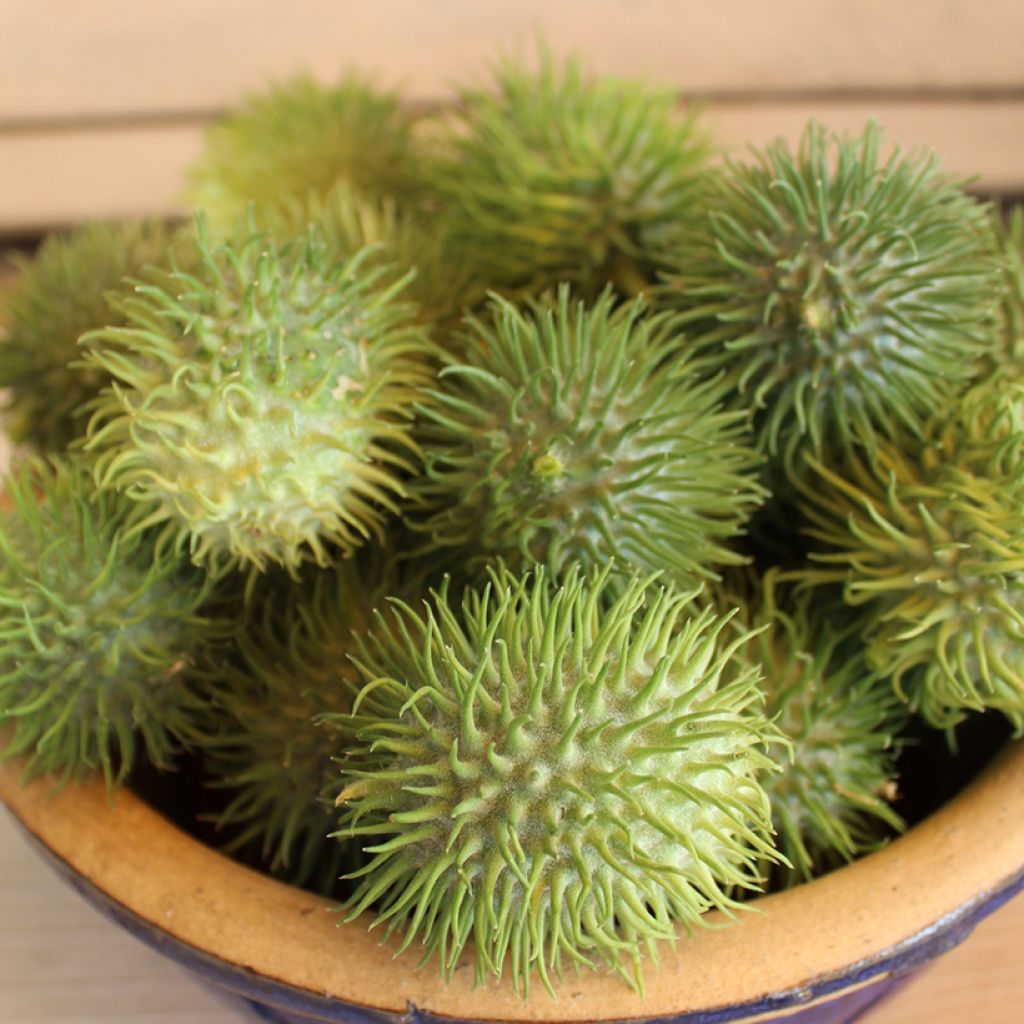
Cucumis anguria - West Indian gherkin, Burr gherkin, Gooseberry gourd
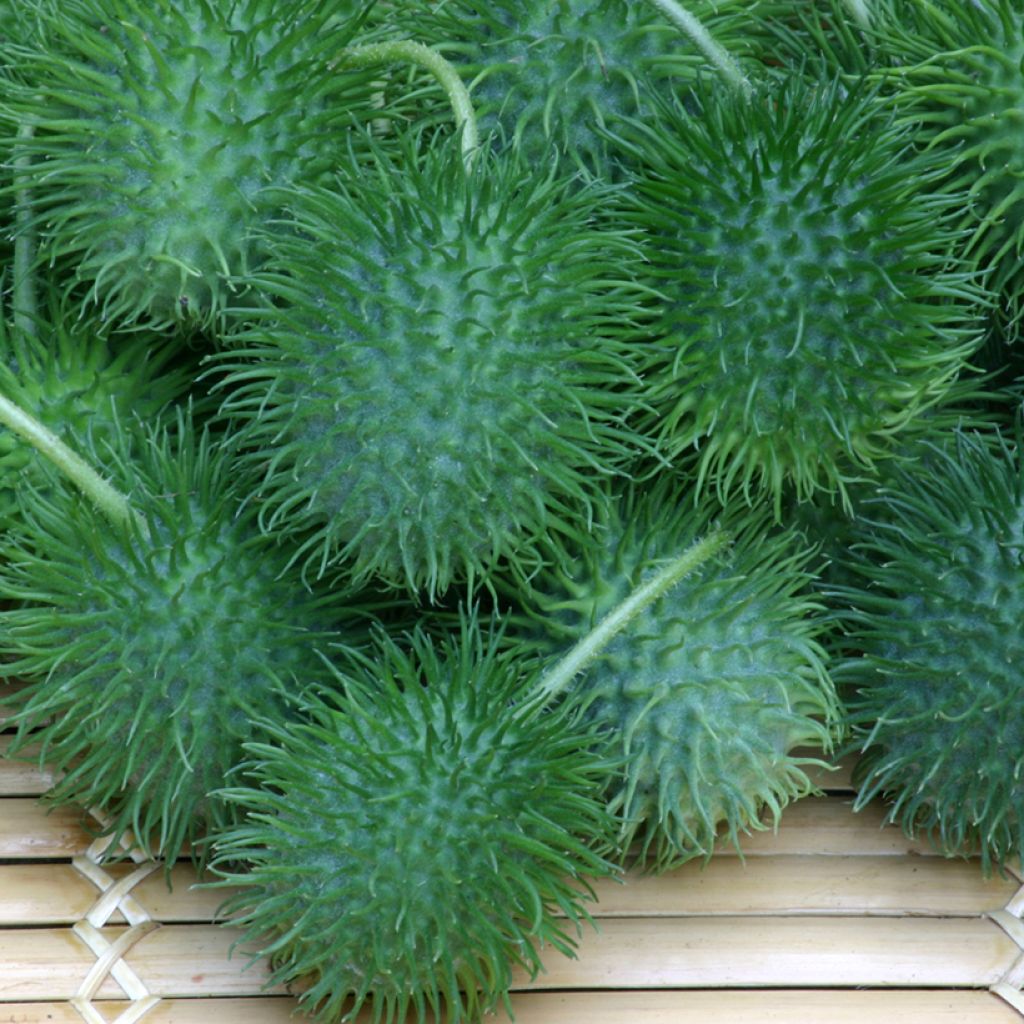
Cucumis anguria - West Indian gherkin, Burr gherkin, Gooseberry gourd
Cucumis anguria - West Indian gherkin, Burr gherkin, Gooseberry gourd
Cucumis anguria
West Indian gherkin, Burr gherkin, Gooseberry gourd
Back-to-school special offer!
Get €10 off for every €50 you spend! And get up to €40 off on a single order.
How does it work?
1. Shop your favourites
Add your favourite plants to your basket. For every €50 you spend (excluding delivery charges, store credit and the plastic-free option), you’ll receive a €10 voucher.
€50 spent = €10 voucher
€100 spent = €20 voucher
€150 spent = €30 voucher
€200 spent = €40 voucher
2. Place your order
Once your basket reaches one of the spending thresholds, place your order. You can even choose your delivery date!
3. Receive your voucher
As soon as your order has been shipped, you’ll receive an email containing your personal voucher code and its value.
4. Use it on your next order
Your voucher is valid for 90 days from the date you receive it. It can be used once only, on a new order worth at least the value of the voucher, excluding delivery charges.
Please note: Vouchers can be combined with other offers, but cannot be split or refunded.
Home or relay delivery (depending on size and destination)
Important: You may be charged customs duties by your country’s customs authorities upon delivery.
Schedule delivery date,
and select date in basket
This plant carries a 6 months recovery warranty
More information
We guarantee the quality of our plants for a full growing cycle, and will replace at our expense any plant that fails to recover under normal climatic and planting conditions.
Would this plant suit my garden?
Set up your Plantfit profile →
Description
The West Indian Gherkin, Cucumis anguria, is an original climbing or creeping plant, used for both its ornamental aspect and its curious small bristly, edible cucumbers. Its small fruits, with a refreshing taste and a hint of bitterness, are often used in cooking to prepare salads or pickles. A tropical plant with attractive foliage, it brings a touch of exoticism to the vegetable garden or balcony. This easy to grow cucumber enjoys warm and sheltered conditions.
The West Indian Gherkin is also known as the West Indian Cucumber, Brown Cucumber, West Indian Gourd, or Anguria Cucumber depending on the region. Cucumis anguria belongs to the Cucurbitaceae family, like all cucumbers, melons, or squashes. Native to the Caribbean and South America, this plant has adapted to a wide range of tropical and subtropical climates. In the wild, it is mainly found in meadow and forest edge areas. It is a climbing or creeping plant that can reach several metres in length, with thin stems equipped with tendrils that allow them to easily cling to a support. Its growth is rapid, especially in warm climates, and it can quickly cover a trellis or fence.
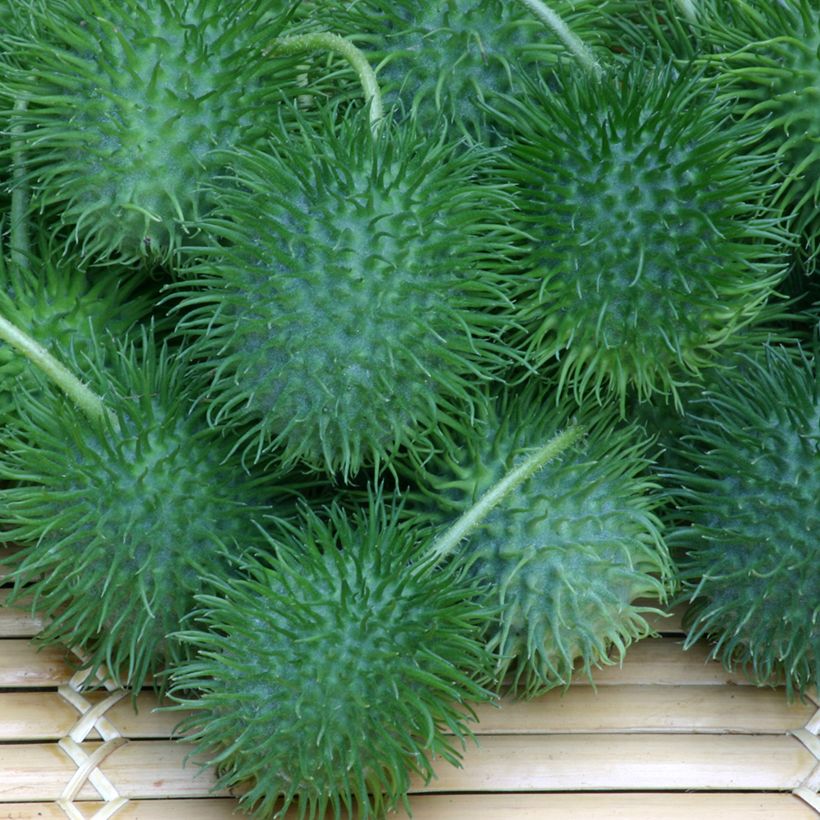
The leaves of Cucumis anguria are wide, lobed, slightly hairy and bright green. Flowering, which occurs in summer, takes the form of small yellow bell-shaped flowers. These flowers are unisex, male or female. They produce oval fruits, about 5 cm long. The fruits are easily recognisable by their green skin covered with small protuberances or soft spines. As they ripen, they take on a lighter hue, sometimes turning yellow. The fruit is appreciated for its crisp and slightly bitter flesh, often compared to that of the classic cucumber but with a more pronounced taste.
Harvesting takes place approximately 60 to 70 days after sowing, when the fruits are still young and tender. To extend the harvest, it is advisable to regularly pick the fruits to stimulate production.
In the kitchen, the West Indian Gherkin is consumed raw in salads or pickled, offering an interesting alternative to the classic cucumber. It can be combined with other summer vegetables such as tomatoes, peppers, or aromatic herbs like coriander and mint. The fruits keep well in the fridge for several days, and their slightly bitter taste brings an exotic and refreshing touch to many dishes.
Sow these cucumber seeds in spring, under heated cover, like vegetable varieties. Then plant them in the ground or in planters. The unusual fruits allow for the creation of all kinds of original decorations. They bring a touch of exoticism and fantasy to a fruit bowl, mixed with clusters of grapes, apples, pears, Virginia creeper leaves, mini pumpkins, and many more. Mounted on a thin metal rod, they can even be integrated into a flower bouquet, or simply combine them with Cape Gooseberries (Physalis peruviana) and small gourds in a bowl placed on the table.
Report an error about the product description
Cucumis anguria - West Indian gherkin, Burr gherkin, Gooseberry gourd in pictures
Flowering
Foliage
Plant habit
Botanical data
Cucumis
anguria
Cucurbitaceae
West Indian gherkin, Burr gherkin, Gooseberry gourd
Cucumis grossulariiformis hort., Cucumis erinaceus hort.
South America
Planting and care
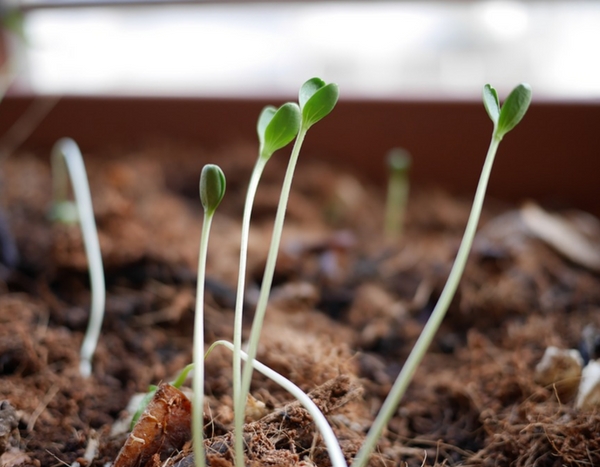
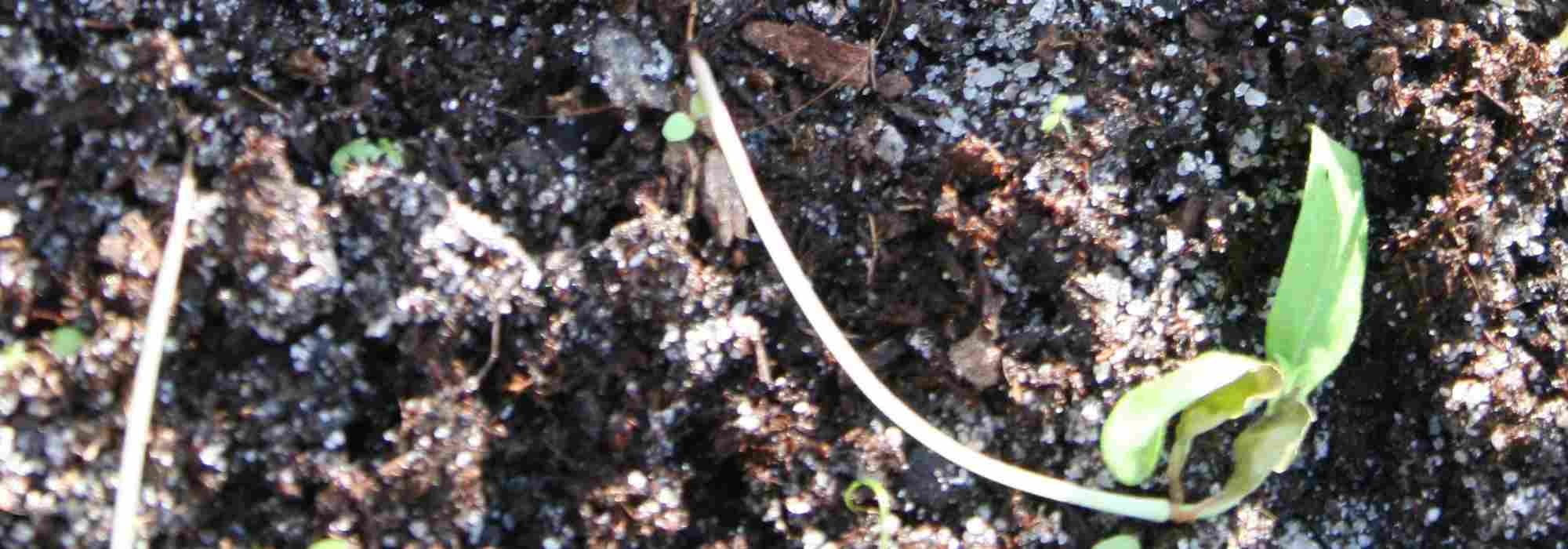
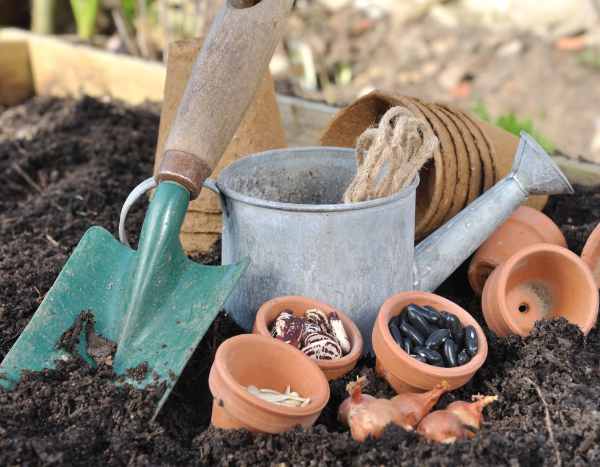
Sow Ornamental Cucumbers from March to May in 7 cm pots. Use good quality soil, possibly enriched with compost. Sow 2 or 3 seeds in a cluster (in the same hole) at a depth of 1 cm. Cover the seeds, lightly press down and water generously with a fine rain. Place your pots in the light, without direct sunlight, at a temperature of 20°C.
The seeds will germinate in 7 to 10 days. As soon as the plants reach a height of 20 cm, start acclimatising them gradually to a temperature of 15°C.
By late May to early June, the temperature will be warm enough in the garden to plant your young plants. Choose a sunny and wind-sheltered location. Add a good shovelful of compost to each planting hole. Don't forget to set up a support for them to climb on.
Throughout their growth, make sure they have an adequate water supply.
Sowing period
Intended location
Planting & care advice
-

-
-
-
-

-
-

-

This item has not been reviewed yet - be the first to leave a review about it.
Recently viewed products
Haven't found what you were looking for?
Hardiness is the lowest winter temperature a plant can endure without suffering serious damage or even dying. However, hardiness is affected by location (a sheltered area, such as a patio), protection (winter cover) and soil type (hardiness is improved by well-drained soil).

The flowering period indicated on our website applies to countries and regions located in USDA zone 8 (France, the United Kingdom, Ireland, the Netherlands, etc.)
It will vary according to where you live:- In zones 9 to 10 (Italy, Spain, Greece, etc.), flowering will occur about 2 to 4 weeks earlier.
- In zones 6 to 7 (Germany, Poland, Slovenia, and lower mountainous regions), flowering will be delayed by 2 to 3 weeks.
- In zone 5 (Central Europe, Scandinavia), blooming will be delayed by 3 to 5 weeks.
In temperate climates, pruning of spring-flowering shrubs (forsythia, spireas, etc.) should be done just after flowering.
Pruning of summer-flowering shrubs (Indian Lilac, Perovskia, etc.) can be done in winter or spring.
In cold regions as well as with frost-sensitive plants, avoid pruning too early when severe frosts may still occur.
The planting period indicated on our website applies to countries and regions located in USDA zone 8 (France, United Kingdom, Ireland, Netherlands).
It will vary according to where you live:
- In Mediterranean zones (Marseille, Madrid, Milan, etc.), autumn and winter are the best planting periods.
- In continental zones (Strasbourg, Munich, Vienna, etc.), delay planting by 2 to 3 weeks in spring and bring it forward by 2 to 4 weeks in autumn.
- In mountainous regions (the Alps, Pyrenees, Carpathians, etc.), it is best to plant in late spring (May-June) or late summer (August-September).
The harvesting period indicated on our website applies to countries and regions in USDA zone 8 (France, England, Ireland, the Netherlands).
In colder areas (Scandinavia, Poland, Austria...) fruit and vegetable harvests are likely to be delayed by 3-4 weeks.
In warmer areas (Italy, Spain, Greece, etc.), harvesting will probably take place earlier, depending on weather conditions.
The sowing periods indicated on our website apply to countries and regions within USDA Zone 8 (France, UK, Ireland, Netherlands).
In colder areas (Scandinavia, Poland, Austria...), delay any outdoor sowing by 3-4 weeks, or sow under glass.
In warmer climes (Italy, Spain, Greece, etc.), bring outdoor sowing forward by a few weeks.
Shipping country and language
Your country of residence may be:
Your country of residence is:
For a better user experience on our website, you can select:
Your shipping country:
-
 Austria
-
 Belgium
-
 Bosnia & Herzegovina
-
 Bulgaria
-
 Croatia
-
 Cyprus
-
 Czechia
-
 Denmark
-
 Estonia
-
 Finland
-
 France
-
 Germany
-
 Greece
-
 Hungary
-
 Iceland
-
 Ireland
-
 Italy
Italy
-
 Latvia
-
 Liechtenstein
-
 Lithuania
-
 Luxembourg
-
 Malta
Malta
-
 Netherlands
-
 Poland
-
 Portugal
-
 Romania
-
 Serbia
-
 Slovakia
-
 Slovenia
-
 Spain
Spain
-
 Sweden
-
 Switzerland
Language:
-
French
-
 English
-
Spanish
-
Italian
-
German
-
Portuguese
-
Dutch
-
Finnish
My Account
Hello
My wish lists
My cart
Log in / Register
Existing customer?
This form is protected by reCAPTCHA - the Google Privacy Policy and Terms of Service apply.
New customer?
Create an account to track your orders, access our customer service and, if you wish, make the most of our upcoming offers.