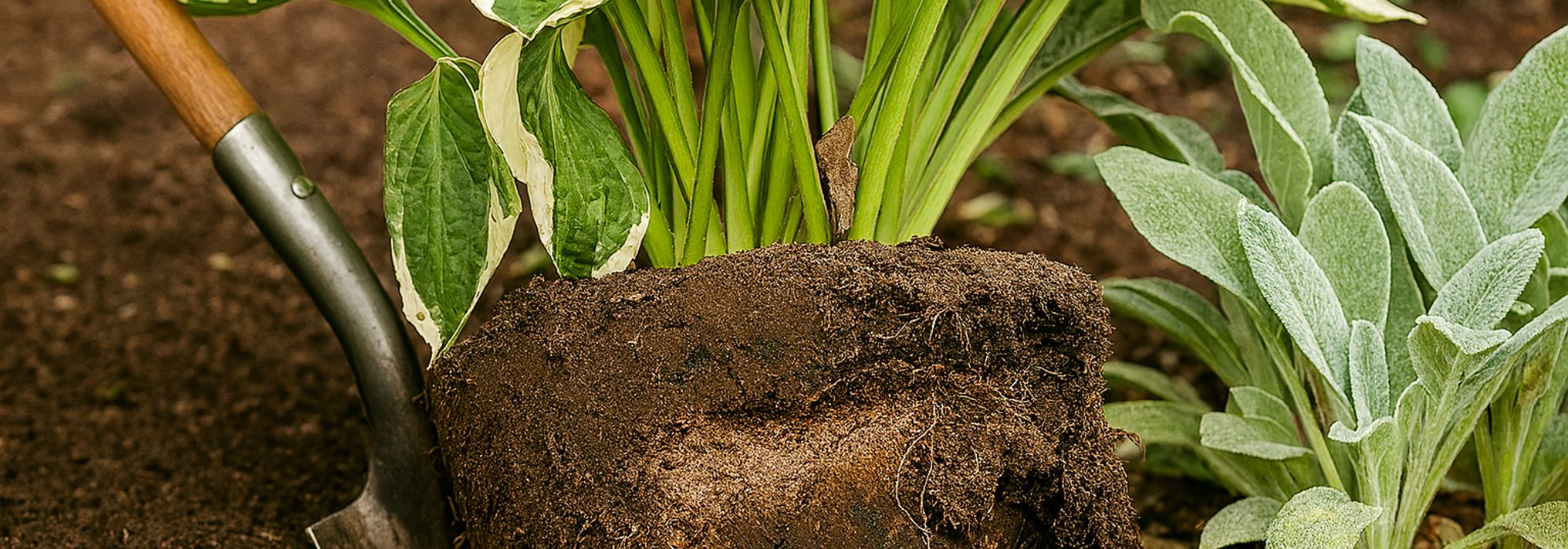
Transplanting perennials and grasses: successfully moving your plants
Our tips
Contents
In the garden, moving plants is a common task. Whether to manage excessive growth, optimise the layout of your borders or simply change the look, transplanting perennial plants and ornamental grasses is often necessary. These types of plants generally tolerate moving very well, especially when clumps are divided. To give yourself the best chance and ensure optimal establishment of your ornamental grasses and perennial plants, follow our explanations and detailed advice.

When to move perennials?
Autumn or early spring are the best times to transplant your perennials. Take the opportunity when transplanting to divide the largest stumps. More information here: How to divide a perennial?
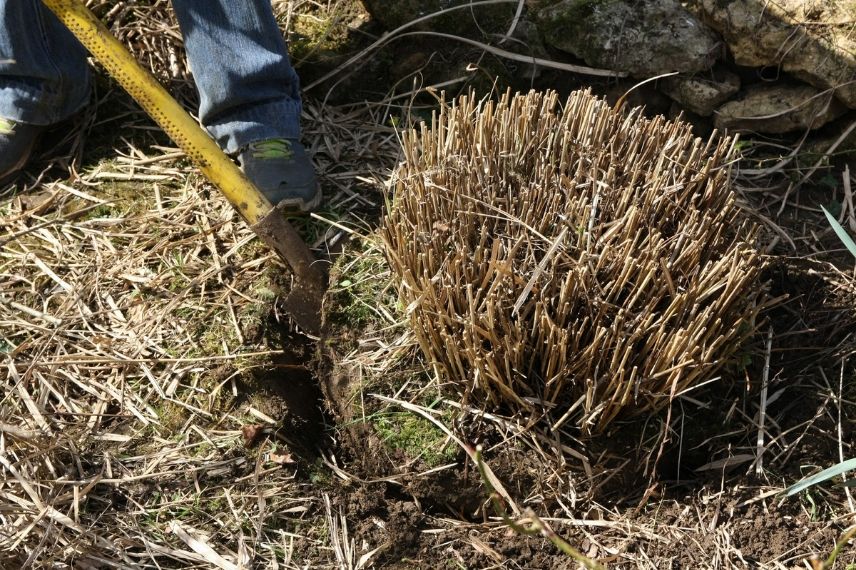
Transplantation d’une graminée
Required equipment
- Spade : indispensable for cutting around the rootball and lifting it.
- Digging fork (optional) : very useful for loosening soil in the new hole and for gently lifting rootballs without damaging them.
- Pruning shear : to cut damaged roots or above-ground parts if necessary, particularly when dividing rootstocks.
- Watering can or hose : to water thoroughly before and after transplanting.
- Planting soil or well-rotted compost : to improve soil in the new hole and provide nutrients to your plant.
- Mulch (wood chips, straw, bark, etc.) : to cover soil after planting, helping to retain moisture and regulate temperature.
How to transplant perennials and grasses?
Transplanting perennial plants is more common than transplanting trees or shrubs. Some need to be divided regularly to maintain their vigour. Division involves lifting the plant out of the ground to replant it, either elsewhere or in the same spot.
Most perennial plants and grasses transplant well, but be particularly careful with those with taproot systems (such as poppies or acanthus) which are more sensitive to disturbance.
Beforehand: Prepare a planting hole twice as wide as the rootball and the same depth. Loosen the base and sides of the hole with a digging fork. If your soil is heavy or poor, mix the planting soil with well-rotted compost or organic matter.
To transplant a perennial plant :
- Water the day before transplanting. Use the time to prepare the new hole.
- Using a spade, cut around the plant.
- Lift the rootball and remove it with as much soil and roots as possible.
- Divide the clump if necessary.
- Replant in the new location, making sure the top of the rootball is level with the soil surface, as it was in its previous position.
- Water and mulch.
Good to know: After planting, water thoroughly to firm the soil around the roots and remove air pockets. Keep the soil regularly and sufficiently moist for several weeks, especially in dry conditions, to ensure good establishment. Also, if the plant shows signs of stress (wilting or yellowing leaves), do not hesitate to cut the flowers or some foliage to concentrate energy on root development.
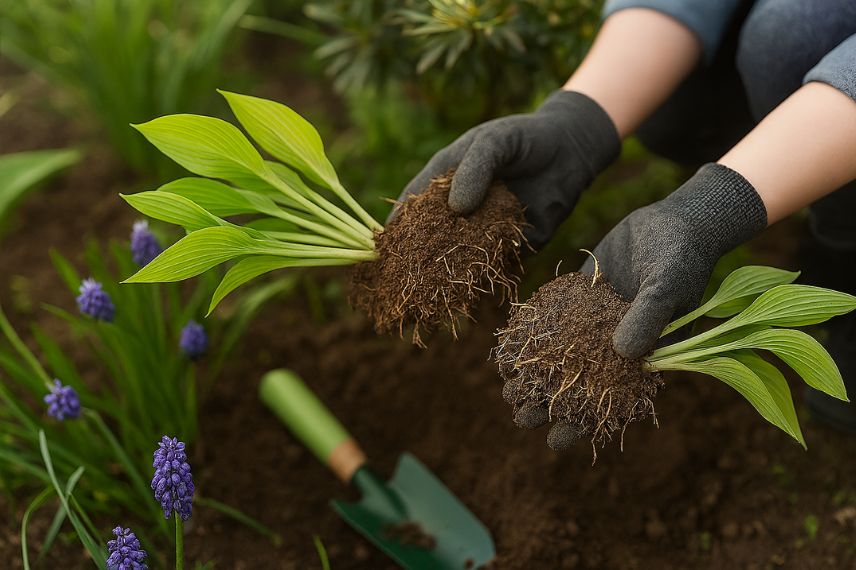
Dividing perennial plants allows you to replant them throughout the garden. (Image generated by AI)
If you cannot replant your perennial immediately
If the clump of perennials or grasses to be transplanted is to be moved to another garden, and must undergo a journey and therefore wait before being returned to open ground: it is essential to prevent the rootball and roots from drying out.
Once lifted from the soil, wrap the rootball in a large hessian cloth or thick plastic. They will reduce evaporation during transport. Replant quickly.
- Subscribe!
- Contents
This form is protected by reCAPTCHA - the Google Privacy Policy and Terms of Service apply.

































Comments