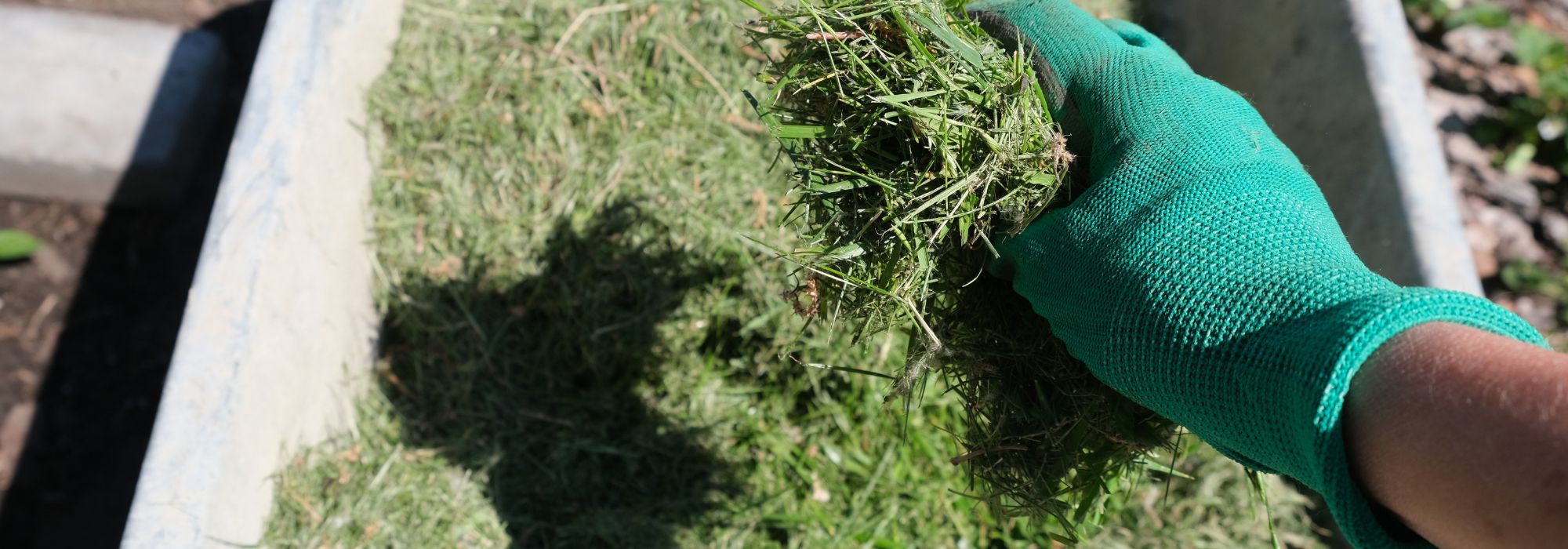
Using lawn clippings as mulch: advantages and disadvantages
Turn your lawn clippings into green gold for your garden
Contents
Each week, lawn mowing produces impressive volumes of green waste that all too often end up at the recycling centre or in a plastic bag. Yet, this cut herb is not bulky waste but genuine “green gold” for your garden. The concept is simple: by recycling your lawn-mowing residues directly at the base of your borders, shrubs or vegetable garden, you mimic the forest’s natural cycle where nothing is lost. This eco-friendly gesture feeds soil for free while creating a protective barrier against external aggressions. By mulching with grass clippings, you turn a constraint into a sustainable, regenerative gardening strategy.

Benefits of using lawn clippings as mulch
- Dramatic water savings : by covering soil, grass blades limit direct evaporation caused by sun and wind. This protective mat keeps moisture consistent at root level, allowing you to reduce watering frequency by up to 70%. A major asset during heatwaves.
-
Natural, effortless weed control : by creating an opaque layer, mulch blocks sunlight needed for germination of “weeds” (adventive). You therefore spend far less time weeding by hand, while avoiding use of harmful chemicals.
-
Free, organic fertilisation : grass clippings are particularly rich in nitrogen, an element essential for foliage growth. As they decompose quickly under action of earthworms and microorganisms, they release nutrients directly into soil, acting as a slow-release natural fertiliser.
-
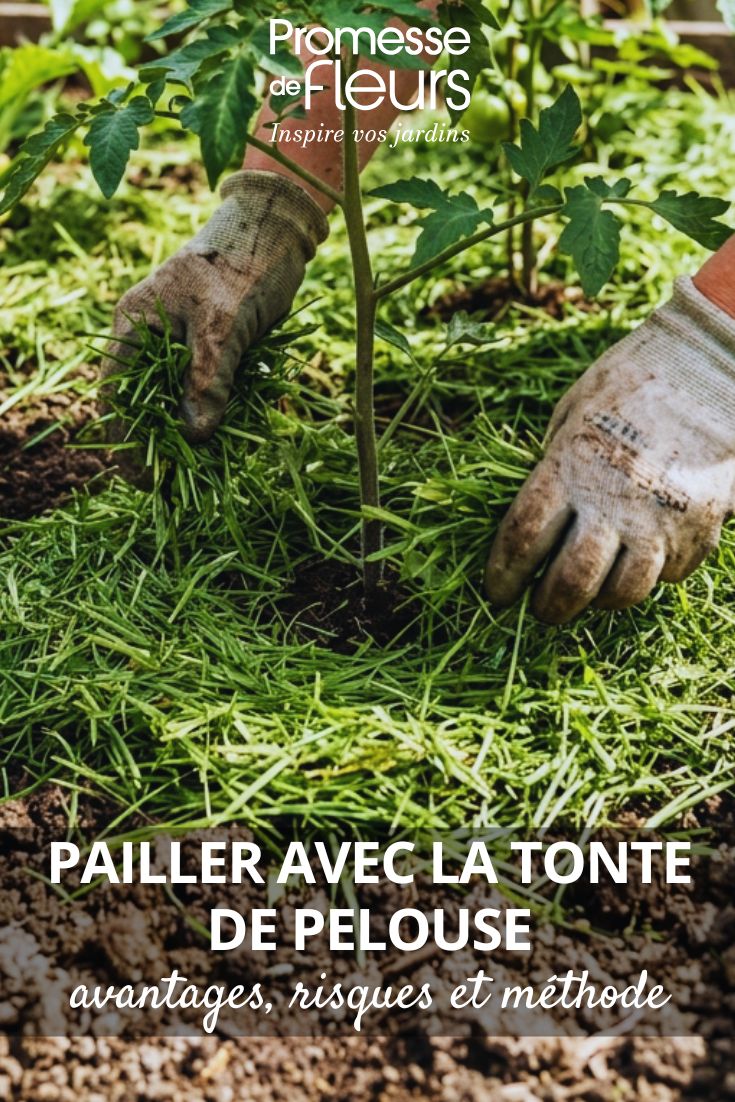
Physical protection for soil : this vegetative cover cushions impact of raindrops, thus preventing surface crusting (the formation of an impermeable crust on soil surface). It also acts as a thermal regulator : it keeps soil cool during day and retains warmth at night.

Mulching with lawn clippings helps keep soil cool. (Image generated by AI)
Drawbacks and points to watch out for
-
Risk of fermentation and “heat spike”: it’s the main danger. When clippings are piled in a thick layer while still soaked with water, the herb undergoes anaerobic fermentation. This process releases intense heat (sometimes more than 50°C to 60°C) that can literally burn stems and the collar of fragile plants. This decomposition also gives off an unpleasant smell of rot.
-
Development of moulds and diseases: a mat of herb that is too compact and wet becomes an ideal breeding ground for fungi. This lack of aeration can encourage the appearance of cryptogamous diseases, such as root rot or certain grey moulds, which may spread from the mulch surface to the roots of your crops.
-
Invasion by slugs and snails: freshly cut clippings are a food source and a perfect damp shelter for gastropods. Mulching with undried clippings risks attracting slugs directly to the base of your lettuces or young plants, which can be eaten overnight.
-
Nutrient imbalance: nitrogen is excellent for growth, but excess can become counterproductive. For fruiting vegetables (tomatoes, aubergines, peppers), a massive dose of clippings, and therefore of nitrogen, favours the development of exuberant foliage at the expense of flower and fruit production. Moreover, a plant too rich in nitrogen often becomes a prime target for aphids.
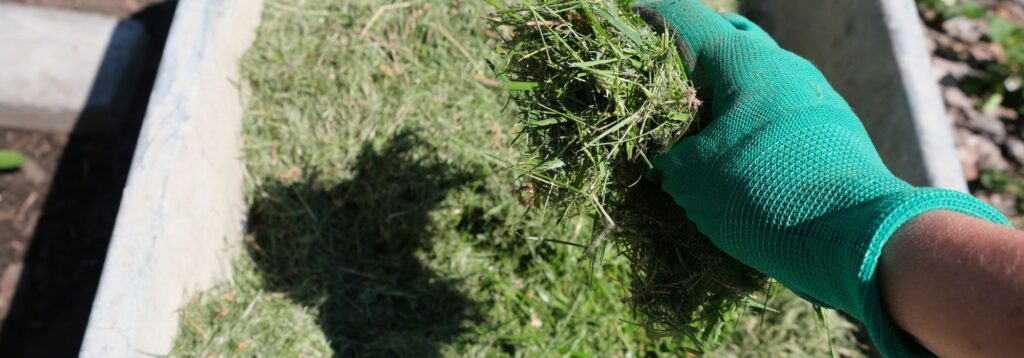
Never use fresh lawn clippings! Dry them for 24 to 48 hours before use.
⚠️ Warning: Never use your clippings if:
- Your lawn has been treated with weedkiller or chemical fertilisers.
- The herb has gone to seed (you would be sowing lawn everywhere!).
- The herb contains many invasive plants (bindweed, couch grass).
The right method: how to make the most of lawn clippings?
-
Drying : this is the most important step. Never mulch with freshly cut grass, as its high water content causes immediate fermentation. Spread clippings in the sun on a tarp or in a clear area for 24 to 48 hours. Goal is a texture close to hay, which will not heat up or attract slugs.
-
Soil preparation : before laying mulch, soil must be clean and moist. Remove weeds by hand to prevent perennial plants from regrowing beneath the mulch. Tip : water thoroughly just before applying, as the mulch will then act as a cover to retain that moisture.
-
Layer thickness : depth depends on quality of your clippings. If clippings are still a little green (not recommended), do not exceed 2 cm to allow air circulation. If clippings are perfectly dry and resemble hay, you can apply a generous layer of 5 to 10 cm for maximum effectiveness against adventive plants.
-
Safety space arrangement : never place mulch against trunk, stem or collar of your plants. Leave a bare ring of 3 to 5 cm around base of plant. This space helps prevent rot and allows the plant to breathe while still benefiting from surrounding mulch.
Oli’s tip : for best results, mix grass clippings with more carbon-rich materials (shredded dead leaves or RCW): it’s the secret of a balanced mulch that turns into perfect humus!
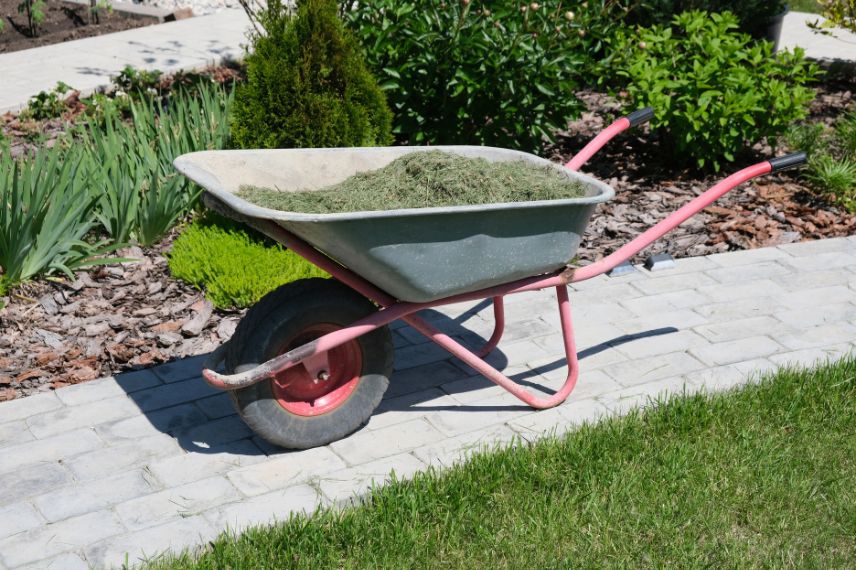
Ideal is to use grass as mulch combined with a carbon material such as RCW or dead leaves.
Quick-reference table: where and how to use your grass clippings?
| Plant category | Recommendation | Specific advice |
|---|---|---|
| Leaf vegetables (lettuces, spinach, chard, cabbages) | ✅ Ideal | These plants have high nitrogen requirements. Grass clippings mulch directly promotes leaf growth. |
| Fruiting vegetables (tomatoes, squashes, aubergines, peppers) | ⚠️ Use sparingly | Wait until first fruits have set before heavy mulching to avoid producing mainly leaves. |
| Root vegetables (carrots, parsnips, radishes) | ❌ Avoid | Mulch may cause collar rot or attract fungus gnats. Use bare soil or a very light mulch. |
| Soft fruit (strawberries, raspberries, blackcurrants) | ✅ Excellent | Protects strawberries from direct contact with soil (prevents rot) and helps maintain surface soil acidity. |
| Shrubs, hedges & trees | ✅ Very beneficial | Allows recycling of large quantities of grass clippings. Ideal for reducing competition from grass at base of young hedges. |
| Rockery and Mediterranean plants | ❌ Not recommended | Thyme, lavender and sedums dislike stagnant moisture retained by grass. Use gravel instead. |
| Ericaceous plants (azaleas, rhododendrons…) | ⚠️ With caution | Decomposing grass can slightly alter pH. Mix with pine needles or bark. |
- Subscribe!
- Contents
This form is protected by reCAPTCHA - the Google Privacy Policy and Terms of Service apply.

































Comments