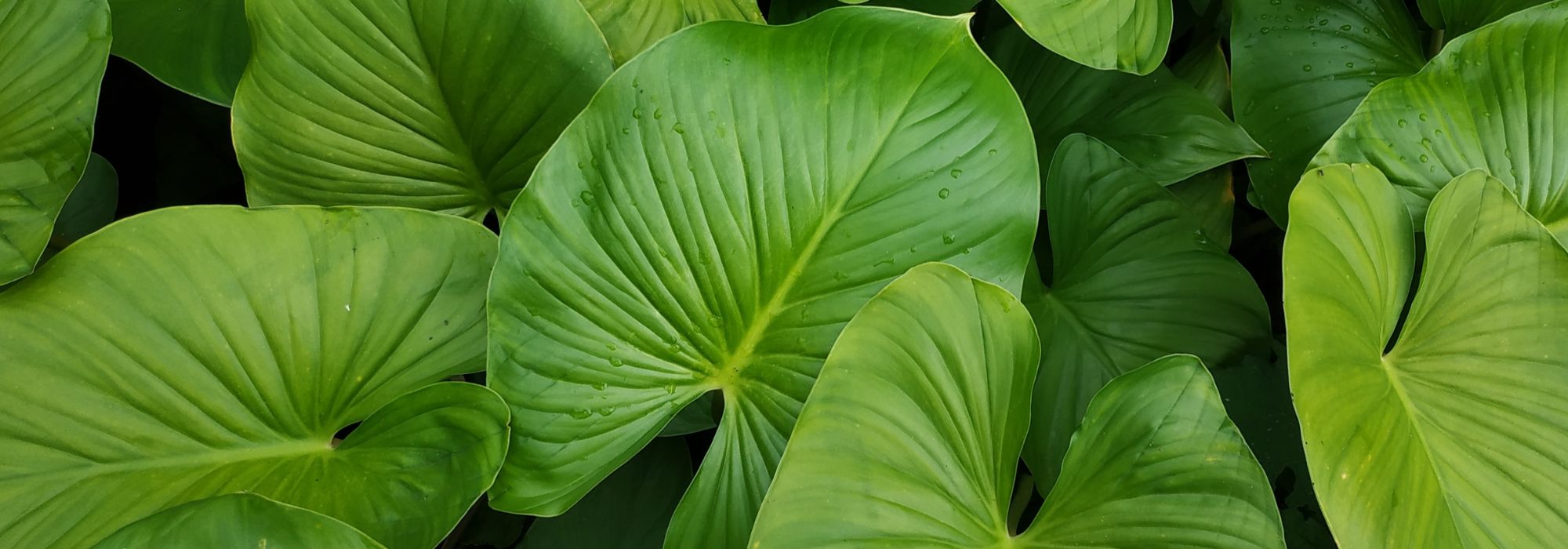
Homalomena: to grow and care for
Contents
Homalomena in a nutshell
-
Homalomena is a tropical plant in family Araceae, related to Aglaonema.
-
It charms with its dense, decorative foliage, sometimes variegated.
-
It prefers a fresh, well-draining substrate and a humid atmosphere.
-
Easy to care for, it tolerates filtered indoor light.
-
Like many Araceae, it is toxic to animals if ingested.
A word from our expert
You don’t know Homalonema? That’s normal! Partly because it isn’t very common, and partly because botanists have struggled to agree on a name. At times placed with the aglaonemas (it’s true it looks like them!), or with the adelonemas, it is now classified in its own botanical genus: Homalonema. In short, you may find this plant under different names.
Not so well known and yet an indoor plant as easy to grow as it is elegant: it certainly deserves to be grown more widely. L’homalomena is a plant that immediately attracts the eye with its dense, luminous foliage, often marked by elegant variegation. Its compact, balanced habit gives it an almost calming presence in a living room or office.
As an indoor plant enthusiast, what I appreciate most about it is its ease of adaptation. It tolerates medium light, it forgives the occasional missed watering, and it grows steadily without demanding constant attention. It’s an ideal companion for people who want some greenery around them without necessarily being experienced gardeners.
From a botanical point of view, homalomena shares with its cousins, philodendrons, spatiphyllums or aglaonemas, that sober but effective structure: a solid root system, robust leaves and inconspicuous flowering. It is a plant that reminds us that beauty is sometimes found in simplicity, and that well-shaped foliage can be enough to transform an interior.
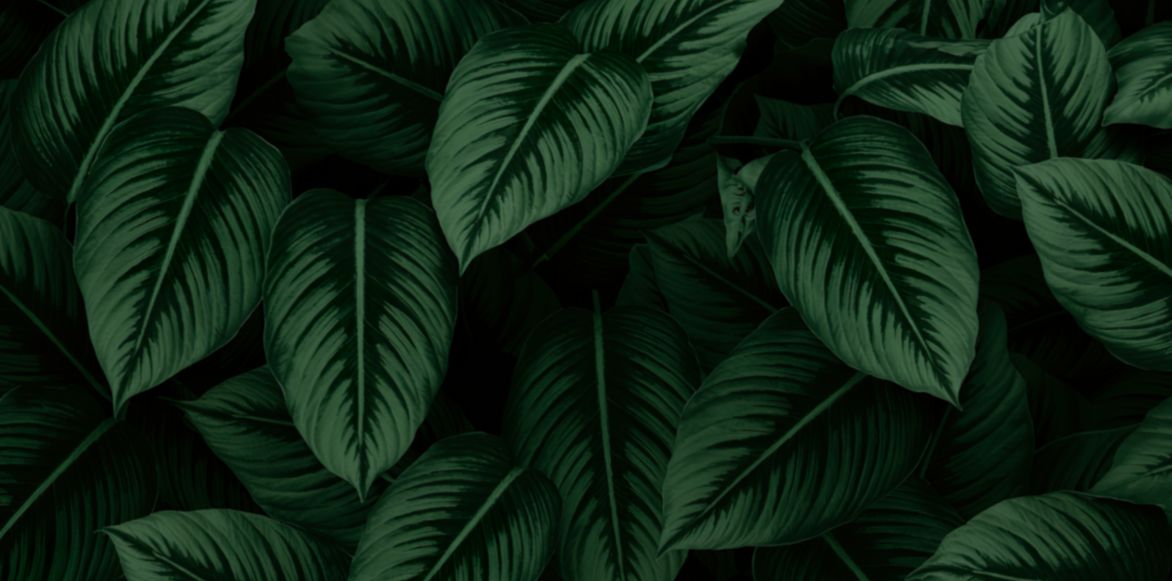
Some homalomenas reveal truly distinctive foliage.

Botany and description
Botanical data
- Latin name Homalomena wallisii
- Family Araceae
- Common name Homalomena
- Flowering insignificant
- Height up to 80 cm
- Exposure indirect light, partial shade
- Soil type rich, well-drained potting compost
- Hardiness not hardy
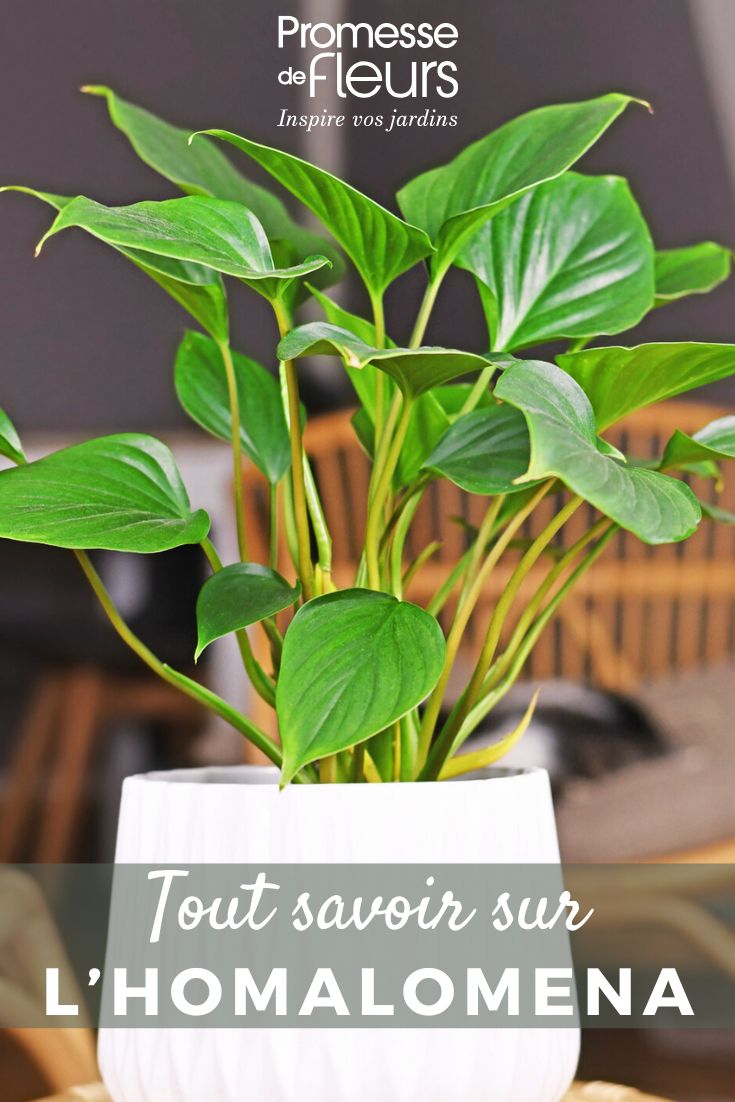
Homalomena is a still little-known houseplant, but one well worth discovering for lovers of decorative foliage. Belonging to family Araceae, like Philodendrons, Alocasias or Aglaonemas, it charms with a dense habit, large glossy leaves often heart-shaped, and a decidedly tropical, lush aspect.
Genus name Homalomena comes from Greek homalos (flat, even) and mênê (moon), referring to the rounded, regular shape of its leaves. Plant has undergone several botanical names over time. Long classified among Aglaonema and sometimes under Adelonema, it is now more commonly placed in genus Homalomena, a sign of taxonomy’s ongoing evolution through morphological and genetic studies. These changes explain coexistence of several Latin names in literature for same species.
Native to humid forests of Southeast Asia and Central America, Homalomena is a perennial with evergreen foliage, perfectly suited to indoor life. It thrives in bright rooms with warm, humid atmosphere, reminiscent of the tropical understory from which it originates. Although still discreet on garden centre shelves, it has much to attract indoor plant enthusiasts: easy care, high shade tolerance and immediate decorative impact thanks to dense, graphic foliage.
It is particularly valued for bringing a touch of freshness and greenery to interiors while remaining sober and elegant. Homalomena is also known for air-purifying qualities, making it an excellent choice for living rooms or offices.
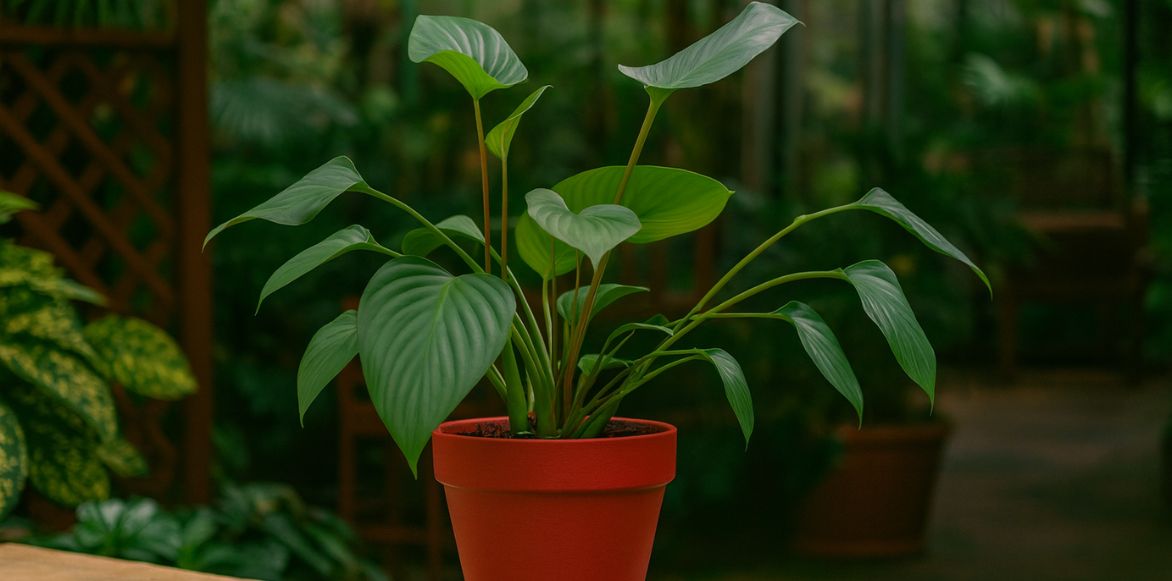
Homalomena ‘Emerald Gem’ quickly gives a ‘jungle’ feel to any interior (image enhanced by AI)
Botanical description
Homalomena is a tropical, rhizomatous plant belonging to genus Homalomena, which includes more than 150 botanically recorded species, of which only a few are grown for ornamental purposes. In its natural habitat it grows in shade of large trees, in an atmosphere that is constantly warm, humid and filtered.
Habit is tufted and compact. From an underground rhizome it produces long petioles often slightly tinged red, which carry coriaceous, persistent leaves, generally heart- or shield-shaped. Foliage is one of main assets: glossy, sometimes veined or variegated, it can display various shades of green, from light to deep green, with silver, bronze or copper highlights depending on variety. These leaves, held upright, create a dense, balanced silhouette evoking tropical understory.
Indoors, Homalomena usually measures between 30 and 60 cm in height, with similar spread. Some varieties may slightly exceed these dimensions, but overall plant remains very manageable in an apartment, including in elevated pot or low-hanging basket.
Flowering, rare under indoor cultivation, is discreet and of little decorative interest. It appears as cream to greenish spathes, similar to those of other Araceae such as Anthuriums or Spathiphyllums. These inflorescences emerge at base of foliage, often in summer, but their appearance depends on very stable growing conditions and good ambient humidity.
Homalomena is not hardy and strictly frost-tender. It does not tolerate temperatures below 15 °C. For our regions it is therefore reserved for heated indoor cultivation or tropical greenhouse. Its tolerance of low light and ability to withstand occasional missed waterings make it an ideal plant for living spaces such as lounges, bedrooms, offices or entrance halls, provided these are well ventilated.
It is also appreciated for depolluting properties: some studies suggest it helps absorb indoor pollutants such as formaldehyde, benzene or xylene, making it both attractive and beneficial for indoor air quality.
Important! Homalomena, like many Araceae, contains calcium oxalate crystals that can cause mouth and digestive irritation if ingested by pets. It is therefore best placed out of reach of cats and dogs to avoid any risk of poisoning.
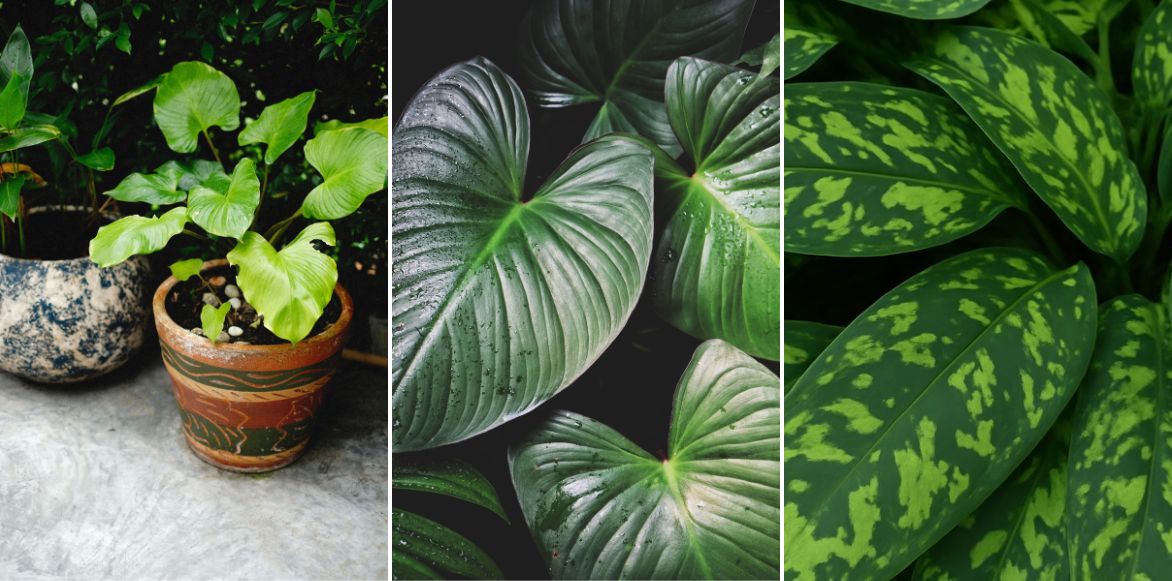
Variegated, lighter, darker… Cultivars are numerous among Homalomena.
Different Homalomena species and varieties
Genus Homalomena includes many tropical species, but only a few are cultivated as houseplants. These varieties have been selected for compact habit, resilience in domestic cultivation, and above all for beauty of foliage. Some originate from recent horticultural hybrids that further enhance decorative appeal.
Among species and cultivars most common in indoor culture, here are the most interesting:
Homalomena rubescens
Probably one of most popular species. Name refers to red-tinged petioles, highly ornamental. Glossy green foliage forms a dense, uniform clump. This type includes several cultivars, among them:
-
Homalomena rubescens ‘Maggy’ : highly prized for large cordate leaves, of a deep, slightly veined green. It forms a compact, elegant rosette. One of easiest varieties to find in trade.
-
Homalomena rubescens ‘Emerald Gem’ : a more compact variety with very dense, lustrous foliage of a deep, slightly bluish green. Well suited to small spaces or mixed container compositions.
Homalomena wallisii
Less widespread, this species offers a more wavy, supple foliage, sometimes darker and adorned with copper or bronze highlights. Its more fluid habit brings a more graphic touch to a plant composition.
Homalomena ‘Camouflage’
Horticultural variety with variegated foliage of light and dark green, reminiscent of military camouflage. Very striking, it immediately catches the eye. It is somewhat more sensitive to drafts and overwatering, but remains perfectly cultivable indoors with some care.
Homalomena ‘Selby’
This rarer cultivar stands out for green leaves veined with silver, particularly luminous. Perfect for darker spots, as its variegation catches ambient light. It adds a subtle, refined decorative touch.
Homalomena ‘Silver’ or ‘Silver King’
Known for silvery leaves with pronounced veins, this variety is prized for very luminous appearance. It fits perfectly into modern or minimalist decors, where foliage contrast creates a true focal point.
Homalomena speariae (less frequently offered)
Botanical species with upright habit, with veined foliage sometimes tinged purple, very decorative but still rarely available in European trade.
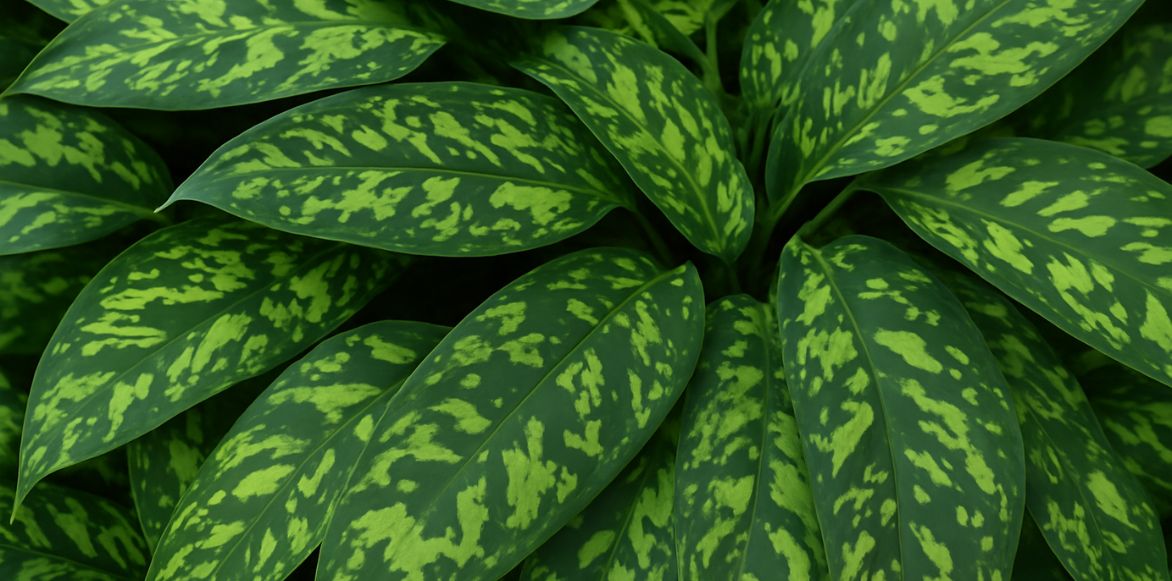
Contrary to its name, cultivar ‘Camouflage’ does not go unnoticed.
Read also
Aglaonema: planting, growing and careOur favourite varieties
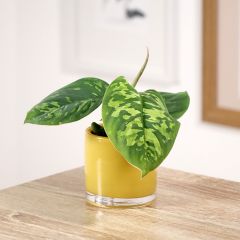
Aglaonema wallisii Camouflage - Chinese evergreen
- Height at maturity 25 cm
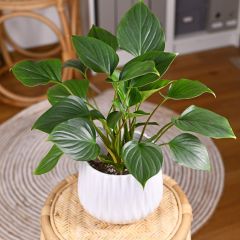
Homalomena wallisii Emerald Gem
- Height at maturity 80 cm
Potting Homalomena
Where to place Homalomena?
Homalomena is a plant that thrives sheltered from full sun, in dappled or soft light. Its foliage, although tough, can scorch from direct sunlight, especially behind a south-facing window. It is therefore ideal for bright rooms facing east or west, or for a position a few metres from a well-exposed window. Some varieties with darker or thicker leaves also tolerate partial shade, allowing placement in slightly more tucked-away corners of a living room or an office.
Homalomena prefers a warm, stable atmosphere, with temperatures between 18 and 25 °C year-round. It does not tolerate cold draughts or sudden temperature fluctuations. A spot close to a radiator or an air conditioner should therefore be avoided.
Ambient humidity also plays an essential role. In air that is too dry, notably during winter in heated homes, leaf edges can desiccate. To maintain adequate humidity, place the pot on a saucer of damp clay pebbles, or group Homalomena with other tropical plants to create a favourable microclimate.
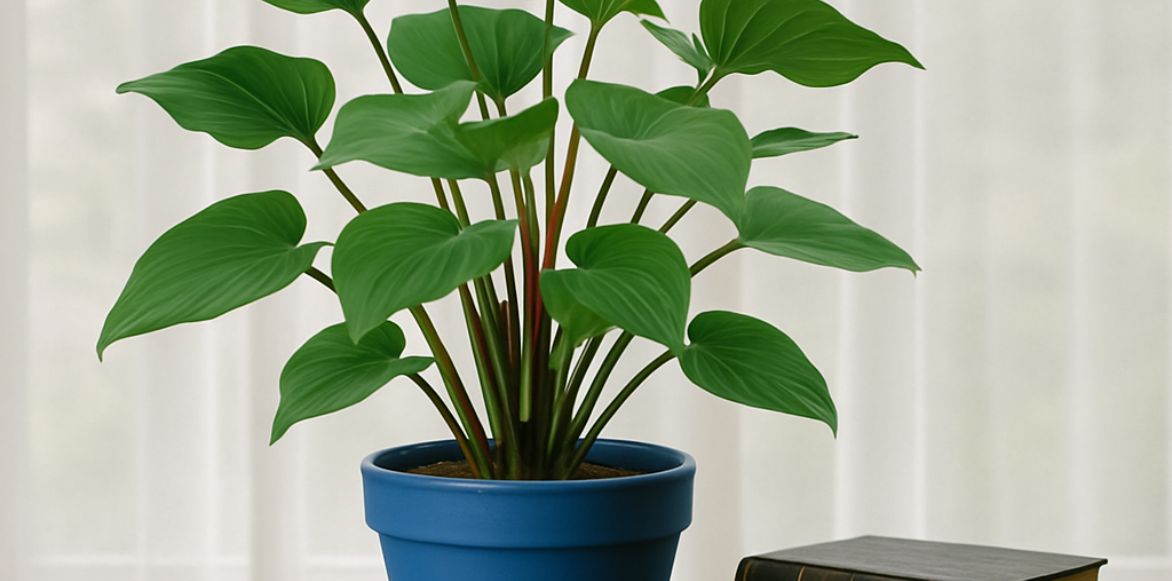
Homalomena, here cultivar ‘Maggy’, favours dappled light.
When to plant Homalomena?
Planting or repotting Homalomena is best done in spring, between March and May. This period corresponds to resumption of vegetative growth, which helps the plant adapt better to new substrate and produce new roots. Outside this window, it is still possible to plant Homalomena indoors, but establishment will be slower in autumn or winter, especially if light or ambient humidity is low.
In any case, it is preferable not to disturb roots during the plant’s dormant period, that is between November and February. If plant is received or purchased outside spring, allow it to acclimatise in original pot for a few weeks before considering repotting.
How to plant Homalomena?
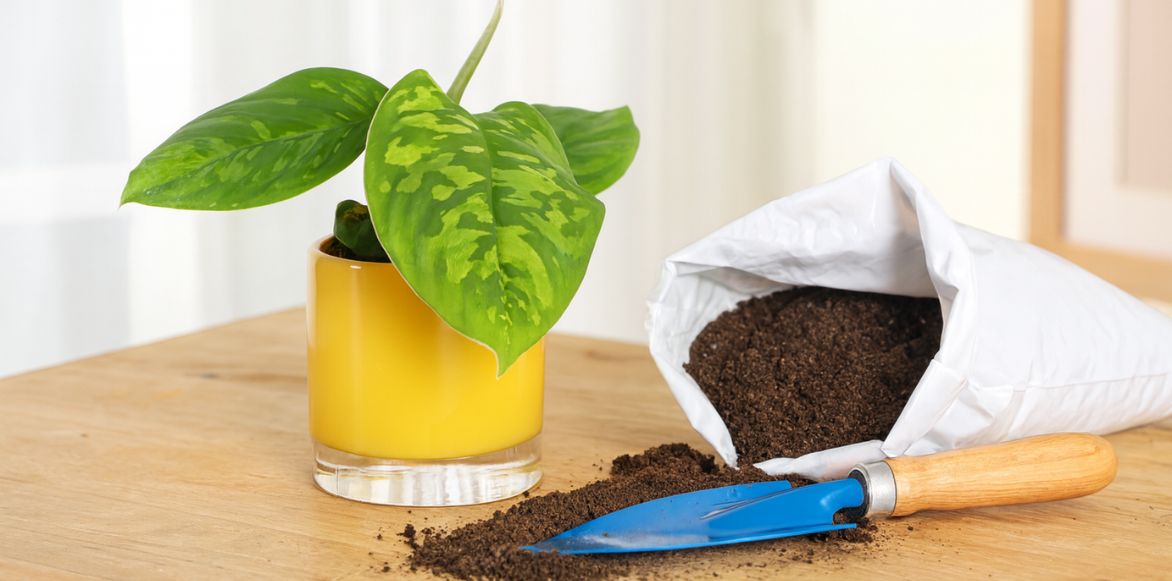
Homalomena is grown exclusively in a pot, indoors, in a substrate suited to its tropical needs. It prefers a light, rich and well-drained compost able to retain some moisture without becoming waterlogged. Use a potting compost for houseplants enriched with humus, to which add a little perlite, coarse sand or coconut coir fibres to improve structure and prevent excess water retention.
Container must be pierced at base to allow good drainage. It is advisable to place a drainage layer (clay pebbles or gravel) 2 to 3 cm deep before adding substrate. Choose a pot slightly larger than rootball, but not excessively so, as an overly large container retains too much moisture and can encourage root rot.
Here are planting steps:
-
Line bottom of pot with a drainage layer.
-
Partially fill with light, moist substrate, without compacting.
-
Remove plant from its pot carefully, without breaking rootball, and gently tease out peripheral roots if they are circling.
-
Place rootball in centre of pot, adjust height then backfill with compost.
-
Firm lightly and water moderately to moisten substrate without waterlogging.
After planting, allow plant to acclimatise without fertiliser or excessive watering during first few weeks. Watering every 7 to 10 days is generally sufficient, depending on ambient temperature and humidity.
How to care for Homalomena?
Care of Homalomena is undemanding, provided its needs for humidity, warmth and filtered light are met. It is a robust, tolerant tropical plant, ideal for dim interiors or beginner gardeners, as long as certain excesses are avoided. Here are essential steps to keep it healthy and maintain dense, glossy foliage year-round.
Watering
Homalomena needs a fresh but never waterlogged substrate. Water moderately but regularly, ensuring excess water drains freely from the pot. During active growth (spring–summer), watering every 7 to 10 days is sufficient, allowing the top layer of compost to dry between waterings.
In autumn–winter, reduce water to avoid stagnant moisture that encourages root rot. The plant then enters a period of relative rest: watering every 2 to 3 weeks may be enough, depending on ambient temperature.
Preferably use non-calcareous water at room temperature, such as rainwater or filtered water, to avoid white deposits on leaves and alkalinisation of the substrate.
Humidity
Native to very humid areas, Homalomena appreciates a moist atmosphere, especially in winter when indoor air dries out. To maintain good humidity:
-
mist its foliage with soft water, once or twice a week (except when temperatures are cool);
-
place pot on a tray of moist clay pebbles without direct contact with water;
-
group several plants together to create a favourable microclimate.
Too low humidity often shows as drying at leaf edges or the appearance of brown spots.
Cleaning the foliage
Homalomena’s glossy foliage readily attracts dust. To maintain shine and optimise photosynthesis, clean leaves every fortnight with a soft, lightly damp cloth. Avoid leaf‑shine products that clog stomata and damage plant tissues.
Feeding
During growth period, apply a liquid houseplant fertiliser every 15 to 30 days. Prefer a product high in nitrogen (N), which promotes foliage development. In autumn–winter, stop feeding so as not to stimulate the plant unnecessarily.
Excess fertiliser appears as browning at leaf margins or abnormally weak growth. Always follow the minimum dose indicated on the label.
Repotting
Repot every 2 to 3 years, ideally in spring, to renew substrate and provide more rootroom. If plant becomes too large, it is possible to divide the rootstock at that time (see propagation section). Between repottings, top‑dress annually with fresh, humus‑rich potting compost.
Pruning
No pruning is necessary: Homalomena naturally retains a compact, harmonious habit. Simply remove damaged, yellowing or faded leaves as they appear, cutting cleanly at the base with a disinfected tool.
Diseases and parasitic pests of Homalomena
Homalomena is a generally hardy houseplant and not very prone to disease if growing conditions are respected. However, some physiological problems or pest attacks can occur, most often linked to overly dry air, an excess of stagnant water or poor ventilation.
Root rot
This is one of the most frequent problems with Homalomena. Excess water in a poorly drained potting mix can cause root asphyxiation, favouring the development of pathogenic fungi such as Pythium or Phytophthora. Symptoms are: wilted or yellowing foliage, softened stems at the base, unpleasant odour from the compost.
It is essential to act quickly: remove the plant from its pot, cut away blackened roots, leave the rootball to air-dry for a few hours, then repot in a dry, well-aerated and clean potting mix. Eliminate any source of excess moisture.
Leaf spots
Brown or blackish spots, sometimes ringed with yellow, can appear on the foliage when moisture lingers on the leaves, notably after excessive misting. Poor ventilation or too-high humidity in a poorly ventilated room can encourage these symptoms. Remove affected leaves, reduce misting and improve air circulation around the plant.
Red spider mites
In hot, dry conditions, especially in winter near a radiator, Homalomena can be attacked by mites invisible to the naked eye, but leaving whitish speckling, discoloured or stippled leaves, and sometimes fine webbing between the petioles.
Increasing ambient humidity is the first measure. In case of severe infestation, use a natural acaricide, such as a spray of diluted black soap or a neem-oil treatment.
Mealybugs
Mealybugs can settle at the base of the leaves or along the petioles, appearing as small cottony white masses. They weaken the plant by sucking sap. They can be removed manually with a cotton bud soaked in 70% alcohol, then treated with an insecticidal vegetable oil.
Other insects
Less frequent, aphids, thrips or fungus gnats may occasionally appear, especially if the plant is surrounded by other infested plants. Regular visual monitoring, use of yellow sticky traps or targeted biological treatments are usually enough to limit their spread.
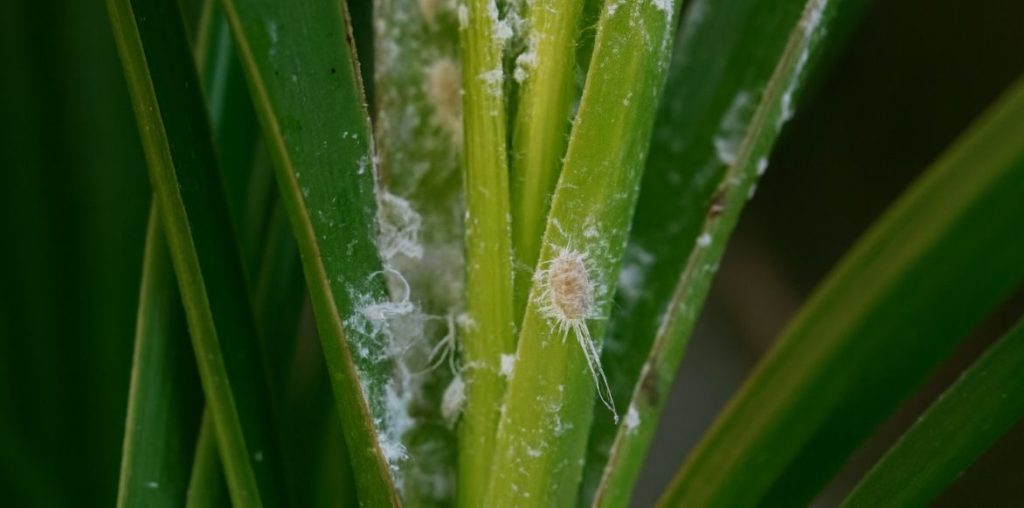
Mealybugs are common on houseplants, but fairly easy to treat.
How to propagate Homalomena?
Propagation of Homalomena is carried out only by division of rootstock, a simple and effective method provided it is done at the right time. Unlike other Araceae such as pothos or philodendrons, it cannot be propagated by cuttings in water or by taking leafy stems. Its rhizomatous underground system does not allow this type of propagation.
When to propagate Homalomena?
The ideal time to divide a Homalomena is in spring, at the time of the annual or biennial repotting. The plant is then entering a phase of renewed vegetative growth, which helps wound healing and the formation of new roots. It is not advisable to carry out this operation in autumn or winter, when growth is slowed and the plant is more vulnerable.
Division should only be considered if the mother plant is well developed, with several visible growth points, and if the root system is filling the pot.
How to divide?
-
Carefully unpot the plant, holding the foliage at the base. Tap the pot or cut it away if necessary.
-
Free the rootball from soil, gently shaking it to release the roots.
-
Locate the natural separation zones: Homalomena often forms clumps that can be divided without severely cutting through the rootstock.
-
Using a disinfected sharp tool, separate the rootball into two or three segments, each with healthy roots and at least two or three leaves.
-
Allow wounds to dry in the open air for a few hours to promote healing, especially if the rootstock was cleanly cut.
-
Replant each division in a small individual pot, in a light, moist and well-drained potting mix.
-
Place young plants in a warm, bright spot out of direct sunlight, and restrict watering during the first weeks until full recovery.
Be patient
Recovery can take a few weeks: young plants need time to re-root and resume above-ground growth. Avoid applying fertiliser in the weeks following division. A slightly increased ambient humidity and controlled watering will encourage rapid rooting.
How best to pair your Homalomena?
Homalomena pairs wonderfully with other tropical houseplants thanks to its graphic, understated and glossy foliage, which can serve both as a backdrop and as a contrasting plant element. Its compact habit and moderate growth make it an excellent companion, whether in loose compositions or more structured displays.
Combining Homalomena by texture
Its dense, glossy foliage creates a pleasing visual balance when set against finely divided or delicate foliage. It works particularly well with tropical ferns (such as Nephrolepis or Asplenium), or with a Calathea with veined foliage to create a lush understorey effect. Monstera adansonii, with its perforations, or climbing Philodendrons add height and reinforce the tropical feel.
Conversely, placed beside plants with fleshy, geometric foliage such as Zamioculcas zamiifolia or a Sansevieria, Homalomena softens the grouping and introduces a softer, livelier touch.
Combining by colour
Homalomena varieties with variegated, silver or reddish foliage can be highlighted by solid deep‑green foliage or, conversely, by very pale varieties such as Philodendron ‘Birkin’ or Syngonium ‘White Butterfly’. This creates a subtle light–dark contrast that is highly decorative in a contemporary or minimalist interior.
When paired with plants with black, purple or bronze foliage (such as Alocasia ‘Black Velvet’, Oxalis triangularis or Colocasia ‘Black Magic’), it enhances depth and visual richness in a slightly shaded plant corner.
Styling ideas
Homalomena is well suited to cultivation in a decorative pot, placed on furniture, a low bench or an elevated cachepot. It finds its place in urban jungle compositions, installed alongside trailing plants such as indoor tradescantias, rhipsalis or chlorophytums, or in a large communal container with Calatheas or Dieffenbachias.
It can also serve as a calming plant base in pared‑back decor, placed alone in a simple ceramic or terracotta pot to showcase the texture of its foliage. In this case, choice of container plays a key role in highlighting the plant.
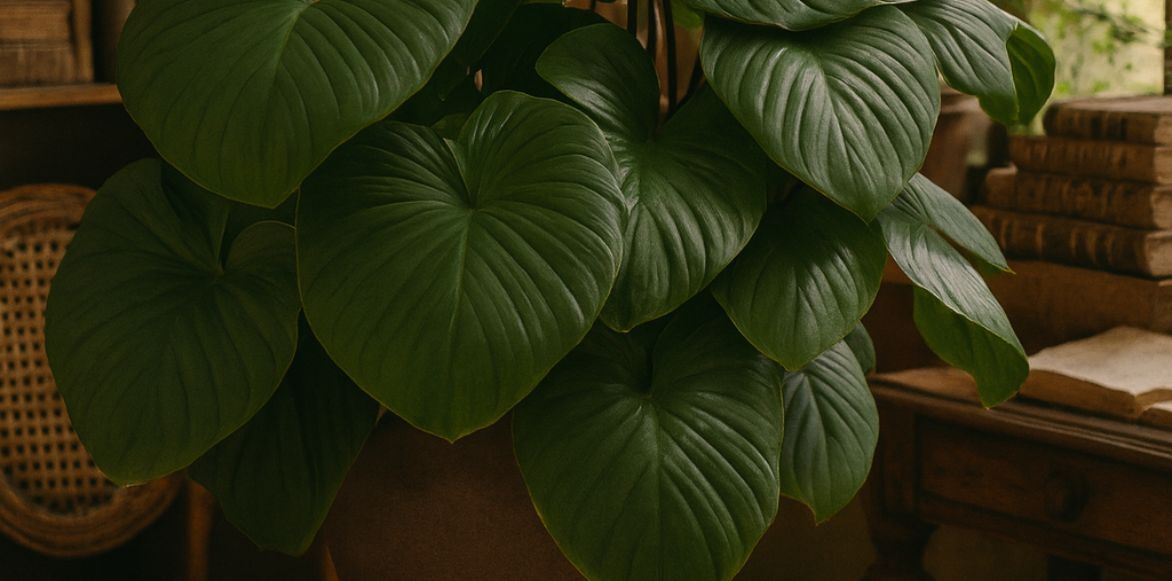
Homalomena often stands well on its own. As with this fine specimen of Homalomena pendula (image enhanced by AI)
Useful resources
→ Discover our wide range of houseplants
→ Many books on houseplants are available, but we recommend THE bible on the subject: Encyclopaedia of Houseplants by Solène Moutardier, published by Ulmer.
- Subscribe!
- Contents
This form is protected by reCAPTCHA - the Google Privacy Policy and Terms of Service apply.

































Comments