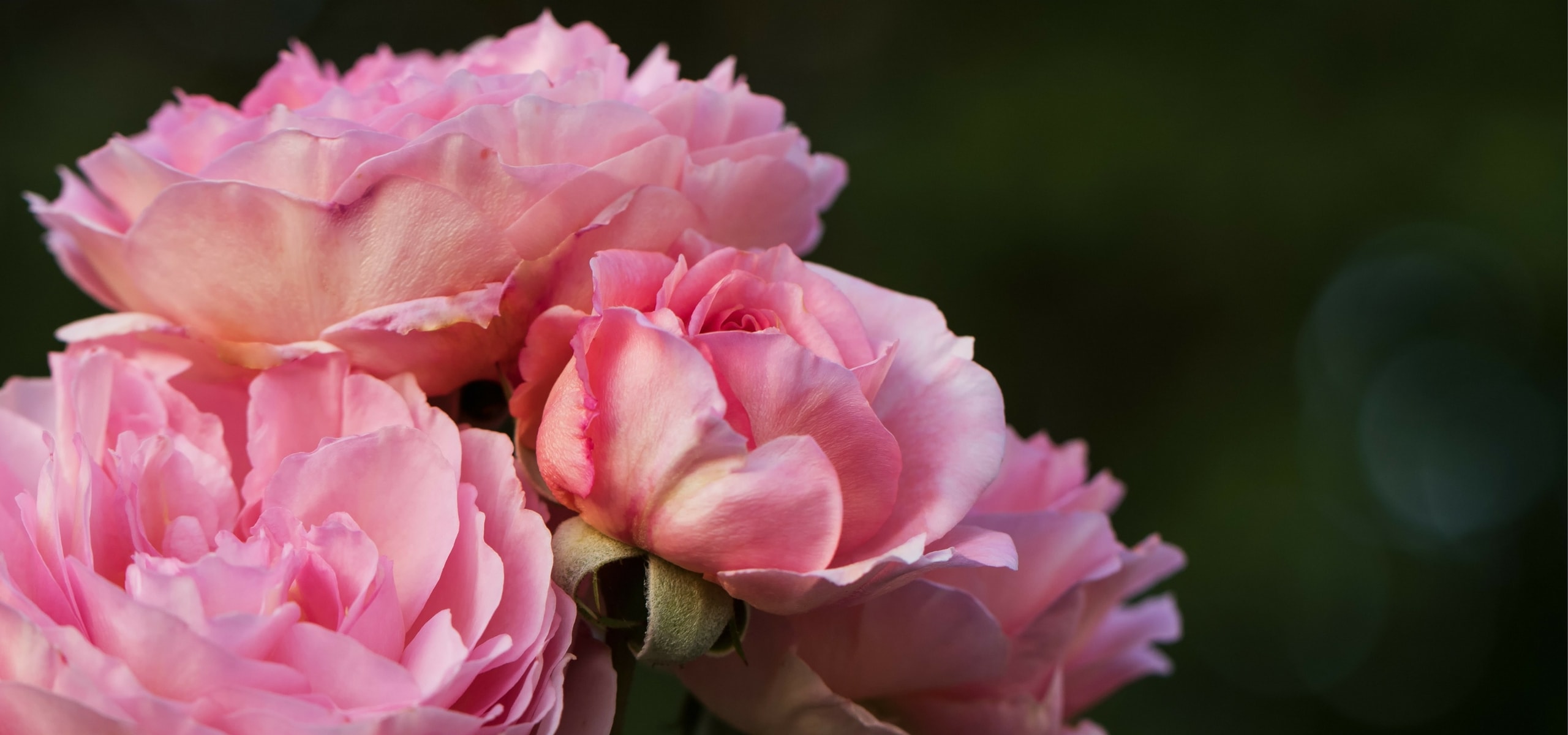
Roses: successfully planting in pots and as bare roots
Our expert advice for planting your rose bushes
Contents
Symbols of love and romance, we appreciate rose bushes for their very delicate, pleasantly scented flowers, single or double, which come in a wide palette of colours. Planting is a crucial step not to be overlooked and is vital for them to flourish! Indeed, a rose bush that gets off to a bad start will rarely become an attractive specimen. A potted rose and a rose with bare roots are planted differently and at different times. Discover our planting guide to plant your rose bush in the best conditions.

When to plant rose bushes?
-
Container-grown roses or “container”
Container-grown roses extend period of availability and improve chances of successful establishment. You can plant them all year round, provided you remain attentive during weeks following planting. Indeed, plant’s rooting period is around 8 weeks in spring or autumn, so water regularly. During very hot months, establishment is more delicate; you will need to cut plants back fairly hard and water more.
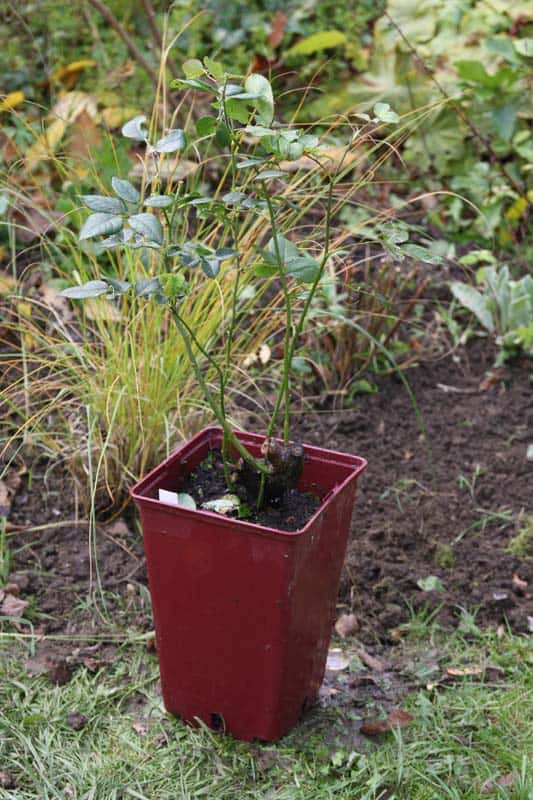
Container-grown rose
Lifted in October to be available for sale, these roses must be planted from November to end of March, avoiding periods of frost.
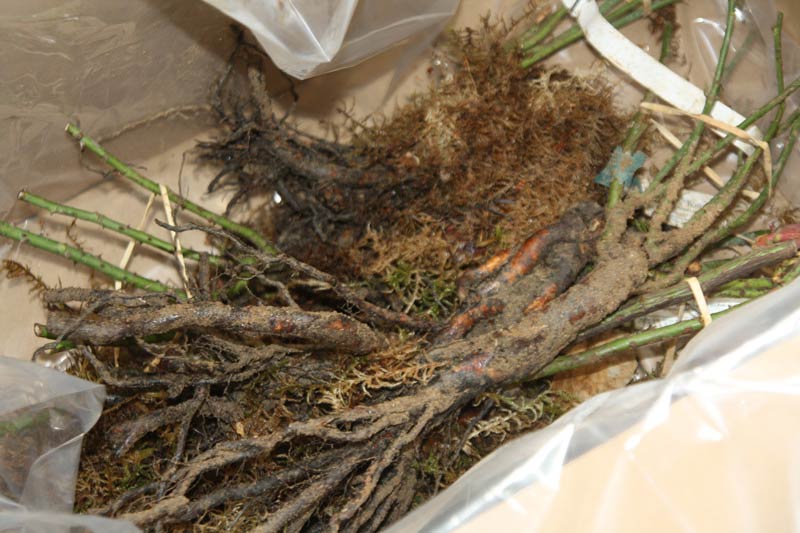
Bare-root roses
How to prepare soil for planting a rosebush?
Although roses prefer good slightly clayey garden soil, they will tolerate almost any soil type. However, amending and enriching soil is advisable.
- Sandy, porous ground should be corrected by additions of organic matter (well-rotted manure, compost…) which should be thoroughly mixed into the soil.
- In heavy soil, improve drainage. For, while roses need plenty of water, they neither like stagnant moisture that asphyxiates roots nor very compact soils that hinder development of rootlets. In both cases, it is essential to ease water flow and soil aeration by adding organic matter such as compost, leaf mould or gravel, or pumice.
What matters for roses is loose, well-aerated soil rich in organic matter, where young roots can easily find their way. That is why you should mix into soil around the roots good homemade compost or well-rotted manure.
Discover other Roses
View all →
Available in 2 sizes
Available in 2 sizes

Available in 2 sizes
Available in 2 sizes

Available in 2 sizes

Available in 2 sizes

Available in 2 sizes
Available in 2 sizes
Available in 1 sizes

Available in 2 sizes
How to plant a container-grown rose?
Rose bushes sold in plastic containers are not meant to be left as they are! You must replant them in your garden or in a larger pot.
To plant a rose bush sold in a container:
- Soak the rose bush in its pot in a large basin of water, until no bubbles rise to the surface.
- With a spade, dig a hole 40 cm long, 40 cm wide and 40 cm deep. Remove the pot carefully so as not to break the rootball.
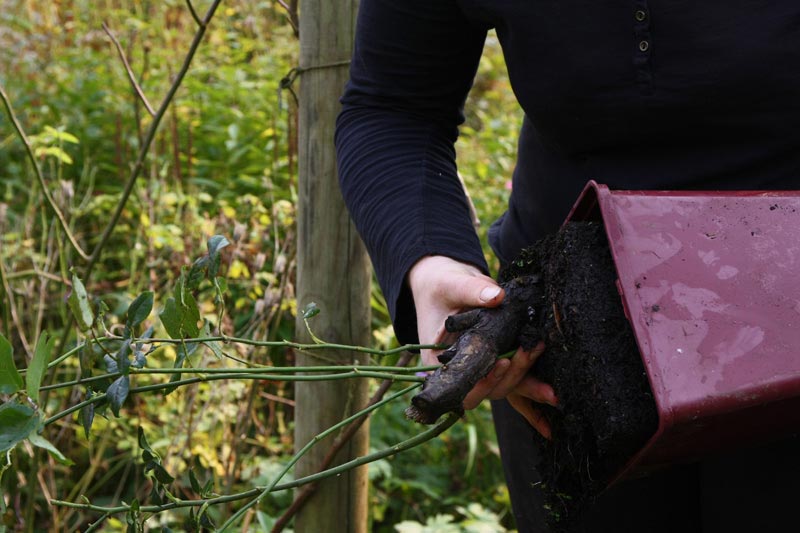
Remove the rootball from its pot with care.
- Place a stake across the hole to mark the soil level.
- Position the plant so that the graft union is slightly above the stake, or plant so that only 2 to 3 cm of soil is added above the rootball.
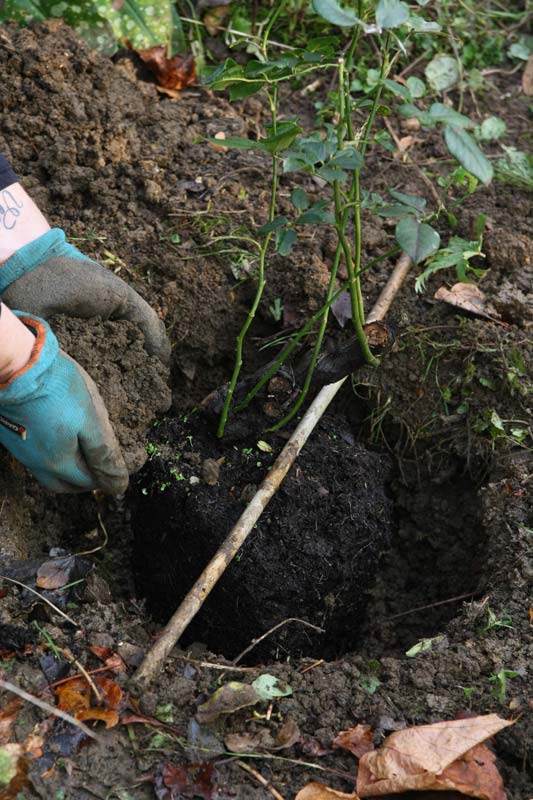
- Backfill and water thoroughly to eliminate air pockets.
In dry weather, water regularly at a rate of one watering can per week to encourage rooting.
- Tip
Roots may escape through drainage holes of a container-bought rose bush. As it is impossible to remove the pot without damaging the precious root hairs, cut the container with a pruning shear to preserve as many roots as possible.
Read also
Propagate roses: when and how?How to plant a bare-root rose bush?
On receipt of your bare-root roses, immerse them completely in a basin of water to rehydrate the tissues. Ideally plant them the same day.
If you receive your roses on a day when you cannot plant, don’t worry: you can heel them in while waiting for permanent planting.
Heeling-in : to create a heel-in, dig with a spade, in a shady, sheltered spot, a trench 30 cm wide and as deep. Place roses in a close, slightly inclined row to reduce wind exposure. Cover them with garden soil or potting compost, taking care to work the substrate between the roots to avoid air pockets. The mix should be heaped up to the roses’ graft unions, then firmed down. If there is no rain, water the soil lightly to keep roots moist. They can remain heeled in for 3 to 4 days.
Planting day :
- Start by “dressing” the roots. This means cutting, with a clean pruning shear, any roots that may have been damaged during lifting. These clean cuts aid the rose’s recovery.
- Prune branches of the rose if necessary, bearing in mind that the top growth should be balanced with the root system.
- Mix soil, water and compost (or well-rotted manure) in a basin to obtain a thick slurry called “pralin”. For detailed information on root pralining, see our advice sheet: Pralining roots of trees and shrubs.
- Dip the rose up to the collar. This helps ensure good establishment of the plant.
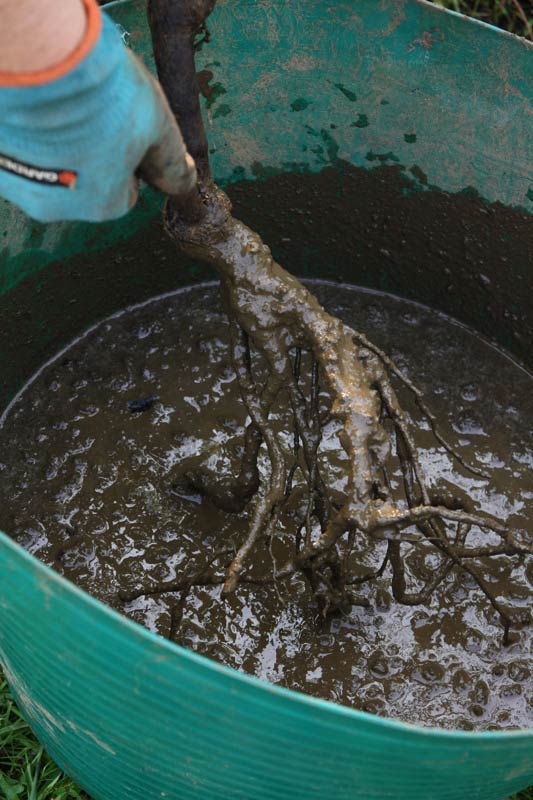
Pralining should not be overlooked when planting roses.
- With a spade, make a hole 40 cm wide and 40 cm deep, breaking up the soil well.
- Add a spadeful of good home-made compost or well-rotted manure to the excavated soil and mix. You can also add a little crushed horn, which breaks down slowly (over 2–3 years) in the soil and provides an excellent long-term nutrient reserve. It should be buried in good quantity at planting. For more on organic fertilisers, see our advice sheet: Crushed horn, dried blood, guano… What are these fertilisers used for in the garden and vegetable patch?
- Place the rose in the hole, taking care to spread the roots out well. Make sure they are not turned upwards.
- Place a stake across the hole to mark soil level.
- Begin to backfill while holding the rose at the correct height, i.e. the graft union (graft collar) slightly above the stake.
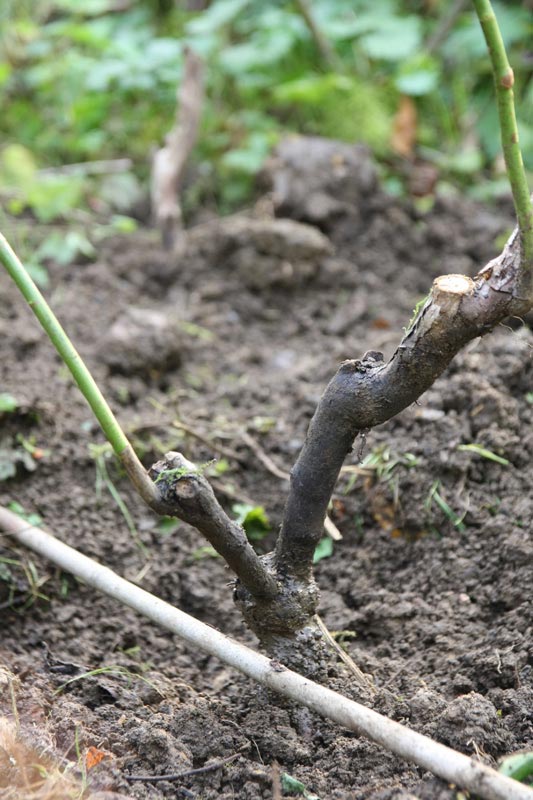
Graft union should be slightly above soil level.
- Once roots are covered, firm the soil around the rose with your hands to form a small saucer that will hold water. Check plant is secure by pulling gently; it should not move.
- Water thoroughly.
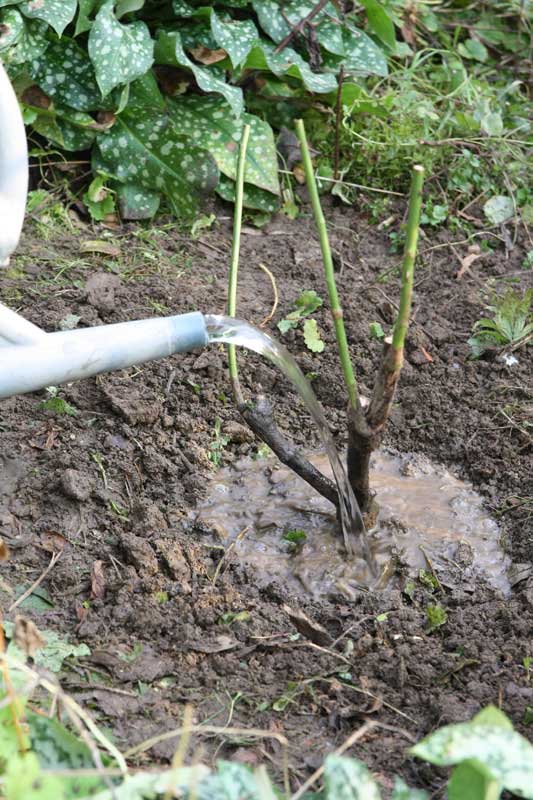
A good watering will remove any air pockets.
- Cover graft union with a good layer of leaf litter or straw.
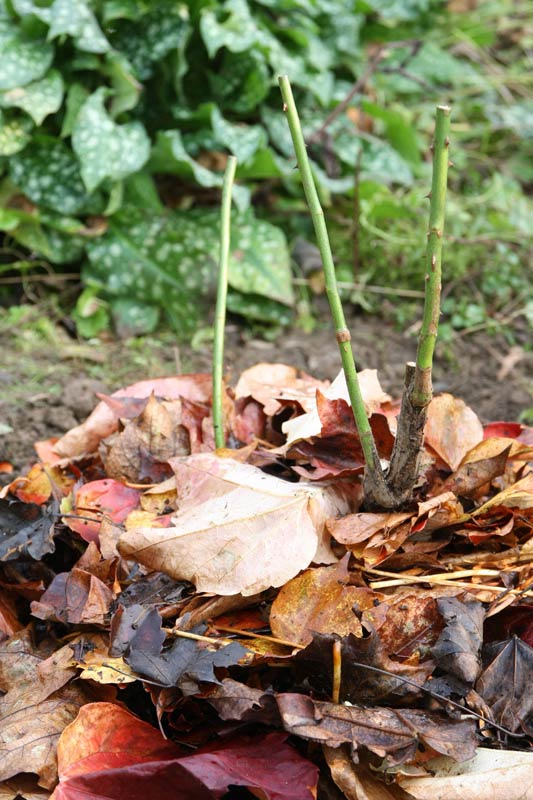
Protect graft union with a good layer of leaves.
Maintain light but consistent moisture throughout the first year.
How to plant rambling roses and rose standards?
Start by probing soil with an iron rod to locate a spot free of large roots. Take care not to plant at the base of an evergreen, as the rose would lack light. Plant as explained earlier, depending on whether it is a container-grown rose or bare-root. Rambling roses should be placed between 50 cm and 1 m from their support and angled slightly towards it.
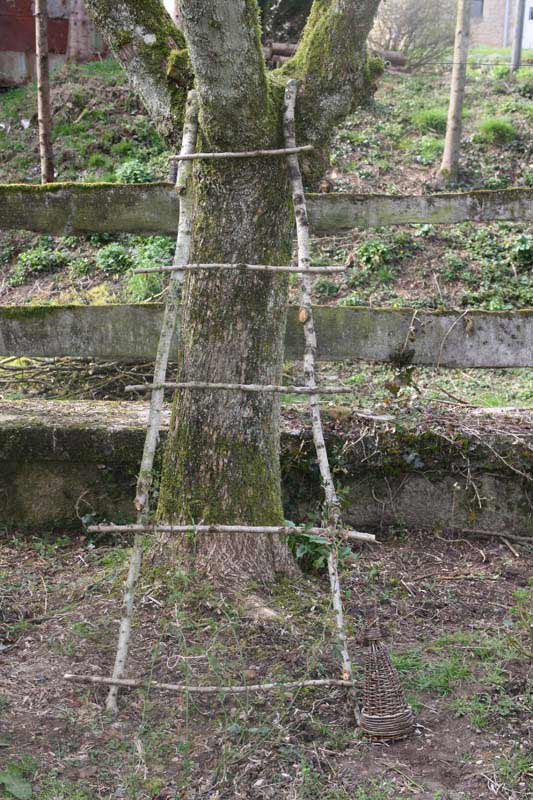
Wooden ladder to guide a rambling rose towards the tree.
When planting standard roses, drive a sturdy stake into the bottom of the planting hole. Do this before positioning the rose to avoid damaging the roots. Where possible, choose a bare-root rose so you do not have to pierce the rootball with the stake. Take care not to over-tighten the ties to prevent a girdling collar forming later.
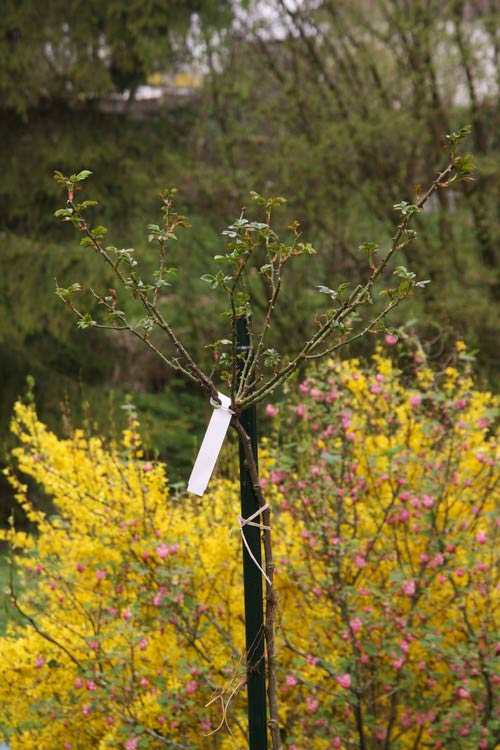
A stake is essential for standard and weeping roses.
These roses are varieties grafted onto a stem of variable height, provided by a vigorous wild rose used as rootstock. The graft union must be protected from frost with winter fleece. You must also ensure removal of any suckers that form on the stem.
How to plant roses in pots?
Choose a compact, slow-growing variety, better suited to this culture, and size the pot to the rose’s growth. Allow 30 cm diameter and depth for a miniature rose, 40 cm for a dwarf rose and 50 cm for a standard shrub or a small climber.
This pot must have drainage holes to allow excess water to escape. Preferably choose a terracotta pot whose porosity benefits the roots. To improve drainage, place 5 cm of gravel, potsherds, expanded clay balls or pumice in the bottom of the pot.
To obtain a good growing medium, make a mix composed of :
- 1/3 garden soil (failing that, a good multipurpose compost will do)
- 1/3 good-quality potting compost, ideally rose compost
- 1/3 well-rotted compost or manure
Position the rose in your pot and fill with the mix up to the top so the graft union is level with the surface. Water thoroughly.
Be aware that roses in pots require more attention than those in the ground. Regular watering is necessary. Take care not to drown your rose. Finally, the only food the rose will find is what you give it: make regular applications of fertilisers during the growing season. Discover when and how to fertilise your roses: Fertilisers for roses.
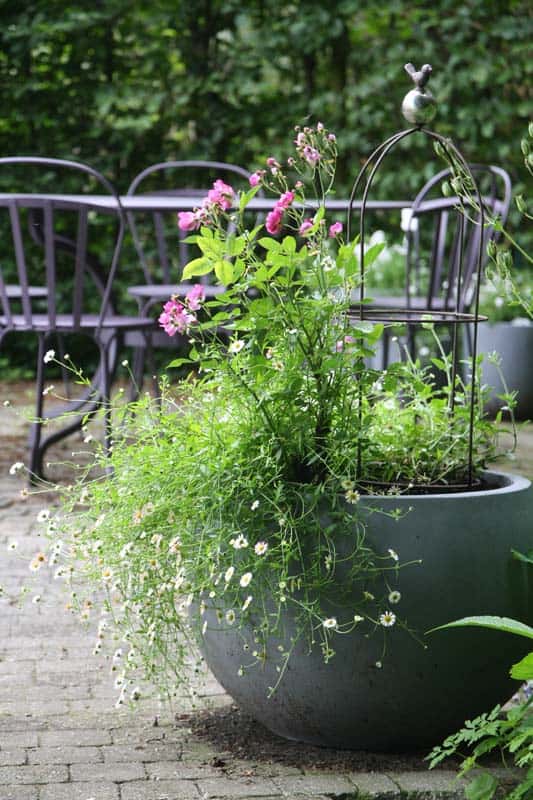
Remove all faded flowers so the rose does not exhaust itself producing hips.
Frequently asked questions from gardeners
- One of my rose bushes has died; I would like to plant another in the same spot. Is that possible?
Avoid planting a rose bush in a spot recently occupied by another. Indeed, many rose bushes release toxins into the soil to deter other roses from their territory. If you cannot do otherwise, we recommend replacing the soil to a width and depth of at least 50 cm.
Virginie’s tip: Having tried it myself, adding mycorrhizae also helps with establishment.
- I have heard that when planting, the graft union of my rose bush should be buried.
Whether to bury the graft union is a matter of debate. In the past, specialists recommended positioning the graft union slightly above the soil. Nowadays, they increasingly recommend burying it to prevent, on rootstocks, the development of latent buds and the appearance of suckers. When the rootstock is buried like this, the grafted plant may develop its own roots. Some consider this nonsensical, since this practice removes all usefulness from the rootstock, which is there to act as an intermediary between the soil and the scion, and thus to allow better adaptation of one to the other. This argument seems perfectly sound, especially when dealing with unwelcoming ground for roses, such as very calcareous soil. In that case, only the use of a suitable rootstock allows roses to be grown under good conditions. Moreover, many varieties lack the vigour to do without the sap supplied by the rootstock. However, with good soil for roses, it can be beneficial to let the plant remain on its own roots. This avoids suckers and the shrubs’ longevity is considerably increased. Some rosarians therefore recommend burying the graft union by 5 to 10 cm. In regions that experience severe frosts, the graft union ends up buried, a precaution that helps better protect against frost.
- Subscribe!
- Contents
This form is protected by reCAPTCHA - the Google Privacy Policy and Terms of Service apply.

































Comments