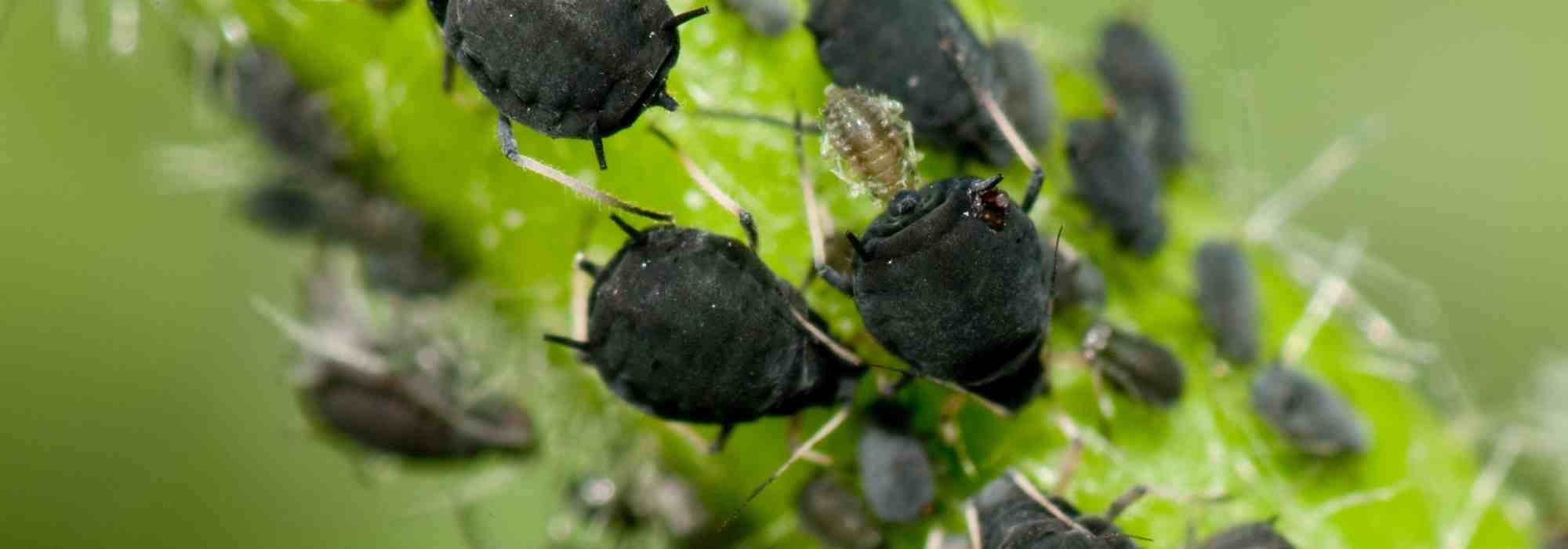
Sow flowers in vegetable patch: natural solution against aphids
Discover different flower species useful for repelling aphids
Contents
In the vegetable garden, aphids are the most persistent, prolific and widespread insect pests. Although many natural solutions exist to combat aphid infestations effectively, many gardeners prefer to prevent rather than cure by stopping these parasitic insects from becoming established. Among various preventive techniques, sowing flowering companion plants can divert aphids away from vegetable crops while encouraging their natural regulation through the activity of beneficial insects.
Discover which flowers to sow in the vegetable garden to avoid aphid invasions and invite biodiversity into the garden.
Why sow flowers to prevent aphids?
Quite logically, your vegetable garden is dedicated to growing vegetables and soft fruit. Yet flowers have plenty of place there, and not only to add colour! Certain flowering plants — annuals, biennials or perennials — can act as ecological, natural alternatives to insecticides. Not to mention their role in pollinating melliferous cucurbitaceous crops.
Attracting auxiliary insects
Companion flowers play a fundamental role in the garden by attracting auxiliary insects, recognised as voracious predators of aphids. Many of them, such as the hoverflies, the green lacewings and the ladybirds, as adults feed mainly on pollen and nectar. However, their larvae are voracious consumers of aphids. By sowing attractive flowering species, you provide habitat and food for these auxiliary insects, encouraging their long-term establishment in the vegetable garden.
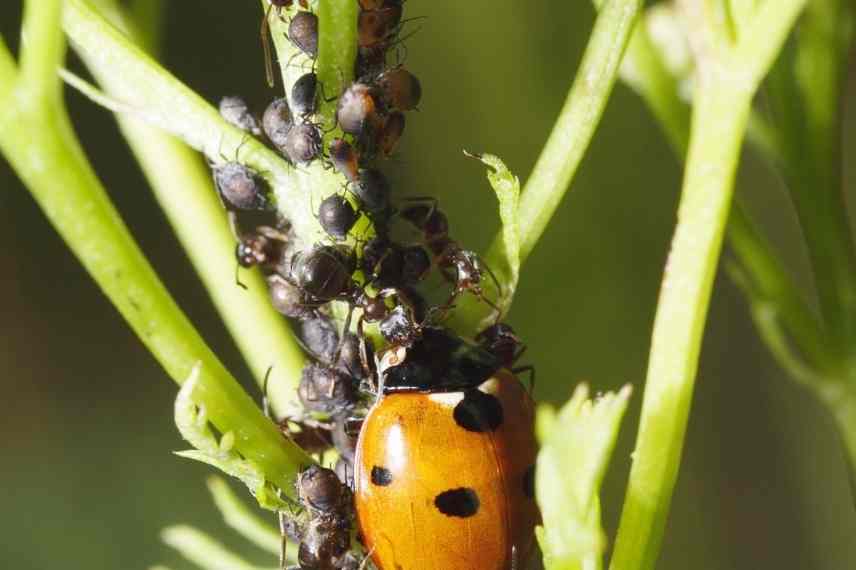
Ladybirds and their larvae are voracious consumers of aphids
Create a diversion
Some flowers, particularly nasturtiums, act as “trap plants”: highly attractive to aphids, they concentrate them on their stems and leaves, thereby sparing nearby vegetables. You can therefore leave these flowers infested with aphids: they will serve as a food source for larvae of ladybirds, lacewings or hoverflies. Another option: spray these flowers with water to remove aphid colonies before they reach main crops.
Repelling aphids
Other flowering plants are valuable allies for gardeners because of the scents they emit. Indeed, some plants are powerful repellents for pest insects, particularly aphids. These flowers confuse aphids’ senses, which then naturally move away from crops.
Read also
Aphid: identification and treatmentWhich flowers useful against aphids should be sown in the vegetable patch?
Here is a selection of key flowering plants that help control aphids. They enable ecological aphid control while adding ornamental interest to the vegetable patch.
Trap flowers for aphids
Among standout flowers that attract aphids, nasturtium (Tropaeolum majus) is the undisputed star. Cultivated as a climbing plant or as a groundcover, nasturtium produces dense foliage and red, yellow or orange flowers from June to October. An annual, it reseeds readily. It is rich in volatile compounds that attract aphids, and its sap is particularly attractive to them. To lure aphids to one corner of the vegetable patch, gardeners often sacrifice this plant by letting it climb a mesh fence.
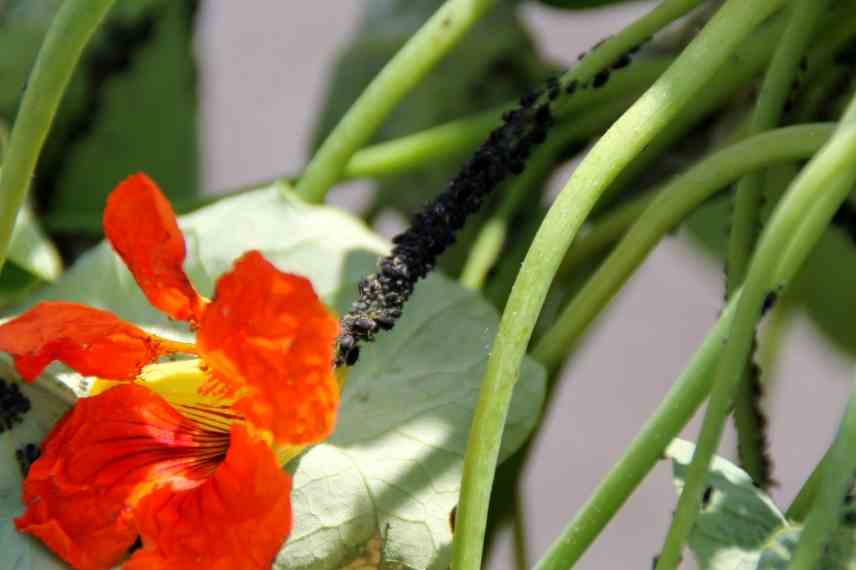
Nasturtiums attract aphids
Repellent plants to keep aphids away
While some flowers act as baits to divert aphids, others act as natural repellents thanks to their aromatic volatile compounds. These flowers, often from the Asteraceae or Lamiaceae families, emit odours that aphids find unpleasant, disrupting their olfactory orientation and making it harder for them to locate host plants. By integrating them strategically into the vegetable patch, gardeners create a deterrent sensory barrier.
Among the most effective are tagetes, including French marigolds and African marigolds. Their roots secrete substances that also repel certain nematodes, and their characteristic odour deters aphids. Plant them on borders or intersperse with sensitive crops such as tomatoes or peppers.
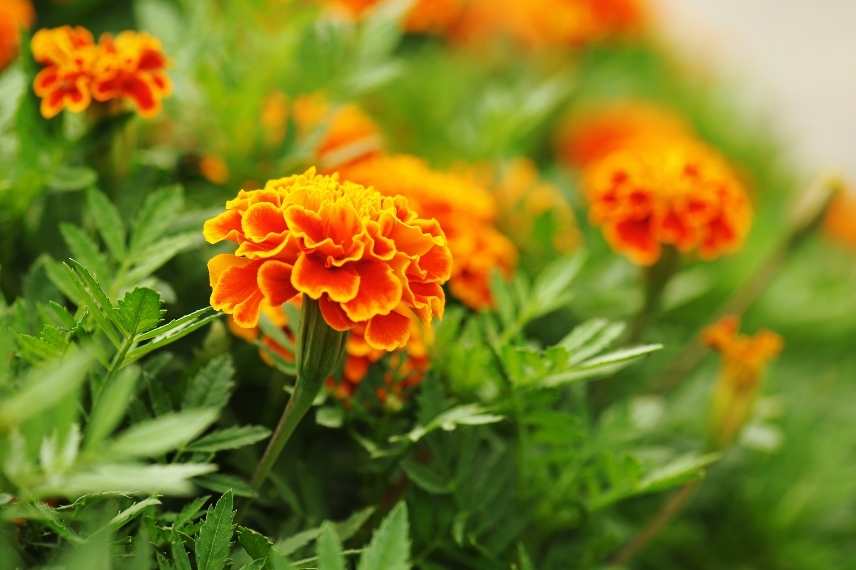
French marigolds have repellent properties against aphids
Other interesting flowers include tansy (Tanacetum vulgare), highly aromatic and sometimes invasive, so use sparingly. Wormwood (Artemisia), with its silver foliage and pungent scent, is also known to disrupt infestations.
You can also consider calendula, anthemis…
By combining these repellent flowers with species that attract beneficials, the experienced gardener implements a complete strategy: repel aphids while strengthening the vegetable patch’s natural defences. Well placed, these flowers become valuable allies to protect crops in an attractive, sustainable way.
Flowers that attract beneficial insects
Many flowers attract beneficial insects that feed on aphids. Examples include :
- yarrow (Achillea millefolium) with its colourful umbels
- phacelia (Phacelia tanacetifolia) with its striking blue flowers, much loved by hoverflies and ladybirds
- salad burnet (Sanguisorba), with discreet but long-lasting blooms
- love-in-a-mist (Nigella damascena) with delicate blue, pink or white flowers
- borage (Borago officinalis), an annual or biennial with blue flowers that self-seeds very easily
- blanketflower (Gaillardia), boasting very bright blooms
- cornflower (Centaurea), an easy-to-sow annual
- cosmos with a long flowering period from June to September
- sunflower (Helianthus) with very melliferous flower heads…
Which sowing techniques should be adopted?
Integrating flowers into vegetable garden depends as much on choice of species as on how they are planted. Some are particularly well suited to direct sowing, such as phacelia, borage, love-in-a-mist or nasturtium. Easy to sow in rows or in small groups from early spring, these species provide quick, low‑maintenance establishment. Direct sowing allows rapid soil cover and early flowering, favourable to first beneficial insects. However, it is essential to ensure adequate moisture at germination, particularly for nasturtium, which can struggle to germinate in dry soil.
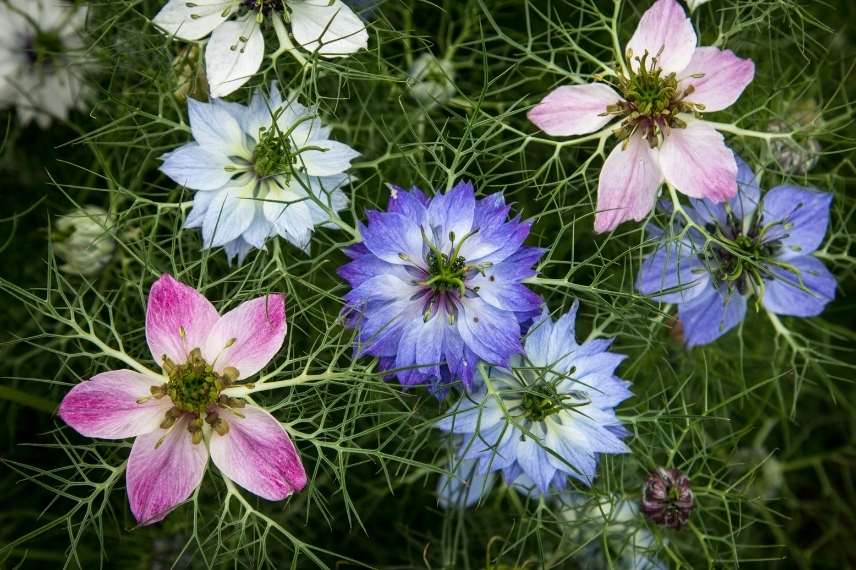
Love-in-a-mist are easy to sow
Other species, such as yarrow, benefit from being transplanted. These plants, often slower to establish or later to flower, are better managed when first grown in pots and then transplanted at a robust stage. This method allows control of their placement and ensures optimal rooting in targeted areas of vegetable garden.
Read also
Roses: aphids and other pestsHow should flowers be arranged in the vegetable garden for best results?
Flower arrangement in a vegetable plot plays a central role in success of biological control strategies against aphids. Far more than a mere decorative element, placement directly influences dynamics of pests and their natural enemies.
In edges of beds, for example along fences, species such as nasturtium act as genuine trap plants. Highly attractive to several aphid species, they concentrate attacks on themselves, thereby diverting pests from main crops. These buffer zones are easy to monitor, allowing rapid intervention if a colony becomes too dense.
Use of small flower clumps planted between vegetable rows is another relevant approach. By sowing small groups of phacelia between rows of lettuce, beans or carrots, a continuous presence of nectar-producing flowers is ensured throughout the season. These clumps act as ecological stepping stones, keeping populations of hoverflies, ladybirds and other predatory beneficials on site.
Finally, for particularly sensitive crops such as tomatoes, aubergines or peppers, creating a focused, densely planted flower bed rich in blooms can be very effective. This small area, composed of several complementary species, simultaneously attracts aphids, their natural predators and many pollinators. This localised concentration promotes natural balance and greatly limits spread of aphids across the vegetable plot. By adjusting density, height and floral diversity, a coherent, living and self-sufficient plant defence system is created.
- Subscribe!
- Contents
This form is protected by reCAPTCHA - the Google Privacy Policy and Terms of Service apply.

































Comments