Rhubarb (Rheum x rhabarbarum or R. rhaponticum) is one of those hardy, perennial vegetable plants that are fairly easy to grow. Fortunately, since its slightly tart flavour is so delightful in jam, pie or crumble. However, in some gardens it can cause problems: weak plants, spindly petioles, untimely flowering, young shoots nibbled by mysterious critters…
So, to put an end to anaemic rhubarb, here are some tips!
Right place and right soil
First, allow plenty of space, because even if your plant looks insignificant in its pot, it will grow quickly and spread widely: 1–1.5 m² per plant is not too much. Rhubarb performs best in cool, moist but well drained soil. Ideally plant in partial shade, avoiding proximity to large trees which, while providing coolness, tend to draw away all available water in summer. Greedy for nutrients, it needs good, humus-rich soil, improved if necessary with a generous application of compost.
Patience, light care and a good turn of the spade, from time to time…
Although growth is quite rapid, rhubarb needs a little time to settle. Except for some varieties such as 'Glaskins Perpetual', you will not harvest until after one or even two years, as it is recommended for young plants not to pick anything during the first year (I know, frustrating).
As we have seen, cool conditions suit rhubarb best. To retain moisture, mulch generously. We do not hesitate: at least 20 cm of fallen leaves in autumn, a little grass clippings from time to time and, after each harvest, we spread the leaves at the plant base, which otherwise we do not know what to do with (aside from using them as insecticidal manure…). In spring or autumn, a good dressing of compost is always welcome and will boost production. Finally, when a plant ages it may become less vigorous: this is a sign that it should be divided. Do this in spring and, using a spade, split the stump into several pieces of one to three buds.
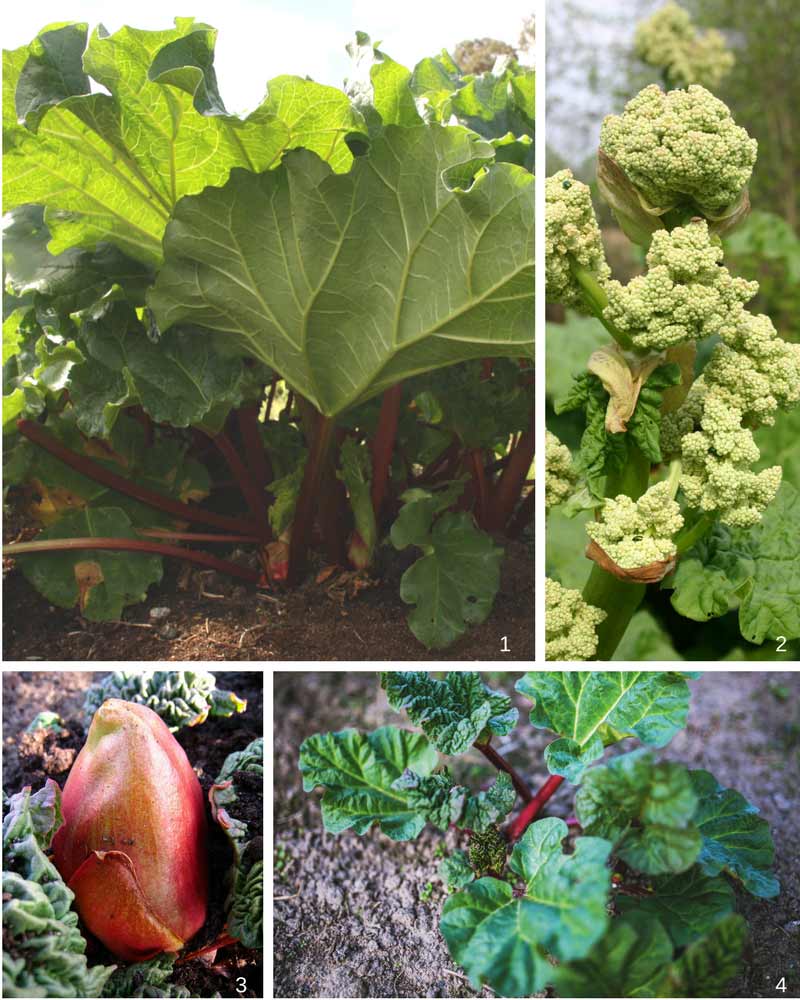
1) a healthy rhubarb plant thanks to regular compost applications 2) rhubarb in flower 3) the 'bud' in late winter 4) a young rhubarb plant
Help — my rhubarb…
- Issue 1: my rhubarb is in flower
It is normal for a mature rhubarb plant to flower; it is a natural behaviour to ensure its offspring. Although spectacular, rhubarb flowers are not very ornamental and come at the expense of petiole size. Flowering also weakens the plant: do not hesitate to remove flower stems as soon as they appear. If you wait… it will be too late!
- Issue 2: my rhubarb is very small
Among vegetable garden worries, a scrawny rhubarb is one of the most frustrating. Most of the time this is because it was not planted in the right place or in the right soil. If the plant looks strong enough to be moved to a more favourable spot, go ahead… Otherwise, up the compost, mulching and watering a little while it establishes.
- Issue 3: my rhubarb is being eaten
Yes, slugs and snails again… By now you know the routine, don’t you? A line of ash if weather is dry, a few Ferramol pellets and that should do the trick!
There you are ready to grow vigorous, productive rhubarb! Did you know the English were crazy about it and used to force it in cellars in much the same way as endives? A harvest by candlelight — how romantic.


































Comments