Meconopsis betonicifolia is the Latin name of the famous Himalayan blue poppy. Considered by many as the gardener's Grail, its cultivation is certainly delicate but remains within reach of all. To succeed in growing it, you must meet 2 conditions in your garden: a suitable location and soil.
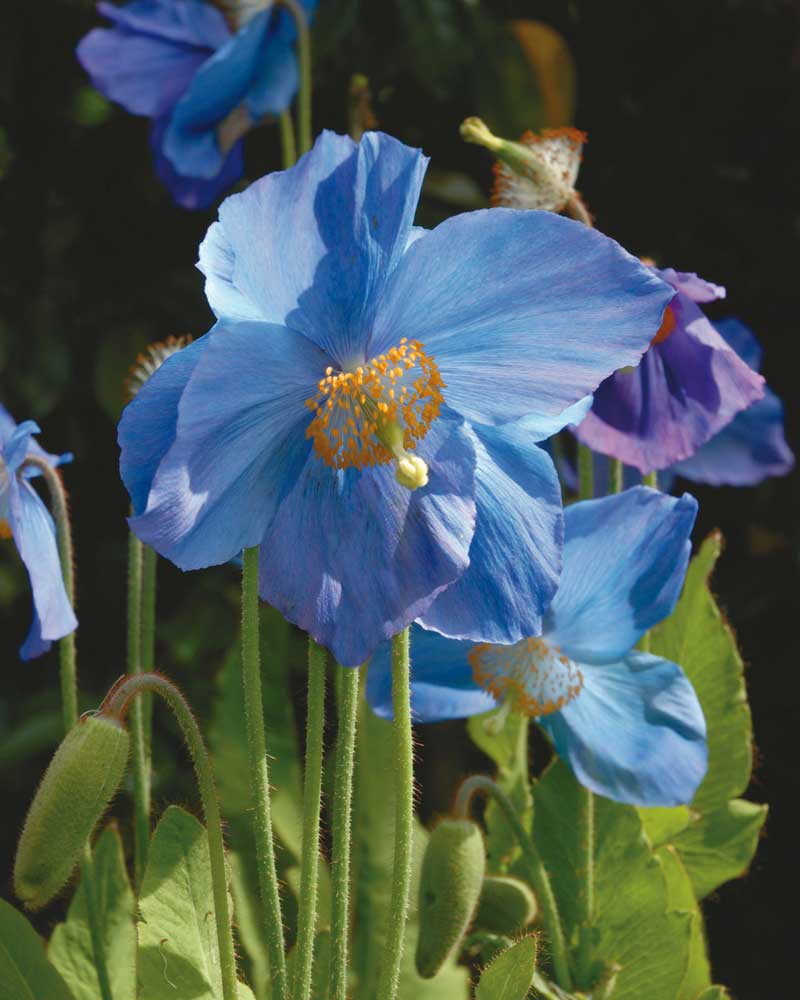
Meconopsis betonicifolia, the famous Himalayan blue poppy
The Himalayan blue poppy appears in a multitude of forms and colours; some are perennial, others annual, others still semelparous (they grow for one or several years before flowering once and dying immediately afterwards). Among the dozens of species and hybrids in this genus, the best known is Meconopsis betonicifolia, and to a lesser extent Meconopsis grandis, with their sublime sky-blue flowers adorned with a cluster of golden stamens. Native to the Himalaya (from Nepal to China), this montane perennial grows at edge of damp woodland, on humus-rich banks alongside primroses and ferns in a moist, cool atmosphere throughout the growing season.
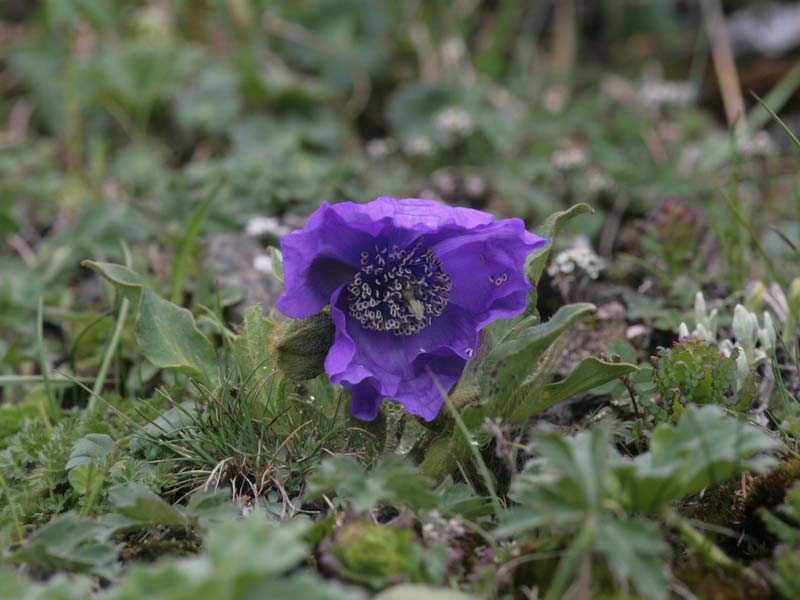
Meconopsis lancifolia, Balang Shan, Sichuan, in situ
Although growing Meconopsis is delicate, it is not impossible, and it is important to respect 2 key points that are decisive for success and for getting flowers over several years. But before addressing these 2 points, here is a short test to find out whether this plant is right for you — answer yes or no:
- Hostas, Asian primroses and hydrangeas grow very poorly in my garden.
- In summer my soil is dry, cracks and I spend every evening watering.
- By contrast, in winter my garden is regularly flooded.
- When it is not the soil that is dry, it is the wind that desiccates the plants.
If you answer "yes" to all these statements, Meconopsis will not be at their best in your garden and will not survive the summer; if "no", succeeding with cultivation of this mythical plant is well within your reach!
1- Planting location will determine about 80% of success with the Himalayan blue poppy. It should be bright, in partial shade and sheltered from the wind. Avoid direct sun during the hottest hours of the day and favour a cool situation. One of the keys to successful cultivation is humidity. The higher the summer humidity, the better the chance Meconopsis have of living a long time. No wind, not too much sun and plenty of ambient moisture in summer guarantee success. In my garden they are protected by large, ancient trees and surrounded by evergreen shrubs (Trochodendron, Rhododendron, Osmanthus...). They are planted facing west near a pond that provides the essential summer humidity.
2- Soil quality is crucial. It should be light, acidic and cool — that is, little or no clay, 0% lime and plenty of leaf mould and humus. Soil should be diggable by hand without a spade yet retain enough density to keep cool in summer. If you do not have such soil you can improve it at planting by adding: potting compost, turf, compost, sand and vermiculite. In my heavy, rich and wet soil, the mix that works best for Himalayan blue poppies is: 50% leaf mould, 20% turf (brown preferably), 20% topsoil and 10% sand. Adjust proportions as needed according to soil type. Planting hole should be 4–5 times the volume of the pot; no need to dig a 1 m³ pit, but ideally a hole 35–40 cm wide and 20–25 cm deep is sufficient.
If all these conditions are met, Meconopsis will grow and flower every year in your garden. Bear in mind their lifespan is short: they live on average 3–4 years in our gardens but when conditions are optimal they self-seed and over time form beautiful colonies, like these Meconopsis grandis in my garden...
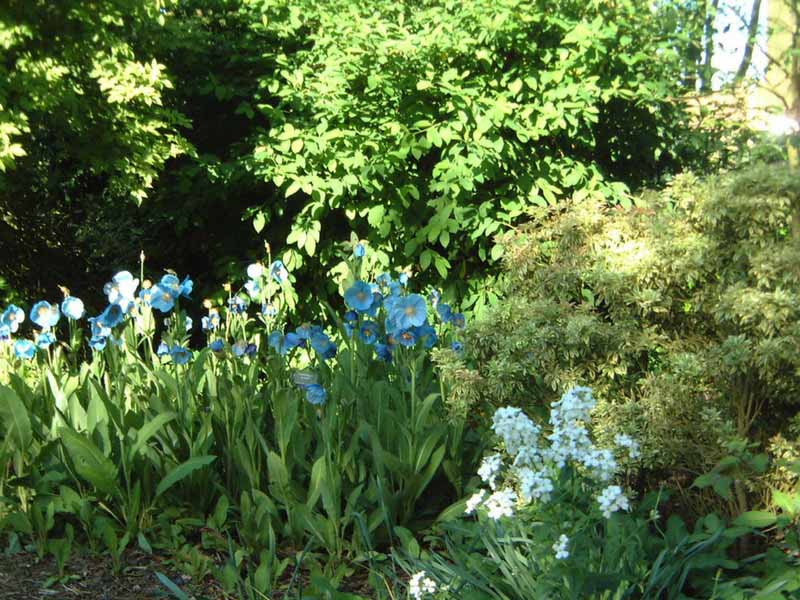
Meconopsis grandis in my garden

































Comments