Strawberries are one of the most popular garden fruits! Besides their delicious flavour, strawberry plants establish easily in the garden, propagate readily from runners, and often produce a generous harvest. Yet, have you noticed that it is always in spring, when there are a thousand jobs in the vegetable plot, that people think about planting strawberry plants? Late summer and autumn (from late August to October) are actually more favourable times for planting them — here’s why!
Encourage better root development
In late summer and autumn, the soil is still warm enough to promote root development. Good rooting is essential for strawberry plants to absorb water and nutrients from the soil efficiently. The stronger and deeper their roots, the better they will cope with droughts and adverse weather conditions, such as summer heatwaves.
Autumn planting aligns with the strawberry's life cycle, as at that time the plant will establish itself naturally in the garden if you have not removed the runners. This gives strawberry plants plenty of time to develop a robust root system before the cold arrives. Once winter has passed, they will already have a head start and will be ready to grow more vigorously in spring.
To maximise rooting of strawberry plants in autumn, make sure to prepare the soil well before planting. Ensure it is well drained and enriched with organic matter (don't hesitate to add compost or well-rotted manure). We also recommend planting strawberry plants with a spacing of 30 to 40 cm between each plant to give them enough room to develop properly.
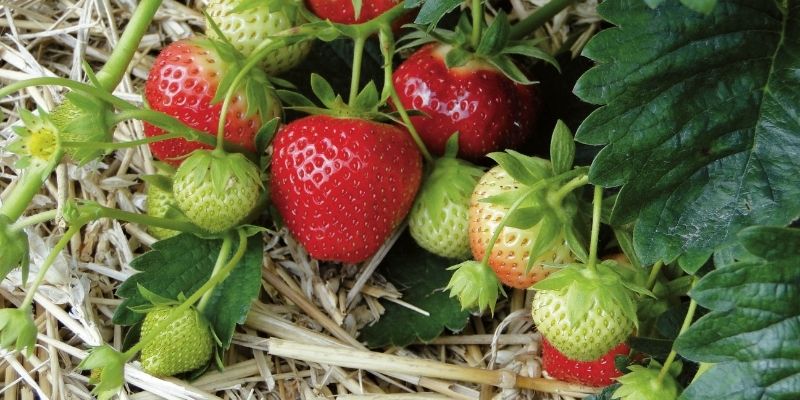
Reduce water stress
Strawberry plants can benefit from regular autumn and winter rainfall to take root. They will therefore need far less watering than if planted in spring. Indeed, a strawberry plant planted in spring is more quickly exposed to high temperatures, increasing its water needs. It then becomes vulnerable to water stress, which can slow growth and reduce strawberry production.
We recommend mulching the soil after planting your strawberry plants: this will limit weed growth while preserving soil moisture.
Enjoy an earlier and more abundant harvest
If you plant strawberry plants in autumn, they will bear fruit in their first year because they will have had time to root and will resume growth more quickly in spring. As soon as temperatures warm sufficiently, they can begin to produce flowers, then fruit. The harvest will also be more generous. Conversely, if you plant them in the garden in spring, you will have to accept a rather meagre first harvest. After all, strawberry plants can't do everything at once: root and fruit abundantly!
Because strawberry plants planted in autumn flower earlier, they often spread the harvest over a longer period. This gives you the chance to savour home-grown strawberries for several weeks, even several months, depending on the varieties you choose.
For everything you need to know about growing strawberries, feel free to consult our complete guide: "Strawberry: How to plant, grow and maintain"


































Comments