One of France's favourite berries, blueberries are ripe between June and August depending on variety. Discover when and how to harvest them, and our tips to store them in the best way so you can enjoy them straight away, or… much later!
American or wild blueberry?
Most of us eat cultivated, American-origin blueberries, Vaccinium corymbosum by their Latin name. These blueberries are an improved form of the so-called wild blueberry and now exist in many varieties, from the classic 'Jersey' to more unusual cultivars, including pink-berried types such as 'Pink Lemonade'. It's the famous Quebec 'bleuet'.
Wild blueberry, also called brimbelle in the Vosges, cousinier, airelle noire, gueule noire or maurette depending on region, is not the same species: it is Vaccinium myrtillus, native to Europe and North Africa. The shrub is much lower, its berries are smaller and the flesh is blue, and altitude more than anything else helps tell them apart. This wild blueberry grows from Brittany to the Pyrenees, via the Massif Central, the Morvan and the eastern ranges (Alps, Jura, Vosges). It reaches full ripeness between late July and September.
When to harvest?
Species influences harvest timing. But June marks the start of the harvest for American blueberry bushes, the ones grown at home.
Watch your blueberry bushes in the garden as they are normally ready between mid-June and mid-August. This can be earlier, as this year, after a very warm spring and repeated heatwaves before the end of June. With several varieties, harvest can stretch over two months.
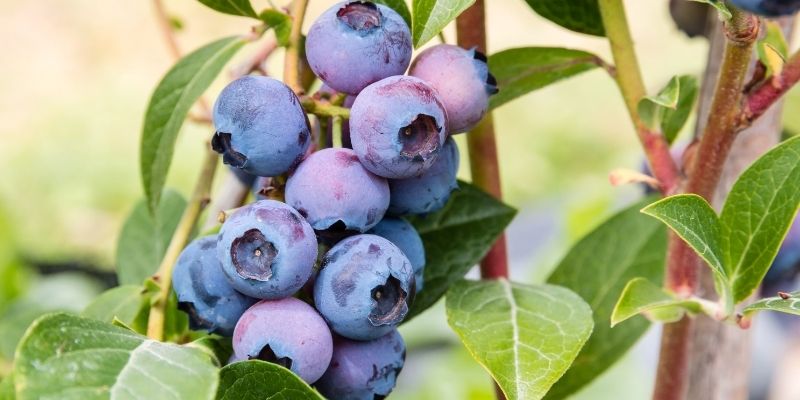
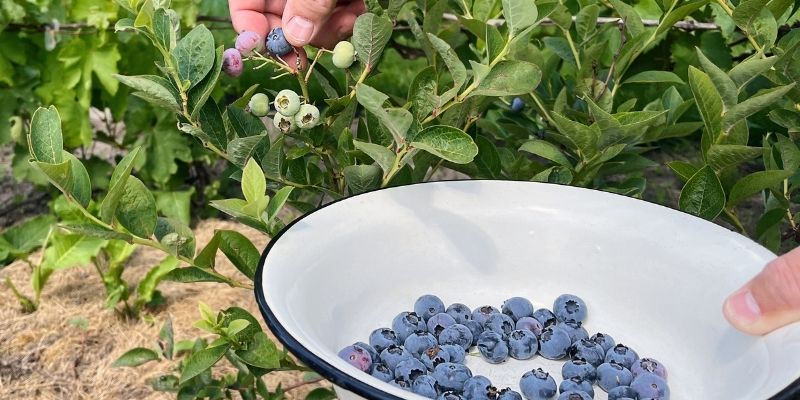
The fruit, first green, turns pinkish-purple then clearly black. A ripe blueberry comes away on its own without forcing when pulled. The berry is then fleshy and dark blue in colour.
Wild blueberries often grow in more shaded spots and ripen later, around August in most regions, up to September or even October at altitude.
How to harvest blueberries?
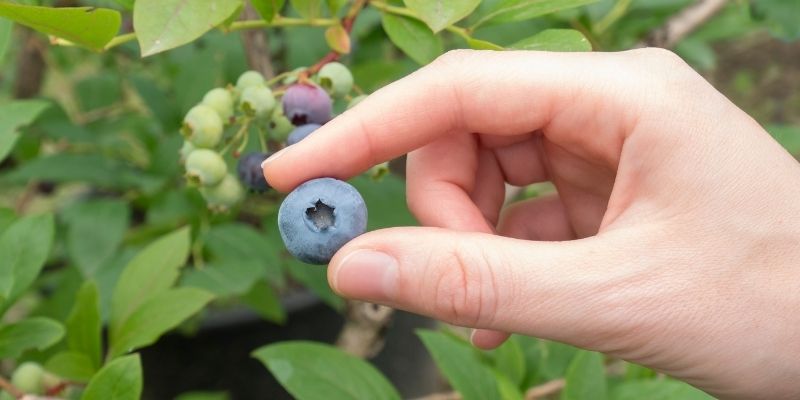
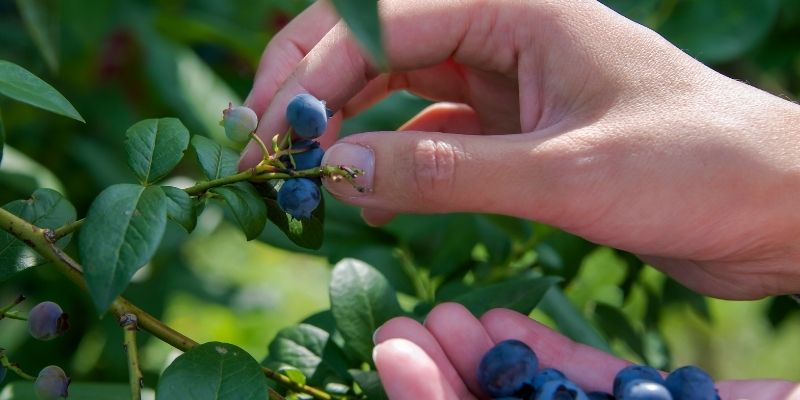
They are picked by hand, which explains blueberries' high price in shops. Mechanisation has nevertheless started, surprisingly for this crop. Being a delicate fruit, it's important not to handle them too much to avoid damage. Blueberries ripen in whole clusters.
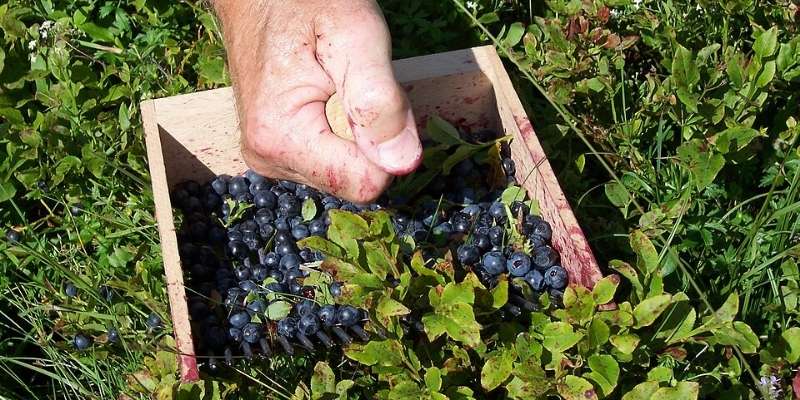
The blueberry comb is a well-known tool among Vosges locals and other mountain regions to avoid damaging the berries and to ease the tedious task of picking berry by berry. But for wild picking during a hike where they grow naturally, combs are forbidden; only hand or knife harvesting is allowed.
NB: Beware of wild-picked blueberries! Often close to the ground, they can be soiled by foxes and transmit a disease (fox tapeworm, Echinococcus multilocularis, a small parasitic worm responsible for a serious liver disease in humans, alveolar echinococcosis): rinse well before use, and preferably pick berries growing higher up.
Place them as you pick into a large shallow dish, to avoid piling them up. Better to gather them daily and eat or store them as you go. Pink fruits, like those next to a fully ripe berry below, will be ready to harvest in about 4–5 days.
How to store blueberries?
Compared with strawberries or raspberries, blueberry keeps better when eaten fresh — its pruinose skin probably helps. But it remains a fragile berry.
For best benefit, eat blueberries freshly picked from the bush within three days. After that they start to shrivel slightly and lose vitamins. A shame for a fruit considered a superfruit! To fully enjoy the delicate flavour of blueberries, I recommend eating them immediately, and above all, do not put them in the fridge, which really alters their taste. Wash only just before eating or using in a recipe.
Use them fresh for making ice creams or sorbets, or pick at breakfast to start the day. This small dark fruit is a treat in the famous blueberry tart that we all love, I think… served in midwinter to skiers: madness, it's frozen!

Freezing
Freezing is the best way to preserve blueberries, retaining flavour, texture and vitamins (A and C), making them ideal for baking.
Quickly wash blueberries under cold water, then spread them on a large tray lined with baking paper. Freeze them like this, then move into a freezer bag or container. They won't stick together and will keep their flavour for up to a year.
Blueberries thawed overnight in the fridge will work well as the main ingredient in a blueberry tart, in a fruit salad, or added to muesli or yogurt, in a crumble, muffins, etc. They're often added still frozen to cakes, which is very handy.
Cooking
Cooking blueberries allows you to make jams, jellies and syrups. It's another way to preserve them long-term in the pantry and to give homemade jars as gifts. In jam, they pair well with aronia berries and all small red fruits.
Drying
Less common, drying — either in a low-temperature oven (about 20 hours at 60°C) or in a dehydrator — preserves your summer harvest for at least a year. Use dried blueberries directly in muesli or granola, or rehydrate in warm water for 10 minutes.
Further reading…
Want to plant blueberries at home? They are not the easiest fruit to grow, but once established a blueberry bush promises good productivity, is completely hardy and a delight straight from the garden or allotment.
We give advice and everything you need to know to ensure success in our dedicated articles: Growing blueberries, Blueberry bush: planting, pruning and care, and I missed out on the blueberry bushes for you, or How to plant a blueberry bush, by Ingrid!



































Comments